Name Tattoo Removal in Liverpool: Questions Clients Ask
Clients come to our Liverpool clinic with a name on their arm, shoulder or neck and a question that has been sitting with them for months. Whether the name belongs to an ex-partner, a child or a friend from years ago, a name carries a weight that a star or a sunflower never does. If you are searching for name tattoo removal Liverpool, you probably want straight answers on how many sessions it takes, whether it will leave a mark and what it will cost. This guide covers the questions we hear most often.
Table of Contents
- Quick Takeaways
- Why Name Tattoos Are Different
- Questions Liverpool Clients Ask Most
- Laser Removal Versus Cover-Up
- Preparing for Your First Session
- What to Expect Across Sessions
- Aftercare in the First Weeks
- Cost and Value of Name Removal
- Frequently Asked Questions
- References
Quick Takeaways
| Key Insight | Explanation |
|---|---|
| Solid black block lettering is usually the easiest name to clear | Dense black ink absorbs laser energy efficiently, so a simple name often needs fewer sessions than a detailed or coloured piece. |
| Plan on several sessions spaced weeks apart | Each session breaks ink into smaller particles, and your body clears them over the following weeks. Rushing sessions tends to increase irritation, not speed up fading. |
| Faint ghosting is common and can persist | Some clients keep a faint outline of the original letters, especially with older or deeper tattoos. Agree on what counts as success before the first session. |
| Sun exposure works against you | Tanned or sunburnt skin reacts differently to the laser and raises the risk of pigment changes, so avoid sun on the area before and after treatment. |
| A cover-up can be the better outcome | Large, dense or sensitively placed names sometimes respond better to a new design, provided the new piece is darker and bolder than the original lettering. |
| Ask for a session-by-session plan | A fair quote states the expected number of sessions, the spacing between visits and what happens if progress is slower than planned. |
| Expect an assessment before treatment | A clinic that looks at the tattoo in person, checks your skin and gives a written plan is working in your interest rather than selling a fixed package. |
Why Name Tattoos Are Different
Most name tattoos are written in a single script or block font using solid black ink. That matters, because laser removal works by targeting pigment, and dense black absorbs the light well. A short name in clean black lettering is often one of the more predictable removals we see, provided the skin is healthy.
The complication is that many names were done quickly, sometimes in a rushed session, with ink packed in deeper or more heavily than the design needed. That can mean thicker strokes, uneven saturation and a tattoo that needs more passes than the original design suggests. The only way to know is to have the tattoo assessed in person.
Simple letterforms and solid black ink
Thin, hairline script can clear quickly because there is less ink in each line, but overlapping letters and heavy shading take longer. A block capital name in solid black is usually more predictable from session to session. When we assess a name, we look at the stroke width, how the letters overlap and whether any colour has been added.
Names added after a relationship ended
Many clients come to us after a breakup, and that emotional driver shapes how they approach the process. Some want the name gone before a new relationship starts. Others want to be sure they will not regret the removal later, so they settle for a fade. We ask people to decide early whether they want full clearance or a result they can live with, because that choice changes the treatment plan.
A name is one of the few tattoos designed to be read, which means every letter that fades is noticed. Plan the removal around how the lettering will look at each stage, not around how quickly the laser can work.
Pro tip: Before you book, photograph the name in daylight from two angles and note whether it is a single colour or has shading. That gives your clinic a clear baseline for the first assessment.
Questions Liverpool Clients Ask Most
Across consultations, the same questions come up almost every time. Clients want to know how long it will take, whether the removal will show and whether the process is painful. The honest answers depend on the tattoo, but there are clear patterns worth knowing before you book.
How many sessions a name usually takes
There is no fixed count, and anyone who promises one without seeing the tattoo is guessing. Simple black names often respond within a modest number of sessions, while older, multi-coloured or heavily layered pieces take longer. Sessions are normally spaced several weeks apart so the body can clear the broken ink between visits.
The clients who are happiest are the ones who accept the timeline at the start. Pushing for faster sessions usually means more discomfort and a higher chance of skin irritation, with no real gain in fading.
Will a name leave ghosting or scarring
Ghosting, a faint outline or shadow of the original letters, is one of the most common concerns. Some clients keep a trace of it, particularly with older tattoos that were placed deeply. Scarring is uncommon when treatment is well spaced and aftercare is followed, but skin that has been picked, sunburnt or treated too aggressively is more vulnerable.
A clean outcome does not always mean complete invisibility. Complete clearance is the goal, but a result that reads as a faint mark in good light is a genuine success for many people, and it is worth saying so at the start.
Does it hurt more than a regular tattoo
Most people describe a snapping sensation against the skin, similar to a rubber band flicking the same spot. Placement matters a great deal. Ribs, ankles and inner arms tend to feel sharper than fleshy areas such as the outer thigh. Topical numbing can be discussed at consultation, though suitability depends on your skin and medical history.
Laser Removal Versus Cover-Up
Laser removal is the standard approach for most tattoos. A 2015 review indexed on PubMed Central describes lasers as the standard modality for tattoo removal, while noting that several factors shape the outcome. That is why a name on one person can clear very differently from a near-identical name on someone else. Lasers are not the only option, but they aim to clear the ink rather than hide it under a new design.
When laser removal makes more sense
Laser removal suits clients who want their skin back as close to its original state as possible, especially if they plan to have other work done later. It also works well when the name is small enough to clear in a reasonable number of sessions and the lettering is fairly simple.
When a cover-up is the better route
A cover-up can be the smarter choice when the name is large, densely packed or sits in an area where repeated laser passes would be uncomfortable. The new design has to be significantly darker or more complex to hide the original lettering, so it is not a quick fix. Some clients take a combined route, lightening the name with laser first so the new design has less to fight.
| Approach | Best for | Main trade-off |
|---|---|---|
| Laser removal | Clients who want the name cleared as fully as possible | Several sessions spaced weeks apart, and results vary with ink, skin and placement |
| Cover-up tattoo | Large or dense names, or clients who want a new design | The new piece must be darker or bolder, and the skin is permanently changed |
| Laser fading followed by cover-up | Stubborn names that need lightening before redesign | A longer overall timeline and two sets of decisions to make |
Preparing for Your First Session
Preparation affects both comfort and results. The biggest factor you control is sun exposure. Skin that is tanned or sunburnt absorbs the laser differently and is more likely to react, so avoid sunbeds and direct sun on the treated area for several weeks beforehand.

Skin care in the weeks before
Keep the area moisturised, and avoid self-tanning products, exfoliants and anything that irritates the skin. Shave the area gently the day before your appointment rather than waxing, since waxing lifts hair from the root and can leave the skin sore.
What to tell your practitioner before you arrive
Share a full list of medications and supplements, since some can increase bruising or affect healing. Mention any history of keloid scarring, cold sores near the treatment area or recent procedures on the same spot. Arriving with clear information and unbroken skin is the difference between a smooth first visit and a delayed one.
Pro tip: Tell your practitioner about any past skin conditions before the first pulse, not after. These details change the treatment settings and the spacing between sessions, and most clinics would rather know in advance.
What to Expect Across Sessions
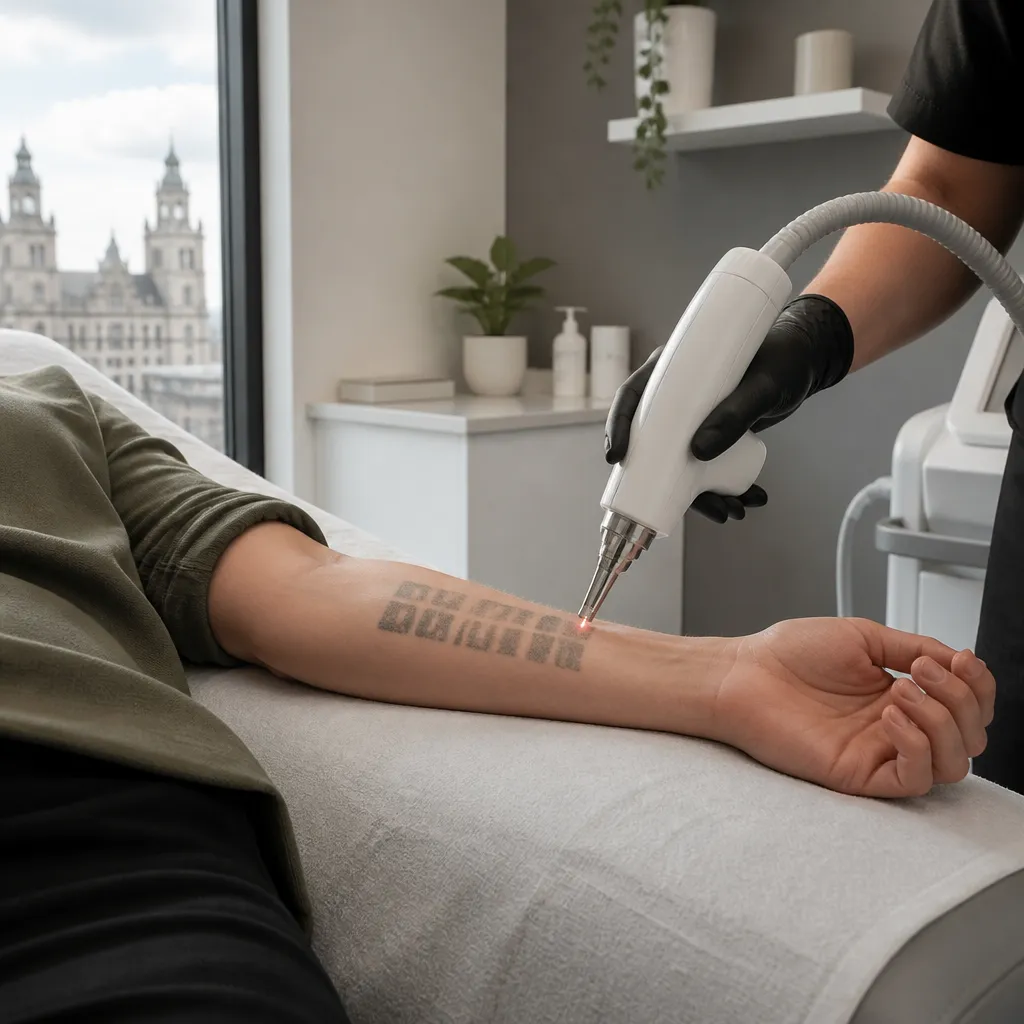
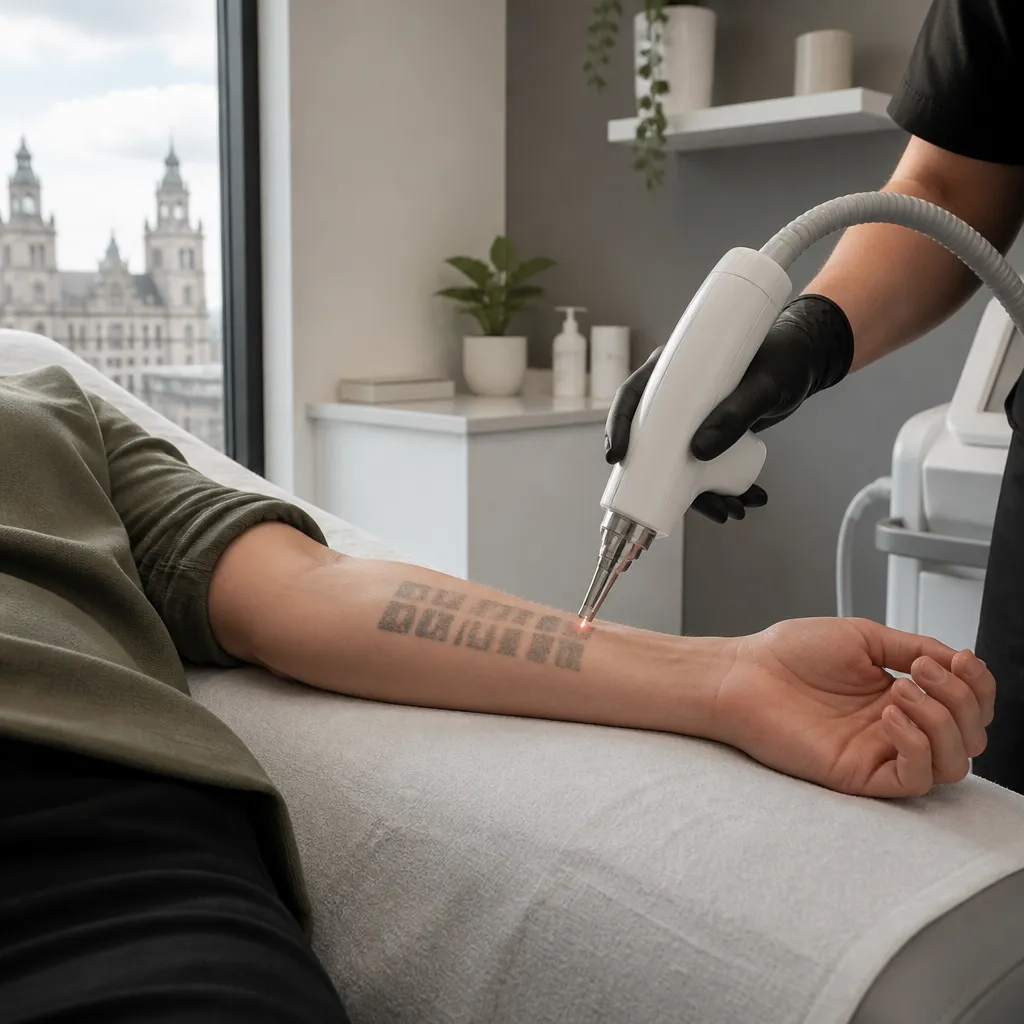
Each session delivers energy into the ink, which breaks it into smaller particles. Your immune system then carries those particles away over the following weeks, which is why results appear gradually. Treat the first visit as a test of how your skin responds, not a preview of the finished result.
Why sessions are spaced apart
Spacing gives the skin time to recover and gives the body time to clear debris. Returning too soon can compound irritation and makes it harder for the practitioner to judge whether the ink is responding to treatment.
Reading the fade after each visit
Photograph the area in the same light at every appointment. Fading is easy to miss day to day but obvious across a set of photos. It also lets you and your clinic adjust settings or spacing if progress stalls. A name that shows little change after several sessions needs a review, not simply a stronger setting.
Aftercare in the First Weeks
Aftercare is where many results are won or lost. Redness, mild swelling and small blisters are normal in the first few days, and the skin may feel tight. Keep the area clean, protect it from friction and follow the written instructions your clinic gives you.
The first 48 hours
Keep the area dry for the first day unless your clinic says otherwise, and use only the aftercare product they recommend. Avoid hot baths, saunas, swimming pools and tight clothing that rubs. If a blister forms, leave it alone, since broken skin raises infection risk and can leave a mark of its own.
Weeks two to six
Peeling and dryness can continue for a while, and the treated area may look lighter or darker than the surrounding skin. Sun protection remains essential. A broad-spectrum SPF on the treated area is not optional, because sun exposure can cause pigment changes that are easy to mistake for ink returning.
Pro tip: Keep a short weekly note on how the area looks, including any itching, crusting or unusual redness. If something worsens rather than settles, contact your clinic before your next booking.
Cost and Value of Name Removal
Cost is one of the first questions we hear and one of the hardest to answer in isolation. Price depends on the size of the name, the ink colours, how many sessions are needed and the experience of the clinic. A per-session figure tells you little unless you know how many sessions the plan assumes.
For context, US cost guides put the average laser tattoo removal session at around $423, with typical ranges from about $200 to $500 per treatment. Those are American figures, so treat them as a rough reference point rather than a UK price list.

Why per-session quotes vary
A small name in solid black will cost less than a large multi-coloured piece covering the same area of skin. Clinics also differ in equipment, the number of passes per session and whether aftercare or follow-up visits are included. Ask what is covered before comparing figures side by side.
Getting a fair quote for a name
A fair quote should come after someone has looked at the tattoo in person. It should state the expected session count, the spacing between visits and what happens if progress is slower than expected. Be cautious of anyone who promises a fixed total without seeing the design. A written plan protects you from surprises and is one of the clearest signs that a clinic takes the work seriously.
Frequently Asked Questions
How many sessions does a name tattoo usually need?
There is no universal number. Simple solid black names often respond within a modest number of sessions, while larger or coloured pieces take longer. A clinic should give you an estimate after assessing the tattoo, not a guaranteed count before seeing it.
Will removing a name tattoo leave a scar?
Scarring is uncommon when sessions are well spaced and aftercare is followed. It becomes more likely when skin is picked, sunburnt or overtreated. Faint ghosting can remain even when the overall result looks good.
Is laser removal better than a cover-up for a name?
For most clients who want the name gone, laser removal is the first choice because it aims to clear the ink. A cover-up suits large or dense names, or clients who want a new design and accept a permanent change to the skin.
Can I have a name tattoo removed in Liverpool if my skin is tanned?
It is better to wait. Tanned or sunburnt skin can react differently to the laser and raises the risk of pigment changes, so most clinics ask clients to avoid sun exposure on the area beforehand.
How long should I wait between sessions?
Sessions are usually spaced several weeks apart so the body can clear broken ink and the skin can recover. Your practitioner should set the interval based on how the skin looks at each visit.
Does laser tattoo removal hurt?
Most people describe a snapping sensation against the skin. Thin areas and spots close to bone, such as ribs and ankles, are usually more sensitive. Discuss numbing options with your clinic before the session.
What was the one thing about your name tattoo removal that surprised you most, and what would you tell someone booking their first session?
References
- Clinical review of the factors that influence laser tattoo removal results
- Guide to average laser tattoo removal prices and insurance coverage
- Breakdown of the cost factors in laser tattoo removal
- Overview of laser tattoo removal types and how they work