
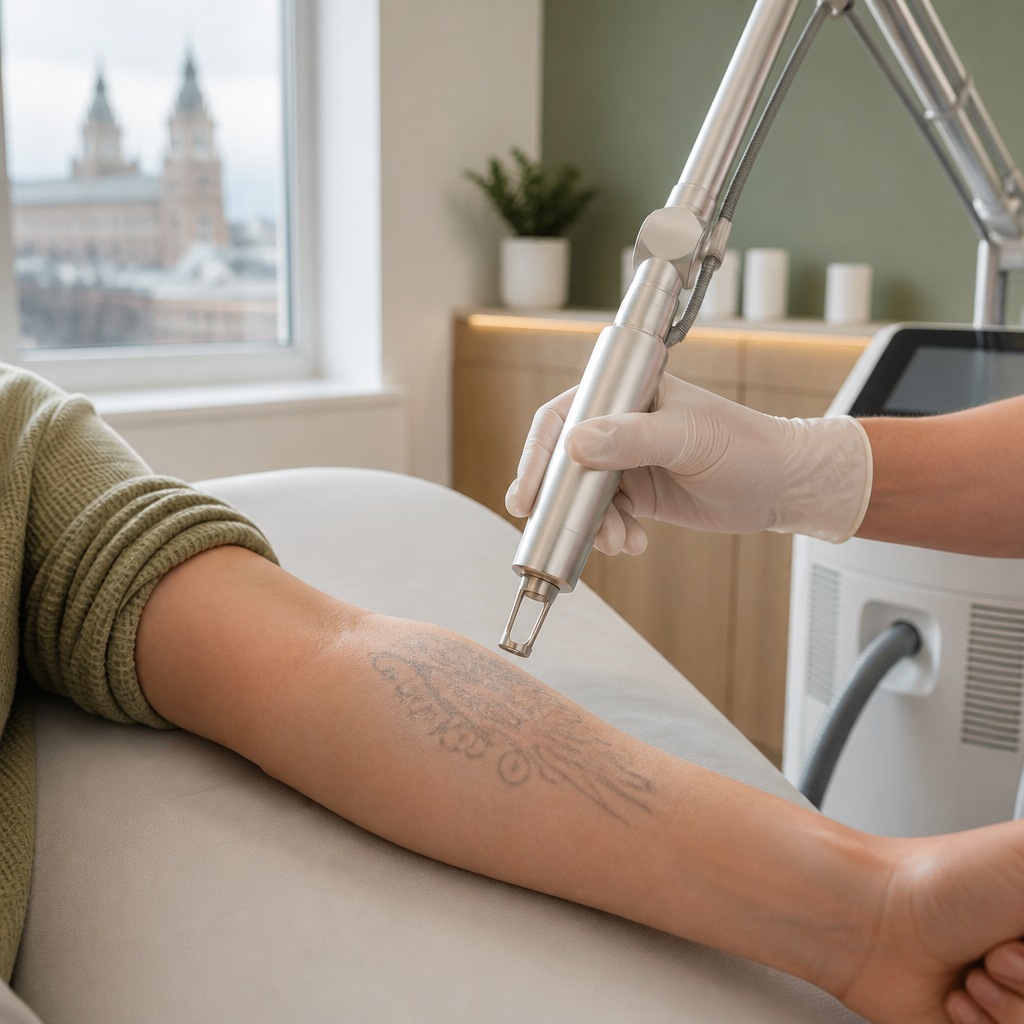
Removing Multiple Tattoos in Liverpool: Priority Guide
Most people who book a second tattoo removal do it because the first piece went well. Then they make the same mistake: they try to book everything at once. Multiple tattoos change the arithmetic. Sessions overlap, budgets stretch, and the order you clear pieces in can decide whether the last ones look finished or stubborn. If you are looking into removing multiple tattoos in Liverpool, the useful question is not how many sessions fit into a month. It is which tattoo to tackle first, and how much recovery time each one needs. At Faith Laser, our Liverpool team builds this kind of plan with every client who comes in with more than one piece.
Table of Contents
- Quick Takeaways
- Why Sequencing Matters More Than Speed
- How to Rank Your Tattoos Before the First Session
- Colour, Depth and Age: What Changes Clearance Order
- Spacing Sessions Between Multiple Tattoos
- Pigmentation and Scarring Risks in Multi-Tattoo Plans
- Comparing Three Sequencing Strategies
- Planning Budget and Timeline Across a Full Removal
- Common Mistakes When Clearing Several Tattoos
- Frequently Asked Questions
- References
Quick Takeaways
| Key Insight | Explanation |
|---|---|
| Treat each tattoo as its own course of treatment | Each piece responds to laser on its own timeline, so one calendar for all of them rarely works. |
| Rank by visibility and personal impact first | Starting with the piece that affects your daily life most keeps motivation high and gives you a clear measure of progress. |
| Expect colour and depth to change the order | Dark black ink usually clears more readily than bright shades, so the easiest pieces are not always the ones to start with. |
| Do not stack sessions on the same tattoo too quickly | Skin that is still settling from the last pass makes it hard to judge whether the treatment worked. |
| Plan one tattoo per block of sessions where possible | Working through pieces in sequence keeps aftercare simple and makes costs easier to predict. |
| Keep a dated photo log for every piece | Photos taken in the same light show real change that is easy to miss from week to week. |
Why Sequencing Matters More Than Speed
Many people arrive with the same plan: more sessions per month should mean faster results. It is an understandable instinct, and it is the one that causes the most trouble. A post on the r/TattooRemoval forum captures it well. The poster said they started removal believing that the faster they could fit in sessions, the quicker they would see results, and then said the subreddit’s habit of waiting longer between sessions surprised them.
Why stacking sessions backfires
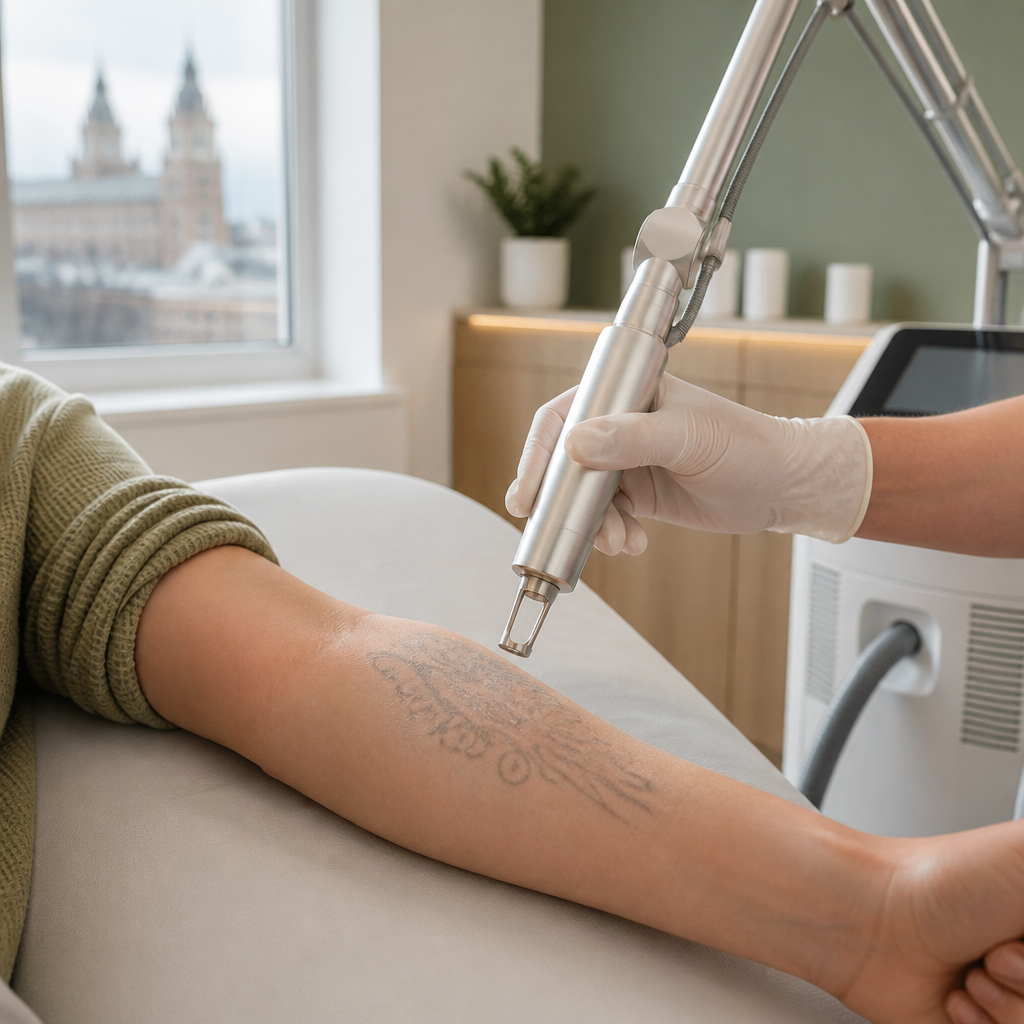
Laser works by breaking ink into fragments that your body clears over the following weeks. If you book the next pass while the skin is still inflamed from the last one, you are treating tissue that has not finished responding. The result is often a patchy picture that makes it hard to tell whether the previous session did anything at all.
At Faith Laser, we would rather see a client wait a little longer and have a clear reading of progress than rush through a schedule and end up guessing. Good sequencing is about giving each session a fair chance to show its effect.
What a two-tattoo plan looks like
Take a common case. A client has a small script on the inner wrist and a larger geometric piece on the upper arm. Booking both on the same day might look efficient on paper, but the wrist is the piece they see every day, and the upper arm needs far more passes. Splitting them into separate blocks lets the wrist move steadily while the larger piece gets its own longer run.
Pro tip: Write down the date of every session and the treated area in one place. When you have two or three tattoos in progress, memory fails quickly, and a simple log is the easiest way to spot which piece is actually responding.
How to Rank Your Tattoos Before the First Session
Before any laser goes near skin, sit down with a list of every tattoo you want gone. Most people have a clear sense of which one they want removed first, but that feeling is not always the right order. For anyone setting tattoo removal priority in Liverpool, a practical ranking uses three questions: how much the piece affects your daily life, how large or complex it is, and whether a cover-up is planned for it.
Ranking by visibility and daily impact
Visibility is the easiest starting point. A piece on the hand, neck or forearm that you see in the mirror every morning, or that shapes how people judge you at work, is often the one people most want cleared. Starting there gives you a visible goal, and it tends to keep people committed through the slower stretches of the process.
Be honest about the emotional weight too. A tattoo tied to a past relationship, a former job or a period you would rather forget can matter more than its size. Ranking by impact rather than convenience usually produces a plan you stick with.
Ranking by size and treatment load
Larger and denser pieces take more passes, and they need more time between those passes. A full sleeve is not a single job. If you put a sleeve in the same block as a small symbol, you will spend most appointments on the sleeve while the symbol waits, so separate the two by workload rather than by how fast you want each one gone.
A common mistake is choosing the smallest tattoo first because it looks like an easy win. That can be sensible for building momentum, but only if the bigger piece will not then be delayed for another year.
Pro tip: If you have a cover-up planned, tell your practitioner before the first session. Some pieces only need to be lightened rather than fully cleared, and that changes both the order and the number of sessions you need.
Colour, Depth and Age: What Changes Clearance Order
Ranking by visibility gets you started, but the ink itself will reshuffle the plan. Two tattoos of the same size can behave very differently on the table, and the reasons are mostly about what is in the skin and how long it has been there. Colour, depth and age are the three factors we look at most closely when we map out a multi-tattoo plan.
Colour changes the plan
Black and dark blue ink usually responds to laser more readily than lighter or brighter shades. Some greens, yellows and pastels can be more stubborn, and a multicoloured piece may need different settings for different parts of the design. A colourful tattoo is not simply a bigger version of a black one. It may need a longer run, and it may sit behind a black piece in your order for that reason.
Colour also shapes expectations. Clients with a bright piece often expect rapid fading, and when it lightens more slowly than a black outline, they start to doubt the process. Warn yourself about that gap at the outset so slow progress is not mistaken for failure.
Depth and age of the ink
Older tattoos sometimes respond differently because ink can settle, spread or fade unevenly over the years. A piece done within the last year or two may still have dense, fresh pigment that holds its shape under the surface. Neither is automatically easier, and a practitioner needs to see the piece in person to judge how it has aged.
Depth matters for a similar reason. Heavily worked ink, including pieces reworked by different artists over several years, can need more passes than a single-layer outline. If a tattoo was reworked or covered at some point, flag it at consultation. It may belong near the top of your list even if it looks modest on the surface.
Spacing Sessions Between Multiple Tattoos
Spacing is where most multi-tattoo plans go wrong. People try to match the gap for one piece to the gap for another, or they book sessions into a calendar that suits their diary rather than their skin. Each tattoo needs its own rhythm, and the total number of multiple tattoo removal sessions you need depends on how each piece responds.
What a too-early second session looks like
A question on RealSelf describes someone whose first laser session did nothing visible to a small black cross tattoo. They asked whether it was safe to have another session five days later and mentioned calling their provider for advice. The lesson is not the specific answer, which depends on the person and the treatment. It is that a tattoo that looks unchanged after one session is not a signal to repeat treatment early.

From our side, a short gap between sessions on the same piece leaves little time to judge the previous result. We would rather see you return on the schedule your practitioner sets for that tattoo, even if that means waiting longer than you wanted.
Building a spacing rhythm for each piece
Once you have decided the order, set a separate rhythm for each tattoo. Keep a short note of the gap you were given, the date you were last treated and the date you are next due. When two tattoos are running at once, these notes stop you booking one piece too soon just because the other is due that week.
Run multi-tattoo treatment in blocks rather than overlapping everything. Finishing one piece before starting the next gives you a clean read on progress, and it keeps aftercare simpler, since you are only tracking one area’s recovery in detail.
Pigmentation and Scarring Risks in Multi-Tattoo Plans
Treating more than one tattoo raises the stakes for skin changes. Each session adds stress to the area, and with several pieces on the same body it becomes harder to tell which treatment caused a change. Pigmentation shifts and scarring are the two outcomes clients ask about most, and both are easier to manage when the plan accounts for them from the start.
Pigmentation changes after treatment
Some skin lightens or darkens after laser, which can show up as patches that look different from the surrounding area. It is most noticeable on skin that tans easily or on areas exposed to sun between sessions. Sun protection is not optional during a multi-tattoo plan, because the skin you are treating is also the skin most at risk of pigment change while it recovers.
For clients who want pigmentation removal alongside tattoo clearance, we suggest tackling the more visible area first and reviewing the skin before each new block. Any change that appears between sessions should be raised with your practitioner promptly, not left until the next booking.
Scarring and what early results can hide
A RealSelf community thread about tattoo removal success describes a removal done about six years earlier, where the scarring looked pretty bad in the beginning. The point for anyone clearing several pieces is that early appearance is not the final result. Skin can look angry or uneven in the weeks after a session and still settle over time.
That cuts both ways. You should not panic about every change, and you should not dismiss a change that keeps getting worse. Keep your photos dated and compare like with like, so you can separate a normal healing phase from a problem that needs a proper conversation.
Comparing Three Sequencing Strategies
There is no single correct order, but three strategies cover most of the plans we discuss in consultation. Each suits a different kind of client, and the table below sets out how they differ. None of them works well if you ignore spacing, so treat the order as the first decision rather than the whole plan.
| Strategy | How It Works | Best Suited To |
|---|---|---|
| Largest piece first | Clears the most complex or densest tattoo at the start, so the remaining pieces are smaller and quicker | Clients with one large or dark piece and several smaller ones |
| Most visible piece first | Starts with the tattoo that affects daily life most, regardless of size | Clients who need a visible result to stay motivated, or who have a piece on the hands, neck or face |
| Smallest piece first | Builds momentum with quicker wins, then moves on to larger or harder pieces | Clients who feel nervous about starting or who want early proof the process works |
In our experience, the most visible piece first works best when that piece is also the most emotionally difficult. Largest first makes sense when the biggest tattoo would otherwise dominate the calendar for the next year. Smallest first is a reasonable compromise, but only if you can accept a longer wait for the large piece.
Whichever strategy you choose, write down the reason for the order. When you are three sessions into a plan and tempted to switch, that note will tell you whether the change is sensible or just impatience.
Planning Budget and Timeline Across a Full Removal
Budget and timing are the practical limits on any multi-tattoo plan. Many people can manage one piece at a time, but the total cost and duration for several pieces often surprise them. Planning the sequence in advance makes it easier to see what each stage costs and when the next stage can realistically begin.
Building a realistic timeline
Start with the number of sessions each tattoo is likely to need, then add the gaps between them. A small piece can clear in a handful of visits, while a large or multicoloured tattoo can take considerably longer. Because the gaps run between sessions on the same piece, the total timeline is rarely the simple sum of the visits.
Leave room for the unexpected. Skin that needs a longer break, a holiday that delays a block, or a piece that responds more slowly than expected can each push the schedule back by weeks. Build a buffer into your plan rather than fixing the final session to a single date.
Keeping costs predictable
Ask for a clear breakdown of what each block of sessions includes before you commit. Packages can work well for clients with several tattoos, as long as you know which sessions are covered and what happens if a piece needs more treatment than planned. At Faith Laser, our affordable packages are tailored to individual needs, so we plan around the tattoos a client actually has rather than a generic bundle. You can read more about how we structure treatment on our main site.

Common Mistakes When Clearing Several Tattoos
Some mistakes show up again and again in clients who come in with more than one tattoo. Most are not dramatic. They are small planning gaps that add months to the process or make results harder to read. Avoiding them is often more useful than finding the perfect order.
Treating everything in one visit
Booking several tattoos into the same appointment sounds efficient, but it can make treatment harder to judge and skin harder to care for. Each piece has its own settings and its own recovery, and a session that covers many areas leaves you with a long list of aftercare instructions that are easy to mix up. Keep the first block focused, then widen the plan once you know how your skin responds.
Ignoring aftercare on pieces that are finished
Aftercare for one tattoo does not stop when you finish treating it. If you have a second piece in progress, it still needs sun protection, gentle cleaning and no picking. Clients often relax their routine on the piece that has finished, then wonder why the next one looks worse than expected.
The order you choose matters less than whether you can read the results clearly at each stage. A plan that lets you see progress is worth more than one that looks tidy on paper.
Pro tip: Take photos of each tattoo in the same lighting, from the same distance, once a fortnight. Side-by-side images show real change that daily checks will miss, and they give you something concrete to talk through at your next consultation.
Frequently Asked Questions
How many sessions do I need for two tattoos?
There is no fixed number. Each piece needs its own count based on size, colour, depth and age, and the total depends on how you schedule them. Ask for a plan for each tattoo rather than a single number for both.
Can I treat two tattoos in the same session?
Sometimes, if both are small and sit in the same area. For most multi-tattoo plans we advise against it, because it makes results harder to judge and aftercare harder to manage.
Which tattoo should I remove first?
Start with the piece that affects your daily life most, unless it is very large. A large piece can tie up your calendar for a long time, so weigh visibility against workload before you decide. Your practitioner can help you compare the two.
Is it safe to book sessions back to back?
Not usually on the same piece. Skin needs time to respond after each session, and the gap your practitioner sets is there for a reason. Spacing applies to each tattoo separately, so a different piece may have its own timing.
Does removing one tattoo affect the others?
Not directly, but sun exposure, skin changes and aftercare on one area can make the next piece look or feel different. Keep notes across all of your pieces so you can see what is happening in each area.
Will every tattoo I have removed look the same at the end?
Not always. Colour, depth and how the ink has aged all affect the final result, and some pieces will look lighter than others even after a full plan. Clear expectations at consultation make the end result easier to accept.
We would love to hear how you sequenced your own removals, so tell us in the comments which piece you started with and what you would change.
We would love your feedback and any insights you would share with others. What perspective would you add?