
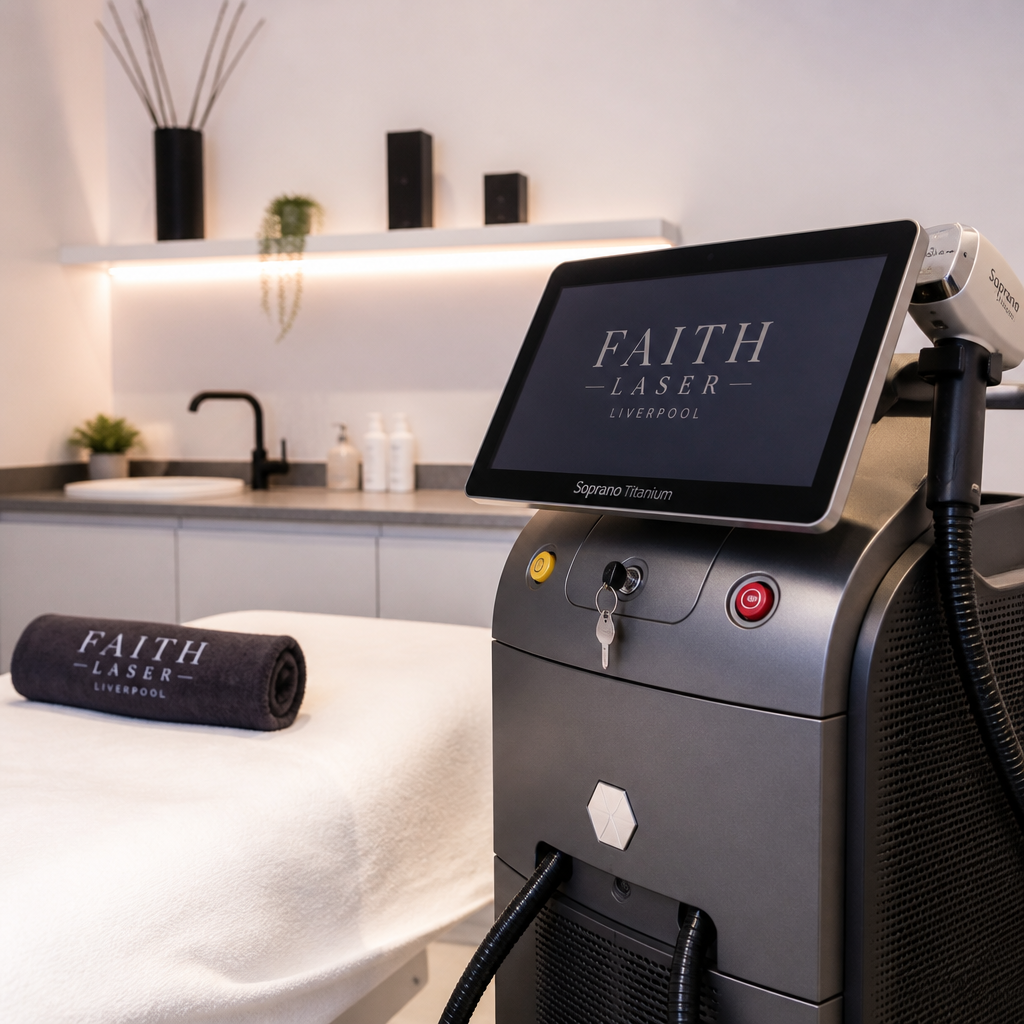
Laser Hair Removal Preparation: Your Complete Guide
Most people who walk into their first laser hair removal appointment have done exactly zero preparation. They show up with moisturiser on, a fresh tan from last weekend, and a complete mystery in their head about what actually happens next. The result? A delayed treatment, a rescheduled appointment, or worse, a poor outcome that could have been entirely avoided. Laser hair removal preparation is not complicated, but it does require deliberate action starting several weeks before you sit in the treatment chair. This guide covers everything you need to know, from the month before your session all the way through to the morning of your appointment, so you arrive at Faith Laser in Liverpool fully ready.
Table of Contents
- Quick Takeaways
- Why Preparation Matters More Than You Think
- What to Do in the Weeks Before Your Appointment
- Medications and Skincare Products to Pause
- The Day Before and the Day of Your Appointment
- How to Compare Preparation Approaches
- What to Expect During and After Your First Session
- Laser Hair Removal Tips Specific to Liverpool Clients
- Frequently Asked Questions
- References
Quick Takeaways
| Key Insight | Explanation |
|---|---|
| Stop waxing and plucking at least four weeks before | The laser targets the pigment inside the hair follicle. Waxing and plucking physically remove that follicle, leaving the laser with nothing to work with. Shaving is the only acceptable hair removal method during your treatment course. |
| Shave the treatment area 24 hours before your session | Shaving leaves the hair shaft just below the skin surface so the laser can accurately target the follicle without the exposed hair above absorbing energy that should go deeper. |
| Avoid sun exposure and tanning for at least two to four weeks prior | Tanned skin has elevated melanin, which causes the laser to treat the skin rather than the hair follicle. This significantly increases the risk of burns and pigmentation changes. |
| Arrive with clean, product-free skin | Moisturisers, deodorants, perfumes, and makeup interfere with laser contact and can cause adverse reactions. Shower beforehand but apply nothing to the treatment area afterwards. |
| Disclose all medications to your practitioner | Photosensitising medications, isotretinoin (Accutane), and topical retinoids all affect how safely your skin responds to laser energy. This is a clinical conversation, not a formality. |
| Wear loose, breathable clothing on the day | Tight fabric against freshly treated skin causes friction and irritation. Cotton clothing that does not press directly on the treated area is the right choice. |
| Book a patch test before your first full session | A patch test confirms your skin and hair type respond safely to the laser settings being used, and it is an essential step before any treatment area is treated in full. |
Why Preparation Matters More Than You Think
Laser hair removal works by delivering concentrated light energy into the hair follicle, targeting the melanin (pigment) that gives the hair its colour. The laser essentially damages the follicle enough to inhibit future growth without harming the surrounding skin. That precision depends entirely on the conditions being right at the time of treatment.
When the conditions are wrong, such as tanned skin, hair that has been waxed, or a product barrier sitting on the surface, the laser cannot do its job accurately. You do not simply get a less effective treatment. In some cases, you increase the real risk of burns, blistering, and hyperpigmentation. Preparation is what separates a smooth, effective session from one that causes more problems than it solves.
The good news is that none of the preparation steps require significant effort. What they do require is timing. Most of the critical actions happen in the two to four weeks before your appointment, not on the morning of it. Start early, and the day itself becomes straightforward.
The laser does not care about your intentions. It responds to the physical conditions of your skin on the day. Get those conditions right, and the treatment works as it should.
What to Do in the Weeks Before Your Appointment
Stop All Waxing, Plucking, and Epilation
This is the single most important rule, and it is the one most often broken by first-time clients. Waxing, plucking, epilating, and sugaring all work by pulling the hair out from the root. When you do this, you physically remove the part of the hair that the laser needs to target. There is no follicle pigment left for the laser to lock onto, so the treatment cannot work.
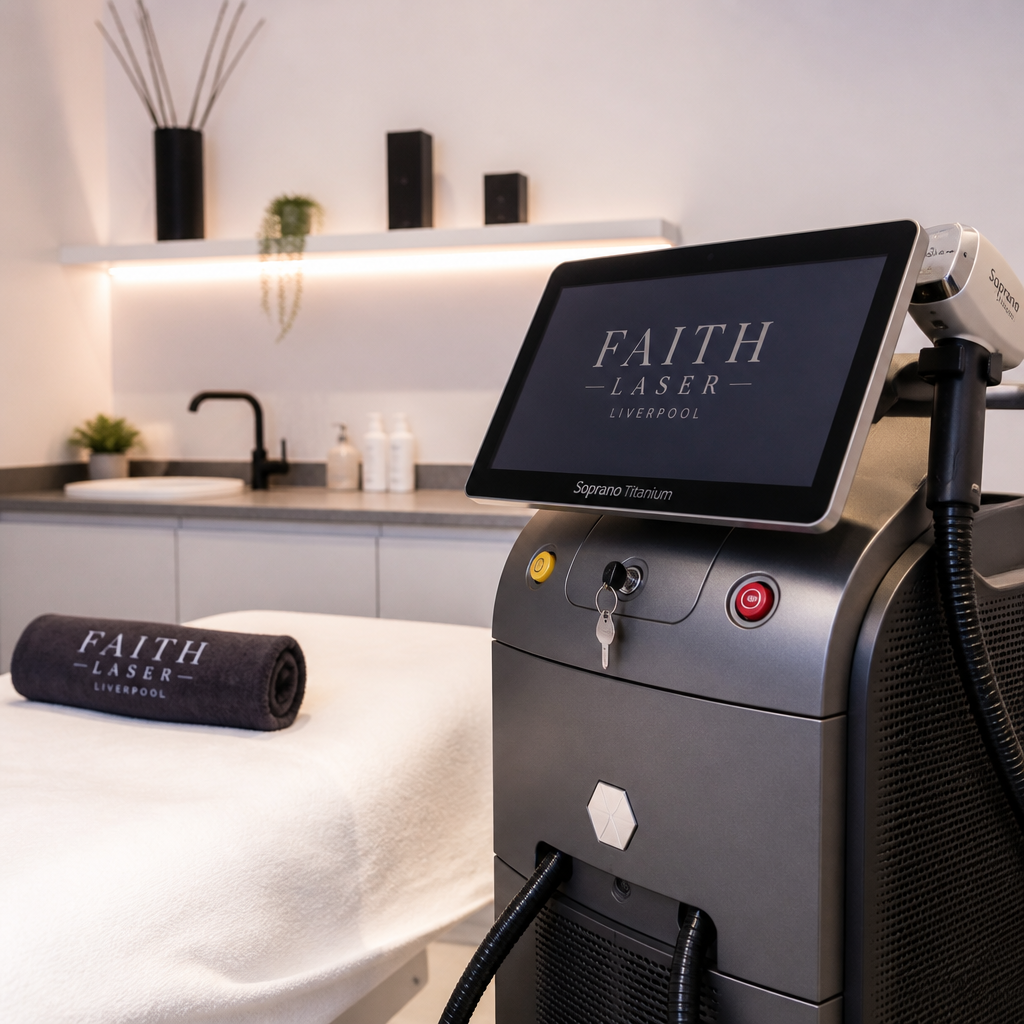
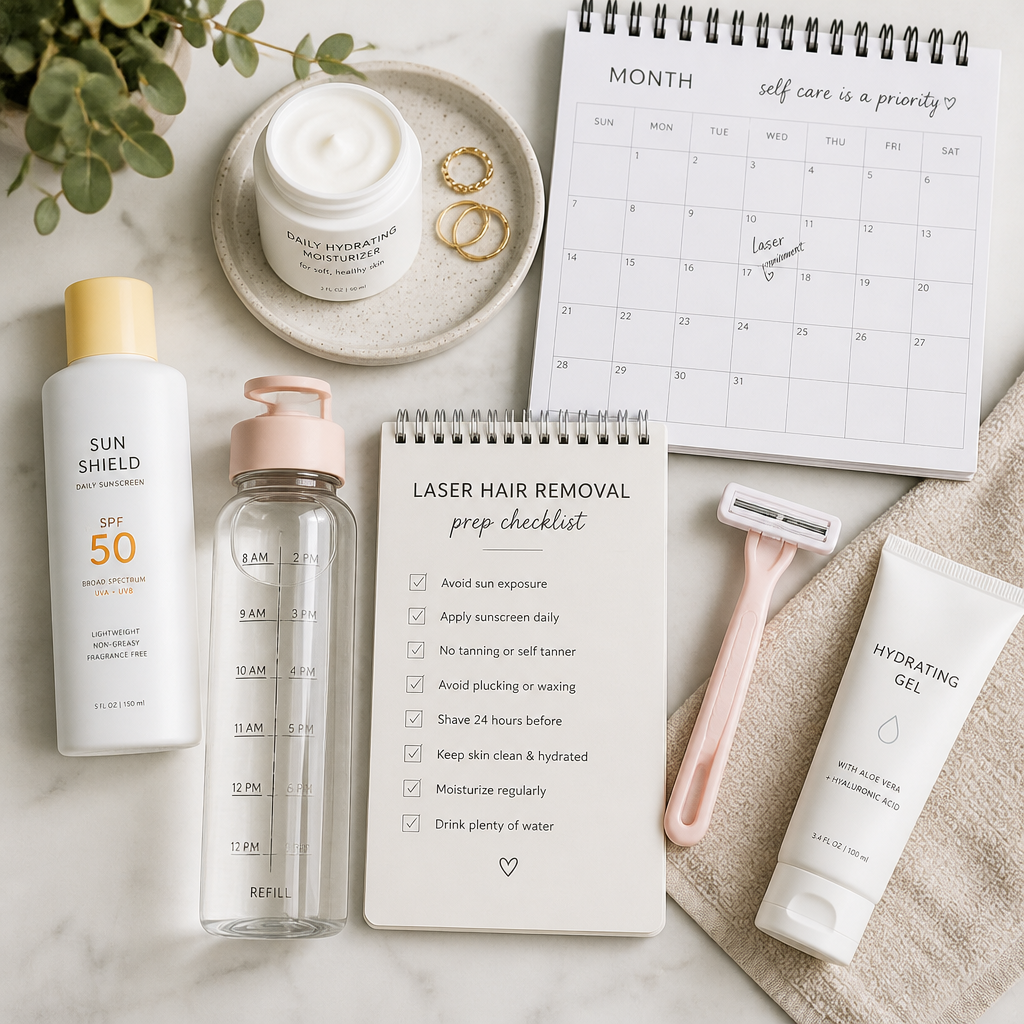
Stop all of these methods at least four weeks before your first session, and do not return to them between sessions. For the duration of your treatment course, shaving is your only option for managing hair between appointments. It keeps the follicle intact while removing the surface shaft, which is exactly what you need.
Protect Your Skin from the Sun
UV exposure raises the melanin content of your skin as a natural protective response. This is a problem for laser hair removal because the laser targets melanin. When skin melanin is elevated from sun exposure, the laser can confuse the skin itself for the hair follicle, which increases the risk of burns and uneven pigmentation changes.
Stay out of direct sunlight on the treatment area for at least two to four weeks before your appointment. That means sunbathing, sunbeds, and self-tanning products are all off the table. Use a high-SPF broad-spectrum sunscreen on any exposed skin if you cannot avoid being outside. Your skin should be at its natural, untanned baseline on the day of your session.
Pro tip: In a city like Liverpool, prolonged sun exposure is less of a daily concern than in sunnier climates, but summer months and holidays abroad can still affect your skin tone significantly. If you have recently returned from a beach holiday, wait at least two weeks before proceeding with treatment and always mention it to your practitioner at your consultation.
Book Your Consultation and Patch Test First
Before any full treatment begins, a consultation and patch test is an essential step. This is where your practitioner assesses your skin type, hair colour, and medical history to establish the correct laser settings for you. A patch test confirms that your skin responds safely to those settings before any larger area is treated.
Skipping the patch test is not a time-saving move. It is a risk that responsible clinics will not allow. At Faith Laser, the consultation process is built specifically around understanding your individual needs, which means the treatment you receive is calibrated to your skin, not a generic default.
Medications and Skincare Products to Pause
Certain medications alter how your skin responds to laser energy, and this is a topic that deserves a direct conversation with your practitioner, not a footnote on a consent form. The category to be most aware of is photosensitising medications, which increase the skin’s sensitivity to light and raise the risk of thermal injury, blistering, and pigmentation issues.
Medications That Require Attention
Isotretinoin (commonly known as Accutane) is an oral acne medication that makes skin significantly thinner and more fragile. The combination of isotretinoin and laser energy creates a genuine risk of scarring and delayed healing. The standard guidance is to stop isotretinoin at least six months before your first laser session. This is not a conservative precaution; it reflects the real clinical risk.
Topical retinoids such as Retin-A should be paused for at least one week before each session, as they sensitise the skin surface. Certain antibiotics, particularly those in the tetracycline class including doxycycline and minocycline, also increase photosensitivity. Some herbal supplements, St. John’s Wort being a notable one, carry a similar effect. Anti-inflammatory drugs and blood thinners may increase bruising risk and should be flagged to your practitioner.
Pro tip: Do not assume over-the-counter products are automatically safe. Skincare products containing retinol, salicylic acid, benzoyl peroxide, or hydroxy acids should be paused for several days before your appointment as they can sensitise the treatment area and increase the chance of irritation.
What Your Practitioner Needs to Know
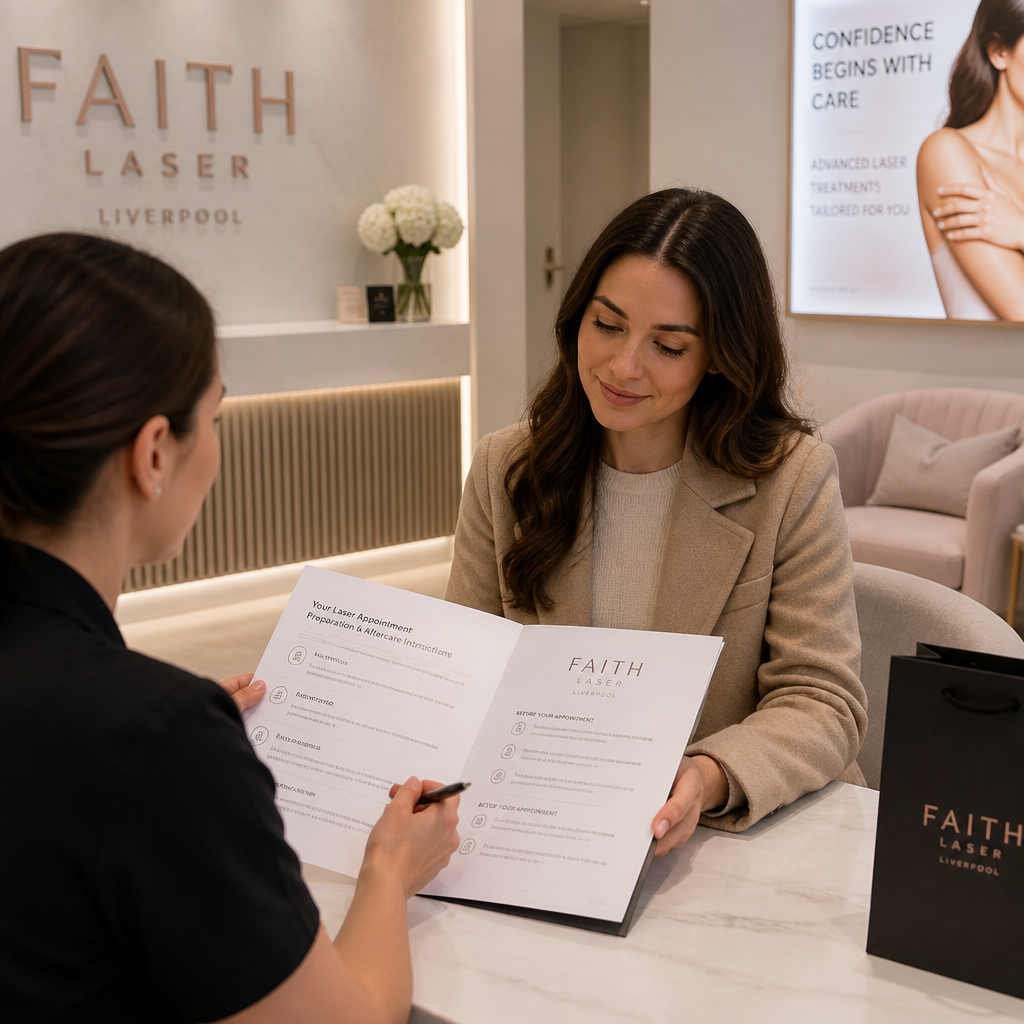
Bring a current list of every medication and supplement you are taking to your consultation. Most people on common medications can still undergo laser hair removal; the goal is not to disqualify you but to time and adjust your treatment correctly. Do not edit what you share based on what you assume matters. Let the practitioner make that call.
The Day Before and the Day of Your Appointment
Shave the Treatment Area
Shave the area you are having treated 24 hours before your appointment. Not the morning of, and certainly not the week before. Shaving 24 hours prior leaves a very short hair shaft beneath the skin surface, which allows the laser to target the follicle accurately without the exposed hair above absorbing energy that should be going deeper.
If you forget to shave, tell your practitioner when you arrive. Do not attempt to shave at the clinic in a hurry. Freshly shaved skin can be more irritated, and the practitioner will advise you on the best course of action.
Arrive with Clean, Product-Free Skin
Shower before your appointment and clean the treatment area with a gentle, fragrance-free cleanser. After showering, do not apply anything to the area being treated. That means no moisturiser, no deodorant (for underarm treatments), no perfume, no fake tan, no makeup if it is a facial treatment.
These products create a barrier on the skin that can interfere with the laser and, in some cases, cause an adverse reaction when combined with the heat generated by the treatment. Clean skin gives the laser direct, unobstructed access to the follicle.
Wear the Right Clothing
Choose loose, comfortable clothing made from breathable fabric such as cotton. After treatment, your skin may feel similar to mild sunburn, with some redness and sensitivity. Tight or synthetic clothing pressing against a freshly treated area will cause unnecessary friction and irritation. Think ahead: if you are having leg hair treated, do not wear skinny jeans to your appointment.
Avoid alcohol in excess the day before your appointment, as it dehydrates the skin and can make the procedure more uncomfortable. Well-hydrated skin tolerates the treatment more easily.
How to Compare Preparation Approaches
| Preparation Approach | What It Involves | Outcome for Your Treatment |
|---|---|---|
| Correct preparation (shave 24 hrs prior, no tan, no products, medications disclosed) | Deliberate steps taken 2-4 weeks in advance, shaving the day before, arriving with clean skin | Accurate laser targeting, reduced risk of adverse reactions, best results per session |
| Partial preparation (shaved but recently tanned or using active skincare) | Some steps followed but skin is tanned from sun or a self-tan product, or retinol still in use | Increased risk of burns and pigmentation changes, session may need to be delayed on arrival |
| No preparation (waxed recently, no shave, products on skin, unreported medications) | No pre-appointment steps taken, arriving with waxed or plucked hair and product-coated skin | Treatment cannot proceed effectively, risk of skin damage, session likely to be rescheduled |
What to Expect During and After Your First Session
A common misconception about laser hair removal is that one session produces dramatic permanent results. In reality, the American Academy of Dermatology notes that you can expect a reduction in hair of around 10 to 25 percent after a single treatment. This is because the laser is only effective on hairs in the active growth phase, and not all follicles are in that phase simultaneously. A full course of sessions is what delivers the cumulative, long-lasting reduction you are looking for.
During the treatment itself, most clients describe the sensation as a brief flick or snap against the skin. Modern laser systems used by clinics like Faith Laser incorporate cooling mechanisms to manage discomfort, making the experience significantly more tolerable than older systems. The session length depends entirely on the area being treated, with smaller areas like the upper lip taking only minutes and larger areas taking longer.
Immediately After Your Session
Some redness and mild swelling in the treated area is completely normal immediately after a session. This looks and feels similar to a mild sunburn and typically settles within 24 hours. Your practitioner will advise you on aftercare specific to the area treated, but the general principles are consistent: be gentle with your skin, avoid heat (saunas, hot baths, vigorous exercise) for 24 to 48 hours, and apply a gentle moisturiser or soothing lotion as directed.
Do not exfoliate, use active skincare products, or apply anything harsh to the treated area for at least 48 hours after your session. Sun protection on the treated area is essential after treatment, just as it is before. The skin is more vulnerable immediately following laser work, and unprotected sun exposure during this window significantly increases the risk of pigmentation changes.
Between sessions, you can shave freely. Do not return to waxing or plucking at any point during your treatment course. Some clients notice what feels like stubble pushing through in the weeks after a session; gentle exfoliation helps those treated hairs shed naturally rather than becoming trapped.
Laser Hair Removal Tips Specific to Liverpool Clients
Liverpool’s climate means prolonged intense sun exposure is not the daily challenge it might be in warmer regions. However, this does not make sun protection irrelevant. UV rays are present even on overcast days, and many Liverpool clients return from holidays in the Mediterranean or further afield with significantly more tanned skin than they arrived with. If this applies to you, be honest with your practitioner at your consultation and allow enough time for your tan to fully fade before beginning treatment.
The more practical Liverpool-specific consideration is how accessible and consistent your appointment schedule is. Laser hair removal works through a series of sessions spaced appropriately apart to catch each hair follicle in its active growth phase. Missing sessions or spacing them too far apart undermines the cumulative effect. Choosing a clinic close enough to your routine in the city that you can realistically keep every appointment is a decision that directly affects your results.
At Faith Laser, affordable packages are designed specifically so that completing the full course does not become a financial barrier. If you are comparing options, consider not just the per-session cost but whether the package structure makes consistent attendance realistic for you.
Pro tip: Ask your practitioner at your consultation to map out the realistic timeline for your specific treatment area. Some areas, such as underarms or intimate zones, follow a different session spacing than larger body areas. Knowing the schedule in advance means you can plan around it rather than trying to fit sessions in at irregular intervals.
Frequently Asked Questions
How far in advance should I stop waxing before laser hair removal?
Stop waxing, plucking, epilating, and sugaring at least four weeks before your first laser hair removal session. These methods remove the hair follicle from the root, which is exactly what the laser needs to target. From the point you book your treatment, switch to shaving only for any hair removal in the treatment area.
Can I shave the day of my laser hair removal appointment?
It is better to shave 24 hours before rather than on the morning of your appointment. Shaving the day before allows any minor irritation from the razor to calm down, while still leaving the hair shaft short enough at the follicle level for the laser to work accurately. If you forget to shave, tell your practitioner when you arrive rather than shaving immediately before your session.
Does a suntan really matter before laser hair removal?
Yes, it matters significantly. Tanned skin has elevated melanin levels as a protective response to UV exposure. Since laser hair removal targets melanin in the hair follicle, a tan increases the risk that the laser will affect the surrounding skin rather than just the follicle. This raises the risk of burns and uneven pigmentation. Clinics will often delay treatment on visibly tanned skin to protect your safety.
What products should I not apply before my appointment?
On the day of your appointment, do not apply any moisturiser, deodorant (for underarm treatments), perfume, self-tan, makeup, or active skincare products to the treatment area. In the days leading up to your session, pause any products containing retinol, salicylic acid, benzoyl peroxide, or hydroxy acids, as these sensitise the skin and increase the risk of irritation during treatment.
How many sessions will I need to see full results?
Most clients require a course of multiple sessions to achieve significant, lasting hair reduction. This is because the laser only affects hairs in the active growth phase, and follicles cycle through growth phases at different times. The exact number of sessions depends on the treatment area, your hair colour and thickness, and your skin type. Your practitioner at Faith Laser will give you a realistic expectation during your initial consultation.
Is laser hair removal painful, and does preparation affect discomfort?
Most clients describe the sensation as a brief snap or flick against the skin, which many find very tolerable. Preparation does affect comfort levels. Arriving with properly shaved, clean, untanned skin means the laser works efficiently and does not have to work harder to penetrate through barriers or tanned skin layers. Well-hydrated skin and avoiding alcohol in the 24 hours before your session can also reduce sensitivity during treatment.
Can I have laser hair removal if I am on medication?
Many people on medication can still undergo laser hair removal, but some medications, particularly photosensitising drugs, certain antibiotics, isotretinoin, and topical retinoids, require you to pause treatment or adjust the timing. Always disclose your full medication list at your consultation. The practitioner’s job is to advise you on what is safe, not to turn you away. Withholding medication information puts you at real risk of adverse effects that could have been prevented.
Have you already had your first laser hair removal session, or are you still deciding? Share your experience or question in the comments below.
References
- American Academy of Dermatology: Laser hair removal frequently asked questions, including what to expect from results and aftercare
- Preparation checklist for laser hair removal covering shaving, sun avoidance, and day-of skin care steps
- Seven beginner preparation tips for laser hair removal, covering waxing, sun exposure, and skin care product guidance
- Guide to medications that should be paused or disclosed before laser hair removal, including isotretinoin and photosensitising drugs
- Dos and don’ts before a laser hair removal procedure, including alcohol, Botox, and product advice