
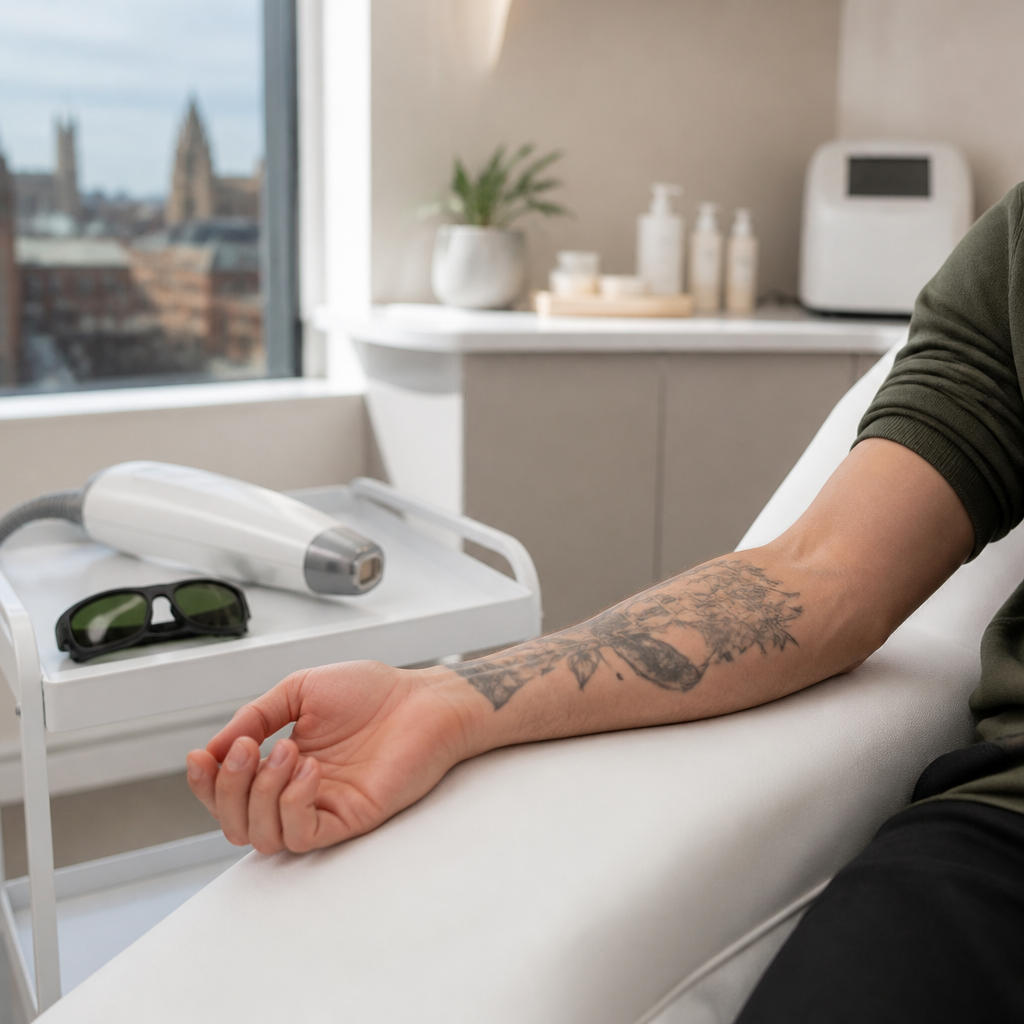
Tattoo Removal for Wedding Prep: Start Your Timeline Early
Most couples assume the dress, venue and flowers will be the hardest parts of wedding planning. Then a tattoo that seemed fine last year starts to clash with a strapless gown, or a name from an old relationship sits exactly where the bouquet will rest. Tattoo removal before a wedding is achievable, but the calendar is less forgiving than most people expect.
Laser treatment works in spaced sessions, and your body needs weeks to clear ink between each one. Start with eighteen months and you can choose freely. Start with six months and your options shrink fast. This guide shows you how to build a realistic tattoo removal wedding timeline, from counting sessions to planning the final weeks.
Table of Contents
- Quick Takeaways
- Why the Timeline Starts Earlier Than You Think
- Working Out Your Session Count
- How Ink Colour and Location Change the Schedule
- Fading or Full Removal: Choosing Your Goal
- Aftercare That Protects Your Timeline
- Building a Month-by-Month Plan
- Skin Prep and the Final Weeks
- Budgeting and Booking Your Consultation
- Frequently Asked Questions
- References
Quick Takeaways
| Key Insight | Explanation |
|---|---|
| Count backwards from your wedding date | Full removal usually takes 6 to 12 sessions spaced 6 to 8 weeks apart, so plan on 12 to 18 months from first session to finish. |
| Black ink is the quickest to clear | Black fades fastest, so a small black piece may need fewer sessions than a multicolour design. |
| Blues, greens and yellows slow things down | These colours can take longer to shift, so add two or more sessions to your estimate for coloured work. |
| Hands, feet and lower legs need extra buffer | Ink in these areas can clear more slowly because circulation is lower, so leave spare months in the schedule. |
| Under a year out, ask about fading | Fading needs fewer treatments and can lighten ink enough for professional makeup on the day. |
| Keep sessions spaced, not rushed | Gaps of 6 to 8 weeks are standard, and some practitioners allow up to 12 weeks, which gives the body more time to clear ink. |
Why the Timeline Starts Earlier Than You Think
In practice, the first question most brides ask us is how long the process will take. The honest answer is longer than the wedding planning calendar suggests. People come to us with reasons that vary, from the name of an ex to a back that will show on an open-back gown.
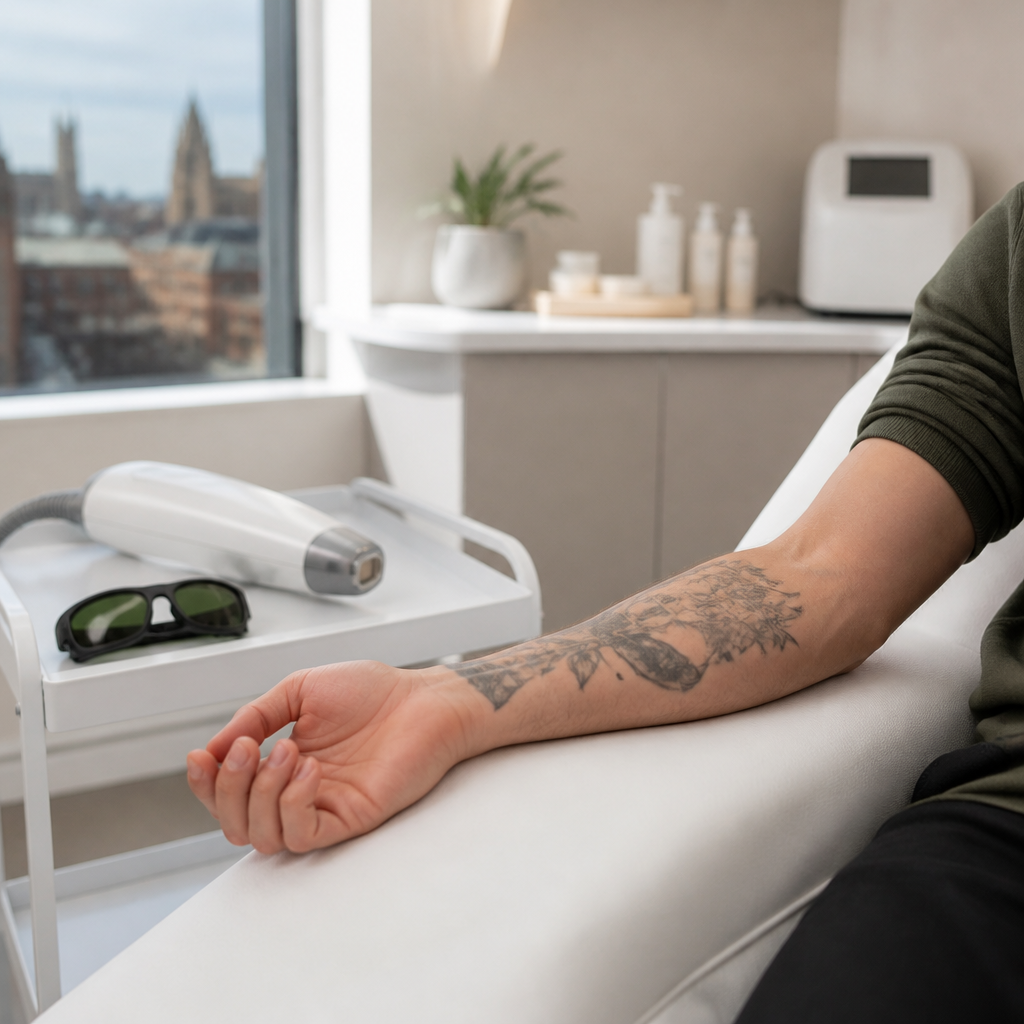
Laser treatment breaks tattoo ink into tiny particles, and your lymphatic system then clears them over several weeks. That clearing process cannot be sped up by booking extra sessions close together. The biology sets the pace, so your calendar has to work around it.
Many clients have already fixed a wedding date and a tattoo they have hidden for years. The ones who finish comfortably are usually those who booked a consultation early, sometimes before choosing a venue. Waiting until the invitations are printed leaves you choosing between a rushed course and a fading plan.
The best time to book a tattoo removal consultation is before you have chosen your dress, because the ink may shape what you can wear, not the other way round.
Pro tip: Book the consultation before you commit to a dress fitting. Once you know how many sessions the ink needs, you can decide on necklines and sleeves with real information.
Working Out Your Session Count
Full removal typically takes between 6 and 12 sessions, spaced 6 to 8 weeks apart. Some clinics and online discussions put the average closer to 10 to 12 treatments for a full piece. Your count depends on the size, depth and colour of the ink, so treat any single number as a starting estimate.
Why 6 to 12 sessions is the working range
A small black outline can clear in far fewer treatments than a large, densely packed colour piece. The range is wide because the ink itself varies so much. A realistic plan uses the upper end of the range until a clinician has assessed your tattoo in person.
The other reason for a wide range is response. Some skin clears ink efficiently, while other people need more passes. You will not know which group you belong to until you have had two or three treatments.
Counting backwards from your wedding date
Here is a simple calculation. Eight sessions spaced seven weeks apart means seven gaps, which adds up to about 49 weeks between the first and last treatment. That is more than eleven months before you even add healing time and a buffer for rescheduling.
Work backwards from the wedding date. Subtract two to three weeks for the final session to settle, then add a buffer of at least one month for missed appointments or a skin reaction that delays treatment. Only then count the sessions you need.
Online forums regularly feature people asking whether they can finish with ten months to go. Sometimes the answer is yes, but usually only with fading as the goal. Be honest with yourself about which outcome you are actually planning for.
How Ink Colour and Location Change the Schedule
Colour and placement are the two variables that most often push a wedding timeline off course. Black ink fades fastest, while blues, greens, reds and yellows can take considerably more time. Where the tattoo sits on your body also changes how quickly the body clears the ink.
Black ink versus colour
Black ink responds to laser energy more predictably than most colours. A black tattoo may lighten noticeably after just a few sessions. Coloured pieces, especially those with several shades, often need separate passes for each pigment.
In practice, a tattoo with black linework and light colour fills is common, and the linework usually clears first. This can give you a faded but visible image that still needs more work. Plan for the colour to be the last part to disappear.
If your design is mostly coloured, add at least two sessions to your estimate. It is better to be pleasantly surprised by an early finish than to panic in the final month. Ask for a small test area first if the clinician is unsure how a particular pigment will respond.
Hands, feet and lower legs
Ink on the hands, feet and lower legs can clear more slowly because circulation is lower in these areas. This is one of the most common reasons a timeline stretches beyond the original plan. A tattoo on the ankle may need noticeably longer than the same design on the upper arm.
Your general health matters too. The better your overall health, the more efficiently your body removes ink. Sleep, hydration and avoiding periods of illness all help the process run smoothly between sessions.
Pro tip: If your tattoo is on a lower limb and the wedding is less than 18 months away, consider ending your goal at fading rather than full removal. It is far easier to adjust the target early than to chase an unrealistic finish date.
Fading or Full Removal: Choosing Your Goal
Your goal decides your timeline more than anything else. Full removal means the tattoo is gone or nearly invisible in normal light. Fading means the ink is lightened enough that it no longer shows through a dress or can be covered with makeup on the day.
If your wedding is less than a year away, fading is usually the realistic choice. It requires fewer treatments and can finish within the time you have. Many brides decide on fading once they see how much time full removal would need.
The table below compares the three approaches we most often discuss with couples at the consultation stage.
| Approach | Typical Timeline | Best For |
|---|---|---|
| Full laser removal | 12 to 18 months from first session, with 6 to 12 sessions spaced 6 to 8 weeks apart | Brides with at least 18 months to spare who want the tattoo gone entirely |
| Laser fading | Fewer sessions than full removal, workable within the final year before the wedding | Brides who need ink light enough for professional makeup or a sheer dress |
| Professional camouflage on the day | No laser treatment needed, decided in the final weeks | Small, pale or simple tattoos that only need covering on the day |
Fading is not a consolation prize. For many people, a tattoo that is light enough to disappear under makeup in daylight achieves exactly what they wanted. Be clear with your clinician about whether you want invisibility in photos or complete removal.
A common mistake is choosing full removal, then spending the last two months wishing you had asked for fading earlier. Make the decision by the time you are about nine months out. That gives you enough room to switch approaches without rushing the final session.
Aftercare That Protects Your Timeline
Aftercare is not just about comfort. Poor aftercare can cause marks or irritation that delay the next session, and every delay pushes your wedding closer to the finish line. Simple habits between treatments keep the schedule on track.
Ask your clinician exactly what to avoid in the first 24 to 48 hours after each session. Heat from saunas, hot showers and intense workouts can irritate treated skin, so plan your gym sessions around your appointment dates.
Sun protection between sessions
Use SPF 30 or higher on treated skin and keep the area covered when you are outdoors. Sun exposure and tanning can change how the skin responds to the next treatment. Tanned or sun-damaged skin is also more likely to need extra care.
Avoid sunbeds completely during your course. This is especially important in the final months before the wedding, when a tan can make your skin look uneven in photos and complicate the last sessions.
Heat, sweat and picking
Do not pick or scratch the area after treatment, even when it itches. Picking can leave marks that look like residual ink and make it hard for a clinician to judge progress. Cool compresses are a better option for discomfort.
Keep the area out of hot baths and saunas for the first couple of days. If you are training, choose gentler sessions for a short period after each appointment. Small changes like these prevent setbacks that eat into a long timeline.
Pro tip: Set calendar reminders for your next session the day you leave the clinic, and note the date when you can resume exercise. Missed or late appointments are one of the most common reasons plans slip.
Building a Month-by-Month Plan
A written plan turns a vague wish into a schedule you can check. Divide your timeline into three phases, each with a clear job. The phases below assume full removal, so adjust them if you have chosen fading.
Twelve to eighteen months out
This is the window for full removal. Book your consultation, get a session count, and book your first treatment as soon as possible. Early sessions also show you how your skin responds, which helps you judge the remaining course with better information.
Use this phase to confirm your dress or outfit shape, but avoid final decisions on any design that depends on the tattoo being invisible. Keep a photo log of the tattoo at each session so you can see progress when the changes feel slow.
Six to twelve months out
By this stage you should know whether full removal is still realistic. If your tattoo has lightened well, continue with the planned spacing. If progress is slow, switch to fading now, while there is still time to meet the goal.
Book your last treatment with enough room to recover before the wedding. Ask your clinician whether one more session is likely, and build that into the plan rather than treating it as a surprise.
Under six months out
At this point, full removal is rarely possible for a large tattoo. Focus on finishing your existing course safely, then confirm your camouflage plan with your makeup artist. Do not start a new, rushed course close to the date, because the skin needs time to heal.
In practice, most of the stress in this phase comes from indecision. Settle the approach early, and the final months become about small adjustments rather than emergency decisions.
Skin Prep and the Final Weeks
The last few weeks before the wedding are about protecting skin that has been treated. Your goal is to arrive on the day with the tattoo looking as light as possible and the skin calm, even and healthy. This requires planning rather than last-minute treatments.
Keep your skin hydrated and avoid anything that might cause a flare-up, including new skincare products on the treated area. Test any makeup or camouflage product on a small patch well before the day, so you know how it looks in natural light.
Timing your last treatment
Try to finish your final laser session several weeks before the wedding. This gives the skin time to settle and lets you judge the result in normal light before you rely on it. A treatment in the final two weeks leaves little room for recovery or touch-ups.
If your last session falls too close to the date, ask whether a camouflage plan can cover the remaining ink. Many clinics can advise on this, and it is far better to know in advance than to discover a sore patch on the morning itself.
Talking to your makeup artist
Share the exact location and state of the tattoo with your makeup artist before the trial. Bring photos from a few weeks before the wedding, not only from the start of the course. This helps them choose a shade and coverage level that matches your real skin.
Ask them to test under the lighting of the venue if possible. Indoor evening light and outdoor daylight can make the same product look very different on the day.
Budgeting and Booking Your Consultation
Cost is one of the biggest concerns for couples who are already spending heavily on a wedding. A single session price tells you very little on its own. What matters is the estimated total for the full course, including any fading sessions you may need.
One US cost guide puts the per-session fee for laser tattoo removal in the range of $200 to $500, although UK pricing will differ and depends on the clinic and the tattoo. Use figures like this only as a rough sense of scale, and ask for a written estimate for your own design.
When you book a consultation with our team, bring the design, its age and the placement. The more detail you give, the more accurate the session count and budget will be.
Questions to ask at your consultation
Ask how many sessions your specific ink is likely to need, and how far apart they should be spaced. Ask what happens if a session is missed or delayed, and whether fading can be used as a fallback if progress is slower than expected.
Also ask how the team will record progress. Photos taken at each visit, in consistent lighting, are the clearest way to judge whether your timeline is working.
Budgeting for the full course
Build your budget around the upper end of the session range, not the lower one. If you finish early, the money you saved can go elsewhere in the wedding. If you need every session, you will be glad you planned for it.
Pro tip: Ask for the total estimated cost of the course in writing, including the number of sessions and the spacing between them. A written estimate makes it much easier to compare options and avoid surprises halfway through.
Frequently Asked Questions
How long before my wedding should I start tattoo removal?
For full removal, plan on starting 12 to 18 months before the wedding, since the course usually takes 6 to 12 sessions spaced 6 to 8 weeks apart. If your wedding is less than a year away, fading is often the more realistic goal.
Can I fully remove a tattoo in a few months?
For most tattoos, complete removal in only a few months is not realistic because the body needs weeks between sessions to clear the ink. Fading or professional camouflage are more practical options for a short timeline.
Does the colour of my tattoo change the timeline?
Yes. Black ink usually fades fastest, while blues, greens, reds and yellows can take longer. If your design is mostly coloured, add at least two sessions to your estimate.
Will the tattoo be invisible in my wedding photos?
Not always, and it depends on your goal. Fading can make ink light enough for makeup to cover, but complete invisibility is not guaranteed. A test with your makeup artist under the venue lighting is the best way to check.
Should I avoid the sun before my wedding?
Yes. Use SPF 30 or higher on treated skin, keep the area covered outdoors, and avoid sunbeds and tanning throughout the course. A tan can change how the skin responds to treatment and make your skin look uneven in photos.
Did you plan tattoo removal around a wedding date, and how long did your course take? We would love to hear about your experience in the comments.