Shoulder Laser Hair Removal Liverpool: Women’s Guide
Shoulders and décolletage are the areas women ask about most often and the ones they tend to leave until last. The skin is thin, the hair is often fine and scattered, and the angles make self-shaving awkward. Many clients shave for years and still see stubble by the next morning, or they wax and deal with ingrown hairs along the neckline. Laser hair removal can solve much of that, but only if the plan matches how hair actually grows in these zones. Here is how we approach shoulder laser hair removal in Liverpool, what to expect in décolletage sessions, and where people usually go wrong.
Table of Contents
- Quick Takeaways
- Why Shoulders and Décolletage Behave Differently
- Shoulder Laser Hair Removal in Liverpool: What a Session Looks Like
- Décolletage Treatment: Sun Damage, Pigment and Fine Hair
- Comparing Laser, Waxing and Shaving on the Upper Body
- Preparing Your Skin and Aftercare
- Common Mistakes That Stall Results
- Frequently Asked Questions
- References
Quick Takeaways
| Key Insight | Explanation |
|---|---|
| Fine, pale shoulder hair is harder to target | Lasers work by absorbing into pigment in the hair. Fine or light hair gives the laser less to grab, so it often needs higher settings or more sessions. |
| Recent tanning changes your session date | Tanned skin on the chest or shoulders can be treated at a lower setting or postponed. Book your first session when you are not planning a long stretch outdoors. |
| Expect a course, not a single visit | Hair grows in cycles, and only hairs in the active growth phase respond. Plan for several sessions spaced weeks apart. |
| Shave the day before, never wax in between | Shaving before treatment is fine. Waxing or plucking removes the root the laser needs, so it resets progress on the area. |
| Décolletage skin needs gentler settings | The upper chest is thin and reactive, and existing sun spots can darken under high energy. Settings should follow your skin tone, not just your hair colour. |
| Photograph the area before you start | Take photos in the same light before the first session and after each one. It is the most honest way to judge progress on hard-to-see areas like the back of the shoulders. |
Why Shoulders and Décolletage Behave Differently
Most women we see at our Liverpool clinic have already tried something on the shoulders or chest. Usually it was a razor that left stubble by the next day, or a wax that pulled up ingrown hairs along the neckline. The problem is rarely effort. These two areas simply behave differently from the legs or underarms, and a plan built for one often underperforms on the other.
Thin skin and fine hair
The skin across the upper chest is noticeably thinner than skin on the back or thighs, and it reacts faster to heat and friction. The hair is often a mix of fine, light strands and a few darker, coarser ones. WebMD notes that lasers can selectively target dark, coarse hairs while leaving the surrounding skin undamaged, which is why contrast matters so much here. A fine, pale hair gives the laser very little to work with, so we test settings carefully before committing to a full course.
Awkward angles and self-shaving
The back of the shoulders is the classic problem area. Most women cannot see it properly, and a razor used by feel tends to leave patchy regrowth and small nicks. Across a whole course, this matters. Clients who cannot maintain the area between sessions often assume the laser has failed, when the real issue is untreated hairs growing back in patches. Consistent coverage across the whole zone, including the hard-to-reach strip, is the difference between a neat result and an uneven one.
Shoulder Laser Hair Removal in Liverpool: What a Session Looks Like
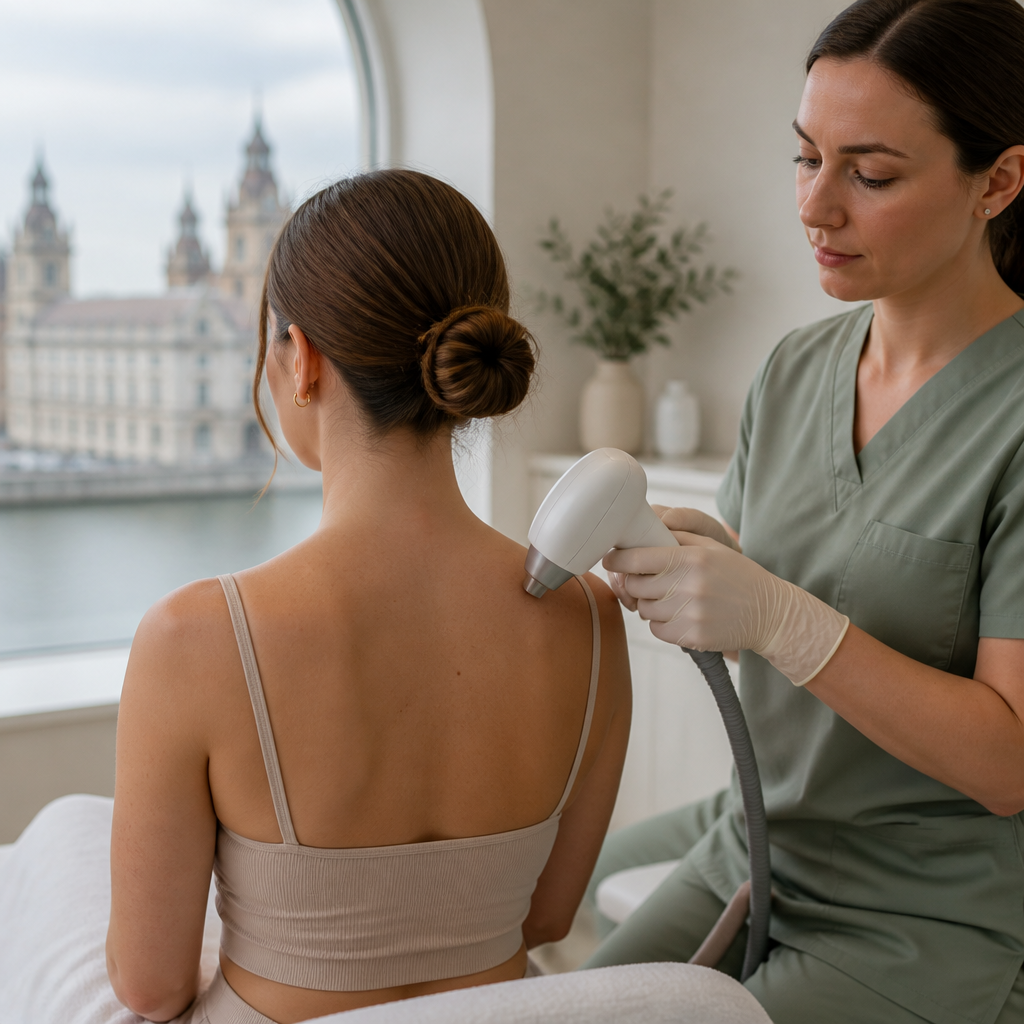
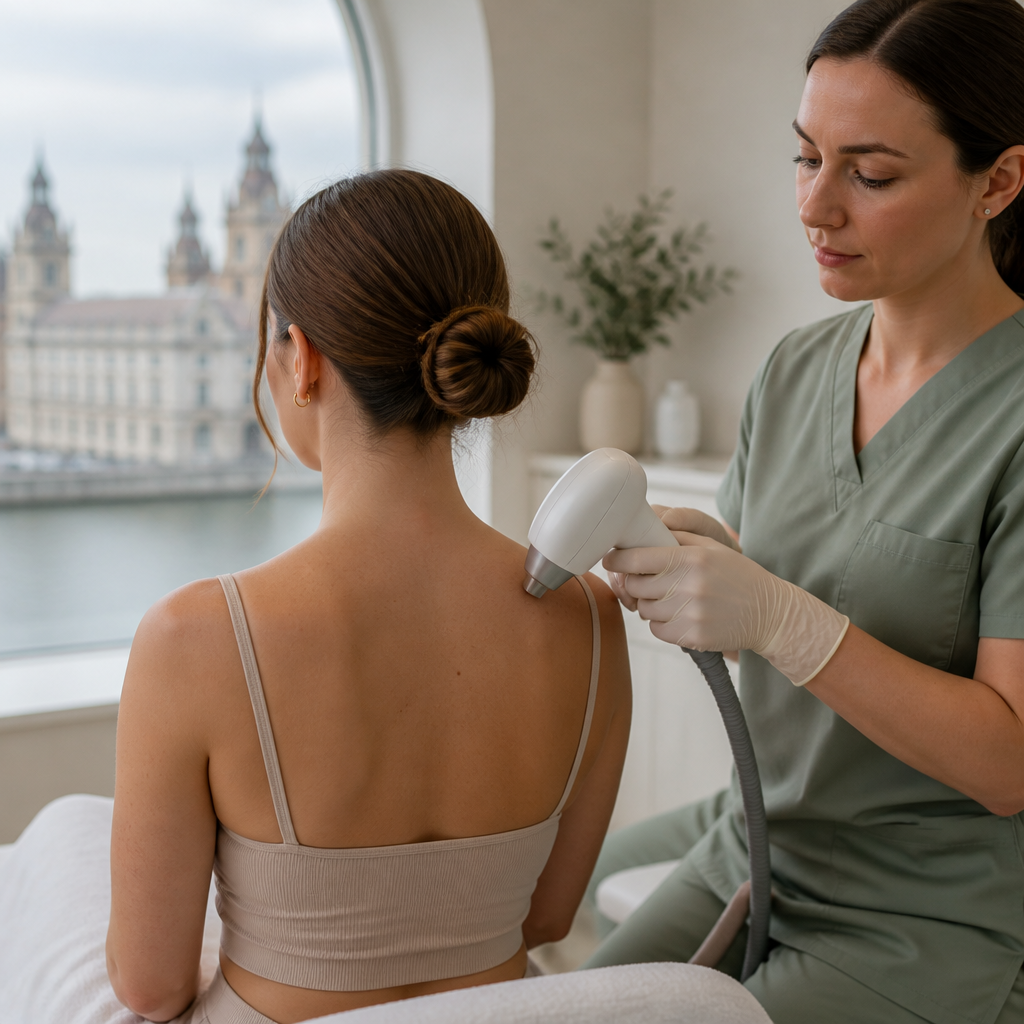
A shoulder session is shorter than most people expect, but the planning before it takes longer. We start with a consultation, check your skin type, hair colour and recent sun exposure, and agree on the exact boundaries of the treatment. For shoulder laser hair removal, those boundaries matter because the top of the shoulder and the strap line of a dress or top rarely line up neatly.
Mapping the treatment area
Before the first pulse, we mark the area and photograph it in the same light we will use for later sessions. That step sounds like admin, but it is how you see progress honestly. Shoulder hair often grows in a recognisable pattern, with the densest growth near the top edge and finer strands thinning toward the back. Working from a map keeps coverage even, so you do not end up with a treated patch beside an untreated one.
Pain, cooling and energy settings
Most clients describe a quick snap, like a flick of an elastic band, and many rate the shoulders as one of the more comfortable areas. Tolerance varies, though, and cooling during each pulse reduces discomfort and protects the skin surface. We adjust energy for your skin tone as well as your hair colour, because a setting that suits pale skin can cause pigment changes on deeper tones. In practice, we would rather run a slightly lower setting for an extra session than push harder and create a mark you have to manage for months.
Pro tip: Book your first shoulder session for a week when you are not planning a beach holiday or a long stretch outdoors. Even a light tan changes how we set the energy, and it can push your course back by a session or two.
Décolletage Treatment: Sun Damage, Pigment and Fine Hair
The décolletage is where sun history shows. Years of unprotected exposure leave pigmentation, fine lines and uneven tone that a laser alone will not correct. That is why many clients come to us for décolletage laser hair removal and ask about pigment at the same time. The treatment is gentle when it is planned around the skin, not only the hair.
Setting energy for pigmented skin
Skin with existing sun spots or a previous tan reacts differently to laser energy. Too much energy in these cases can trigger temporary darkening that takes weeks to fade. We use lower settings and extra passes where needed, and we would rather finish the course over a few more visits than rush to a result that leaves marks. A patch test on a small area a few days before the first full session is a sensible check, and it is one we recommend to every client with visible sun damage.
Hair along the neckline
The neckline is where coarse and fine hairs sit side by side. Coarser hairs respond quickly, while finer hairs take longer and may need more sessions. Clients usually see the centre of the chest clear first, and the edges of the neckline catch up later. Be realistic about the fringe of very fine hair. The laser clears the bulk of the coverage, and the finest strands often need one or two extra visits.
On the chest, pigment and hair are two separate problems, and a plan that treats only one of them usually disappoints.
Comparing Laser, Waxing and Shaving on the Upper Body
Every method has a place on the upper body, but they do not perform equally. Shaving is quick and needs no appointment, but on the shoulders and chest it has to be repeated every day or two, and it can irritate sensitive skin. Waxing lasts longer per visit, yet thin chest skin is prone to redness and ingrown hairs, especially with fine or curly hair. Laser asks more of your time upfront, but it reduces regrowth steadily across a course.
Much of the published work uses the underarm as its test site rather than the shoulders or chest. One bilateral axilla study compared three firing modes and reported mean hair clearance of 81 to 86 percent. That is useful context, but it does not tell you exactly what your shoulders will do. Treat such figures as a benchmark, and expect your own results to vary with hair colour and skin tone.

| Approach | How it performs on shoulders and décolletage | Main drawback |
|---|---|---|
| Laser hair removal | Reduces regrowth over a course, gives a cleaner neckline, and avoids the ingrown hairs common with waxing | Needs several sessions, and results depend on the contrast between hair and skin |
| Waxing | Fast, with smooth skin lasting a few weeks, but can be harsh on thin chest skin | Redness and ingrown hairs, particularly along the neckline |
| Shaving | Quick and flexible for the back of the shoulders, with no appointment needed | Regrowth within a day or two, and frequent irritation |
If you have tried electrolysis before, the comparison is different again. Cleveland Clinic lists fewer treatments, less pain and reduced ingrown hairs as benefits of laser over electrolysis. In our experience, clients notice the difference most on the neckline, where regrowth from older methods is hardest to hide.
Preparing Your Skin and Aftercare
Preparation is simple, but clients skip it more than any other step. In the two weeks before a session, avoid self-tanning products and keep the area out of strong sun. Tell your practitioner about any medication or skincare active that makes your skin more reactive, such as retinoids, because these change how the skin responds to energy.
Before your first session
Shave the area the day before, not earlier, so the laser can reach the follicle. Do not wax, thread or pluck in the weeks before, because the laser needs the hair root. Arrive with clean skin, free of moisturiser, perfume or oil, so the cooling and energy transfer work properly.
The first 48 hours after treatment
Expect mild redness and a warm feeling that usually settles within hours. Avoid hot baths, saunas and heavy workouts for a day or two, since sweating on fresh skin can irritate it. Apply sunscreen every day, because treated skin is more vulnerable to the sun. Hair shedding over the following weeks is normal and does not mean the treatment has stopped working.
Pro tip: Pack a loose top with a wide neckline for your appointment. Anything that rubs against the treated area on the first day can irritate it, and a soft fabric makes the first 24 hours far more comfortable.
Common Mistakes That Stall Results
Most disappointing courses come down to a handful of avoidable habits. The three below cause most of the stalled results we see in our own clients, and each one is easy to fix once it has been named.

Waxing between sessions
Waxing pulls out the root, so the laser has nothing to target at the next visit. Clients who wax the back of the shoulders between sessions often feel the treatment has failed, when the area is simply being reset. If you need smooth skin between visits, shave instead, and keep it to a minimum.
Skipping the patch test
A patch test shows how your skin reacts to the chosen settings before a full session. Clients who skip it are the ones most likely to need a rescue plan for pigment changes on the chest. It takes only a few minutes, and it saves a lot of frustration if your skin is more reactive than expected.
Booking sessions too far apart
Hair grows in cycles, and only hairs in the active growth phase respond to the laser. Spacing sessions too widely means more hairs cycle out of reach between visits, so the course drags on. Keep to the schedule we set, and only stretch it when skin condition or sun exposure makes a delay necessary.
Frequently Asked Questions
Is laser hair removal safe on the shoulders and décolletage?
For most skin types it is safe when a trained practitioner sets the energy for your skin tone and hair colour. The main risks on the chest are temporary pigment changes and irritation, and both are far less likely when a patch test comes first.
How many sessions will I need for my shoulders?
Most courses need several sessions spaced weeks apart. Fine or pale hair usually takes more visits than dark, coarse hair, and the back of the shoulders can take longer to clear fully than the front.
Does laser work on grey, white or very light blonde hair?
Laser needs pigment in the hair to absorb its energy, so grey and white hair responds poorly. Very light blonde hair can respond, but usually needs higher settings and more sessions, so a consultation is the best place to check.
Can I book décolletage treatment if I have a tan?
Usually not straight away. Wait until the tan has faded, avoid sun on the area before and after treatment, and let the skin settle. Treating tanned skin at a high setting risks pigment changes that can take weeks to fade.
Will the hair grow back after laser treatment?
Laser reduces regrowth substantially, but it rarely removes every hair permanently. Occasional maintenance sessions are common, particularly after hormonal changes that can alter hair growth on the chest and shoulders.
What has your experience been with shoulder or chest laser hair removal, and what would you tell someone booking their first session?