

Tattoo Removal on Dark Skin in Liverpool: Honest Guide
If you have darker skin and a tattoo you want gone, you have probably heard two extremes: that laser removal is unsafe for you, or that it works exactly the same way for everyone. Neither is right. Laser tattoo removal on darker skin is well established, but the settings, the pacing and the aftercare all have to change, because melanin, the pigment that gives skin its colour, absorbs laser energy along with the ink. This guide covers how that plays out for anyone looking for tattoo removal on dark skin in Liverpool, what results are realistic, and what to check before you book.
Table of Contents
- Quick Takeaways
- Why Dark Skin Changes the Treatment Plan
- Realistic Expectations for Fading
- Laser Approaches Compared
- Spacing Sessions and Aftercare
- Side Effects to Watch For
- Choosing a Liverpool Clinic
- Frequently Asked Questions
- References
Quick Takeaways
| Key Insight | Explanation |
|---|---|
| Melanin absorbs laser energy | Your skin pigment competes with the ink, so energy levels must be set more carefully than they would be on lighter skin. |
| Ask about skin type scoring | A proper consultation records your Fitzpatrick skin type and sets the treatment parameters from it, not from a generic template. |
| Expect more sessions | Darker skin usually needs slower, more cautious sessions, so the full course can take longer than the figures quoted for lighter skin. |
| Space sessions properly | Giving skin several weeks to recover between treatments lowers the risk of lasting pigment change. Rushing is the most common mistake. |
| Test before committing | A small test spot shows how your skin responds to the energy before a full session is booked. |
| Treat aftercare as part of the job | Sun protection, no picking at scabs and keeping the area clean affect the final result as much as the laser does. |
Why Dark Skin Changes the Treatment Plan
Laser tattoo removal works by sending short pulses of light into the skin. The ink particles absorb that energy, heat up and break apart, and the body clears the fragments over the following weeks. The problem is that melanin in the surrounding skin also absorbs some of the light. On darker skin there is more melanin in the upper layers, so more of the energy can be taken up in the wrong place.

In practice, this means the same laser setting that works well on pale skin can cause problems on deeper skin tones. The most common issues are temporary darkening of the skin, which clinicians call post-inflammatory hyperpigmentation, and in rarer cases lightening of the skin. Both are avoidable when the treatment is planned around the skin rather than around the tattoo alone.
Melanin and laser energy
Think of the laser as having a target. For a tattoo, the target is the ink. For darker skin, the melanin around the ink is a second target that the laser cannot completely ignore. A good practitioner reduces the energy delivered per pulse, adjusts the spot size and watches the skin closely during each pass. That is slower work, and it is the reason a rushed session is a bad sign.
The Fitzpatrick scale in practice
The Fitzpatrick scale is a numbered classification of skin type based on how the skin reacts to sun exposure and how much melanin it contains. Reputable providers use it to choose settings, not as a label to be ticked off. At Faith Laser in Liverpool, the scale is the starting point for every consultation, and we record it alongside the colours and age of the tattoo so the plan is specific to you.
Skin tone does not decide whether a tattoo can be removed. It decides how carefully the energy has to be delivered.
Pro tip: Bring any photos of the tattoo from when it was first done, plus a list of any previous treatments or skin conditions. Both help the clinician judge how the skin is likely to respond.
Realistic Expectations for Fading
Most people want a clear answer about how many sessions they will need and how quickly the tattoo will fade. The honest answer is that it depends on the ink, the depth of the tattoo and how your skin responds, but you can still set a realistic plan from the start. Anyone who promises a fixed number of sessions without seeing the tattoo is guessing.
On darker skin, the pace is usually slower and more deliberate. That does not mean the result is worse. It means the clinician is protecting the skin while still working toward a clear, cleaner outcome. Expect the first session to show less change than you hoped, and judge progress across several treatments rather than after one.
How many sessions to plan for
For many clients with darker skin, a course runs to several sessions spaced weeks apart. Smaller, simpler designs with dark ink often clear faster than large, layered pieces. Tattoos that have been touched up or reworked over the years can take longer because the ink sits at different depths. A consultation should give you a rough range, along with the reasons behind it.
Which tattoos fade slowest
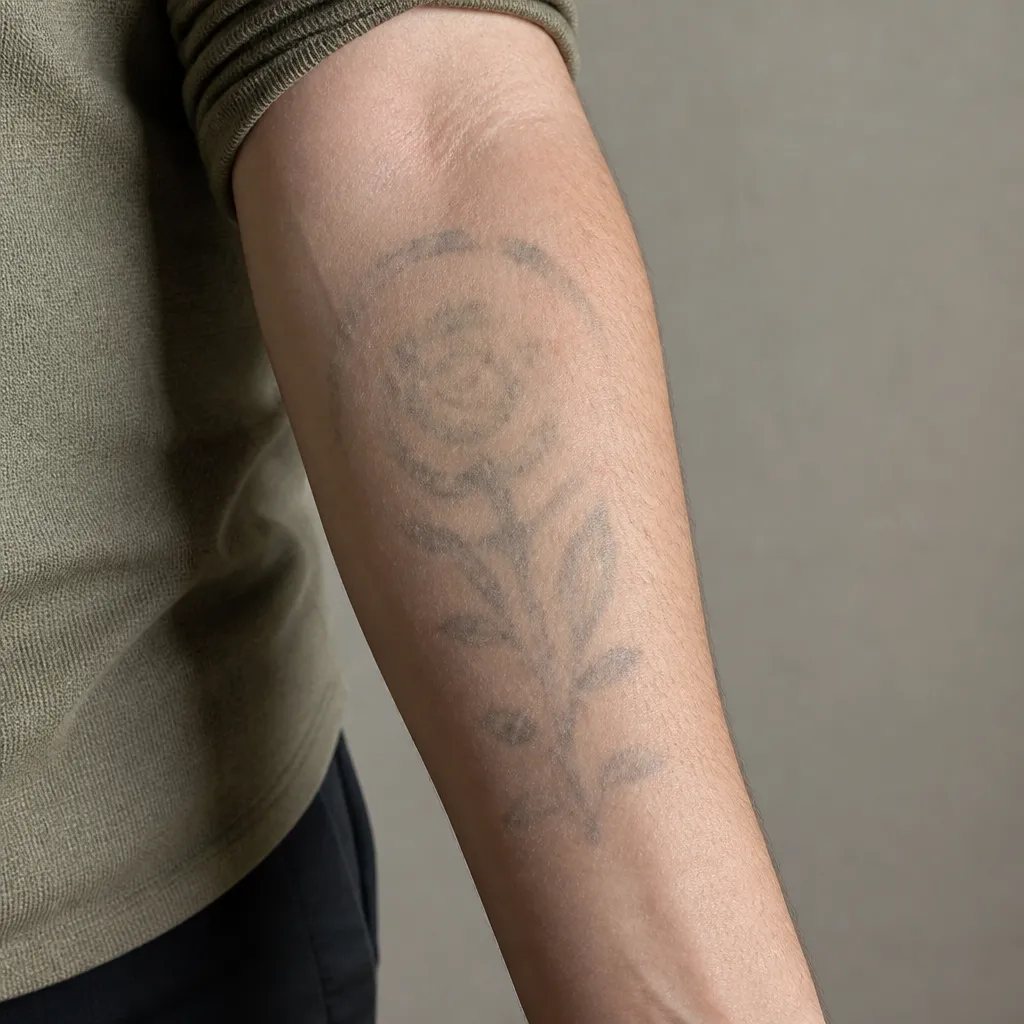
Some inks are harder to shift than others. Green, blue and some lighter shades can be stubborn, and multi-coloured designs need more than one approach because each colour responds to a different wavelength. Black and dark blue usually respond best. If your tattoo has several colours, ask whether each colour can be treated, and what result is realistic for the lighter shades.
Laser Approaches Compared
Not all laser systems handle darker skin in the same way, and the difference matters more here than on lighter skin. Three approaches come up most often when clients ask about treatment for darker skin. The right one depends on your skin type, the ink and how much recovery time you can realistically allow.
| Approach | Best suited to | Main trade-off |
|---|---|---|
| Picosecond 1064nm laser | Darker skin and mixed or stubborn inks where pigment change is a concern | Sessions can be slower to deliver, and results still need several visits |
| Nanosecond Q-switched laser | Older treatments and some lighter-skin cases where the clinic has tested it carefully | Higher thermal load on the surrounding skin, which raises the risk of pigment change on darker tones |
| Staged low-energy plan with test spot | First-time clients with darker skin who want a cautious start | Slower progress in the early sessions, but a clearer picture of how your skin behaves |
In our experience, the most reliable results come from combining the right wavelength with a staged plan. A longer wavelength reaches the ink while spending less energy in the outer layers of skin. A staged plan then lets the clinician adjust the next session based on how the previous one healed.
Spacing Sessions and Aftercare
The gap between sessions is one of the most important decisions in the whole course, and it is the one clients most often try to shorten. Skin needs time to recover from each treatment, and darker skin generally needs longer than lighter skin. A common rule in practice is at least six to eight weeks between sessions, with longer gaps for large or stubborn tattoos.
Why the gap between sessions matters
When you rush the schedule, the skin is still inflamed when the next pulse arrives. That is when pigment changes are most likely to become lasting. Patience is not a sales tactic here. It is what allows the skin to settle so the next session can be delivered at a sensible level.
Aftercare in the first two weeks
Keep the treated area clean and covered when you are outdoors, and use a sunscreen with a high protection factor once it has healed. Avoid picking scabs, even when the area itches, because picking can leave marks that look far worse than the original tattoo. Hot baths, heavy sweating and tight clothing rubbing on the area can also slow healing, so plan around them where you can.
Pro tip: Take a dated photo of the tattoo in the same light before each session. It is the easiest way to see real progress, and it helps the clinician spot any change in the skin early.
Side Effects to Watch For
Laser tattoo removal is generally safe for darker skin when it is planned and delivered properly, but it is not risk free. Knowing the possible side effects helps you recognise a normal reaction from one that needs attention. Most reactions are temporary, but the ones that are not tend to come from rushed sessions or inexperienced treatment.
Hyperpigmentation
Hyperpigmentation is the darkening of the skin after treatment. It is the most common concern for darker skin tones and is usually temporary, fading over several months. It is more likely when energy levels are too high or sessions are too close together. If you notice dark patches that spread or do not settle, tell your clinic straight away rather than waiting for the next appointment.
Hypopigmentation
Hypopigmentation is lightening of the skin in the treated area, and it can occur on any skin tone. Most cases are temporary, but a small number can be more lasting and leave a pale outline of the original design. In our view, the best protection is a conservative first session and a clinician who adjusts the settings based on how the skin reacts.
Scarring and raised tissue
Raised scar tissue, sometimes called a keloid, can develop around the treatment area in people who are prone to it. A keloid is not something a clinic can guarantee to avoid, which is why your consultation should ask about any history of raised scarring. If you have a history of keloids, say so before the first session, not after.
Choosing a Liverpool Clinic
Choosing where to have your tattoo removed is the decision that shapes everything else. A clinic that is comfortable talking about skin type, patch testing and session spacing is usually one that will handle darker skin well. You can read more about our approach at faithlaser.co.uk, but the questions below will help you judge any provider, including us.
Questions to ask at the consultation
Ask how the clinic records skin type and what settings they would start with on your skin. Ask whether they offer a test spot before the first full session, and how many sessions they expect for your specific tattoo. A clear, specific answer is a good sign. A vague answer, or one that promises results without seeing the tattoo, is a warning sign.
Red flags to avoid
Be wary of any provider who says skin tone makes no difference, who wants to book a full course on the first visit, or who will not explain how they adjust energy levels for darker skin. Also be cautious of anyone who pushes sessions closer together to speed up the price per treatment. The cheapest package is not a bargain if it leaves you with pigment damage to treat.
Pro tip: Ask to see examples of tattoos treated on skin similar to yours. Most clinics can show this, and a clinic that cannot should explain why not.
Frequently Asked Questions
Is laser tattoo removal safe for dark skin?
Yes, when it is performed by trained practitioners who adjust the settings for darker skin. The main risks are temporary darkening or lightening of the skin, and they are reduced by careful energy levels, a test spot and proper spacing between sessions.
Will my tattoo fade as quickly on darker skin?
Usually not as quickly, because the treatment needs to be more cautious. The tattoo can still fade well, but you should expect a slower pace and a course of several sessions rather than a quick result.
Do all tattoo colours respond to laser treatment?
No. Black and dark blue inks generally respond best, while some greens, blues and lighter shades can be harder to remove. Multi-coloured tattoos may need a tailored plan for each colour.
How long should I wait between sessions?
In practice, most darker skin needs at least six to eight weeks between sessions, and longer for large or stubborn tattoos. Your clinician should set the interval based on how your skin healed after the last treatment.
What should I do if I notice dark or light patches after treatment?
Contact your clinic as soon as possible rather than waiting for your next appointment. Many pigment changes settle over time, but early assessment helps the clinician decide whether the next session should be adjusted or paused.
Have you had a tattoo removed on darker skin, or are you thinking about starting? We would like to hear about your experience, including what you wish you had known before your first session.