
Tattoo Removal Liverpool and Your Immune System Response
Most people who book tattoo removal in Liverpool expect the laser to do all the work. It doesn’t. The laser only breaks ink into fragments, and the finishing job falls to your immune system, which has to find, carry, and clear those fragments out of the skin over the following weeks. That is why two people with identical tattoos can fade at very different speeds, and why aftercare matters more than many people expect. In this guide, we explain how tattoo removal works at the cellular level, what the research says about immune response, and which habits genuinely help your body finish what the laser starts.
Table of Contents
- Quick Takeaways
- How Tattoo Removal Works: Ink, Laser, and Your Immune Cells
- Macrophages: The Cells That Carry Your Ink
- Why Immune Response Varies From Person to Person
- What Speeds Up Clearance After Each Session
- Comparing Laser Approaches
- Mistakes That Slow Immune Clearance
- What to Expect at Your Consultation
- Research Frontiers: Targeting Immune Cells Directly
- Frequently Asked Questions
- References
Quick Takeaways
| Key Insight | Explanation |
|---|---|
| Lasers fragment ink, they do not remove it | Each pulse breaks pigment into smaller particles. Your immune cells carry those fragments away over the weeks after each session. |
| Ink lives inside immune cells | Macrophages swallow pigment, die, and release it for the next macrophage to collect. This recycling is why tattoos are so stubborn. |
| Immune reactions can interfere with treatment | A 2023 systematic review described responses ranging from mild hypersensitivity to severe anaphylaxis. Report any allergies or past reactions before your first session. |
| Give your skin time between sessions | Booking again too early means treating skin that has not finished responding to the last session, which often causes irritation rather than faster fading. |
| Protect healing skin from the sun | UV exposure on treated skin can cause uneven darkening or lightening. The FDA also notes that laser removal can leave skin lighter than the surrounding area. |
| Ink colour and depth change the timeline | Different pigments absorb light differently, so the same number of sessions can produce very different results on two tattoos. |
How Tattoo Removal Works: Ink, Laser, and Your Immune Cells
Tattoo ink is placed in the dermis, the layer beneath the surface of the skin. Needles deposit pigment particles there, and because the outer skin constantly renews itself, the ink stays put. It is not shed with the skin the way surface marks are.
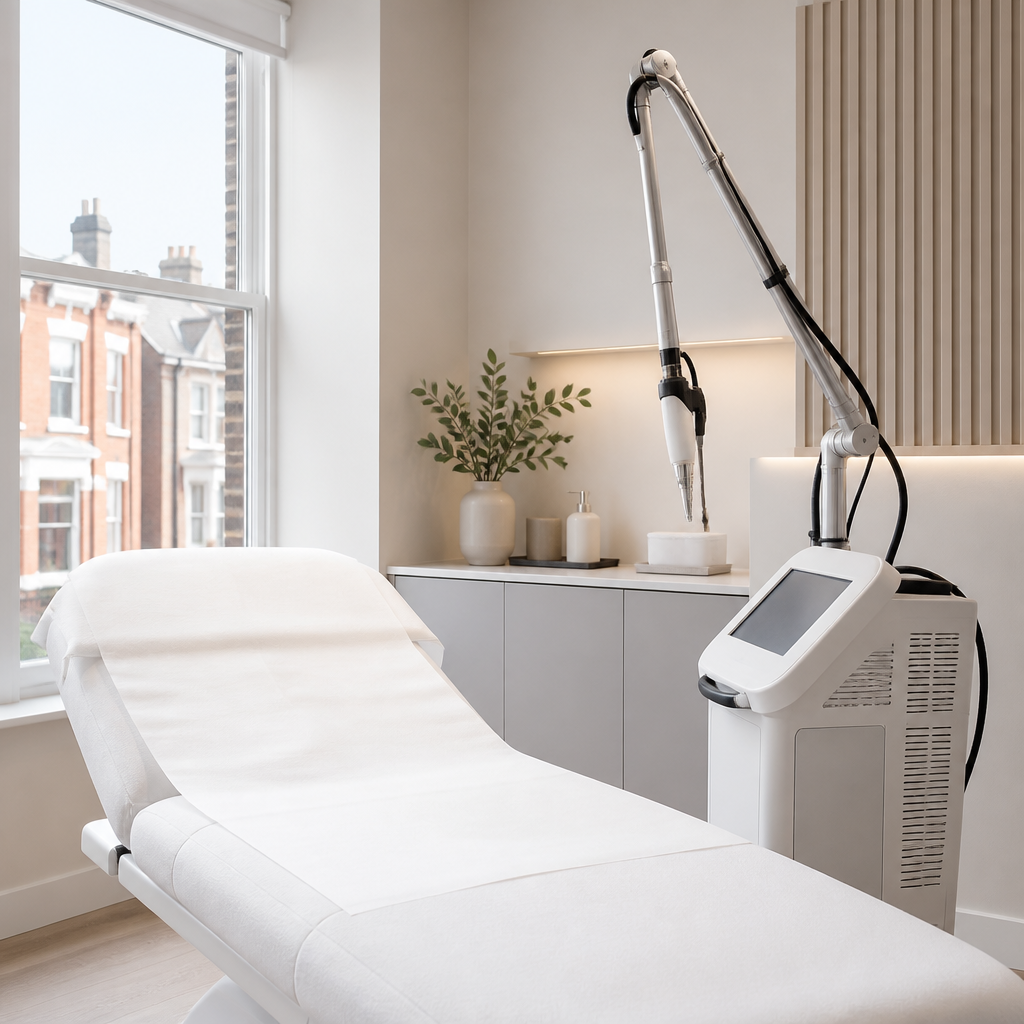
Laser tattoo removal exploits the fact that pigment absorbs light at specific wavelengths. Short, intense pulses heat and shatter the ink particles into a large number of tiny fragments, ideally without damaging the surrounding skin. The laser never clears the tattoo by itself. It turns a solid mark into fragments that your body must handle.
What the laser actually does to ink particles
The pulse length and wavelength determine how finely the ink is broken up. Practitioners choose settings based on pigment colour, depth, and skin type, which is why a thorough consultation matters more than the brand of machine in the room.
Fragments are not destroyed on contact. They sit in the tissue until immune cells collect them, which is why you see a gradual fade over weeks instead of an instant change. Clients who expect results overnight are almost always disappointed, and that disappointment often leads to booking sessions too early.
Why the body has to finish the job
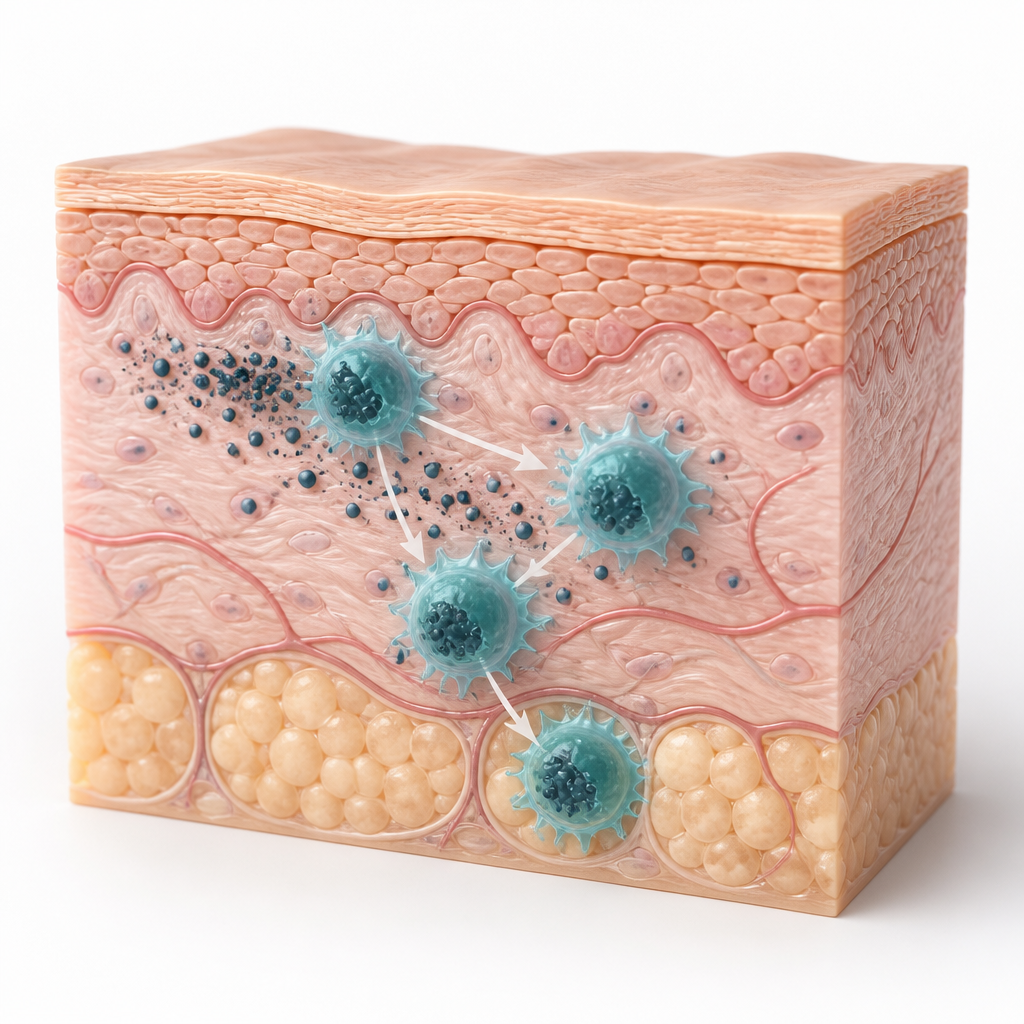
Once fragmented, the particles are cleared mainly by macrophages, the immune cells that engulf debris. Some of the smaller fragments are also carried away through lymphatic channels. This clearance is slow, which is why the timeline is measured in months rather than days.
In practice, this is the single idea that explains most of what happens after a session. The laser starts the job, and the immune system completes it on its own schedule.
Macrophages: The Cells That Carry Your Ink
Macrophages are the body’s cleanup cells. They patrol the dermis, eat debris, and signal other immune cells. For tattoo ink, they are both the reason a tattoo lasts and the key to removing it.
A 2018 study reported by Scientific American and published in The Journal of Experimental Medicine helped explain why. A French research team, including immunologist Sandrine Henri, found that macrophages take up tattoo pigment and that the ink persisted for months even after the macrophages carrying it had died and been replaced. The experiments were carried out in mice, so they are not a direct guide to human treatment, but they changed how researchers understand the problem.
The one-cell-after-another problem
The study suggested that tattoo pigment is passed along a chain. A macrophage holds ink, dies, and releases the particles. The next macrophage then clears the debris and takes up the same particles. Ink is recycled inside the immune system rather than removed from it.
This is the core problem laser removal has to solve. A laser interrupts the chain by shrinking particles into fragments that are easier for the body to carry away, but it cannot make that process instant.
“The fact that macrophages hardly move within the skin explains why the tattoo is pretty stable.”
Sandrine Henri, immunologist, as quoted in Scientific American
Why ink stays put for months
Macrophages move very little within the skin, and pigment particles are large enough that they tend not to drain away on their own. Those two features keep a tattoo stable for years. They also mean the body has little natural ability to clear ink, which is why removal needs outside help.
For clients, the practical takeaway is that a tattoo is not a stubborn surface stain. It is a population of immune cells holding pigment in place, and the laser works by changing what those cells have to deal with.
Why Immune Response Varies From Person to Person
Not everyone’s immune system responds to laser treatment in the same way. Some clients clear fragments steadily, while others show slower progress or more noticeable reactions. This variation is one of the main reasons no reputable clinic can promise an exact number of sessions.
Reactions that can interfere with treatment
A 2023 systematic review published in the Journal of Lasers in Medical Sciences analysed eight carefully selected articles on immune responses to laser tattoo removal. The authors described these responses as unpredictable, ranging from mild hypersensitivity reactions to severe anaphylaxis, and noted that such responses can hinder the effectiveness of the procedure. They argued that a better understanding is needed to develop more efficient management strategies.
Most clients never experience anything beyond mild redness and swelling. Even so, the practical lesson is clear. Tell your practitioner about any history of allergic reactions, skin conditions, or previous tattoo reactions before the first session. A short conversation at the start can stop a treatment from becoming a medical problem.
Skin type, ink colour, and how your body responds
Pigment colour matters because different inks absorb light differently, and some are more stubborn than others. Skin tone also shapes how a practitioner sets the laser, since it affects how much energy the surrounding skin can tolerate. Your immune system then deals with whatever fragments remain.
In our experience, the clients who progress most steadily are not always the ones with the simplest tattoos. They tend to be the ones who answer health questions honestly, follow aftercare, and give their skin time between sessions. Consistent fading comes down to discipline far more than luck.
What Speeds Up Clearance After Each Session
You cannot instruct your immune system to work faster, but you can stop getting in its way. The aim after each session is to keep the treated area calm, well supplied, and free from unnecessary stress, so that macrophages can clear fragments without interruption.
Keep the treated skin calm and hydrated
Treated skin is inflamed and needs time to settle. Keep the area clean, follow the aftercare instructions your practitioner gives, and moisturise with a fragrance-free product if the skin feels tight. Well hydrated skin tends to recover more predictably than dry skin, and predictable recovery helps the clearance process stay on schedule.
General health matters too. Your immune cells work harder when you are run down, and smoking or heavy drinking slows wound healing in general. Small changes in the weeks around a session often do more for your results than any single expensive product.
Protect healing skin from the sun
Sun exposure is one of the most common reasons clients see uneven results. UV light can darken treated skin, and the FDA notes that laser tattoo removal can leave skin lighter than the surrounding area. Covering the treated area and using broad-spectrum sun protection during healing reduces that risk considerably.
Pro tip: Take a photo of the tattoo on the same day each month, in the same light. Visible change is slow, and a dated record is the only reliable way to judge whether your body is clearing the ink at the pace you expect.
Comparing Laser Approaches
Not every tattoo removal method asks your immune system to do the same job. The differences matter for how many sessions are needed and how long clearance takes. Here are the approaches most often discussed in clinical practice, compared on the factors that affect clearance.
| Approach | How It Affects Ink Clearance | Best Suited For |
|---|---|---|
| Q-switched nanosecond laser | Delivers high-energy pulses that fragment ink, and clearance is usually spread across several sessions as the body carries fragments away | Established tattoos with dense black or dark blue ink on well healed skin |
| Picosecond laser | Uses much shorter pulses, which many practitioners favour because they can break ink into finer particles for the immune system to process | Stubborn colours and multi-coloured designs, subject to a clinical assessment |
| Surgical excision | Removes the tissue containing the ink, so the immune system has no fragments to clear over months | Small tattoos where a scar is acceptable, rather than large or highly coloured designs |
Nanosecond versus picosecond pulses
Nanosecond systems have been the workhorse of tattoo removal for years. Picosecond systems deliver energy in much shorter bursts, and many practitioners prefer them for certain colours. Neither is automatically better. The right choice depends on pigment, depth, and your skin, and any clinic that recommends one type for every client is simplifying the problem.
Why surgical removal is the exception
Surgery removes the ink along with the tissue it sits in, so the immune system has nothing to clear over the following months. That speed comes at the cost of a scar, which can be a poor trade for a large or colourful piece. For most clients, laser remains the first choice, with excision reserved for specific cases.
Mistakes That Slow Immune Clearance
Most slow results trace back to a handful of avoidable habits. None of them are dramatic, which is why they are easy to overlook. The same patterns come up again and again, and fixing them usually costs nothing.
Booking sessions before the skin has recovered
Booking too soon is the most common mistake. If the treated area is still red, raised, or tender, the skin is still responding to the last session. Treating it again adds more fragments to an area that has not finished clearing, which tends to produce more irritation rather than faster fading.
Waiting several weeks between sessions is the usual guidance, and your practitioner should set the interval based on how your skin looks at each visit. Patience here is a clinical decision, not a sign of a slow clinic.
Picking scabs and scratching
Scabs and scratching disrupt the protective layer the body needs for healing and increase the risk of scarring and infection. The FDA lists scarring and infection among the possible risks of laser tattoo removal, and picking at the area makes both more likely. If a session leaves a crust, let it fall off on its own.
Pro tip: Ask your practitioner for written aftercare instructions and keep them somewhere visible. Written instructions are far easier to follow than memory, especially in the days when the area itches.
What to Expect at Your Consultation
A good consultation is where your results are shaped. Expect questions about your health history, previous tattoo reactions, medications, and any autoimmune condition. If you take medication that affects your immune system, speak to your GP before booking, because it can change how your body responds.

Questions we ask before the first session
We ask about the age of the tattoo, the ink colours, whether it was done professionally, and how your skin has reacted to past injuries or sun exposure. Those answers help set the laser and estimate how many sessions may be needed. Estimates are only that, and we revise them as the tattoo responds.
Setting realistic timelines
Clients often ask for a fixed number of sessions. A fair answer is that timelines depend on ink density, colour, depth, and how well your immune system clears fragments between visits. Anyone who promises an exact count without seeing the tattoo is guessing.
Many people notice a visible change in the first few sessions, but progress often slows as the remaining ink is the deeper, more stubborn part. Judge the treatment across the full course rather than the first appointment.
Research Frontiers: Targeting Immune Cells Directly
The 2018 mouse study does more than explain why tattoos persist. It also points toward a possible future strategy that targets the immune cells holding the ink. The researchers suggested that this approach might one day help remove ink more effectively, but they were clear that it would need rigorous safety testing.
It is important to be precise about what this means for clients today. To our knowledge, no approved treatment in Liverpool or anywhere else works by switching off macrophages, and any future method would have to be tested for its effects on the wider immune system. For now, laser remains the practical option, and it works by supporting the body’s natural clearance rather than replacing it.
Why the basics still win
Until research of this kind reaches clinics, the most reliable gains come from the basics: choosing an experienced practitioner, reporting your health history honestly, and protecting treated skin from the sun. Those choices influence your immune response far more than any product marketed as a shortcut.
Frequently Asked Questions
Does my immune system affect how well tattoo removal works?
Yes. The laser only fragments the ink, and immune cells clear those fragments over the following weeks, so your immune response influences the pace and consistency of fading.
How long does the immune system take to clear laser-treated ink?
It varies with ink density, colour, depth, and individual response. Clearance continues for weeks after each session, so judge progress across several months rather than a single week.
Can a medical condition or medication affect tattoo removal?
Some conditions and medications can change how you respond to treatment. Disclose any history of allergic reactions, speak to your GP before booking if you take immune-altering medication, and tell your practitioner about any relevant condition at the consultation.
Is tattoo removal in Liverpool safe for sensitive skin?
It can be, when a trained practitioner assesses your skin before the first session and adjusts settings accordingly. Sensitive skin is a reason for a more careful consultation, not an automatic reason to avoid treatment.
Why does my tattoo look worse a few days after a session?
Swelling, redness, and temporary darkening are normal as the body begins clearing fragments. Blistering, spreading redness, pus, or increasing pain are not normal, and you should contact your practitioner or a medical professional promptly.
Can I have pigmentation removal and tattoo removal in the same area?
Both can use laser energy, so treating both in the same area needs a proper assessment. A practitioner can plan the order and timing so that one treatment does not interfere with the healing of the other.
What did your body’s response to tattoo removal look like, and what do you wish you had known before your first session?