
Laser Hair Removal for Sensitive Skin: Liverpool Guide
If you are considering laser hair removal for sensitive skin in Liverpool, you have probably heard two opposite messages. Some people say reactive skin rules you out, while others say it is fine if you just go slowly. The truth sits in the middle. Most clients with reactive skin can be treated safely, but the plan has to be built around the skin as well as the hair. If you have eczema, rosacea, a tendency to flush, or skin that stings after shaving, the way a session is set up matters as much as the device. This guide explains what to check before you book.
Table of Contents
- Quick Takeaways
- Why Sensitive Skin Changes the Treatment Plan
- Skin Types and What They Mean for Your Session
- Patch Testing Before Your First Appointment
- Matching the Laser to Your Skin
- Aftercare, Shaving and Sun Exposure
- Conditions That Need Extra Caution
- Laser Versus Electrolysis for Reactive Skin
- Frequently Asked Questions
- References
Quick Takeaways
| Key Insight | Explanation |
|---|---|
| Sensitive skin is a planning issue, not an automatic no | Reactive skin usually means lower energy settings, a patch test and longer gaps between sessions. It rarely means you cannot be treated. |
| Your skin type decides the starting settings | Ask the clinic to record your skin type and hair colour at the consultation. Both affect wavelength and energy choice. |
| Patch test at least 48 hours before the full session | Treat a small area at the planned settings, then check it at 48 and 72 hours for lingering redness, swelling or blistering. |
| Stop waxing and plucking four to six weeks before treatment | The laser needs the hair root intact. Shaving is fine and is the usual method between sessions. |
| Keep treated skin out of the sun for at least two weeks | Tanned or sunburnt skin carries a higher risk of burns and pigment changes after laser energy. |
| Declare every medication and active skin treatment | Isotretinoin, photosensitising antibiotics, retinoids and recent skin procedures can all change whether and when you can be treated. |
Why Sensitive Skin Changes the Treatment Plan
Sensitive skin is a loose term, and in clinic we use it to describe skin that reacts quickly to heat, friction, fragrance or product. That group includes people with diagnosed conditions such as eczema and rosacea, along with people who simply flush or sting after a hot bath. Each group needs a slightly different approach, which is why a single standard protocol does not work for them.
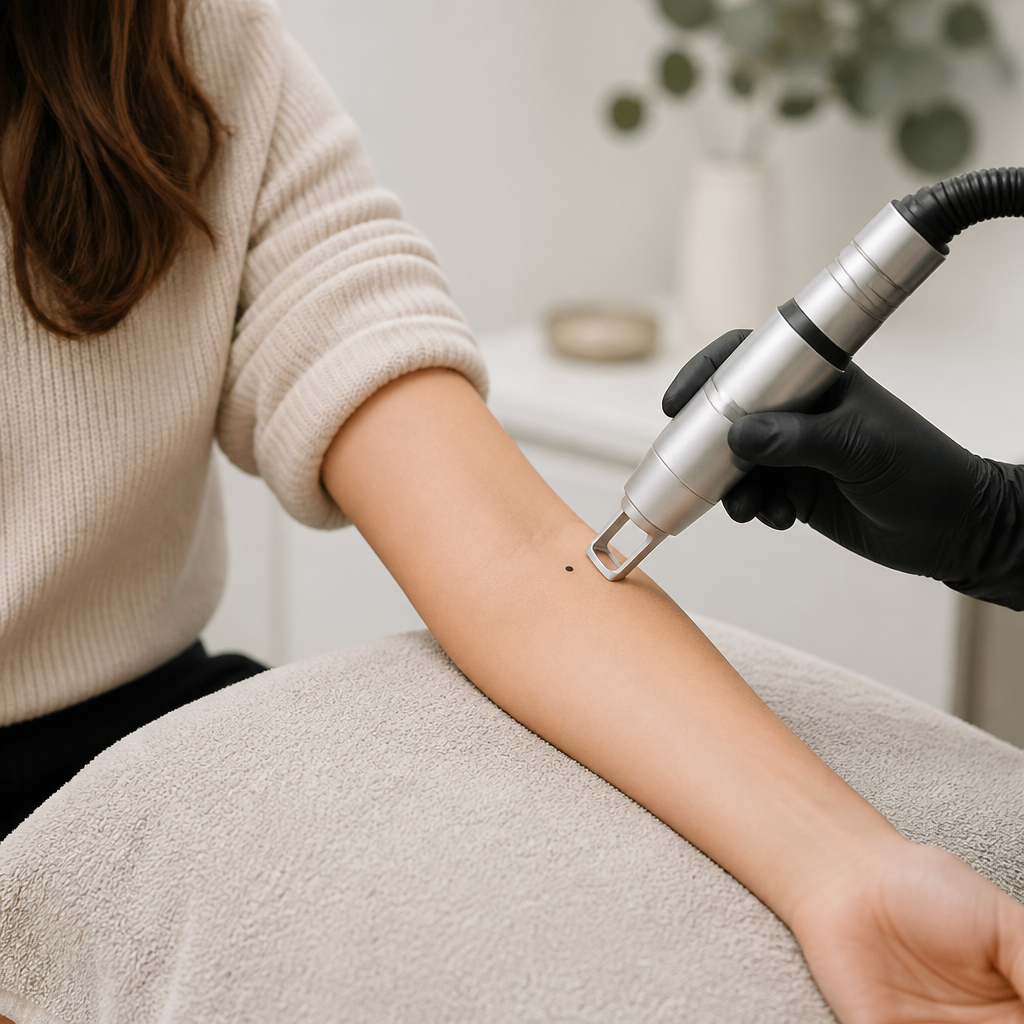
Laser hair removal works by sending light energy into the pigment in the hair follicle. The heat generated is what damages the follicle, but that same heat can irritate the surrounding skin. A setting that clears hair quickly on robust skin can leave a reactive client with weeks of redness, so the practitioner has to trade some speed for comfort.
For sensitive skin, the best setting is usually the lowest one that still clears the hair, not the highest one the device allows.
Where reactions usually come from
In practice, most reactions come from three sources: settings that were too high for the skin type, skin that was already irritated on the day of treatment, and aftercare that ignored the first 48 hours. A less obvious cause is treating over breakouts or fresh shaving nicks. Each of these is preventable with a clear plan agreed before the first pulse.
Why a cautious first session pays off
A conservative first session is not a sign of a weak clinic. It shows how your skin responds and gives the practitioner real data to set the next session. Many reactive clients get better results from a slightly longer course than from a fast, aggressive start that triggers a flare and forces a long pause.
Skin Types and What They Mean for Your Session
Skin type is usually described using the Fitzpatrick scale, which runs from type I, very fair and prone to burning, to type VI, very deeply pigmented. The scale matters because laser light is absorbed by melanin. Darker skin contains more melanin in the outer layer, so if the settings are wrong, the energy absorbed by the surrounding skin can cause burns or pigment changes.
Fair skin with dark hair
This is often the easiest combination to treat, because the contrast between hair and skin is high. Fair skin can still flush easily, though, and it may stay pink for a few hours after treatment. The usual plan here is lower density settings and sessions spaced to give the skin time to settle.
Deeper skin tones with sensitive skin
Clients with deeper skin tones and reactive skin need a more careful conversation. Very fine or light hair is harder to target, and pushing the energy higher to compensate increases the risk of pigment change. The practitioner should choose the wavelength and pulse duration with your skin type in mind, and should be willing to run a test pass before committing to a full area.
Being honest about how your skin reacts
Many people describe their own skin type inaccurately. Someone who burns in the first hour of sun but tans after a few weeks is often not as fair as they think, and someone who has always been told they tan easily may have skin that burns badly under a strong lamp. Describe how your skin reacts to sun, heat and products, not how you wish it reacted, because that history shapes the first settings.
Patch Testing Before Your First Appointment
A patch test is the most useful few minutes of a sensitive skin consultation. A small area is treated at the planned settings, or at a more conservative version of them, before the full treatment begins. The result tells you more than any general description of your skin.
How a patch test is run
Choose a small, discreet area inside the zone you plan to treat, such as the outer thigh, the bikini line or the underarm. Check the area at around 48 hours and again at 72 hours. Mild pinkness that fades within a few hours is normal. Swelling, blistering, or redness that lingers beyond a day is a signal that the plan needs adjusting before you go further.
What to do if the patch test reacts
A reaction does not mean treatment is off the table. It usually means the settings, the spacing between sessions or the device needs changing. Common adjustments include lowering the energy, extending the gap between sessions and switching to a different wavelength. A common mistake is treating a reactive patch as a failure and skipping the test next time, which turns the first full session into the real test.
Matching the Laser to Your Skin
Not every laser is equally suited to sensitive skin. The main differences are wavelength, which determines how deeply the light travels and how strongly melanin absorbs it, and the cooling system, which protects the surface layer during each pulse. A good provider will tell you which device they use and why, rather than treating the machine as a black box.
Comparing the common options
The table below covers the three devices most often discussed for hair removal. Suitability varies by clinic and by individual skin, so treat it as a starting point for your consultation rather than a fixed rule.
| Approach | Best Suited For | Sensitive Skin Considerations |
|---|---|---|
| Alexandrite laser | Fair to light olive skin with dark hair | Strong absorption by pigment means higher irritation risk if energy is set high. Cooling and conservative settings are essential. |
| Diode laser | A wide range of skin types, including many olive and medium tones | Often used with built-in cooling. A sensible middle option for reactive skin when settings are kept low at the start. |
| Nd:YAG laser | Deeper skin tones | The longer wavelength is absorbed less by surface melanin. It still needs a patch test, because reactive skin can flare under any setting. |
Why cooling and pulse duration matter as much as the device
In practice, the operator and the settings matter more than the brand of device. A well-set diode can outperform a poorly set alexandrite on the same client. Ask how long each pulse lasts, what cooling method is used and whether the energy will be stepped up gradually across sessions. Clear answers to those questions tell you more about a clinic than marketing claims do.
Aftercare, Shaving and Sun Exposure
Most reactions after sensitive skin treatment appear in the first 72 hours, and the aftercare routine is where you can influence them. Keep the area cool, avoid hot baths, saunas and intense exercise for the first day or two, and use a fragrance-free moisturiser if the skin feels tight.
The first 72 hours
Expect mild redness and warmth. Avoid exfoliating acids, scrubs and retinol on treated skin until it has settled. A cold compress wrapped in a cloth is usually enough for discomfort. If you notice blistering, spreading redness or increasing pain, contact your clinic straight away rather than waiting for your next appointment.
Shaving between sessions
Shaving is the right method between sessions for most people, because it leaves the follicle intact for the laser to target. Use a clean, sharp blade and shave in the direction of hair growth. UK guidance on surgical preparation notes that razors can create micro-abrasions, which is one reason to shave gently and less often when your skin is reactive. Avoid shaving on the day of treatment if the skin is already raw.
Sun exposure and tanning
Avoid sun exposure and sunbeds on treated areas for at least two weeks before and after each session. A common mistake is assuming a fading tan is safe. Tanned skin still carries the risk of burns and pigment changes, and that risk is highest in the weeks after a session when the skin is still recovering.
Conditions That Need Extra Caution
Some conditions do not rule out laser hair removal, but they do change the timing, the settings, or whether a clinic should treat the area at all. Be specific about any diagnosis at the consultation rather than describing your skin only as sensitive.
Eczema and rosacea
Active eczema or a flare on the treatment area is a reason to wait. Treating inflamed skin raises the chance of a reaction and makes it harder to tell whether a reaction came from the laser or from the flare itself. Rosacea often responds well to conservative settings, but you should disclose any prescribed creams and oral treatments.
Medications that affect skin sensitivity
Some medications increase sensitivity to light or change how skin heals. Isotretinoin is the one practitioners check for most often, and clinics commonly ask clients to wait for a set period after finishing it. Photosensitising antibiotics and topical retinoids also need to be disclosed. Tell your practitioner exactly what you take, including over-the-counter products.
Active infections and recent skin procedures
Do not book over an active infection, open skin or a recently healed wound. Even mild folliculitis can be aggravated by heat. A recent peel, microneedling or other skin treatment also needs a gap before laser, and the minimum wait differs by procedure, so ask the clinic for its own guideline.
Pro tip: Take photos of the treatment area at your consultation and before each session. Changes in colour or texture are much easier to spot when you compare images, and they help your practitioner decide whether to adjust the next session.
Laser Versus Electrolysis for Reactive Skin
People with sensitive skin often ask whether electrolysis is the gentler option. The honest answer depends on the hair and the skin. A general health overview from Healthline notes that both laser and electrolysis produce longer-lasting results than shaving, and that electrolysis appears to give the most permanent outcome. Electrolysis works on individual follicles with a fine probe, which makes it slower over large areas.
Where electrolysis fits
Electrolysis suits small areas and very fine or light hair that laser may struggle to target. It can also be a sensible route for clients whose skin and hair combination makes laser less effective. One community discussion of the two methods suggests electrolysis is often the better fit for dark skin with light hair. That is a reasonable starting point, but it is not a clinical rule, so ask for an assessment before you decide.
Where laser still makes sense
Laser covers larger areas far more efficiently, which matters for legs, backs and underarms. For most clients with sensitive skin and darker hair, a well-planned laser course is the more practical choice, provided they accept that a few top-up sessions may be needed later. The key is a patch test, conservative settings and honest communication throughout the course.
Frequently Asked Questions
Can sensitive skin have laser hair removal in Liverpool?
Yes, in most cases. Once your skin has been assessed, patch tested and treated at conservative settings, many clients with reactive skin complete a full course. Active flares, open skin and certain medications can mean waiting before treatment starts.
Do I need a patch test before every session?
Do one before your first session, and again whenever settings change significantly or your skin has been unusually reactive since the last visit. A routine patch test is a small step that catches problems early.
Does shaving affect laser hair removal results?
Shaving before a session is normal and generally expected, because it leaves the hair root in place for the laser to target. Waxing and plucking should be avoided for about four to six weeks beforehand, because they remove the root.
How long should I stay out of the sun?
Keep treated areas out of direct sun and sunbeds for at least two weeks before and after each session. If you have a tan or a recent sunburn, tell your clinic before treatment, because they may need to delay or reduce the settings.
Is laser hair removal suitable for deeper skin tones with sensitive skin?
It can be, but the device, wavelength and settings have to be chosen carefully. Your practitioner should explain the device they plan to use, run a test pass, and adjust the energy gradually across sessions.
If you have had laser hair removal with sensitive or reactive skin, share your experience with our team at Faith Laser, including what worked, what caused a reaction, and what you wish you had known before your first session.
We would love your feedback and any insights you would share with others. What perspective would you add?