Laser Hair Removal Aftercare: Do’s and Don’ts
You have just walked out of your laser hair removal session feeling good about the decision. What happens in the next 48 to 72 hours, however, will have more influence on your results than almost anything done during the treatment itself. Laser hair removal aftercare is not a list of optional suggestions. It is the difference between skin that heals cleanly, sheds efficiently, and delivers the smooth results you paid for, and skin that ends up irritated, hyperpigmented, or failing to respond properly. At Faith Laser in Liverpool, every client leaves with clear aftercare guidance because we have seen, session after session, exactly what happens when it is followed and what happens when it is not.
Table of Contents
- What Happens to Your Skin After Treatment
- Quick Takeaways
- The Do’s: First 48 Hours
- The Don’ts: First 48 Hours
- Sun Protection: The Rule That Most People Break
- Heat, Exercise, and Swimming
- The Shedding Phase: What It Looks Like and Why It Matters
- Aftercare by Treatment Area
- Aftercare Approach Comparison
- Frequently Asked Questions
- References
What Happens to Your Skin After Treatment
Laser hair removal works by directing concentrated light energy into each hair follicle. That energy converts to heat, which damages the follicle’s ability to produce new hair. The skin around those follicles absorbs some of that heat too. The result is that your skin immediately after treatment is in a sensitised state, and its response will be similar to a mild sunburn: warmth, redness, and some swelling around the follicle openings.
This is completely normal. Mild redness and swelling typically resolve within 24 hours for most clients. What is not normal, and what poor aftercare tends to cause, is extended irritation, folliculitis (inflamed follicles), crusting, or changes in skin pigmentation. Understanding the biology of what your skin is going through is the starting point for understanding why every aftercare rule exists.
Quick Takeaways
| Key Insight | Explanation |
|---|---|
| Cool compresses reduce immediate discomfort | Apply a cool compress or ice wrapped in a cloth for 5 to 10 minutes at a time to soothe redness and reduce swelling in the hours following treatment. |
| Avoid heat for at least 48 hours | Hot showers, baths, saunas, steam rooms, and hot tubs prolong inflammation and should be avoided for a minimum of 48 hours post-treatment. |
| SPF 30 or higher is non-negotiable | Treated skin is significantly more vulnerable to UV damage. Apply broad-spectrum SPF 30 or above every day if going outdoors, starting from the day after treatment. |
| No gym for 24 to 48 hours | Sweating and friction from exercise raise skin temperature, which extends irritation and increases infection risk on freshly treated follicles. |
| Shedding is the sign it is working | Treated hairs typically begin to shed one to three weeks after a session. This is not regrowth. Do not wax or tweeze, as this removes follicles the laser still needs to target. |
| Fragrance-free moisturiser is your best friend | A gentle, fragrance-free moisturiser applied twice daily supports healing, prevents dryness, and reduces discomfort without irritating sensitised skin. |
| Avoid strong actives until redness clears | Retinoids, glycolic acids, exfoliating acids, and alcohol-based toners are too aggressive for post-laser skin. Hold off until all sensitivity has settled. |
These takeaways represent the most common points where clients either protect or undermine their results. The detail behind each one matters, and the sections below cover exactly what to do and why.
The Do’s: First 48 Hours
The first two days after treatment are the most important window for aftercare. Your skin is sensitised, the follicles are in a state of controlled stress, and what you do in this period directly affects both comfort and outcome.
Apply a Cool Compress Immediately
Wet a clean, soft cloth with cool water and hold it against the treated area for several minutes at a time. An ice pack wrapped in a paper towel works equally well. This reduces temporary swelling and calms the heat sensation in the skin. Repeat this a few times in the first few hours if needed.
Use a Gentle, Fragrance-Free Moisturiser
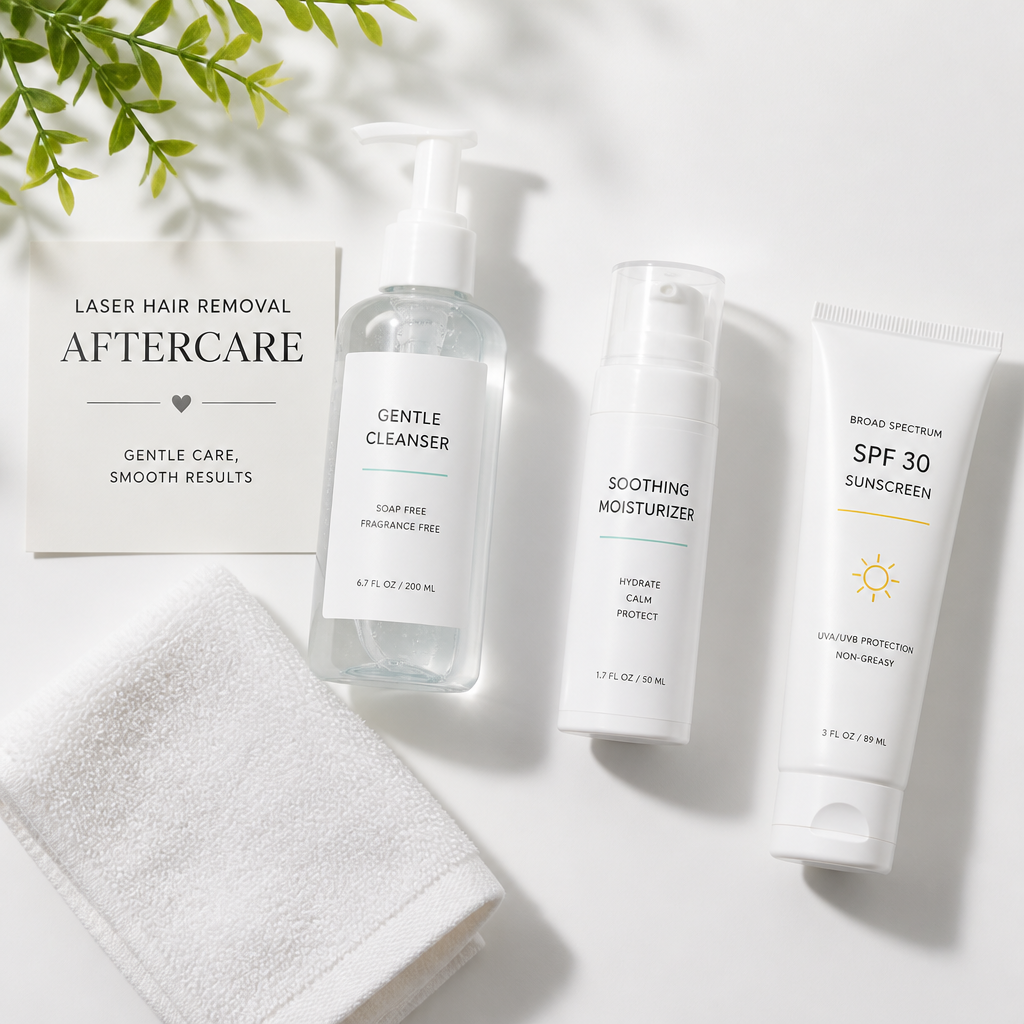
Keeping the treated area hydrated is essential. Apply a fragrance-free moisturiser or pure aloe vera gel twice daily. Aloe vera is particularly good in the first day or two because it soothes irritation and provides a light cooling effect. Avoid anything with perfume, alcohol, or active ingredients such as retinol or glycolic acid.
Wear Loose, Breathable Clothing
The hair follicles retain heat from the laser for several days. Tight clothing causes friction against this sensitised skin, which extends irritation and can cause ingrown hairs. Opt for loose, soft fabrics over the treated area during the first week.
Keep the Area Clean
Use a mild, fragrance-free cleanser and lukewarm water to gently clean the treated area. Pat dry rather than rubbing. Maintaining hygiene reduces the risk of infection in the open follicles.
Pro tip: If you are treating an area prone to sweating, such as underarms, avoid applying deodorant or antiperspirant for at least 24 hours. The chemicals in these products can irritate freshly treated skin significantly.
The Don’ts: First 48 Hours
The don’ts list is where most aftercare mistakes happen. These are not overly cautious suggestions. They are the behaviours most likely to cause the side effects that clients complain about.
Do Not Use Hot Water
Hot showers and baths add heat to skin that is already managing excess heat from the laser. Stick to lukewarm water for the first 48 hours. The same applies to hot tubs and saunas.
Do Not Apply Makeup or Perfumed Products to Treated Areas
If your face has been treated, avoid applying makeup for at least 24 hours. Cosmetic products, especially those containing alcohol or fragrances, can cause reactions on sensitised skin. Switch to mineral makeup if you need coverage sooner, but ideally, give the skin a full day clear.
Do Not Scratch or Pick the Area
Even if the area feels itchy, do not scratch or pick. Introducing bacteria through broken skin increases infection risk and can disrupt the healing process. If itching is persistent, apply aloe vera gel or a gentle moisturiser to manage it.
Do Not Wax, Thread, or Tweeze
This rule extends beyond the first 48 hours. Between sessions, shaving is the only acceptable hair removal method. Waxing, threading, and tweezing remove the hair shaft from the follicle entirely. The laser needs that pigmented hair inside the follicle to target it in your next session. Remove the hair, and you remove what the laser tracks.
The way you care for your skin after the procedure can help reduce the risk of side effects and possible damage. Taking care of your skin after laser hair removal may reduce the risk of side effects, but not all risks are avoidable.
Pro tip: A common mistake is exfoliating too soon to speed up shedding. Wait at least 24 hours before any form of exfoliation, and use only gentle methods like a soft washcloth. Harsh scrubs in the first few days cause unnecessary irritation and can worsen redness rather than helping it.
Sun Protection: The Rule That Most People Break
Of all the laser hair removal aftercare tips, sun protection is the one most consistently ignored, especially in summer. After treatment, your skin is significantly more vulnerable to UV damage. The risk is not just sunburn. UV exposure on freshly treated skin increases the likelihood of hyperpigmentation, which means patches of darker skin that can take months to fade.
The guidance is consistent across professional practice: avoid direct sun exposure on treated areas for at least two weeks after each session. If sun exposure cannot be avoided, apply a broad-spectrum SPF 30 or higher every day. Protective clothing such as long sleeves or a wide-brimmed hat adds another layer of defence.
The sun protection rule also applies before treatment, not just after. Recently tanned skin can affect how safely certain laser settings are applied. For Liverpool clients planning holidays abroad during a treatment course, the timing of sessions needs to be managed carefully. Speaking to the team at Faith Laser before you travel is the right move. Do not simply skip appointments without discussing the implications.
Avoid self-tanning products on treated areas too. These can further irritate healing skin, and the artificial pigment they deposit can interfere with how the laser reads the skin in your next session.
Heat, Exercise, and Swimming
Returning to exercise is one of the most common questions clients raise. The answer is not that you need to avoid all activity. Walking and light stretching are generally fine immediately after treatment. The issue is anything that raises body temperature significantly, causes heavy sweating, or creates friction against the treated skin.
Strenuous exercise should be avoided for 24 to 48 hours. The reason is straightforward: the laser has already delivered heat to your skin. Adding more heat through vigorous activity before the skin has calmed down compounds the irritation. Sweat also introduces bacteria to open follicles, raising infection risk.
Swimming deserves its own mention. Chlorinated pool water and salt water are both problematic for treated skin. Chlorine is a strong irritant, and both environments expose the skin to bacteria at a time when the follicles are open and vulnerable. Avoid swimming for at least 48 to 72 hours after treatment.
Saunas, steam rooms, and hot tubs follow the same principle. The combination of heat and humidity extends the inflammatory response in the skin. Some NHS guidance groups these with strenuous exercise and recommends avoiding them for up to seven days after treatment in some cases. If your skin is still noticeably red or sensitive, that is your cue to wait longer.
The Shedding Phase: What It Looks Like and Why It Matters
One to three weeks after your session, you will notice what looks like hair growing back. This is one of the most misunderstood parts of the process, and it causes unnecessary concern. What you are seeing is not new hair growth. It is the treated hair shafts being pushed out of the follicle as the body sheds them. The follicle has been damaged. It is releasing what was inside it.
During the shedding phase, the hair may look like stubble or fine growth, but it will come out with very little effort. You can encourage this process with gentle exfoliation once the initial 24 to 48 hours have passed. A soft washcloth used in gentle circular motions, or a mild sugar scrub, helps dislodge shedding hair and prevents ingrown hairs from developing.
If you do not exfoliate at all during this phase, dead skin can trap the shedding hair shafts and cause ingrown hairs. These are uncomfortable and can lead to small bumps or spots on the treated area. Gentle, regular exfoliation after the first couple of days is therefore part of good aftercare, not something to avoid.
The key word is gentle. Harsh physical scrubs, loofahs used with pressure, or any form of chemical exfoliant applied too soon will irritate already sensitised skin. If in doubt about the right product for your skin type and treatment area, the team at Faith Laser can advise you directly.
Aftercare by Treatment Area
Not all areas of the body respond identically to laser treatment, and aftercare needs a small adjustment depending on where you have been treated. The core rules apply everywhere, but some areas require extra attention.
Face and Upper Lip
Facial skin is thinner and more reactive than body skin. Expect slightly more pronounced redness around the follicles after facial treatments, particularly on the upper lip. Avoid any active skincare ingredients including retinoids, vitamin C serums, and exfoliating acids until all redness has cleared. Do not apply foundation or concealer for at least 24 hours. If mineral makeup is necessary sooner, apply it very gently without rubbing.
Underarms
As mentioned, skip deodorant and antiperspirant for at least 24 hours. Friction from clothing is less of an issue here because underarms are generally covered, but wear soft fabrics. Avoid any spray products containing alcohol on the treated area.
Intimate and Bikini Areas
These areas are among the most sensitive. Tight underwear or synthetic fabrics can cause significant friction irritation immediately after treatment. Loose cotton underwear is the best choice for the first few days. Avoid sexual activity for at least 24 hours, as friction and heat will aggravate the area. Swimwear and swimming pools should be avoided for a minimum of 48 hours.
Legs and Large Body Areas
Sun exposure is a particular concern for legs, especially during summer. If your legs have been treated and you are spending time outdoors, cover them or apply SPF consistently. Tight leggings and compression wear should be avoided for the first 48 hours.
Aftercare Approach Comparison
| Aftercare Approach | What It Involves | Outcome if Followed |
|---|---|---|
| Minimal / No Aftercare | Returning to normal routine immediately, using regular skincare products, exercising the same day, ignoring sun protection | Higher risk of prolonged redness, folliculitis, hyperpigmentation, and reduced treatment effectiveness over the course |
| Partial Aftercare | Avoiding obvious irritants for a day, applying some moisturiser, skipping the gym briefly, but not managing sun exposure or shedding phase properly | Moderate protection with some avoidable side effects still likely, particularly pigmentation issues in sun-exposed areas |
| Full Aftercare Protocol | Cool compresses immediately post-treatment, fragrance-free moisturiser and aloe vera, SPF 30 or higher daily, no heat or exercise for 48 hours, gentle exfoliation during shedding, no waxing or tweezing between sessions | Fastest healing, maximum hair reduction per session, minimal side effects, and best long-term skin condition throughout the treatment course |
The full protocol is not complicated. It asks you to be gentle with your skin for two days, sun-smart for the full course of treatment, and consistent with moisturising. The results it produces are meaningfully better than a partial approach.
Frequently Asked Questions
How long does redness last after laser hair removal?
Mild redness and slight swelling around the follicles are normal and typically resolve within 24 hours for most clients. Some areas, particularly the face and intimate zones, may remain pink for up to 48 hours. If redness or swelling persists beyond three days, or if you notice blistering or unusual skin reactions, contact your clinic promptly.
Can I shower after laser hair removal?
Yes, but use lukewarm water only. Avoid hot showers for the first 48 hours because heat aggravates treated skin, worsens redness, and prolongs any sensitivity. Wash the area gently with a mild, fragrance-free cleanser and pat dry. Do not scrub or rub the treated area with a towel.
Why does it look like the hair is growing back after treatment?
This is the shedding phase, and it is a sign the treatment worked. Treated hairs begin to shed one to three weeks after each session. The hair may appear to push up through the skin like new growth before falling out. Gentle exfoliation with a soft washcloth helps this process along and reduces the chance of ingrown hairs forming.
What skincare products should I avoid after treatment?
Avoid retinoids, glycolic acid, salicylic acid, and other exfoliating acids until all redness and sensitivity has fully settled. Alcohol-based toners and any fragranced products should also be avoided on treated skin in the first few days. Stick to simple, fragrance-free moisturisers and, if needed, aloe vera gel during the recovery period.
Can I use fake tan on treated areas?
No. Self-tanning products should be avoided on treated areas until all redness and sensitivity has completely resolved. Artificial pigment from self-tan can irritate healing skin and may affect how the laser reads your skin in the next session. Wait until the skin has fully settled before applying any tanning product.
How soon can I exercise after laser hair removal?
Light activities such as walking are generally fine immediately after treatment. However, strenuous exercise that causes heavy sweating or raises body temperature significantly should be avoided for 24 to 48 hours. Sweating on freshly treated follicles increases irritation and infection risk. If your skin is still red or sensitive after 48 hours, give it more time before returning to intense workouts.
Can I get laser hair removal if I have a tan?
Tanned skin is not ideal for laser hair removal. Recently tanned skin can affect how safely laser settings are applied, and the risk of hyperpigmentation increases on tanned skin. If you are planning treatments alongside a holiday, discuss the timing with your clinic before booking. Daily SPF use before and during a treatment course helps keep your skin in the right condition for safe and effective sessions. Faith Laser assesses each client individually and advises on the safest timing for treatment.
We would love to hear about your experience with laser hair removal aftercare. Whether it is a tip that worked well for you or a question you wish you had asked sooner, leave a comment below and share it with others on the same journey.
We would love your feedback and any insights you would share with others. What perspective would you add?
References
- Healthline: Laser Hair Removal Aftercare Guide covering do’s, don’ts, and when to contact a physician
- Colaz: Exercise and laser hair removal, including NHS trust guidance on heat avoidance timelines
- Pure Skin Laser Center: Aftercare tips covering the shedding phase and area-specific guidance
- Germain Dermatology: Skincare routine after laser hair removal with do’s and don’ts for best results
- Milan Laser: Laser hair removal aftercare instructions including exfoliation, SPF, and session spacing