Coloured Tattoo Removal: Can Laser Actually Work?
Most people assume laser tattoo removal works the same way regardless of ink colour. It does not. A bold black tribal piece and a watercolour sleeve with pastels, yellows, and whites are two completely different clinical challenges. Coloured tattoo removal is technically more demanding, often requires more sessions, and demands a laser setup matched to the specific pigments in your skin. If you are considering removal at a Liverpool clinic and your tattoo has more than one colour in it, you need to understand what you are actually getting into before your first appointment.
Table of Contents
- Quick Takeaways
- Why Colour Matters in Laser Tattoo Removal
- Which Colours Are Easiest and Hardest to Remove
- Laser Wavelengths Explained: Matching the Tool to the Ink
- How Many Sessions Does Coloured Tattoo Removal Take?
- Skin Type and Coloured Ink Removal: What Changes
- Nanosecond vs. Picosecond Lasers for Coloured Ink
- What to Ask Your Liverpool Clinic Before You Book
- Frequently Asked Questions
- References
Quick Takeaways
| Key Insight | Explanation |
|---|---|
| Not all colours respond equally | Black and dark blue ink absorbs laser energy most efficiently. Yellow, white, and light pastel inks are the hardest to break down effectively. |
| Wavelength matching is non-negotiable | Each ink colour requires a specific laser wavelength. A clinic with only one wavelength cannot treat the full spectrum of a multicolour tattoo safely or effectively. |
| White ink can darken under laser treatment | Paradoxical darkening is a documented clinical phenomenon where white, pink, peach, and yellow inks can turn darker after Q-switched laser exposure. |
| Coloured tattoos need more sessions on average | While a simple black tattoo may clear in 6 to 8 sessions, multicoloured tattoos frequently require 10 to 15 or more sessions spaced 6 to 8 weeks apart. |
| Picosecond lasers outperform nanosecond for colour | Picosecond-domain lasers break ink into finer particles with less heat damage to surrounding tissue, making them better suited for difficult colours like green and blue. |
| Fluorescent and pastel inks are in a category of their own | These inks reflect rather than absorb laser light, which means standard protocols produce minimal results. Specialist assessment is essential before treatment begins. |
| Layered multicolour tattoos add complexity | When multiple colours overlap or are applied in layers, ink depth becomes uneven. This extends the treatment process beyond what the surface design suggests. |
Why Colour Matters in Laser Tattoo Removal
Laser tattoo removal works on a principle called selective photothermolysis. The laser emits a specific wavelength of light, and the ink absorbs that energy, heats up rapidly, and fractures into particles small enough for the immune system to flush out. The critical word here is “absorbs.” If the ink colour does not absorb the wavelength being fired at it, the laser energy passes through or scatters, and very little happens to the ink.
This is why black ink is the easiest colour to remove. Black absorbs across the entire visible light spectrum, which means almost any laser wavelength will interact with it. Coloured inks are far more selective. Each pigment has a specific absorption peak, and unless your laser can match that peak, the ink will not break down efficiently.
Coloured tattoos also tend to be more complex structurally. They frequently use layered pigment, multiple ink types applied at different depths, and shading techniques that create uneven ink distribution beneath the skin. All of this compounds the clinical challenge beyond what the visible colours alone would suggest.
Which Colours Are Easiest and Hardest to Remove
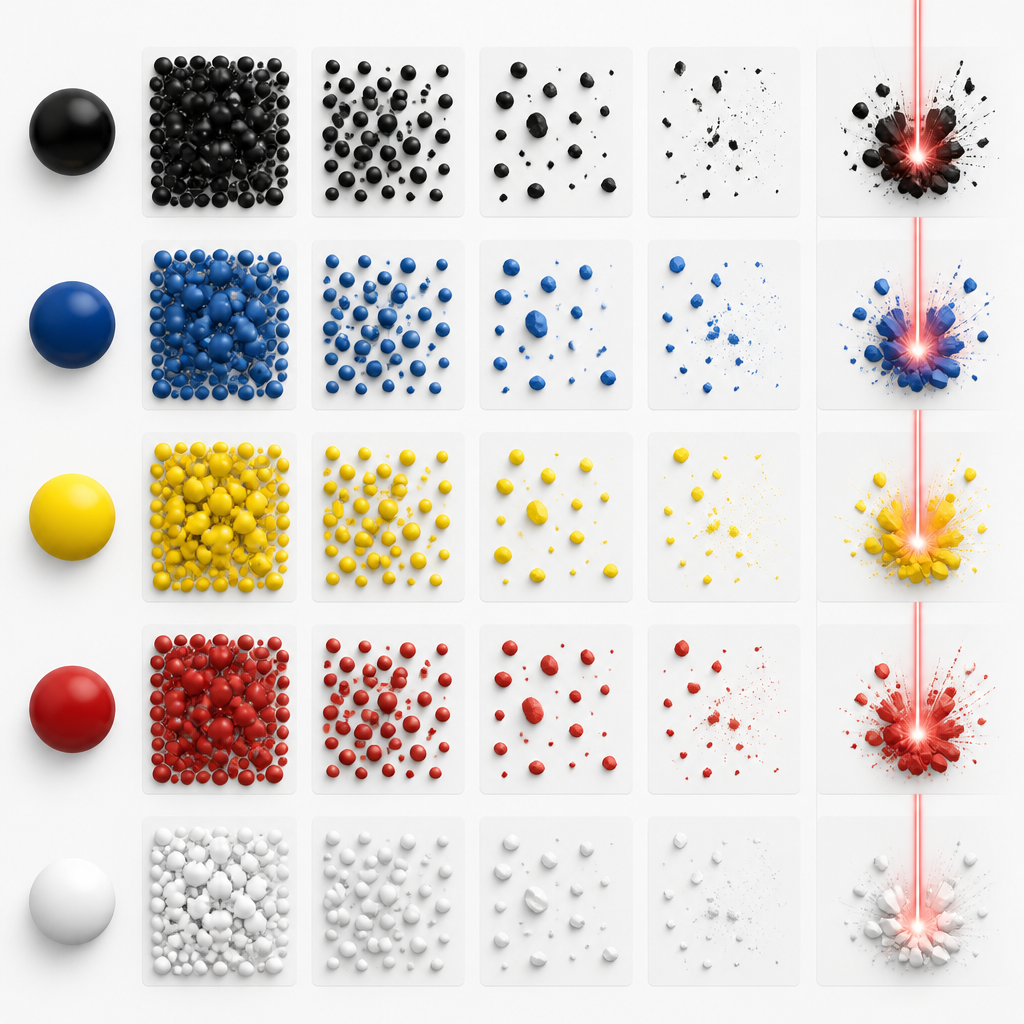
Understanding where your tattoo sits on the difficulty spectrum is the first honest conversation any good clinic should have with you. Here is how the colour categories break down in practice.
Easiest to Remove
Black and dark blue are the most responsive colours across all laser platforms. They absorb laser energy at multiple wavelengths, which gives practitioners more options for safe, effective treatment. Dark brown also falls into this easier category. If your tattoo is predominantly dark ink with some colour accents, the dark sections will typically clear first and fastest.
Red, orange, and brown inks also respond well, particularly to 532 nm wavelength lasers. Red is the complementary colour of green light, meaning it absorbs green wavelengths efficiently. This makes red tattoos more treatable than many people expect.
Moderate Difficulty
Green and blue inks sit in the middle category. They require wavelengths in the 694 to 785 nm range to be treated properly, which means a clinic needs a ruby or alexandrite laser, or a picosecond system with the appropriate handpiece. Standard dual-wavelength setups that only fire at 532 nm and 1064 nm will underperform on these colours. Purple also falls here, responding variably depending on its exact pigment composition.
Hardest to Remove
Yellow, light green, pastel shades, and fluorescent inks are the most resistant. These inks tend to reflect laser light rather than absorb it, which means much of the energy bounces off rather than fracturing the ink. White ink is in a category by itself. Published clinical research confirms that white, pink, and peach inks can actually darken paradoxically following Q-switched laser treatment, a phenomenon linked to chemical changes in the iron oxide compounds commonly used in these pigments. Any clinic that does not mention this risk before treating white ink is not giving you the full picture.
The relationship between laser wavelength and ink colour is not a technicality. It is the entire mechanism. A laser that cannot match your ink’s absorption peak is not removing your tattoo, it is just making expensive noise.
Laser Wavelengths Explained: Matching the Tool to the Ink
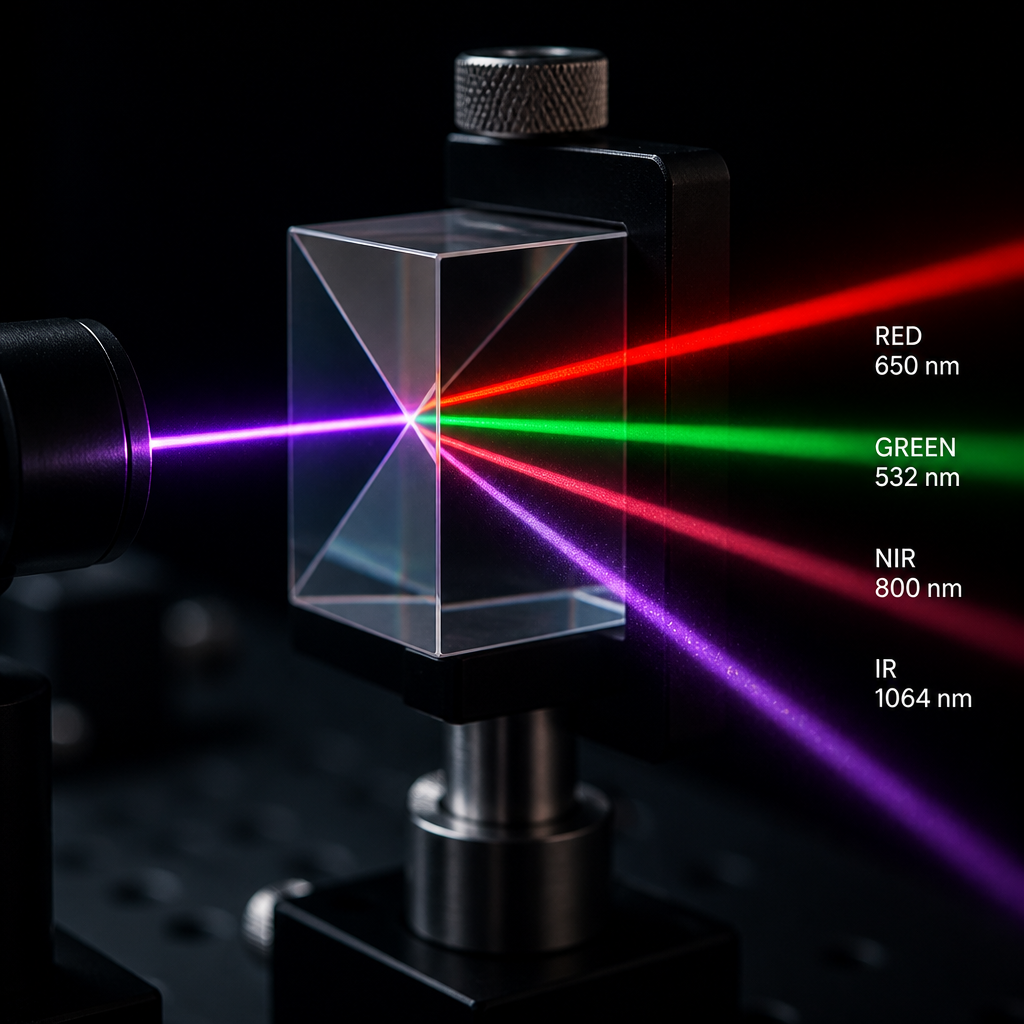
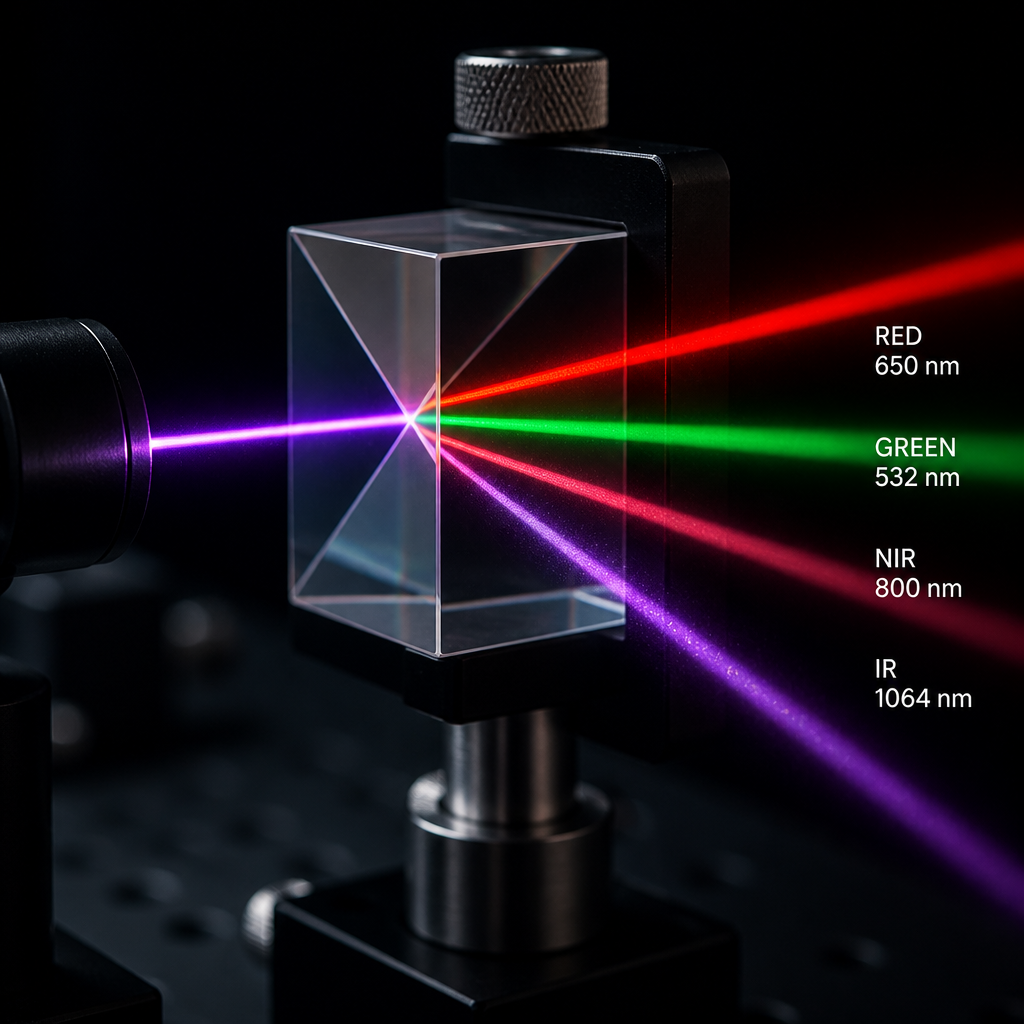
The wavelength of a laser is measured in nanometres (nm), and each wavelength interacts differently with tattoo pigments. This is not a matter of laser power alone. A higher-powered laser at the wrong wavelength will still fail to clear a stubborn colour. What matters is precision, not brute force.
Here is what the most clinically relevant wavelengths target in practice:
- 1064 nm: The standard for black and very dark blue ink. This wavelength penetrates deeper into the skin and is also safer for use on darker skin tones.
- 532 nm: Targets red, orange, brown, and some yellows. Because it sits in the green portion of the visible spectrum, it is absorbed strongly by red pigments, which are red’s complementary colour in optical terms.
- 694 nm (Ruby laser): Effective against blue and green inks. Less commonly available in standard clinic setups, which is why green ink is so often undertreated.
- 755 nm (Alexandrite): Works well on blue and green pigments, and also useful for darker skin-compatible protocols in some configurations.
A tattoo with multiple colours genuinely requires access to multiple wavelengths across its treatment course. A clinic advertising coloured tattoo removal with only a basic dual-wavelength system is telling you something important about the limits of what they can deliver. At Faith Laser in Liverpool, the equipment and treatment planning are matched to your specific ink profile, which is exactly what a multicolour case demands.
Pro tip: Ask any clinic you consult with exactly which wavelengths their laser system operates at. If they cannot tell you, or if the answer is only “532 nm and 1064 nm,” ask how they plan to address your green, blue, or yellow ink specifically.
How Many Sessions Does Coloured Tattoo Removal Take?
There is no single honest answer here, but there are realistic ranges. The honest starting point is that coloured tattoos consistently require more sessions than single-colour black tattoos of comparable size. A simple black tattoo might clear in six to eight sessions. A multicoloured tattoo, particularly one with difficult pigments like green, yellow, or white, will often take ten to fifteen sessions or more.
Sessions are spaced six to eight weeks apart. This gap is not optional padding. It is the time your immune system needs to flush cleared ink particles from the treatment area. Going faster than this does not accelerate results. It risks skin damage and can actually impede clearance.
Factors That Affect Session Count
Beyond ink colour, the following factors all directly influence how many sessions your removal will take:
- Tattoo age: Older tattoos have already experienced some natural ink breakdown and often respond faster than fresh work.
- Ink density: A tattoo applied by a professional with heavy saturation carries far more ink than an older faded piece. More ink means more sessions.
- Tattoo location: Areas with poorer circulation, such as the feet and ankles, tend to clear more slowly because the immune system has fewer resources to draw on locally.
- Layered colours: If your tattoo has been covered up or added to over time, multiple layers of different inks compound the work needed.
- Skin type: Lighter skin tones typically allow for higher laser fluence, which can accelerate clearance. Darker skin tones require more conservative settings to avoid pigmentation changes.
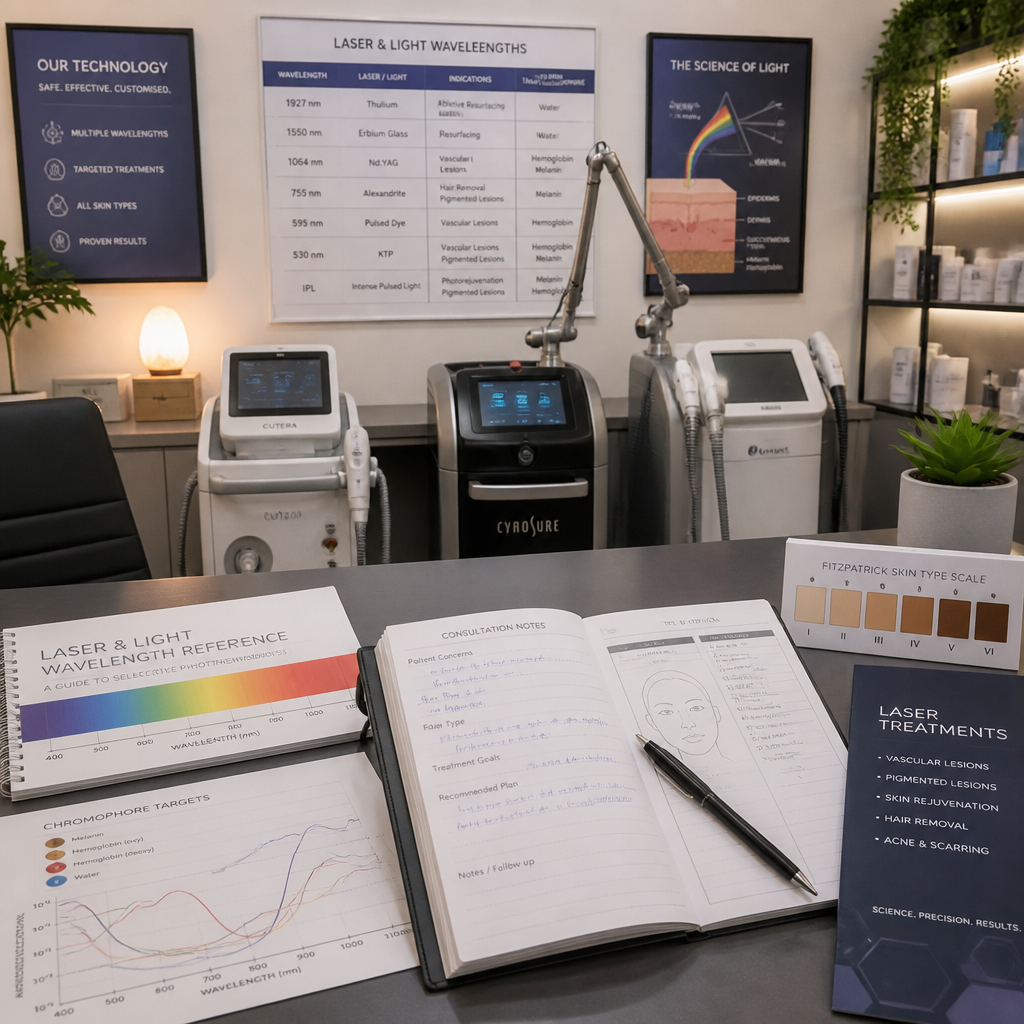
Pro tip: When you see a “before and after” showing dramatic clearance, check whether the image notes the number of sessions and the time elapsed. A result achieved over eighteen months of careful treatment is not the same as a result achieved in three sessions.
Skin Type and Coloured Ink Removal: What Changes
Skin type is one of the most frequently glossed-over variables in tattoo removal consultations, and for coloured tattoos it matters more, not less. The Fitzpatrick scale, which ranges from Type I (very fair skin that always burns) to Type VI (deep brown to black skin that rarely burns), is the standard clinical tool practitioners use to calibrate laser settings.
On lighter skin types (Fitzpatrick I to III), practitioners have more flexibility. Higher fluence settings can be used, which improves clearance rates and can reduce total session count. On darker skin types (Fitzpatrick IV to VI), the laser energy needs to be carefully controlled to avoid targeting the melanin in the skin itself alongside the tattoo ink. Getting this wrong causes hypopigmentation or hyperpigmentation, which can take months to resolve and in some cases is permanent.
For coloured tattoos on medium to darker skin, the 1064 nm wavelength is generally safer because it is less aggressively absorbed by melanin. This is one reason why having a clinician who can assess your skin type properly is not a box-ticking exercise. It changes the entire treatment plan for the better when done correctly.
Nanosecond vs. Picosecond Lasers for Coloured Ink
The generational shift from nanosecond Q-switched lasers to picosecond lasers has been one of the most significant developments in tattoo removal. For black tattoos, both technologies produce results, with picosecond performing faster. For coloured tattoo removal, the difference is more pronounced.
Nanosecond lasers work primarily through a photothermal mechanism. They heat the ink rapidly until it fractures. This works well for high-absorbing dark inks, but for colours that absorb less efficiently, the thermal energy can be damaging to surrounding tissue before the ink breaks down adequately.
Picosecond lasers fire in pulses measured in trillionths of a second. At this pulse duration, the mechanism shifts toward a photomechanical effect, meaning the ink shatters through pressure rather than heat. This produces smaller ink particle fragments, which the immune system can clear more efficiently, while causing less collateral thermal damage to surrounding skin. Published research supports picosecond lasers as better suited to treating multicolour tattoos, including the difficult green and blue pigment ranges that nanosecond systems struggle with.
Comparison of Laser Approaches for Coloured Tattoo Removal
| Laser Type | Best Suited Colours | Key Limitation |
|---|---|---|
| Nanosecond Q-Switched Nd:YAG (1064/532 nm) | Black, dark blue, red, orange, brown | Primarily photothermal mechanism; less effective on green, yellow, and lighter colours; higher paradoxical darkening risk on white/pink ink |
| Picosecond Laser (multi-wavelength) | Black, blue, green, red, purple, and a wider colour range overall | Cannot reliably clear yellow, white, or fluorescent ink regardless of technology; still requires multiple sessions for complex multicolour work |
| Ruby Laser (694 nm) / Alexandrite (755 nm) | Blue and green ink specifically; also effective on certain pigmented lesions | Not suitable for darker skin tones at standard settings; less versatile across the full colour spectrum without complementary wavelengths |
What to Ask Your Liverpool Clinic Before You Book
Liverpool has no shortage of clinics advertising laser tattoo removal. The difference between a good outcome and a disappointing one often comes down to what happens before the first session, not during it. A proper consultation should cover your tattoo’s specific colour profile, your skin type, a realistic session estimate, and what the protocol will be for any difficult colours present.
Here are the specific questions worth asking before you commit to any course of treatment:
- Which laser wavelengths does your equipment operate at, and how do those match the colours in my tattoo?
- Do you use nanosecond or picosecond technology, and which is more appropriate for my specific ink?
- How will you handle the white or yellow sections of my tattoo, and are you aware of the paradoxical darkening risk?
- What is a realistic session estimate for my tattoo, and what factors could push that number higher?
- How will you assess and adapt treatment as we progress, particularly if some colours respond differently to others?
At Faith Laser in Liverpool, consultations are built around these exact questions. Rather than offering a generic package and fitting your tattoo into it, the approach is to assess your individual ink profile and build a treatment plan around what the clinical evidence says works for those specific colours. That specificity is what separates a clinic doing laser tattoo removal colours properly from one applying a one-size-fits-all approach to a problem that is anything but uniform.
If you are searching for tattoo removal Liverpool and your tattoo has colour in it, the single most important thing you can do is attend a face-to-face consultation before booking any sessions. A reputable clinic will insist on this. One that offers to book sessions without seeing the tattoo and your skin in person is telling you something important about their standards.
Frequently Asked Questions
Can laser treatment fully remove a coloured tattoo?
Complete removal is possible for many coloured tattoos, but it depends significantly on the specific colours involved, the ink density, your skin type, and the laser technology being used. Black, dark blue, red, orange, and brown inks have the highest clearance rates. Yellow, white, light green, and fluorescent inks are the most resistant, and for some of these colours, significant fading rather than full removal may be the realistic outcome. A thorough consultation with an experienced practitioner will give you the clearest picture of what is achievable for your specific tattoo.
Why is green ink so difficult to remove from tattoos?
Green ink has a specific absorption peak in the red portion of the light spectrum, which means it requires wavelengths in the 694 to 755 nm range to be treated properly. Many standard clinic lasers only operate at 532 nm and 1064 nm, neither of which matches green ink’s absorption profile well. This is why green tattoo ink frequently outlasts other colours through multiple sessions and why the laser technology available at your clinic matters so much for multicolour work.
Does white tattoo ink get darker when treated with a laser?
Yes, this is a documented clinical phenomenon called paradoxical darkening. White, pink, peach, and some yellow inks contain iron oxide compounds that can be chemically reduced by laser energy, causing them to turn a darker grey or brown shade. This can happen with Q-switched laser treatments in particular. A skilled practitioner will identify this risk during your consultation and adjust the treatment protocol accordingly. In some cases, a test patch on a small section of white ink is advisable before committing to full treatment of that colour.
How long does coloured tattoo removal take in total?
For a multicoloured tattoo, expect the full process to take between one and two years in most cases. Sessions are spaced six to eight weeks apart to allow the skin to heal and the immune system to clear fragmented ink. Coloured tattoos typically require ten to fifteen sessions or more, compared to six to eight for simpler black tattoos. Individual factors including tattoo age, ink density, location on the body, and your skin type all influence this timeline. The interval between sessions cannot be safely shortened without compromising results or risking skin damage.
Is it more painful to remove a coloured tattoo than a black one?
Pain levels in laser tattoo removal are primarily determined by the laser settings and your individual pain tolerance, not the ink colour itself. However, coloured tattoos often require higher fluence settings or multiple laser passes with different wavelengths, which can mean slightly more discomfort per session compared to a straightforward black tattoo removal. Numbing cream is routinely used at professional clinics, and cooling methods are applied during treatment to manage discomfort effectively. Most people find the sensation manageable with appropriate preparation.
Can I remove just one colour from a multicoloured tattoo?
Selective colour removal is theoretically possible because different wavelengths target different pigments. In practice, achieving complete removal of one specific colour without affecting adjacent colours is extremely difficult given how closely pigments can sit to each other under the skin. That said, targeted wavelength selection can prioritise fading of specific colours in a tattoo, which is particularly useful if you are preparing for a cover-up rather than full removal. Discuss this aim clearly with your practitioner so the treatment protocol can be adjusted from the start.
Have you had experience with coloured tattoo removal, or do you have a specific ink colour you are worried about? Share your experience or question below and let us know what you found most useful here.
References
- Clinical guide to removing colour tattoos with laser treatment, covering ink types, wavelengths, and difficulty levels
- Peer-reviewed research on causes of unanticipated ink retention and paradoxical darkening following laser tattoo removal
- Scientific study on picosecond Nd:YAG laser efficacy across multiple tattoo colours and wavelengths
- Clinical research on dual-wavelength picosecond laser for safe and effective multicolour tattoo removal
- Dermatology clinic overview of laser tattoo removal for colour tattoos including wavelength targeting by ink type