Tattoo Removal Myths Liverpool Clients Still Believe
Ask ten people in Liverpool what laser tattoo removal involves and you will likely hear ideas that were out of date a decade ago. Some clients think a dark blue piece is untouchable, others have been told a cream will fade it, and plenty expect the process to be worse than getting inked in the first place. These beliefs decide whether people book at all, and many wait years because of them. Here are the tattoo removal myths we hear most often at Faith Laser, and what the evidence says about each one.
Table of Contents
- Quick Takeaways
- Myth One: Colourful Tattoos Cannot Be Removed
- Myth Two: Fading Creams Work Better Than Lasers
- Myth Three: Removal Hurts More Than the Tattoo
- Myth Four: You Can Fade Ink at Home
- Myth Five: One Session Clears the Ink
- Myth Six: Laser Always Leaves Scarring
- Comparing the Approaches People Try First
- What to Check Before You Book in Liverpool
- Frequently Asked Questions
- References
Quick Takeaways
| Key Insight | Explanation |
|---|---|
| Colour is treatable | Modern Q-switched and picosecond lasers target most ink colours, though yellow pigments often need specialised wavelengths. |
| Creams cannot reach the ink | Tattoo ink sits in the dermis, deeper than any topical product can penetrate. |
| Plan for several sessions | Multi-colour and dense designs usually need more appointments, with healing gaps between each one. |
| Ask about training | Safety depends on a trained practitioner who adjusts settings to your skin type and tattoo. |
| Skip home scrubs and peels | They damage the surface skin, can cause scarring, and leave the ink underneath largely untouched. |
| Pain is manageable | Topical numbing and an honest conversation about your sensitivity make sessions far easier to sit through. |
Myth One: Colourful Tattoos Cannot Be Removed
This is the myth we hear most often, and it usually comes from older equipment. Early laser systems struggled with anything other than black, so clients who had colour work done years ago were often told it was a lost cause. Current equipment is far more capable, and most colourful tattoos can be treated, although results depend heavily on the pigments involved.
How wavelength matching works
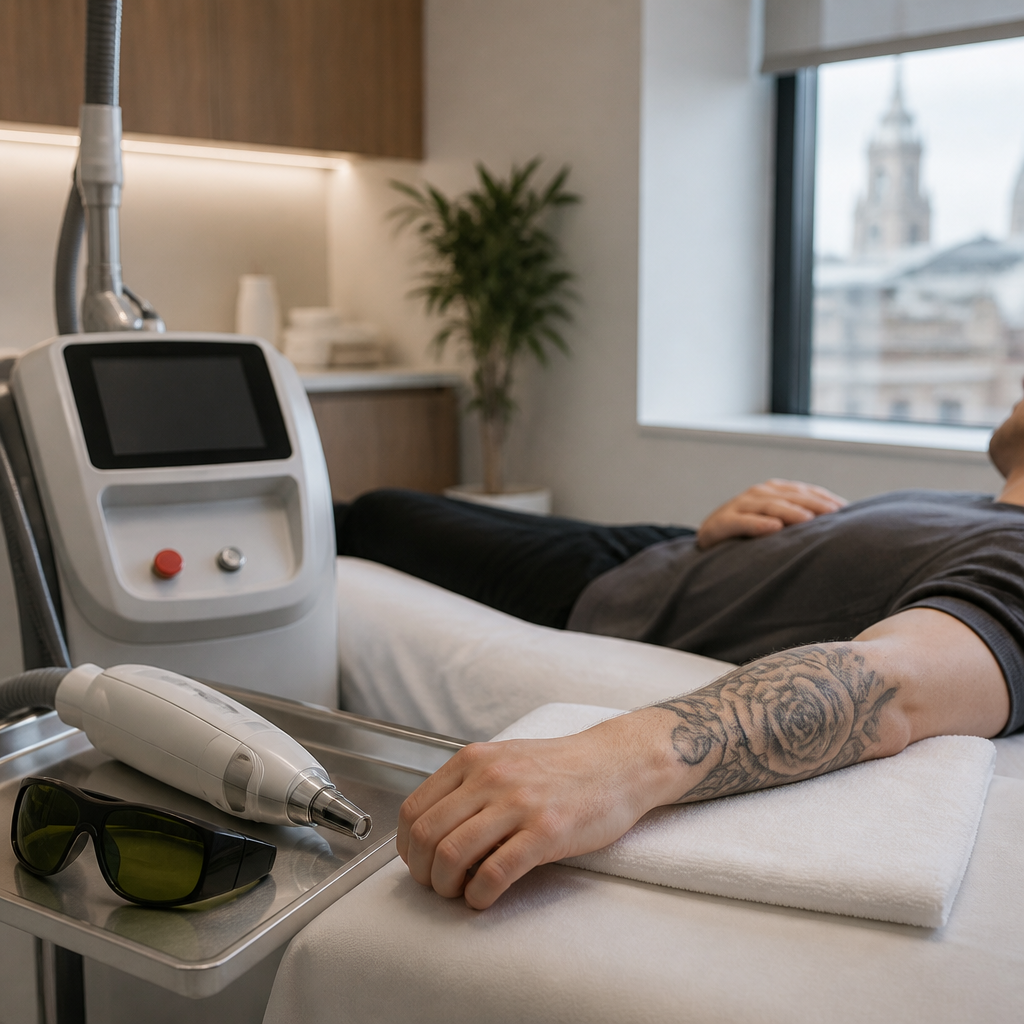
Each ink colour absorbs certain wavelengths of light more readily than others. Black ink is the easiest to treat because it absorbs across the spectrum. Modern Q-switched and picosecond lasers can target reds, oranges, blues, greens and purples, while yellow pigments usually need specialised wavelengths. A good practitioner checks every colour in your piece before the first session, not halfway through the course.
Why multi-colour designs take longer
A tattoo with five colours is really five treatment plans running at the same time. Each pigment has to be cleared with the wavelength it responds to, so multi-colour pieces typically need more sessions than a single-colour outline. Metal-based inks can also be harder to shift, whatever their colour, and may need adjusted settings. Expect a longer course, not a failed one.
At Faith Laser, we map each colour during the consultation so clients know roughly what the course will look like. That plan matters more than any promise about a final result, because it tells you what progress should look like at each stage.
Myth Two: Fading Creams Work Better Than Lasers
Every few months a new cream appears online promising to dissolve ink overnight. Clients who have tried them usually arrive with the same story: money spent, some skin irritation, and a tattoo that looks exactly as it did before. The problem is physics rather than marketing. Tattoo ink sits deep in the dermis, while topical products only reach the outer layer of skin.
Why creams stop at the surface
Laser removal works by delivering short pulses of energy that break ink particles into smaller fragments. Your immune system then clears those fragments over the weeks after treatment. No cream can break pigment apart at dermal depth, so there is no equivalent process to compare it with. Any product that claims otherwise has not shown a mechanism that could work.
What delay actually costs you
The real harm of creams is lost time. A client who spends six months on a product has six months less progress, and the ink is still there to treat. Some over-the-counter products can also irritate the skin enough to complicate a later assessment. We would always rather see someone for a consultation before they start anything at home.
Myth Three: Removal Hurts More Than the Tattoo
Most people describe laser removal as a sharp snapping sensation, a bit like a rubber band flicked against the skin again and again. Some find it uncomfortable, and areas with thin skin or close proximity to bone, such as ribs, ankles and the inner arm, are often more sensitive. Still, many clients tell us the experience is more tolerable than they feared, especially once numbing is in place.
Numbing and planning your appointment
Topical numbing is standard practice and can make a real difference, particularly on larger areas. We also suggest booking when you are not under deadline pressure, because the skin can feel sore for a day or two afterwards. Planning around that window makes the recovery much less stressful, and it stops the discomfort from becoming a reason to cancel the next session.
Why sensitivity varies from person to person
Pain tolerance depends on body site, skin thickness and how the original tattoo was done. Densely packed solid black work can feel different from fine linework. If you have had a bad reaction to pain before, say so at the consultation so your practitioner can adjust the approach. Honest communication at that stage is worth more than any reassurance we can offer over the phone.
Pro tip: Eat a proper meal before your session and wear loose clothing that gives easy access to the treated area. Both small steps make the appointment more comfortable at no extra cost.
Myth Four: You Can Fade Ink at Home
Online forums are full of home methods, from salt scrubs to acid-based peels, and some people try several before booking a consultation. They appeal because they seem free and private. In practice they damage the skin without reaching the ink in any controlled way, which is the opposite of what a removal course needs.

Salt scrubs and acid peels
Abrasive scrubs and acid products remove the top layers of skin, which can look like progress for a few days. The ink underneath is largely unaffected, and the skin is left raw. Repeated exfoliation can leave the surface uneven, and scarring from chemical or abrasive injury is much harder to treat than the tattoo itself.
Why home burns are the real risk
A chemical burn can leave pale or dark patches that remain long after the ink has faded. We regularly see clients who tried home methods first, and their plan often has to begin with healing the skin before any laser work can be safely scheduled. The safe route is always a qualified professional who can assess your skin type and the age and depth of the tattoo.
Myth Five: One Session Clears the Ink
Clients often book one appointment expecting a clean result, then feel let down when the tattoo looks only slightly lighter. Laser removal is a course, not a single treatment. The body needs time to clear fragmented pigment, and the skin needs time to recover between passes, so the schedule is built around both.
Why the gaps between sessions matter
Between appointments your immune system continues to clear the ink fragments, and the skin repairs itself. Rushing the schedule can increase the risk of a skin reaction and may reduce what you ultimately achieve. Most practitioners space sessions several weeks apart, and the exact interval depends on how your skin responds.
Realistic expectations for a full course
Simple single-colour tattoos often need fewer sessions than dense, multi-coloured or older designs. Ink type, skin tone, tattoo depth and the original application all shape the timeline. A good consultation should explain what the course looks like for your particular piece and what partial clearance looks like at each stage, rather than promising a fixed number.
Myth Six: Laser Always Leaves Scarring
Scarring is a fair worry. Older removal methods, including surgical excision and dermabrasion, carried a real risk of it. Professional laser treatment is different. According to the US Food and Drug Administration’s consumer guidance, when laser tattoo removal is done by a trained health care professional it can be safe and effective. The word that matters there is trained.
What actually causes scarring
Scarring usually comes from poor technique, overly aggressive settings, or treating skin that was already damaged or infected. It is rarely an unavoidable outcome of the laser energy itself. Before you book, ask how the practitioner adjusts settings for your skin type and whether they check the skin after each session.
What the clinical literature shows
A clinical update on laser tattoo removal reported superior clearance with certain multi-pass protocols compared with traditional single-pass treatment. That matters because it shows the way a session is delivered affects results, not just the type of laser used. Laser treatment is also generally considered safer than other removal methods because it targets only the pigment in the tattoo.
The myths that cost clients the most are rarely about the laser itself. They are about the shortcuts people take before a laser is ever used.
Comparing the Approaches People Try First
Most Liverpool clients have tried or considered at least one method before they book. The table below compares the three most common options on what they can realistically do. A method can be cheap at the start and still be the most expensive choice once you count lost time, wasted money and skin repair.
| Approach | What it can realistically do | Main trade-off |
|---|---|---|
| Professional Q-switched or picosecond laser | Breaks ink into fragments the immune system clears, across most colours when the right wavelengths are used | Needs several sessions and careful aftercare |
| Topical fading creams | Cannot reach dermal ink, and there is no established mechanism that fades tattoos | Money and time spent with no proven effect, plus possible skin irritation |
| Home methods such as salt scrubs or acid peels | Removes surface skin only, with the ink largely untouched | Risk of burns, uneven skin and scarring |
The comparison makes one thing clear: only the professional laser approach targets the pigment where it sits. The other two options can cost you skin health without moving the ink at all. That is why we steer clients toward a consultation before they try anything at home.
It is also worth being honest about the limits. Laser removal will not always deliver complete clearance, and a practitioner who guarantees it is making a claim the process cannot back up. A realistic outcome, clearly explained, is a far better benchmark than a dramatic before-and-after photo.
What to Check Before You Book in Liverpool
Choosing the right practitioner matters more than choosing a particular laser brand. Liverpool has a wide range of providers, and the quality of the consultation tells you more than any price list. A good clinic will examine your tattoo in person, explain the colours and ink depth, and give you a realistic plan rather than a fixed promise.

Questions to ask at your consultation
Ask which wavelengths will be used for each colour in your design, how many sessions they expect, and what they do if a session leaves the skin reacting badly. Ask who performs the treatment and how they are trained. Vague answers are a warning sign. Our consultations cover these points in plain language, because we would rather a client leaves informed than booked on hope. You can read more about our approach on the Faith Laser website.
Aftercare between appointments
Aftercare is where many courses succeed or fail. Keep the area clean, protect it from sun exposure, and follow the specific instructions your practitioner gives you. Avoid picking at healing skin, and tell your practitioner about any new medication or skin condition, since these can change the treatment plan.
Pro tip: Photograph your tattoo in natural light from a few angles before your first session. That gives you and your practitioner a baseline to measure fading against, which is far more reliable than memory.
Frequently Asked Questions
Can every tattoo be removed with laser?
Almost every tattoo can be significantly faded, but complete removal is not guaranteed. Results depend on ink colour, ink depth, how dense the design is, and your skin type. A proper consultation will tell you what is realistic for your piece.
How many sessions will I need?
There is no single answer. Simple single-colour tattoos often need fewer sessions, while multi-coloured or heavily packed designs usually take longer. Sessions are normally spaced several weeks apart so the skin can recover and the body can clear the ink fragments.
Does laser tattoo removal hurt?
Most clients describe a snapping or stinging sensation rather than deep pain. Sensitivity varies by body area and skin thickness. Topical numbing is standard practice and makes sessions noticeably more comfortable.
Are fading creams worth trying before a laser appointment?
No. Topical products cannot reach the ink, which sits deeper in the skin than creams can penetrate. Trying them first usually adds time and cost without changing the outcome of a professional course.
How do I know the clinic is safe?
Ask who will perform the treatment and what training they have. A trained professional who adjusts settings to your skin type and checks the skin after each session is the key safety factor. Vague answers about qualifications should be a reason to look elsewhere.
Will my tattoo look worse before it looks better?
It can. Treated areas often look greyish, frosted or slightly raised straight after a session, and they may look darker for a short period while the skin settles. This is a normal part of the process and does not mean the treatment has failed.
Have you tried a cream, a home method or a laser course on a tattoo, and what did you learn from it? We would like to hear your experience, because it helps other Liverpool clients make a better-informed decision.