Fading an Old Tattoo in Liverpool: A Sensitive Guide
Most people searching for help with fading an old tattoo in Liverpool are not really asking about ink. They want to stop a piece of their past from deciding how they are seen today. A gang insignia from a difficult period, a name from a first relationship, or a rushed design done at seventeen can follow someone into job interviews, family gatherings and every morning in the mirror. Fading is often the gentlest route to making that ink recede without pretending it never existed. This guide explains what laser fading really involves, how to prepare, and how to move on at your own pace.
Table of Contents
- Quick Takeaways
- What Fading an Old Tattoo Actually Means
- Why Gang and Youthful Tattoos Carry Different Weight
- Preparing for a Consultation in Liverpool
- How Laser Fading Works Over Several Sessions
- Fading, Cover-Ups and Full Removal Compared
- Talking to Family and Employers About Your Ink
- Common Mistakes That Slow Fading Down
- Frequently Asked Questions
- References
Quick Takeaways
| Key Insight | Explanation |
|---|---|
| Fading lightens the ink rather than erasing it | Laser energy breaks pigment into smaller particles over several sessions. Expect a softer, less visible tattoo, not a perfectly blank patch of skin. |
| Dense black and deep blue usually respond best | Heavy, dark pigment gives the laser more to work on. Pale yellows and some light greens are often more stubborn, so colour should shape your expectations from the start. |
| Sessions need recovery time between them | Treatments are normally spaced several weeks apart so the skin can settle. Booking too close together is one of the fastest ways to cause unnecessary irritation. |
| You do not owe anyone your history | A good consultation focuses on the design, the skin and your goals. You can book without explaining why the tattoo was done. |
| Visible placement often comes first | Tattoos on the hands, neck and face are the ones most often linked to employment barriers, so many people prioritise them before anything else. |
| Decide your end goal before the first session | A faded tattoo, a cover-up canvas and full removal each need a different plan. Choosing one early saves time and money. |
| Keep a consistent photo log | Take photos in the same light every few weeks. Progress is easy to miss day to day but obvious when you compare images months apart. |
What Fading an Old Tattoo Actually Means
Fading is a reduction, not a deletion. Laser light targets the pigment in the skin, and the body gradually clears the broken-down particles over the weeks that follow. Each session removes a portion of the ink, so the tattoo gets lighter and less defined rather than disappearing in a single visit.
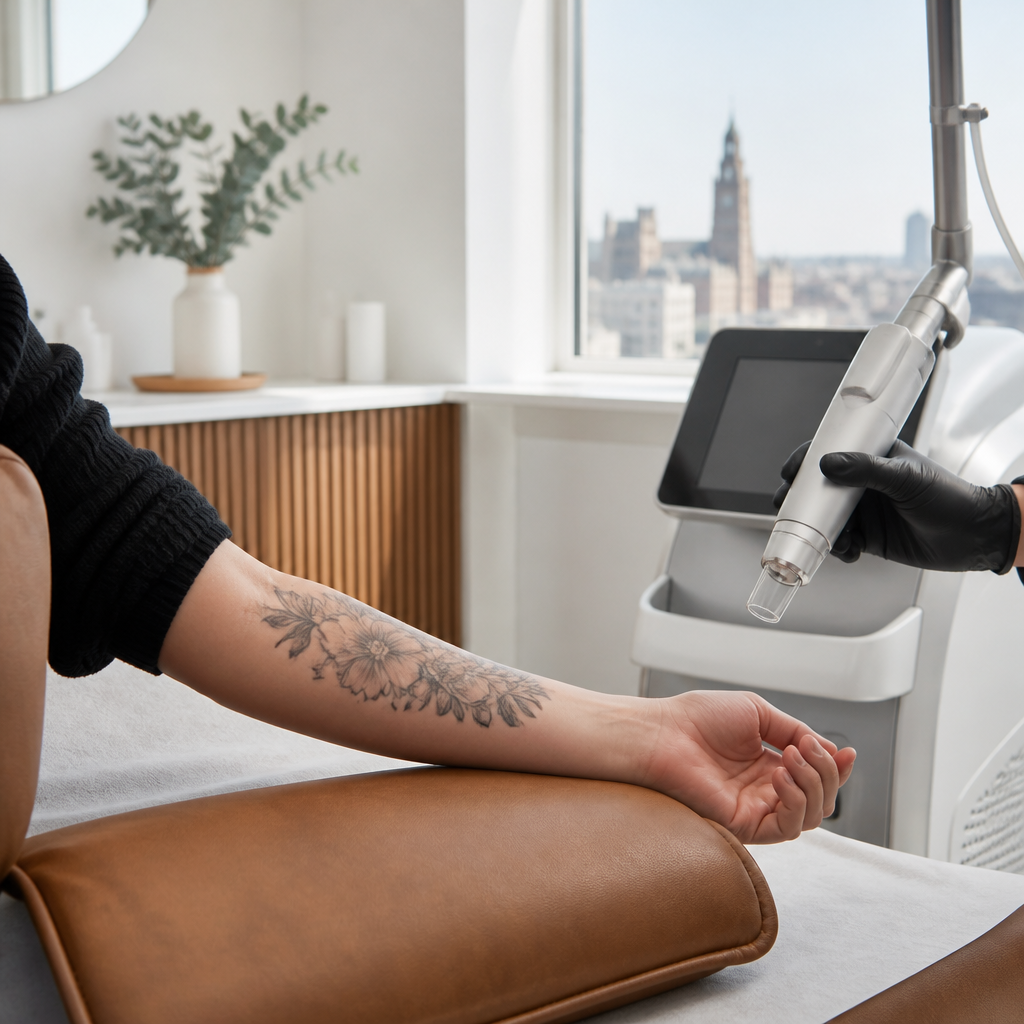
In practice, the outline usually softens first. Solid black fills then turn grey and patchy, and fine detail blurs into the surrounding skin. Many clients find that the tattoo stops being the first thing people notice long before it is fully gone.
Why fading can be the better goal
Full removal is rarely the most realistic target for a large or dense tattoo, especially one applied years ago with deep pigment. A faded tattoo can still be useful, because it creates room for a cover-up or simply reduces the impact of the design in everyday life. The aim is a tattoo that no longer defines you, which is a different and often more achievable outcome.
Medical overviews of tattoo removal list laser therapy, surgical excision and dermabrasion as the main options. Surgery can remove a small tattoo cleanly but leaves a scar, and dermabrasion is rarely the right choice for a visible area. For most people wanting to reduce ink on the face, hands or neck, laser remains the most controlled option.
Why Gang and Youthful Tattoos Carry Different Weight
Not all old tattoos create the same problem. A gang-related design often carries a message that people read instantly, and that message can close doors before anyone has spoken to you. A youthful tattoo may be less loaded in meaning but still feel like a decision you no longer recognise yourself in. Both deserve a plan that fits your situation rather than a generic approach.
Visible ink and employment
Homeboy Industries, a nonprofit in Los Angeles, offers free tattoo removal to community members and minors who have gang-related or visible tattoos on their hands, neck or face. The organisation describes visible tattoos as a major obstacle to employment, and says many people’s first step out of gang life is recognising that such tattoos are unwelcome at work. That observation matches what many people tell practitioners across the UK, even though the legal and social setting is different.
If your tattoo is visible during an interview, a shift at a warehouse or a meeting with a new client, it is worth treating it as a practical priority. Fading the most visible areas first can make a real difference while larger pieces are planned over a longer timeline.
Tattoos from your teenage years
Many tattoos from the teenage years were done in informal settings. Licensed studios will not tattoo anyone under 18, so younger people often ended up with work that was rushed, badly placed or chosen under peer pressure. Those tattoos can be particularly hard to live with because they were never a considered choice.
Clients in this position often want to fade the design so that it stops looking like a teenage decision. There is no shame in that. Your twenties and thirties are allowed to look different from your sixteenth year, and a consultation can help you decide what a realistic next version of your skin looks like.
Preparing for a Consultation in Liverpool
A consultation is where most of the important decisions get made. It is your chance to explain what you want, ask about what is possible, and understand how the process will feel. Good providers will examine the ink, the skin tone and the depth of the pigment before they promise anything.
What to bring to your first appointment
Bring recent photos of the tattoo taken in natural light, along with any older pictures that show how it looked when it was new. If you have a particular placement concern, such as a tattoo near the neck or on the fingers, mention it at the start. Wear clothing that allows easy access to the area so the assessment does not take longer than necessary.
Think about your goal before you arrive. “I want it less visible” is a perfectly valid answer, but it helps to know whether you want it gone entirely, faded enough to cover, or simply reduced for work. Those three aims lead to very different treatment plans.
Questions worth asking
Ask how many sessions the practitioner expects, and how they arrived at that estimate. Ask what results look like at each stage, and what happens if the ink responds more slowly than expected. A reliable answer will be specific about the uncertainty rather than promising a fixed outcome.
Pro tip: Ask whether the consultation can be kept to the design and the skin only. You can share as much or as little of the tattoo’s history as you choose, and a respectful clinic will work from the artwork rather than the story behind it.
You should also ask about aftercare, the cost of each session and whether a package is better value if several treatments are needed. Our team at Faith Laser in Liverpool approaches every consultation as a private, judgement-free conversation, because people make better decisions when they feel relaxed.
How Laser Fading Works Over Several Sessions
Laser fading happens in stages, and the rhythm matters as much as the technology. Each session delivers light into the ink, causing the pigment to break apart. Your skin then needs time to recover before the next treatment, which is why sessions are normally several weeks apart rather than back to back.
Patience is the hardest part for most clients. The first session can look like very little has changed, and it is common to feel disappointed. Changes tend to become more obvious after the body has cleared the broken pigment over the following weeks.

Why ink colour changes the plan
Black and dark blue usually respond most predictably, because the laser can target that pigment strongly. Red, orange, yellow and some light green pigments can behave differently and sometimes require a different approach. A tattoo with mixed colours may fade unevenly, so the practitioner may treat each shade in a different way.
Skin tone and the age of the tattoo also influence results. Older tattoos sometimes respond more readily because the ink has already started to spread and settle, though this is not a guarantee. Be wary of anyone who promises the same outcome for every tattoo without looking at it first.
Aftercare between sessions
Keep the treated area clean and follow the aftercare instructions you are given. Blistering, crusting and temporary redness can occur, and picking at the skin can increase the risk of marks. Sun protection matters too, because sun-exposed treated skin is more vulnerable to changes in colour.
Fading, Cover-Ups and Full Removal Compared
Choosing between options is easier when you can see the trade-offs side by side. Fading, cover-ups and full removal each suit a different kind of tattoo and a different kind of goal. The right choice depends on what the tattoo looks like now, where it sits on your body and how quickly you want to see change.
| Approach | Best suited for | Main trade-off |
|---|---|---|
| Laser fading | Reducing visibility quickly, particularly on hands, neck or face, or softening a design before a cover-up | Usually takes several sessions, and some faint outline or shadow may remain |
| Cover-up tattoo | People who want a new design in the same place and are comfortable with a permanent change of artwork | Works best after the original ink has been faded, so it can add to the total time and cost |
| Full laser removal | Small, lighter tattoos where a complete result is realistic and the client wants a blank canvas | Large or dark designs can take many more sessions, and complete clearance is not always achieved |
The goal for most people is rarely a perfect blank canvas. It is a tattoo that no longer defines the first impression they make.
Many clients find that fading first and then choosing a cover-up gives them the most control. The faded version becomes a clearer base for a new design, which often produces a better final result than working on the original ink.
Talking to Family and Employers About Your Ink
Deciding who needs to know about your tattoo removal is a personal choice. Some people want to tell their family because they are working toward a fresh start, while others prefer to keep the process private until the results are clear. Neither approach is wrong, and you can change your mind as you go.
Deciding who needs to know
Start by asking who sees the tattoo regularly and who will be affected by it. A parent who wants to be involved may appreciate an honest update, while an employer usually needs only enough information to understand a temporary change in appearance. Many people find that they only need to explain the situation to one or two people.
Explaining it without giving the full story
You can say something simple and true, such as “I am getting an old tattoo faded because I want it to reflect who I am now.” That answer closes the conversation without inviting questions about the past. You are allowed to stop there.
Pro tip: If you need to cover a tattoo for work in the short term, ask your practitioner about temporary options during the fading period. A plan that keeps you comfortable at work can make the process far less stressful.
For children, the conversation can be more emotional. Many people in this situation want to set a good example for their kids, and that goal can give the process a clear purpose. Keep the explanation age-appropriate and focus on the change you are making rather than the history behind the ink.
Common Mistakes That Slow Fading Down
Most setbacks in tattoo fading come from avoidable choices rather than bad luck. Clients who understand the common mistakes tend to get more consistent results and fewer complications. The good news is that most of these problems are easy to prevent once you know what to watch for.

Booking sessions too close together
The most frequent error is booking treatments before the skin has recovered. Repeated sessions on irritated skin can increase discomfort and slow the healing process. It is usually better to wait the full recommended interval and judge progress from consistent photos.
Skipping sun protection and aftercare
Sun exposure can make the treated area more prone to colour changes, and some clients stop following aftercare once the initial redness fades. Keep the area covered when you are outside and use the products your practitioner recommends for as long as they advise. Treat the healing period as part of the treatment, not a break from it.
Pro tip: Take a photo at the same time of day, in the same place and under the same light before every session. Small changes are easy to miss in the mirror, but a simple photo timeline will show you clearly whether the approach is working.
Frequently Asked Questions
How many sessions will it take to fade an old tattoo?
Most people need several sessions spaced weeks apart. The exact number depends on the size, density and colour of the ink, as well as how your skin responds, so a practitioner can only give a realistic estimate after assessing the tattoo.
Will fading remove a gang tattoo completely?
Complete removal is not always achievable, especially with large or heavily shaded designs. Many clients aim for a result that is far less visible and no longer dominates the first impression they make, and that goal is often the most realistic one.
Do I have to explain the history of my tattoo at a consultation?
No. A consultation needs to focus on the design, the skin and your goals. You can keep your personal history private and still receive a full assessment and clear advice.
Is laser fading painful?
Most people describe a snapping or stinging sensation during treatment. Numbing products are commonly offered, and the level of discomfort often depends on the placement of the tattoo, so ask your practitioner what to expect for your specific area.
Should I fade a tattoo before getting a cover-up?
In many cases, yes. Fading the original ink first often gives a cover-up artist a lighter, cleaner base to work from, which can produce a better final design. Your consultation can confirm whether this makes sense for your tattoo.
Are there free tattoo removal options in the UK?
Free programmes for this purpose are less common in the UK than in some parts of the United States. Where free or low-cost options exist, they tend to be run by community or support organisations, so it is worth asking local charities or community services whether they can point you in the right direction.
If you have faded an old tattoo or are weighing up your options now, we would welcome you telling us about your experience or what has held you back so far.