Laser Hair Removal vs Waxing: Best for Liverpool?
If you have ever booked a waxing appointment every four weeks and thought “there has to be a better way,” you are already asking the right question. The debate around laser hair removal vs waxing comes down to one core tension: short-term convenience versus long-term freedom. For Liverpool clients weighing up both options, the answer is rarely as simple as price per session. This guide cuts through the noise and gives you a straight, experience-backed comparison so you can make the right call for your skin, your schedule, and your budget.
Table of Contents
- Quick Takeaways
- How Each Method Actually Works
- Pain and Skin Reactions Compared
- The Real Cost Comparison
- Which Method Suits Your Skin and Hair Type
- Laser vs Waxing for Specific Treatment Areas
- Full Comparison Table
- Frequently Asked Questions
- References
Quick Takeaways
| Key Insight | Explanation |
|---|---|
| Laser delivers long-term reduction | Laser targets the hair follicle itself, progressively reducing regrowth with each session, while waxing only removes hair temporarily at the surface root level. |
| Waxing needs repeat appointments indefinitely | Most clients need waxing every three to four weeks for life. Laser hair removal typically requires a course of sessions, after which maintenance is far less frequent. |
| Ingrown hairs are a waxing problem, not a laser one | Waxing is a leading cause of ingrown hairs and folliculitis, especially in curly or coarse hair types. Laser hair removal actively reduces this risk over time. |
| Sensitive skin tolerates laser better | Laser treatments cause minimal skin trauma. Waxing strips the skin along with the hair, frequently causing redness, irritation, and micro-tears in sensitive skin. |
| Laser costs more upfront but less over a lifetime | The cumulative cost of waxing every month for years consistently exceeds the cost of a completed laser course at a reputable clinic. |
| Multiple sessions are non-negotiable for laser | Laser only works on hairs in the active growth (anagen) phase. A typical course spans six to eight sessions spaced four to six weeks apart to catch every follicle. |
| Hair and skin colour affect laser suitability | Dark, coarse hair on lighter skin responds best to laser. Modern diode and Nd:YAG technology has expanded the range of treatable skin tones significantly. |
How Each Method Actually Works
Understanding why these two methods produce such different outcomes starts with the biology. Hair grows in three phases: anagen (active growth), catagen (transition), and telogen (resting). The difference between a temporary result and a long-term one depends entirely on which phase the treatment can reach.
Waxing: Removal at the Root, Not the Follicle
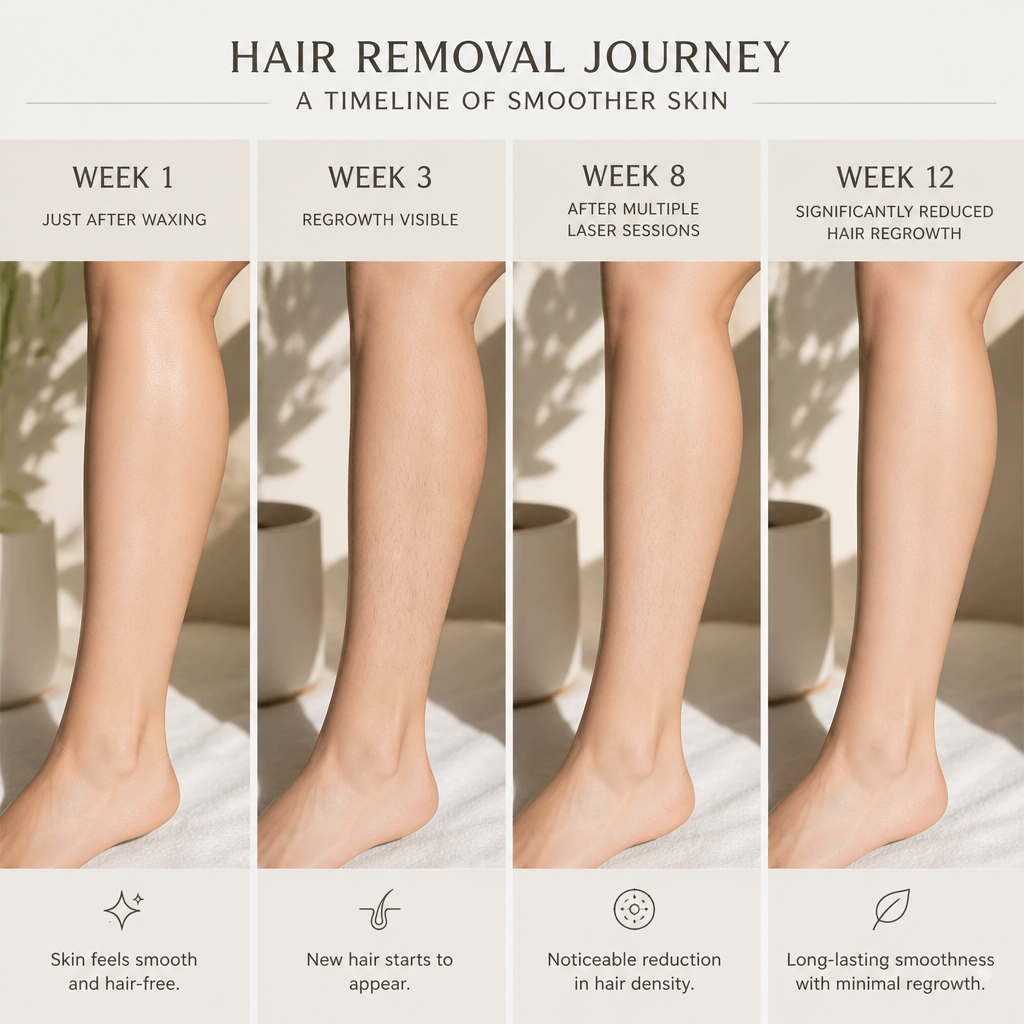
Waxing pulls the hair shaft out from the root, giving you smooth skin for roughly three to four weeks. But it does nothing to damage the follicle itself. The follicle remains fully intact and capable, so new hair grows back on the same schedule it always has. You are not breaking the cycle. You are just interrupting it, repeatedly, indefinitely.
Over years of waxing, some clients notice their hair grows back slightly finer in some areas. This is inconsistent and largely unpredictable. It is not a treatment outcome you can plan around.
Laser: Disrupting the Follicle at the Source
Laser hair removal works on a principle called selective photothermolysis. The laser emits a precise wavelength of light that is absorbed by the melanin (pigment) in the hair shaft. That energy converts to heat and travels down into the follicle, damaging its ability to produce new hair. Done correctly across the right number of sessions, this results in significant, long-term hair reduction rather than a temporary pause.
At Faith Laser, we use advanced wavelength technology designed to treat the hair follicle precisely, minimising the energy absorbed by surrounding skin tissue. This is what separates professional clinic-grade treatment from consumer devices and makes the results genuinely lasting.
Pro tip: Do not shave immediately before your waxing appointment or laser consultation without guidance from your clinician. The two methods require different pre-treatment preparation, and getting this wrong can affect results or cause unnecessary skin irritation.
Pain and Skin Reactions Compared
Pain tolerance is personal, but the mechanics of each method create very different sensations. Waxing involves physically pulling hair from the root using applied force. For most people, especially in sensitive areas like the underarms, bikini line, or face, this is a sharp, stinging pain. It is brief but it is real, and it repeats every few weeks for as long as you wax.
What Laser Feels Like in Practice
Laser treatment is commonly described as feeling like a warm flick or the snap of a rubber band against the skin. At professional clinics using modern equipment, the discomfort is brief and controlled. Many clients are surprised by how manageable it is, particularly when compared to the regular pain of a waxing appointment in a sensitive zone.
Skin Reactions: Short-Term vs Ongoing
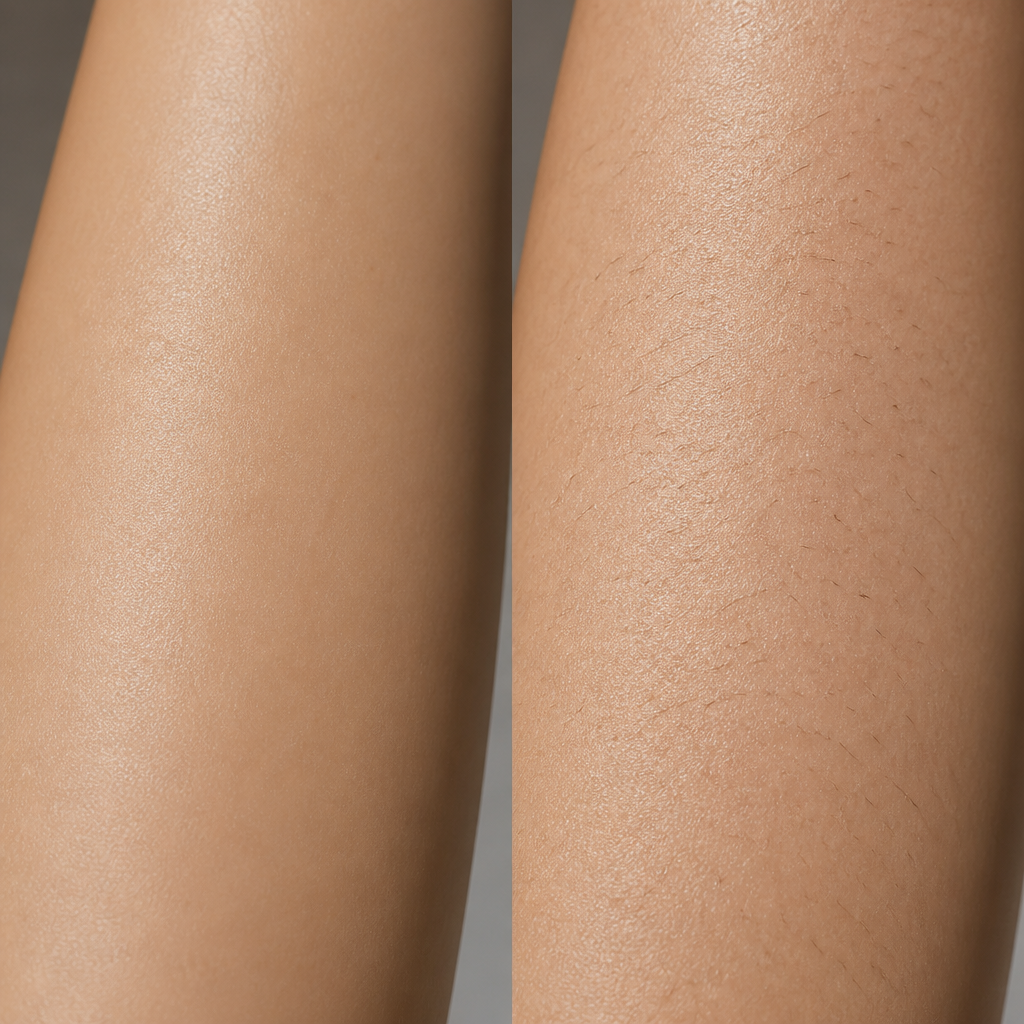
Waxing frequently causes immediate redness, minor swelling, and sensitivity that can last 24 to 48 hours after each appointment. Ongoing waxing is also a well-recognised cause of folliculitis, which is an inflammation of the hair follicles that presents as tender red spots or pustules. Clients with curly or coarse hair are particularly prone to ingrown hairs after waxing, which can lead to pigmentation changes and scarring if left unmanaged.
Laser hair removal can cause mild redness and a sensation similar to mild sunburn immediately after treatment, but these side effects typically resolve within hours. Crucially, as the course of treatment progresses and hair becomes finer and sparser, even these minor reactions tend to diminish.
The skin is not just an aesthetic surface. Every time waxing strips hair from sensitive tissue, it creates micro-trauma that accumulates over months and years. Laser hair removal, by contrast, targets the follicle precisely without pulling on the surrounding skin, which is why long-term skin health outcomes tend to be better with laser.
For Liverpool clients who have been managing persistent ingrown hairs or folliculitis through regular waxing, switching to laser is not just about convenience. It is about resolving a skin health issue at its source.
The Real Cost Comparison
Cost is the most common objection to laser hair removal, and it deserves a direct answer. Waxing looks cheaper per session. Over a lifetime, it is not. The maths is straightforward once you account for frequency and duration.
The True Cost of Ongoing Waxing
A typical waxing appointment happens every three to four weeks. Over twelve months, that is roughly thirteen appointments per year. Multiply that across five, ten, or twenty years and the cumulative spend becomes substantial, especially when you factor in multiple treatment areas. Add the cost of aftercare products for ingrown hairs, soothing creams, and any dermatologist visits for skin reactions, and the real number climbs further.
The critical point is that waxing costs never stop. There is no endpoint. You pay, indefinitely, for a result that lasts a few weeks at a time.
Understanding the Laser Investment
Laser hair removal requires an upfront investment in a course of sessions. Most areas require six to eight sessions spaced four to six weeks apart to achieve significant, lasting reduction. After the course is complete, most clients need only occasional maintenance sessions, which are far less frequent than monthly waxing appointments.
When you compare the total cost of waxing over several years against the cost of a laser course plus infrequent top-ups, laser consistently comes out ahead for clients who were previously waxing regularly. For high-frequency waxing clients, the crossover point often arrives within two to three years.
Pro tip: When requesting a laser hair removal quote, ask about package pricing that covers multiple areas together. Treating underarms, intimate zones, and facial areas in a combined package is often significantly more cost-effective than booking each area separately, and it is how most clients at Faith Laser approach their treatment plan.
Which Method Suits Your Skin and Hair Type
Waxing works on virtually any hair colour and skin tone, which gives it a broad accessibility advantage. Laser hair removal is more nuanced, though modern technology has dramatically expanded who can be treated effectively.
Hair Colour and Laser Effectiveness
Laser targets melanin, the pigment that gives hair its colour. Dark, coarse hair contains the highest concentration of melanin and responds best to laser treatment. Brown and black hair across a range of skin tones can be treated effectively. Very light blonde, white, or grey hair contains little to no melanin and does not respond well to laser. Red and strawberry blonde hair can fall somewhere in between, depending on the specific shade and underlying pigment.
If you have very light or white hair, waxing remains one of the few consistently effective options for hair removal in those areas. For everyone else, modern laser technology offers a genuine, lasting solution.
Skin Tone Considerations
Early laser technology worked best on the classic light skin, dark hair combination because the contrast made it easier to target the follicle without affecting surrounding tissue. Diode lasers and Nd:YAG lasers have changed this significantly. Nd:YAG technology, in particular, operates at a wavelength that penetrates deeper and is less absorbed by skin melanin, making it suitable for darker skin tones that would previously have been advised against laser treatment.
At Faith Laser, we assess each client individually and match the right technology to their skin type, ensuring safe and effective treatment regardless of complexion. This is exactly the kind of personalised consultation that generic or budget-focused providers skip, and it is where results and safety diverge.
Laser vs Waxing for Specific Treatment Areas
Not all body areas are equal when it comes to hair removal, and the comparison between laser and waxing shifts slightly depending on where you are treating. The body areas that attract the most client questions at Faith Laser are underarms, intimate zones, and facial areas.
Underarms
The underarm area is one of the most popular for laser treatment, and for good reason. Underarm skin is sensitive and waxing this area repeatedly causes cumulative irritation. Laser results in the underarms tend to be fast and dramatic because the hair is typically dense and dark, meaning it responds excellently to the targeted energy. Most clients see significant reduction within the first few sessions.
Intimate Zones
Intimate area waxing is among the most painful hair removal experiences a person can have, and the ingrown hair risk is highest here due to the coarseness of the hair and the sensitivity of the skin. Laser treatment of intimate zones is more comfortable by comparison and eliminates the chronic ingrown hair problem that many regular waxing clients deal with. At Faith Laser, intimate zone treatments are handled in a private, relaxed environment designed to make clients feel entirely at ease.
Facial Hair Removal
Facial waxing is effective but harsh on the skin. The face is exposed to daily environmental stressors, and repeatedly stripping hair with wax adds another layer of trauma to already-sensitive facial tissue. Laser for facial hair removal offers a much gentler long-term approach, and as hair reduces over the course of treatment, clients typically notice improvements in skin texture as well.
Full Comparison Table
The table below gives a direct, side-by-side look at how laser hair removal and waxing compare across the factors that matter most to Liverpool clients making this decision.
| Factor | Laser Hair Removal | Waxing |
|---|---|---|
| Result duration | Long-term reduction, often permanent in treated areas after a full course | Temporary, typically three to four weeks per session |
| Number of treatments needed | Six to eight sessions across a few months, then occasional maintenance | Ongoing appointments every three to four weeks, indefinitely |
| Pain level | Mild, brief discomfort described as a warm flick or snap | Moderate to high pain from mechanical hair pulling |
| Ingrown hair risk | Low, and reduces further with each session | High, especially for coarse or curly hair types |
| Suitable for sensitive skin | Yes, laser minimises skin trauma | Poorly, waxing strips skin and causes recurring irritation |
| Hair colour requirement | Best on dark hair; not effective on white, very light blonde, or grey | Works on all hair colours |
| Upfront cost | Higher per course | Lower per single appointment |
| Long-term cost | More cost-effective once the course is complete | Accumulates significantly over months and years |
| Skin health over time | Improves, with reduced irritation and fewer ingrown hairs | Can worsen with repeated trauma, folliculitis, and pigmentation |
Frequently Asked Questions
Is laser hair removal vs waxing a permanent solution?
Laser hair removal delivers significant, long-term hair reduction. Most clients experience permanent reduction in treated follicles after completing a full course of sessions. It is more accurate to describe it as a long-term reduction rather than absolute permanent removal, since occasional maintenance sessions may be needed over time. Waxing is entirely temporary and offers no cumulative reduction in hair growth.
How many laser sessions will I need to replace waxing entirely?
Most clients need between six and eight sessions, spaced four to six weeks apart, to achieve significant hair reduction. The exact number depends on the treatment area, your hair colour and thickness, and your skin tone. Hair only responds to laser during its active growth phase, which is why multiple sessions are necessary to treat every follicle. After your course, you may need an occasional top-up session, but the frequency is nothing like the monthly commitment of waxing.
Does laser hair removal hurt more than waxing?
For the majority of clients, laser hair removal is more comfortable than waxing, particularly in sensitive areas like the underarms or intimate zones. Waxing involves pulling hair out by the root with force, which causes a sharp, immediate pain that repeats at every appointment. Laser produces a brief, controlled sensation often compared to a warm rubber band snap. That discomfort also reduces as hair becomes finer and sparser across the treatment course.
Can I switch from waxing to laser hair removal?
Yes, and many clients make this switch specifically because they are tired of the pain, ingrown hairs, and ongoing cost of waxing. The main preparation requirement is that you stop waxing before your laser course begins, because laser needs the hair shaft to be present in the follicle to work. Your clinician will advise you on the exact preparation timeline during your consultation. Shaving the area in the weeks before is fine and will not affect laser effectiveness.
Is laser or waxing better for the bikini and intimate area?
Laser is the better long-term choice for intimate areas. The skin is sensitive, the hair is typically coarse, and the ingrown hair risk from waxing in this zone is high. Laser treatments in this area are more comfortable than waxing and progressively reduce the hair permanently, eliminating the chronic cycle of appointments, irritation, and ingrown hairs that many regular waxing clients experience. At Faith Laser, intimate zone treatments are carried out in a discreet, professional environment.
Is laser hair removal worth it for Liverpool clients specifically?
Absolutely, and the value case is straightforward. Liverpool clients who wax regularly are paying for appointments every few weeks, indefinitely. A professional laser course at a clinic like Faith Laser replaces that ongoing spend with a finite investment that delivers lasting results. Factor in the improved skin health, elimination of ingrown hairs, and the time saved from skipping monthly salon visits, and the value proposition is clear. The key is choosing a clinic with the right technology and a properly qualified team rather than opting for the cheapest option available.
Have you made the switch from waxing to laser, or are you still weighing up the options? Share your experience or questions in the comments below.
References
- Laser hair removal vs waxing results and longevity compared by a UK clinic
- UK laser clinic guide to whether laser hair removal is better than waxing for skin sensitivity and cost
- Long-term results, pain, and value compared between laser hair removal and waxing
- Overview of laser hair removal technology, skin types, and hair pigmentation from Wikipedia
- Complete guide to laser vs waxing covering pain, cost, and suitability