How Does Laser Tattoo Removal Work? A Plain-English Guide
Most people assume laser tattoo removal is simply “burning” the ink out of your skin. It is not, and understanding the difference matters if you want to set realistic expectations, choose the right clinic, and know exactly what your body is doing between sessions. The reality is more precise, more fascinating, and far more reassuring than the myths. This article breaks down how laser tattoo removal works in plain language, from the physics of light pulses to the role your own immune system plays in clearing the ink, and explains what makes modern technology at a clinic like Faith Laser in Liverpool so much more effective than older methods.
Table of Contents
- Quick Takeaways
- What the Laser Actually Does to Ink
- The Role of Your Immune System
- Laser Types and Why Technology Matters
- What Affects How Many Sessions You Need
- What to Expect During and After a Session
- The Laser Tattoo Removal Process in Liverpool
- Frequently Asked Questions
- References
Quick Takeaways
| Key Insight | Explanation |
|---|---|
| Lasers shatter ink, not skin | Ultra-short light pulses create a photoacoustic shockwave that fragments ink particles without burning surrounding tissue. |
| Your immune system does the clean-up | After the laser breaks ink into tiny fragments, your lymphatic system flushes those particles out over several weeks. |
| Black ink fades fastest | Black and dark grey absorb all laser wavelengths most effectively. Bright greens, blues, and yellows require specific wavelengths and more sessions. |
| Spacing sessions matters | Allowing 6 to 8 weeks between treatments gives your body time to clear fragmented ink and your skin time to heal fully. |
| Picosecond technology outperforms older lasers | Picosecond pulses are shorter than nanosecond pulses, shattering ink particles more efficiently with less thermal damage to surrounding skin. |
| Professional tattoos take more sessions | Professional ink is injected deeper and more densely than amateur work, requiring more passes to fully fragment all pigment layers. |
| Aftercare directly affects results | Sun exposure, picking at blisters, and skipping moisturiser slow healing and can prolong the overall treatment timeline. |
What the Laser Actually Does to Ink
Tattoo ink sits in the dermis, the deep layer of skin beneath the surface. Your body already knows the ink particles are foreign, but it cannot remove them because they are too large for immune cells to engulf and carry away. That is precisely why tattoos are permanent without intervention.
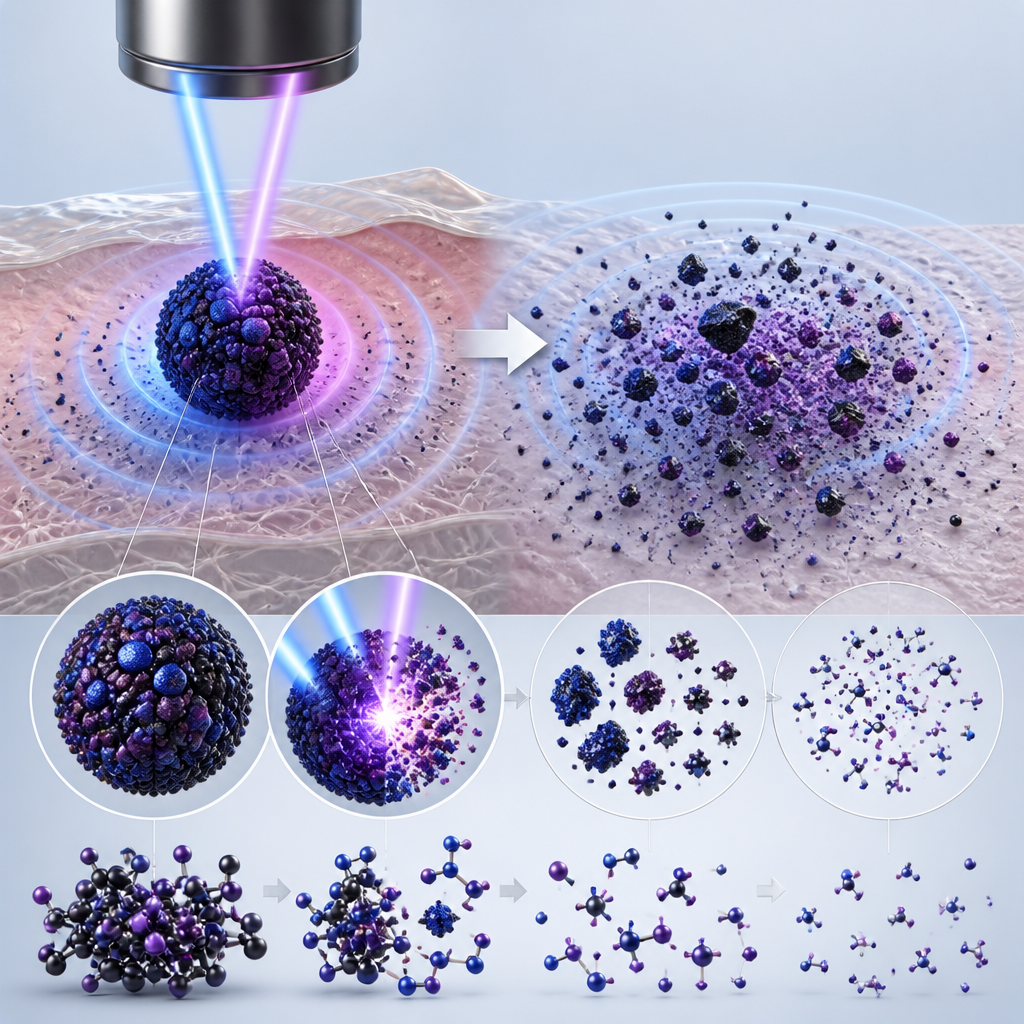
A laser changes the situation entirely. It fires extremely rapid pulses of concentrated light directly into the tattooed skin. Those pulses are calibrated to a wavelength that the ink pigment absorbs, while the surrounding skin tissue absorbs very little of that same wavelength. This selectivity is the whole point: the energy goes into the ink, not into the tissue around it.
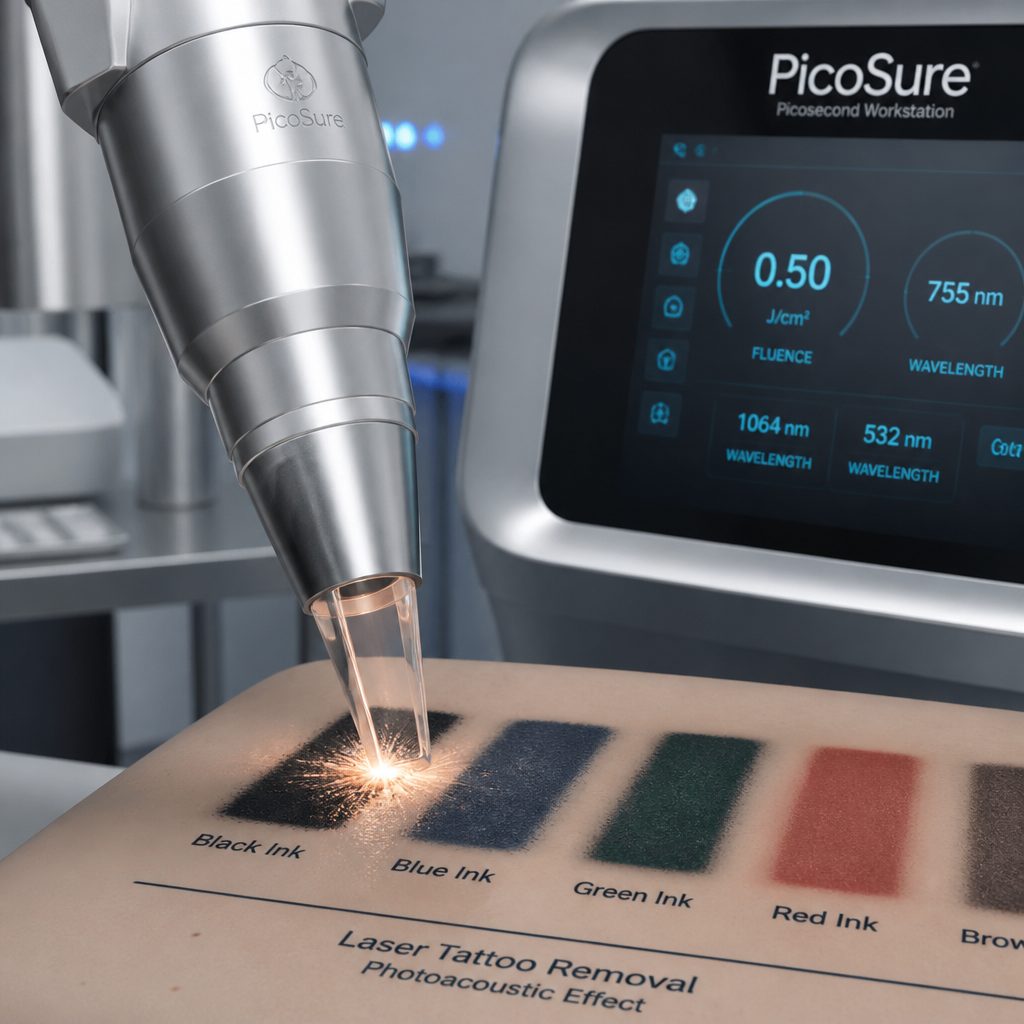
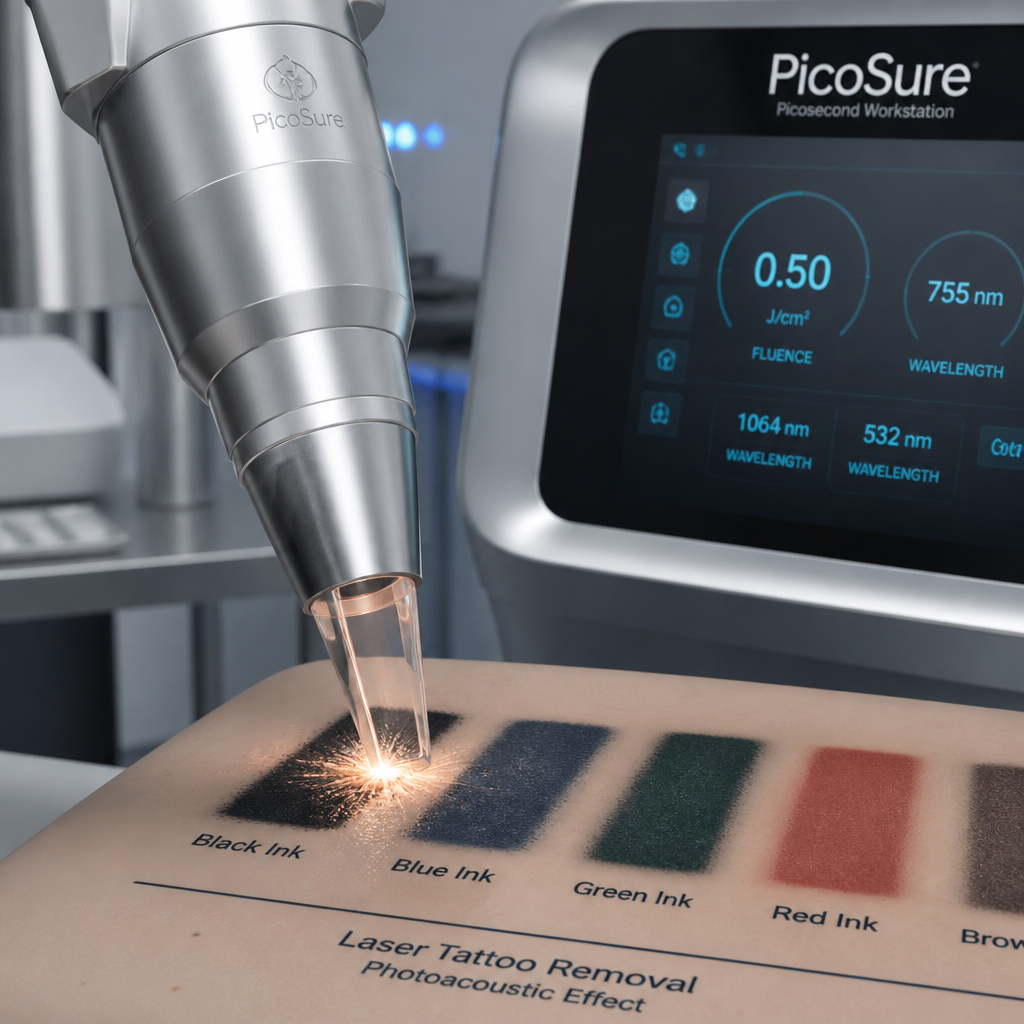
The photoacoustic effect is what makes this work. The pulse is so fast that the ink particle cannot dissipate the energy as heat. Instead, the absorbed energy creates a tiny, localised shockwave that physically shatters the ink particle into fragments many times smaller than the original. Think of it as hitting a brick with a precise hammer strike versus trying to melt the brick slowly. The fragments are now small enough for your immune system to collect and process.
Pro tip: The “frosting” you see on skin immediately after a laser session, that temporary white haze over the tattoo, is a normal reaction. It is caused by rapid heating of water in the skin creating a gas bubble effect just beneath the surface. It fades within 20 to 30 minutes and is not a cause for concern.
The Role of Your Immune System
After the laser session ends, your work is done for the day. Your immune system then takes over, and this is the part most people do not fully appreciate. The shattered ink particles are now recognised as debris by your body’s macrophage cells. Those cells migrate to the treated area, engulf the tiny fragments, and carry them through your lymphatic system to be processed and eliminated.
This is why fading continues for weeks after each session. You are not just healing from the laser itself. Your body is actively dismantling and removing the ink wreckage the laser created. Sessions spaced 6 to 8 weeks apart allow this process to run its course before the next treatment begins, which means more ink is cleared with each round.
The reason tattoos are permanent in the first place is that ink particles are too large for immune cells to remove on their own. Laser treatment simply does what the body already wants to do: break the particles down to a size the lymphatic system can finally handle.
A common mistake people make is expecting to see the full result of a session within the first week. The most dramatic fading often happens between weeks three and six after treatment, not in the days immediately following. Patience between sessions is not passive waiting. It is an active part of the process.
Pro tip: Staying well-hydrated and maintaining a healthy lifestyle between sessions genuinely supports your lymphatic system’s ability to clear fragmented ink. It is one of the few things within your direct control during the treatment course.
Laser Types and Why Technology Matters
Not all lasers used for tattoo removal are equal. The two main categories you will encounter are Q-switched nanosecond lasers and picosecond lasers. The difference comes down to how fast each pulse fires, measured in nanoseconds (billionths of a second) versus picoseconds (trillionths of a second).
Q-Switched Nanosecond Lasers
Q-switched lasers were the industry standard for many years and remain effective. They fire pulses in the nanosecond range, which is fast enough to create the photoacoustic shockwave needed to fragment ink. They work particularly well on black and dark ink, and multiple wavelength options allow treatment of a range of colours.
Picosecond Lasers
Picosecond lasers fire pulses roughly 100 times shorter than nanosecond lasers. Because the pulse is so brief, the mechanical shattering effect on ink particles is more powerful, and the thermal energy deposited into the surrounding skin is lower. Clinical studies comparing the two have found picosecond lasers to be statistically superior to nanosecond lasers for overall tattoo clearance. The difference in side effects between the two is also meaningful, with picosecond treatment tending to be less painful.
The 3D NanoSure System at Faith Laser
At Faith Laser, the clinic uses cutting-edge 3D NanoSure technology from 3D Aesthetics. This advanced system is designed to work across all ink colours with greater precision than older laser platforms, requiring fewer sessions and delivering minimal discomfort compared to traditional methods. It represents a meaningful step forward from the Q-switched systems that dominated the industry for years.
| Technology | Pulse Duration | Key Characteristics |
|---|---|---|
| Q-Switched Nanosecond Laser | 5 to 20 nanoseconds | Proven technology, effective on dark inks, requires more sessions for coloured or dense tattoos |
| Picosecond Laser | Trillionths of a second range | Stronger photoacoustic effect, superior clearance in clinical studies, less thermal side-effect on tissue |
| 3D NanoSure (Faith Laser) | Advanced nano-pulse system | Effective across all ink colours, fewer sessions required, designed for precision with minimal skin damage |
What Affects How Many Sessions You Need
The most common question anyone asks about tattoo removal is how many sessions it will take. There is no single honest answer to this because the number depends on several converging factors, but the typical range for most tattoos is somewhere between 5 and 12 sessions, spaced 6 to 8 weeks apart.

Ink Colour
Black and dark grey respond fastest because they absorb all laser wavelengths effectively. Colours like bright green, turquoise, and some blues require specific wavelengths and are more resistant. Yellow and white inks are the most stubborn of all. A multicoloured tattoo will almost always take more sessions than a single-colour piece of equivalent size.
Ink Density and Depth
Professional tattoos are applied with machines that deposit ink consistently and deeply into the dermis. Amateur or hand-poked tattoos often sit at inconsistent depths and with lower ink density, making them faster to clear. A heavily shaded, professionally executed piece will take more sessions than a faded, older amateur tattoo of the same size.
Tattoo Age and Location on the Body
Older tattoos have already experienced some natural fading as the immune system has been slowly processing ink at its limited capacity. They tend to respond more quickly to laser treatment than fresh tattoos. Location on the body also matters because circulation affects how efficiently the lymphatic system clears fragmented ink. Tattoos closer to the heart typically fade faster than those on extremities like feet or fingers.
Skin Type and Individual Health
Darker skin tones require more careful calibration of wavelength and energy settings to avoid affecting the melanin in the skin alongside the ink pigment. A skilled practitioner will adjust settings accordingly. Your overall health, hydration, and immune function also influence how quickly your body clears fragmented ink between sessions.
What to Expect During and After a Session
A typical laser tattoo removal session takes under 30 minutes for most tattoos. Larger pieces or full sleeves may take longer, but even complex work is usually completed within an hour. The area to be treated is cleaned, and a topical numbing cream is often applied beforehand to reduce discomfort. Many clinics also use cooling air during the treatment.
The sensation is commonly described as similar to having a rubber band snapped against the skin. It is more intense than the original tattooing process for most people, though the numbing cream and any cooling measures used by your practitioner significantly reduce this.
The Healing Timeline
Immediately after the session, the treated skin will be red, slightly raised, and warm to the touch, similar to a sunburn. This typically settles within a few hours. Within 24 to 72 hours, blistering and scabbing can develop. This is a completely normal thermal response and does not indicate something has gone wrong. Blisters should not be burst deliberately, as doing so increases the risk of infection and scarring.
By week two, swelling is usually significantly reduced. Between weeks three and eight, the ink continues to fade as your immune system processes the fragmented particles. The tattoo will continue to look different at each stage of this process, and the full result of each session is only visible once healing is complete.
Pro tip: Keep the treated area out of direct sunlight throughout the treatment course and for several months after your final session. UV exposure can cause hyperpigmentation in treated skin, which complicates results and extends your overall timeline.
The Laser Tattoo Removal Process in Liverpool
If you are considering the laser tattoo removal process in Liverpool, the first thing to understand is that the quality of the technology and the practitioner’s expertise matter far more than proximity or price alone. Underpowered equipment or poorly calibrated settings can mean far more sessions for the same result, and a higher risk of skin damage.
At Faith Laser, the clinic’s approach is built on three things: advanced technology in the form of the 3D NanoSure system, qualified practitioners who calibrate treatment to the individual, and a genuine focus on client comfort throughout the process. The 98% effectiveness figure the clinic cites is a reflection of using the right equipment and the right technique together.
The process at Faith Laser follows a clear structure. You begin with a consultation to assess the tattoo, your skin type, and what a realistic treatment plan looks like for your specific case. Sessions are then spaced appropriately to allow your immune system to do its work. Aftercare guidance is provided, and the team remains accessible for any questions between appointments. For anyone searching for tattoo removal technology in Liverpool, this structured approach is what separates a clinic producing genuine results from one simply selling sessions.
If you are also dealing with unwanted hair in addition to a tattoo you want removed, Faith Laser offers laser hair removal services across multiple treatment areas, making it possible to address both concerns at the same clinic with the same standard of care.
Frequently Asked Questions
Does laser tattoo removal completely remove the tattoo or just fade it?
For the majority of tattoos, complete removal is achievable with the right technology and sufficient sessions. Black and single-colour tattoos on lighter skin types have the highest complete clearance rates. Multicoloured tattoos or those with particularly stubborn inks like yellow or white may result in significant fading rather than total elimination in some cases, though modern advanced systems have greatly improved outcomes across all ink types.
Is the laser targeting ink safe for the surrounding skin?
Yes, when performed correctly. The principle of selective photothermolysis means the laser wavelength is chosen because the ink absorbs it far more readily than the surrounding skin tissue does. The pulse duration is also calibrated so the energy is released within the ink particle before it can transfer as heat to neighbouring cells. This is why qualified practitioners using appropriate equipment can treat tattoos with minimal damage to the skin around them.
How long does each laser tattoo removal session take?
Most sessions take under 30 minutes. A small tattoo on a single area may be completed in as little as 5 to 10 minutes of active laser time. Larger or more complex tattoos, such as full sleeves or large back pieces, can take up to 45 minutes to an hour. The total appointment time including preparation, numbing, and aftercare advice will be somewhat longer than the laser time alone.
Can all tattoo ink colours be removed with laser treatment?
All colours can be treated, but they respond at different rates and require different wavelengths. Black and dark grey respond fastest and most completely. Reds and oranges respond well to certain wavelengths. Blues and greens require specific laser settings and typically need more sessions. Yellow and white inks are the most challenging because they do not absorb common laser wavelengths as readily. A clinic with multi-wavelength technology is significantly better equipped to handle multicoloured tattoos than one operating on a single wavelength.
Will laser tattoo removal leave a scar?
Scarring is not an expected outcome of properly performed laser tattoo removal. The risk is low when treatment is delivered by qualified practitioners using appropriate settings. The main causes of scarring after treatment are improper aftercare, particularly picking at blisters or scabs, excessive sun exposure on healing skin, and sessions performed too aggressively or with poorly calibrated equipment. Following your practitioner’s aftercare instructions carefully is one of the most direct ways to protect your skin.
How soon can I book my first session?
You can start the process with a consultation at any point. Your practitioner will assess the tattoo and your skin type during the consultation, set realistic expectations for the number of sessions, and outline exactly what the treatment plan looks like before any laser work begins. There is no commitment required before the consultation, and it is the only sensible way to get an accurate picture of what your specific tattoo will require.
Have you already started a tattoo removal course, or are you weighing up your options before booking a consultation? Share your experience or questions below.
References
- How Q-switched laser technology creates the photoacoustic effect that shatters tattoo ink
- Cleveland Clinic overview of tattoo removal methods and why ink particles require treatment to be removed
- Peer-reviewed clinical study comparing picosecond and nanosecond laser efficacy for tattoo clearance
- Detailed recovery and aftercare timeline for laser tattoo removal sessions
- Factors determining how many laser sessions a tattoo requires for full removal