Laser Hair Removal for Men in Liverpool: Breaking the Stigma
More men in Liverpool are quietly booking laser hair removal appointments, and the numbers are no longer quiet. Laser hair removal for men is now the fastest-growing segment in the UK aesthetics market, with male bookings rising sharply year on year. Yet plenty of men still hesitate, held back not by logic but by an outdated idea that grooming is somehow not for them. That idea is wrong, it is fading fast, and this article is here to finish it off. Whether you are fed up with daily shaving, battling back hair you cannot reach, or simply want to stop wasting time and money on razors, here is everything you need to know about male laser hair removal in Liverpool.
Table of Contents
- Quick Takeaways
- Why the Stigma Exists, and Why It Is Collapsing
- Why Men in Liverpool Are Choosing Laser Hair Removal
- The Most Popular Treatment Areas for Men
- How Laser Hair Removal Actually Works for Male Skin and Hair
- What to Expect From Your Sessions
- Comparing Your Options: Laser vs. Waxing vs. Shaving
- Frequently Asked Questions
- References
Quick Takeaways
| Key Insight | Explanation |
|---|---|
| Male laser hair removal is the fastest-growing segment | The male segment is growing at roughly 20% year-on-year, making it the most dynamic part of the UK laser hair removal market. |
| Men typically need 6 to 8 sessions for body areas | Because male body hair is thicker and coarser than female hair, areas like the back and chest usually require more sessions than finer hair areas. |
| The stigma is a generational issue, not a medical one | Men aged 16 to 24 are removing body hair at rates almost identical to women of the same age. The hesitation exists primarily among older demographics. |
| Ingrown hairs and razor bumps are the number one practical driver | For many men, laser is not about aesthetics first. It is about ending the cycle of painful ingrown hairs, particularly on the neck and bikini line. |
| Back and chest are the most requested male treatment areas | These are areas men cannot easily manage themselves and where traditional hair removal methods cause the most irritation. |
| Technology choice matters for darker or coarser male hair | The Nd:YAG laser is particularly well suited to coarser, darker hair types commonly found in male clients, including those with deeper skin tones. |
| Faith Laser uses Crystal Freeze Technology for comfort | Pain is the most cited reason men avoid laser. Cooling technology directly addresses this, making treatment genuinely comfortable for most clients. |
Why the Stigma Exists, and Why It Is Collapsing
The idea that body hair is a marker of masculinity is old, culturally specific, and built on almost nothing. It took hold in an era when grooming products were marketed almost exclusively to women, and men had no cultural language to talk about personal aesthetics without embarrassment. That marketing gap created a perception gap, and the perception gap created the stigma.
Here is the reality check: research shows men aged 16 to 24 are removing body hair at rates almost identical to young women of the same age, with roughly 29% of men versus 34% of women in that bracket actively doing so. The stigma is not universal. It is concentrated in older age groups and in peer groups where nobody has yet been the first to say it out loud.
Grooming culture has shifted visibly. Professional athletes, actors, and public figures are open about skin and body care in ways that would have seemed unusual a decade ago. The laser specialist community across the UK has noted this shift directly, with senior practitioners describing laser for men as “quite the norm now” compared to just a few years ago when it was “still a bit taboo.” Liverpool, as a city with a strong culture of personal presentation, is no exception to this trend.
“The hesitation men feel about laser hair removal is not about the treatment. It is about being the first in their social circle to talk about it. Once one man does it and gets results, his friends follow.”
The practical reality is this: the stigma has never had a logical foundation, and it is collapsing under the weight of results. Men who have laser hair removal do not regret it. They refer their friends. And clinics across the UK report that male referrals are one of the strongest growth drivers in the sector right now.

Why Men in Liverpool Are Choosing Laser Hair Removal
The motivations are more practical than you might expect. Very few men walking into Faith Laser in Liverpool are doing so purely for aesthetic reasons. The real drivers split into three clear categories: relief from irritation, time savings, and long-term cost reduction.
Ending the Ingrown Hair Cycle
Male hair is, on average, thicker and coarser than female hair. That means shaving and waxing create more friction, more irritation, and a far higher rate of ingrown hairs and razor bumps. The neck, chest, and groin area are particularly prone to this. Ingrown hairs are not just uncomfortable, they can cause hyperpigmentation and scarring over time, especially for men with darker skin tones who shave regularly.
Laser hair removal addresses the root of the problem rather than the surface symptom. By targeting and disabling the hair follicle itself, it eliminates the regrowth that causes ingrown hairs in the first place. For men who have spent years dealing with a sore, bumpy neck after every shave, this is not a luxury. It is a medical quality-of-life improvement.
The Time and Cost Argument
A man who shaves daily will spend a significant portion of his life managing hair that simply grows back. Waxing costs money every four to six weeks, indefinitely. When men actually sit down and calculate the cumulative cost of razors, shaving products, and wax appointments over a five-year period, laser hair removal looks very different from expensive.
After a full course of sessions at a clinic like Faith Laser, most men see permanent, long-lasting reduction that requires only occasional maintenance. The upfront investment replaces a recurring one, and the recurring cost eventually disappears almost entirely.
Confidence and Sport
Athletes, swimmers, cyclists, and gym-goers frequently cite comfort and hygiene as primary reasons. Back hair that cannot be managed independently is a common frustration. Men who train regularly also find that smooth skin reduces friction from sportswear, prevents heat rash, and makes post-workout hygiene simpler. This is not vanity. It is practical body management.
Pro tip: If you are considering laser hair removal primarily to deal with ingrown hairs on your neck or jawline, mention this specifically at your consultation. A good practitioner will tailor the treatment plan to address the irritation zones directly rather than treating a wider area unnecessarily.
The Most Popular Treatment Areas for Men
Not all treatment areas are equal, and men tend to prioritise differently from women. Understanding which areas are most commonly requested, and why, helps set realistic expectations about what laser can and cannot achieve in each zone.
Back and Shoulders
This is the single most requested male treatment area, and for obvious reasons. Back hair is genetic and hormonal, it cannot be self-managed without help, and waxing it is both painful and expensive to maintain. Laser hair removal on the back typically requires six to ten sessions given the density of hair and the size of the area, but results are among the most dramatic and life-changing of any male treatment.
Chest and Abdomen
Dense chest hair is another common concern. Some men want full removal, others prefer thinning and tidying rather than complete clearance. Laser gives you precise control over outcomes that waxing simply cannot match. Faith Laser’s consultation process is designed exactly for this: identifying what result you actually want, not just defaulting to maximum removal.
Neck and Beard Line
Laser on the neck and beard line does not mean removing your beard. It means defining it. Men with thick neck hair or uneven beard edges can use laser to create a permanent clean line, eliminating the need to shave the neck daily and reducing razor burn in the process. This is one of the most underrated male treatments available.
Underarms and Intimate Areas
More men are requesting these treatments than the cultural conversation would suggest. Underarm laser removes a significant hygiene burden, reduces sweat odour at the source, and eliminates daily shaving. Intimate area treatments are increasingly requested for comfort rather than aesthetics, particularly among cyclists and athletes.
Pro tip: Do not assume that because an area is sensitive it cannot be treated comfortably. Faith Laser’s Crystal Freeze Technology significantly reduces discomfort during treatment on all body areas, including the most sensitive zones. A patch test before your first session will confirm exactly what to expect.
How Laser Hair Removal Actually Works for Male Skin and Hair
The mechanism is straightforward. A laser emits a specific wavelength of light that is absorbed by the melanin (pigment) in the hair shaft. That energy converts to heat, which travels down to the hair follicle and damages or destroys it, preventing regrowth. The surrounding skin is left largely unaffected because the laser is calibrated to target pigment specifically, not the skin tissue itself.
Male hair presents a particular set of characteristics that affect how treatment is planned. Male body hair is generally denser, coarser, and more deeply rooted than female hair, which means more energy is often required and more sessions are typically needed to achieve comparable results. This is a biological fact, not a disadvantage of the technology.
Why Hair Colour and Skin Tone Matter
The laser targets contrast: dark hair against lighter skin absorbs the most energy most efficiently. Men with dark hair and light to medium skin tones tend to see the fastest, most dramatic results. Men with darker skin tones or lighter hair require a laser specifically matched to their profile, typically an Nd:YAG (1064nm) device, which is designed to work safely and effectively on deeper skin tones without surface skin damage.
This is where choosing a qualified, properly equipped clinic matters enormously. A clinic using a single laser type and applying it to every client regardless of skin or hair type is not providing safe, personalised treatment. At Faith Laser, the technology and approach are matched to the individual, not the other way around.
The Hair Growth Cycle Explained Simply
Laser only affects hairs in the active growth phase (anagen). At any given time, only a proportion of your hairs are in this phase. This is exactly why multiple sessions spaced several weeks apart are required: each session catches a new cohort of hairs as they enter the active phase. Skipping sessions or spacing them too far apart reduces effectiveness significantly, which is one of the most common reasons men are disappointed with results at under-resourced clinics.
What to Expect From Your Sessions
The first thing Faith Laser does before any treatment is a consultation and patch test. This is non-negotiable at any reputable clinic, and if a provider offers to skip it, walk away. The patch test confirms how your skin and hair respond to the laser at the planned settings, reducing any risk before your full course begins.
Session Frequency and Duration
For most male clients, sessions on large body areas like the back or chest are spaced six to eight weeks apart to align with the hair growth cycle. A typical course for male body areas runs to around six to ten sessions. Smaller areas like the neck or underarms may complete faster. Results appear progressively, with noticeable reduction typically visible after the second or third session.
What the Treatment Feels Like
With modern equipment and cooling technology, most men describe the sensation as a brief warm snap, similar to a rubber band flick against the skin. The Crystal Freeze Technology used at Faith Laser actively cools the treatment area in real time, making the experience significantly more comfortable than older laser systems. Men who have delayed treatment because they expect it to be painful are frequently surprised by how manageable it is in practice.
Aftercare is Simple
Immediately after treatment, the area may appear slightly red or feel warm, similar to mild sunburn. This settles within a few hours for most clients. Avoid sun exposure on treated areas and do not shave with a blade in the 24 hours immediately before your appointment. A good clinic will give you a full aftercare sheet. Follow it. It is not complicated, but it does affect your results.
Comparing Your Options: Laser vs. Waxing vs. Shaving
Every man considering laser hair removal has already been managing unwanted hair through one of the conventional methods. Here is how those methods compare directly with professional laser treatment, particularly for male hair types and typical male treatment areas.
| Method | Effectiveness and Longevity | Suitability for Male Hair and Skin |
|---|---|---|
| Professional Laser Hair Removal (e.g. Faith Laser, Liverpool) | Long-lasting to permanent reduction after a full course. Clinical studies report 80 to 90% hair reduction. Requires periodic maintenance for some clients. | Excellent, particularly with equipment matched to skin tone and hair type. Resolves ingrown hairs at source. Requires 6 to 10 sessions for dense male body areas. |
| Waxing | Results last 4 to 6 weeks before full regrowth. Must be repeated indefinitely. No cumulative permanent benefit. | Painful on coarse male hair, especially on the back and chest. High rate of ingrown hairs post-treatment. Costly as a long-term strategy. |
| Shaving | Results last 1 to 3 days. Must be maintained daily for smooth results. Zero permanent benefit. | Creates significant irritation on the neck, face, and groin. Primary cause of razor bumps and ingrown hairs in men. Impractical for large or hard-to-reach areas like the back. |
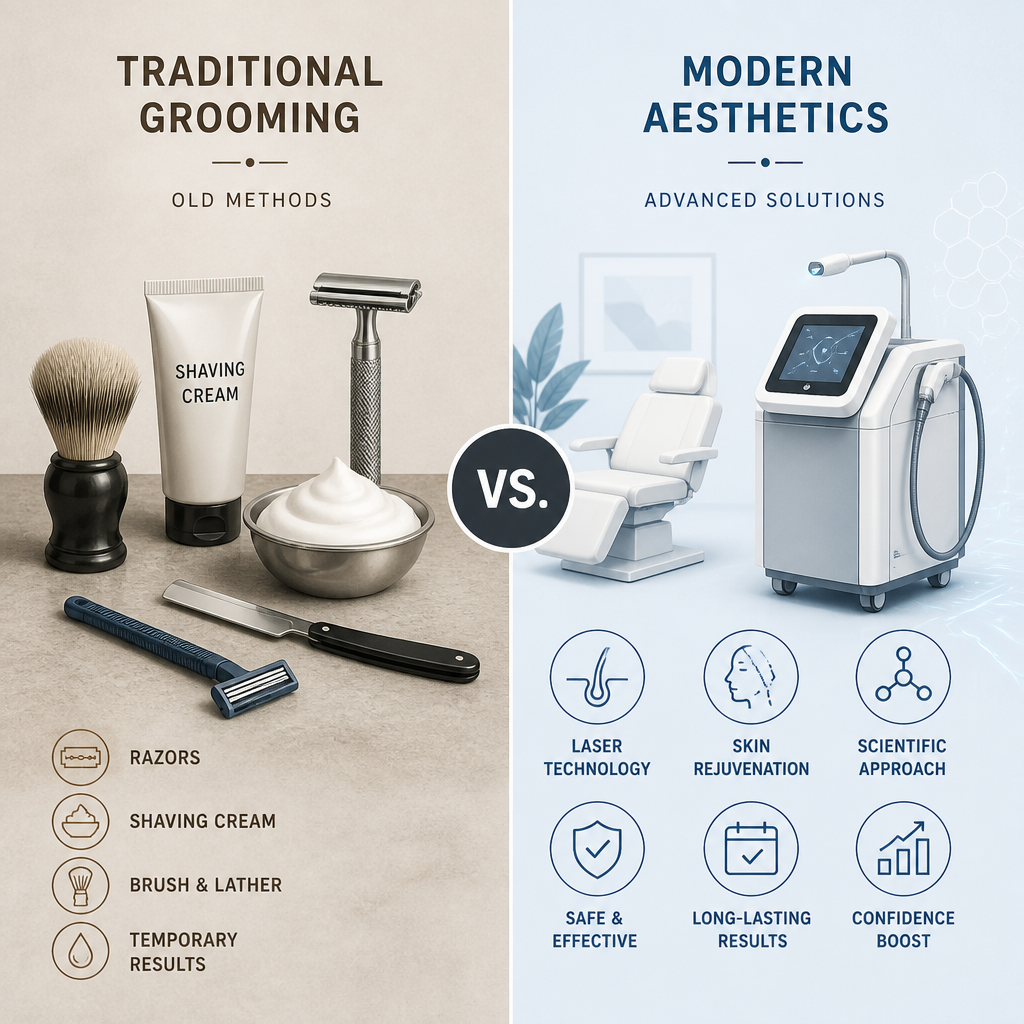
The comparison speaks for itself. Shaving and waxing address the symptom temporarily. Laser addresses the source permanently. For men in Liverpool who have been in a cycle of daily shaving or regular waxing, the shift to laser is not a cosmetic upgrade. It is a practical decision that pays back in time, money, and comfort.
Frequently Asked Questions
Is laser hair removal safe for men?
Yes, professional laser hair removal is safe for men when carried out by qualified practitioners using appropriate equipment. Male skin and hair types are well within the scope of modern laser technology. The key is choosing a clinic that performs a proper consultation and patch test, uses equipment matched to your skin tone and hair colour, and follows clinical protocols. Faith Laser in Liverpool is a qualified, professional clinic with specific experience treating male clients.
Does laser hair removal hurt more for men?
Men tend to have coarser, denser hair which absorbs more laser energy, and some male body areas are more sensitive than others. That said, modern systems with integrated cooling technology make treatment far more manageable than older laser equipment. At Faith Laser, Crystal Freeze Technology is used specifically to minimise discomfort throughout the session. Most male clients rate the sensation as mild and entirely tolerable after their first appointment.
How many sessions will I need for my back or chest?
For large, dense areas like the back or chest, men typically require between six and ten sessions, spaced around six to eight weeks apart. The exact number depends on your hair density, colour, and how your follicles respond to treatment. You will see progressive reduction after each session, with the most significant change usually visible from the third session onwards. Your practitioner will give you a personalised assessment at your consultation.
Can I still keep my beard and just remove hair on my neck?
Absolutely. Laser hair removal is precise and fully customisable. A very common male treatment is neck and lower cheek line definition, where laser removes the hair below and outside your desired beard shape while leaving the beard itself completely intact. This creates a permanent clean line and eliminates daily neck shaving. It is one of the most popular and underappreciated treatments among male clients.
Will my results be permanent?
Professional laser hair removal produces long-lasting and in many cases permanent reduction of hair in treated areas. Most men experience 80 to 90% reduction after a full course of sessions. A small number of follicles may eventually reactivate, particularly due to hormonal changes, meaning occasional top-up sessions may be needed years down the line. This is normal and expected. The treatment is not marketed as guaranteed permanent removal in every single follicle, but the practical result for most men is a dramatic, lasting reduction that makes conventional hair management largely unnecessary.
What areas can Faith Laser treat for men in Liverpool?
Faith Laser offers laser hair removal across a comprehensive range of areas for male clients, including back, chest, shoulders, abdomen, neck, beard line, underarms, and intimate zones. All treatments are tailored to the individual following a full consultation. If you have a specific area in mind that is not listed here, contact the clinic directly as the team is experienced in handling a wide range of male treatment requests.
Have you had laser hair removal, or are you still weighing it up? Share your experience or your biggest question in the comments below, because your honest take helps other men in Liverpool make a more informed decision.
References
- Why men hesitate about laser hair removal: toxic masculinity or a market gap?
- Why more men are choosing laser hair removal and what is driving the trend
- How UK clinics are responding to the surge in male laser hair removal clients
- A practical UK guide to men’s laser hair removal in 2025
- Male laser hair removal trends and why the numbers keep growing in the UK