Am I a Good Laser Hair Removal Candidate?
Most people spend months shaving, waxing, or threading before they finally consider laser hair removal. Then the question hits: am I actually a good candidate? It is a fair question, and the honest answer is that most people are suitable, but not everyone is suitable in the same way. The technology has advanced far beyond the days when only fair-skinned, dark-haired individuals could benefit. At Faith Laser in Liverpool, our consultations start with exactly this assessment, because matching the right laser to the right person is what separates consistently excellent results from disappointing ones. Here is everything you need to know before you book.
Table of Contents
- Quick Takeaways
- What Makes a Good Laser Hair Removal Candidate
- How Skin Tone Affects Laser Hair Removal
- Hair Colour and Texture: What the Laser Actually Targets
- Medical Conditions and Medications That Affect Candidacy
- Laser Types Compared: Which One Suits Your Profile
- How Many Sessions Will You Need
- Frequently Asked Questions
- References
Quick Takeaways
| Key Insight | Explanation |
|---|---|
| Dark hair on light skin gets the best results | High contrast between hair pigment and skin allows the laser to target follicles precisely without affecting surrounding tissue. |
| Darker skin tones can be treated safely | Nd:YAG lasers at 1064 nm are clinically appropriate for Fitzpatrick skin types IV to VI, penetrating deeper while bypassing surface melanin. |
| White, grey, red, and very light blonde hair cannot be treated | These hair colours lack the melanin that laser energy needs to absorb into. Electrolysis is the recommended alternative. |
| Pregnancy and certain medications are absolute contraindications | Laser treatments should be avoided entirely during pregnancy and while taking photosensitising drugs such as isotretinoin (wait at least 6 months after stopping). |
| Hormonal conditions like PCOS require a modified plan | Laser reduces hair growth but cannot correct the underlying hormonal imbalance driving it. More maintenance sessions are typically needed. |
| A patch test and Fitzpatrick assessment come first | UK clinics should always assess your skin type before treatment. Skipping this step increases the risk of burns, hyperpigmentation, and paradoxical hair growth. |
| Recent tanning disqualifies you temporarily | Sun exposure, sunbeds, or self-tanner within 2 to 4 weeks before treatment raises your melanin level and increases the risk of adverse reactions. |
What Makes a Good Laser Hair Removal Candidate
The word “candidate” is not marketing language. It is a clinical term that describes whether the biology of your hair and skin will respond well to laser energy. Get this assessment right and you get strong, predictable results. Get it wrong and you risk burns, pigmentation changes, or simply wasted money on a treatment that cannot work on your hair type.
At its core, laser hair removal works by selective photothermolysis: the laser emits a specific wavelength of light that is absorbed by melanin (the pigment) inside the hair follicle. The energy converts to heat, which damages the follicle enough to inhibit future growth. The surrounding skin is largely unaffected, provided it has significantly less melanin than the hair itself.
This explains why candidacy revolves around two variables above everything else: your hair colour and your skin tone. The gap between them determines how accurately the laser can find and destroy the follicle without touching the skin around it. Most healthy adults with dark, pigmented hair are suitable candidates. The assessment process exists to personalise the approach, not to exclude people.
Pro tip: Book a proper consultation rather than a same-day treatment. A thorough Fitzpatrick skin type assessment and patch test before your first full session is not optional. It is the difference between a clinic that knows what it is doing and one that does not.
How Skin Tone Affects Laser Hair Removal
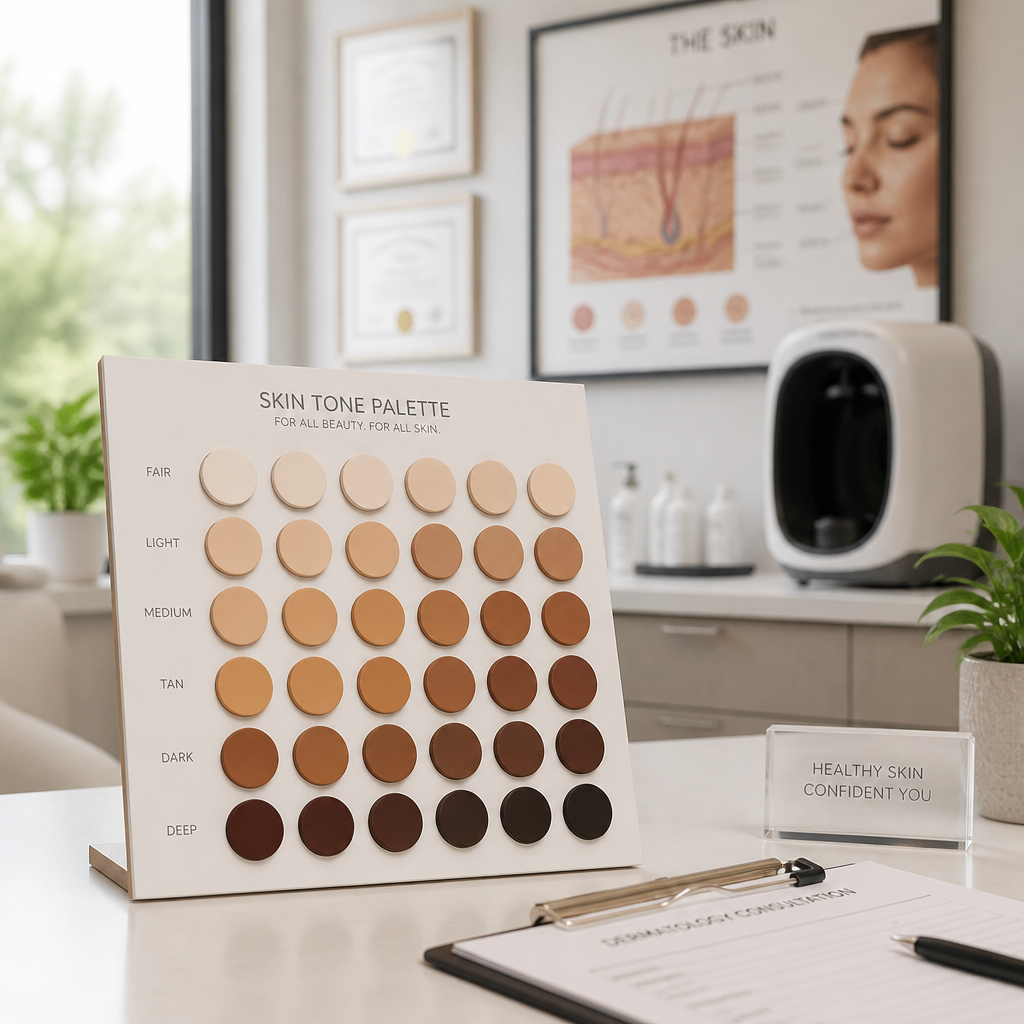
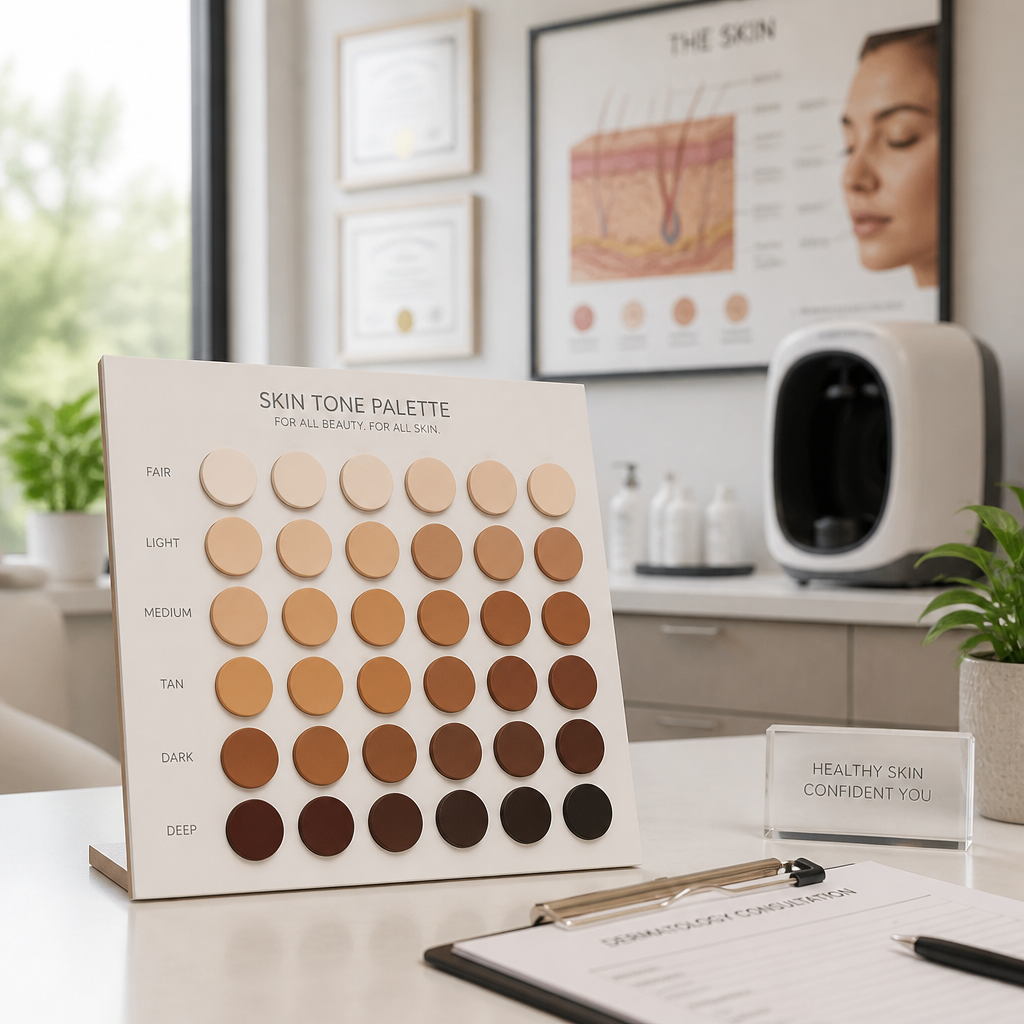
Skin tone is measured in clinical practice using the Fitzpatrick scale, a six-point classification system that categorises skin based on its melanin content and how it responds to UV exposure. This scale is the foundation of every safe laser hair removal assessment.
The Fitzpatrick Scale Explained
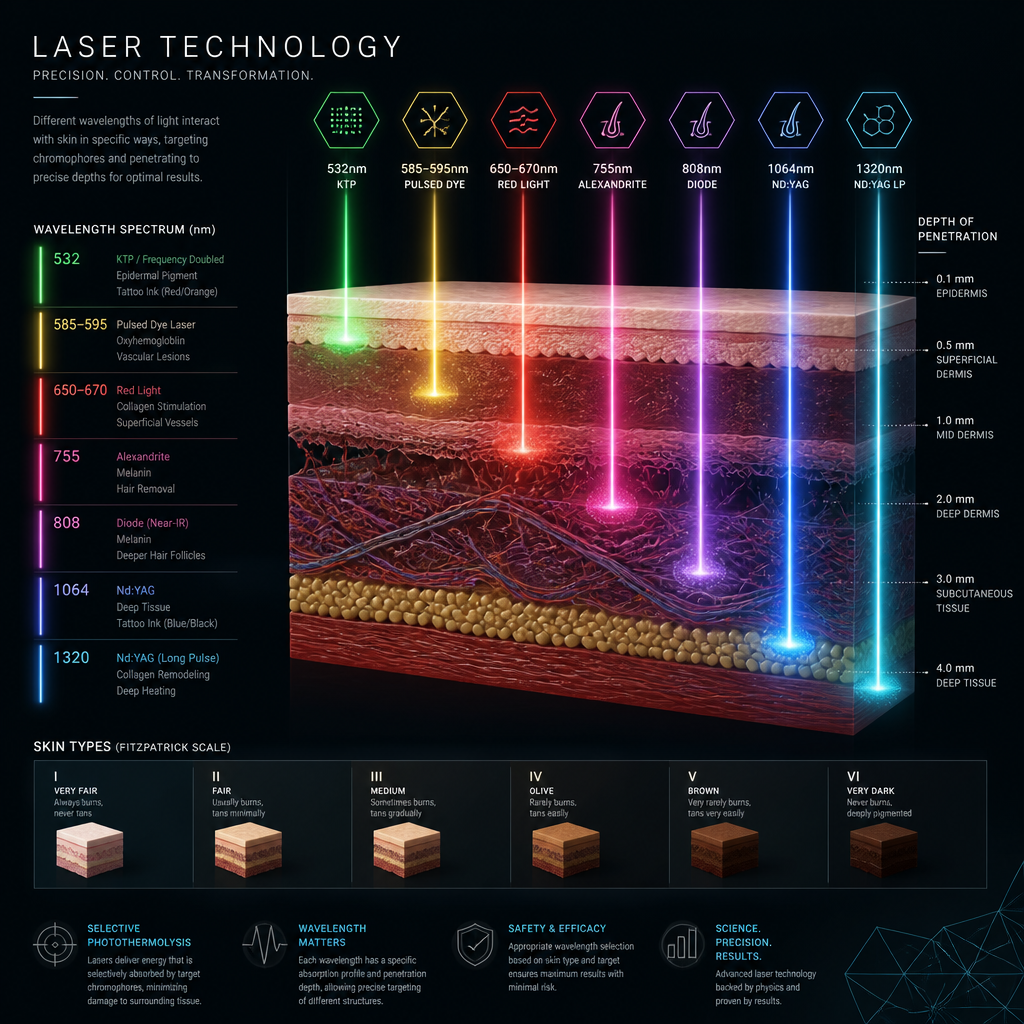
Types I and II are very fair to fair skin that always burns and rarely tans. Types III and IV cover medium and olive skin tones that tan more readily. Types V and VI describe brown to very dark skin with high melanin content. Each type responds differently to laser energy, and the correct laser wavelength changes accordingly.
For lighter skin tones (Types I to III), Alexandrite lasers at 755 nm are highly effective and widely used. The high melanin contrast between dark hair and pale skin gives the laser a precise target with minimal risk to the surrounding tissue. For olive to medium skin (Type IV), diode lasers around 800 to 810 nm are generally appropriate with carefully calibrated settings. For darker skin tones (Types V and VI), the Nd:YAG laser at 1064 nm is the clinically appropriate choice: it penetrates deeper into the dermis with less interaction with surface melanin, making it safe and effective where other lasers would cause harm.
Choosing the wrong laser for a darker skin type does not just reduce effectiveness. It raises the real risk of hyperpigmentation, burns, and a phenomenon called paradoxical hair growth, where treated follicles are stimulated rather than destroyed.
One important point that many people miss: skin tone is not purely what you see in the mirror. Genetics can mean a lighter-looking skin surface still carries more subcutaneous melanin than expected. This is why a skilled practitioner asks about ethnicity and ancestry, not out of formality, but because it directly informs the safe laser settings to use.
Tanned Skin Is Temporarily Unsuitable
If you have been sunbathing, used a sunbed, or applied self-tanner in the 2 to 4 weeks before your appointment, your treatment should be postponed. Tanning raises the melanin level in the upper layers of your skin, narrowing the contrast with your hair and increasing the risk of burns or pigmentation changes. This applies even to self-tanner, which the laser cannot distinguish from a natural tan.
Hair Colour and Texture: What the Laser Actually Targets
Skin tone determines which laser is safe. Hair colour and texture determine whether the treatment will actually work. These are separate questions, and both need to be answered honestly during your assessment.
Hair Colours That Respond Well
Dark brown and black hair contain the most melanin and respond best to laser treatment. The follicle absorbs the laser energy efficiently, the heat is concentrated where it needs to be, and the result is reliable, lasting hair reduction. Coarser, thicker dark hair tends to respond even better than fine dark hair, because the larger follicle presents a stronger melanin target.
Hair Colours That Do Not Respond to Laser
White, grey, light blonde, strawberry blonde, and red hair all share the same problem: they lack sufficient melanin for the laser to absorb. The treatment cannot work on these colours, regardless of the laser type used or the skill of the practitioner. This is not a limitation of any particular clinic. It is a fundamental limit of how the technology works.
If your hair falls into these categories, the recommended alternative is electrolysis, which destroys individual follicles using electrical current and works regardless of hair colour. For people with mixed hair (for example, mostly dark hair with some grey or blonde strands), laser will address the dark hairs while electrolysis can be used to supplement treatment on the lighter ones.
Fine vellus hair, the soft “peach fuzz” that covers much of the body, is also not suitable for laser treatment. It lacks the melanin density needed to respond, and attempting to treat it risks damaging the surrounding skin without achieving any meaningful reduction.
Pro tip: Stop waxing, threading, and epilating at least four weeks before your first laser session. These methods remove the hair from the follicle entirely, and the laser needs the hair shaft to be present in the follicle to conduct the heat energy down to the root. Shaving is fine and actually recommended in the days before treatment.

Medical Conditions and Medications That Affect Candidacy
Beyond skin and hair, a number of medical conditions and medications directly affect whether laser hair removal is safe for you. A responsible clinic will always ask about these in your consultation, but it is worth knowing the key ones before you arrive.
Absolute Contraindications: When to Wait or Avoid Treatment
Pregnancy and breastfeeding are absolute contraindications. Laser treatments should be avoided entirely during this period. The safety of laser energy on a developing foetus has not been established, and no reputable clinic should treat a pregnant client.
Isotretinoin (commonly known as Accutane or Roaccutane) dramatically increases skin sensitivity and the risk of scarring. Most practitioners recommend waiting at least 6 months after stopping isotretinoin before undergoing any laser treatment. Similarly, certain antibiotics and other photosensitising medications increase the skin’s reaction to light-based treatments and should be discussed openly before booking.
A history of keloid scarring is also a significant risk factor. If your skin has previously formed raised, overgrown scar tissue, the thermal injury from laser treatment could trigger the same response in treated areas.
Conditions That Require a Modified Approach
Polycystic ovary syndrome (PCOS) and other hormonal conditions that drive excess hair growth are worth discussing in detail. Laser hair removal can meaningfully reduce hair and slow regrowth in these cases, but it cannot correct the underlying hormonal imbalance causing the problem. Clients with PCOS typically need more sessions and more frequent maintenance treatments than clients without a hormonal driver.
Active skin infections, including herpes outbreaks, bacterial infections, or fungal conditions in the area to be treated, are temporary contraindications. Treatment should wait until the skin is fully clear. Chronic skin conditions like active eczema or psoriasis in the treatment zone also require caution, as the laser can aggravate already-inflamed skin.
Laser Types Compared: Which One Suits Your Profile
Not all laser hair removal is the same, and a clinic that offers only one laser type cannot optimally treat all skin profiles. Understanding the differences helps you ask the right questions when choosing where to go.
| Laser Type | Best Suited For | Key Limitation |
|---|---|---|
| Alexandrite (755 nm) | Fitzpatrick skin types I to III (fair to medium skin with dark hair). High melanin absorption makes it very efficient on this profile. | Not safe for darker skin tones (Types V to VI). Increased risk of hyperpigmentation if used on highly melanated skin. |
| Diode (800 to 810 nm) | Fitzpatrick types II to IV. Versatile mid-range wavelength suitable for a broader range of skin tones with careful calibration. | Falls short at the extremes of the Fitzpatrick spectrum. On Types V and VI, risks are comparable to Alexandrite if settings are not precisely adjusted. |
| Nd:YAG (1064 nm) | Fitzpatrick types IV to VI (olive to very dark skin). Deeper penetration with lower surface melanin absorption makes it the clinically safe choice for darker skin. | Less efficient on fine or very light-coloured hair. Lower overall melanin absorption means it needs coarse, dark follicles to work at its best. |
The best clinics either hold multiple laser systems or use a dual-wavelength platform that can be adjusted per client. When you ask a clinic what laser they use, a clear, confident answer is what you should expect. Vagueness here is a warning sign.
How Many Sessions Will You Need
The number of sessions required is not one-size-fits-all, but it is also not a mystery. Hair grows in three phases: anagen (active growth), catagen (transition), and telogen (resting). Laser treatment only affects follicles in the active anagen phase, which is why multiple sessions spaced several weeks apart are necessary to catch each follicle at the right moment.
Most people with suitable hair and skin profiles require between 6 and 8 sessions to achieve significant, lasting reduction. Coarse, dark hair on fair skin tends to respond fastest. Finer dark hair, hormonal growth, or facial hair driven by conditions like PCOS may require additional sessions or ongoing maintenance. The treatment area also matters: the underarm and bikini line typically respond faster than the face, where hormonal influence is stronger and finer hairs are more common.
A realistic expectation is substantial and long-lasting hair reduction, not necessarily permanent total removal after a fixed number of sessions. Any clinic that guarantees permanent complete removal after a set number is overpromising. At Faith Laser, packages are tailored to your individual profile so you are not paying for sessions you do not need or going home expecting results the science cannot deliver on your specific hair type.
Frequently Asked Questions
Can I have laser hair removal if I have a darker skin tone?
Yes. With the correct laser, darker skin tones can be treated safely and effectively. The Nd:YAG laser at 1064 nm is clinically appropriate for Fitzpatrick skin types IV to VI. The key is ensuring the clinic uses the right equipment and has experience treating your specific skin type. Always ask to see before-and-after results from clients with similar skin tones before committing to treatment.
Does laser hair removal work on red or blonde hair?
No. Laser hair removal targets melanin in the hair follicle, and red, white, grey, light blonde, and strawberry blonde hair do not carry enough melanin for the laser to absorb. The treatment is physically unable to work on these hair colours. Electrolysis is the recognised alternative for these hair types, as it destroys individual follicles using electrical current independent of hair colour.
Is laser hair removal safe during pregnancy?
No. Pregnancy is an absolute contraindication for laser hair removal. The safety of laser treatments during pregnancy has not been established, and all responsible UK clinics will decline to treat pregnant clients. You can resume treatment after pregnancy and when you have finished breastfeeding.
I have PCOS. Will laser hair removal still work for me?
It will work to reduce hair growth and slow regrowth, but you should expect to need more sessions and potentially ongoing maintenance treatments compared to someone without a hormonal condition driving the hair. PCOS creates a continuous hormonal signal that stimulates follicle activity. Laser addresses the symptom, not the cause. Managing the hormonal element medically alongside laser treatment tends to produce the most consistent results.
Do I need to stop waxing before starting laser treatment?
Yes, and this is one of the most common reasons people arrive unprepared for their first session. Waxing, threading, and epilating remove the hair from the follicle entirely. The laser needs the hair shaft to be present inside the follicle to conduct heat energy to the root. You should stop all these methods at least 4 weeks before your first treatment. Shaving is fine and actually recommended in the 24 to 48 hours before each session.
How soon after a holiday can I have laser hair removal?
You should wait 2 to 4 weeks after sun exposure, sunbed use, or self-tanner before your treatment. Tanning raises the melanin content of the upper skin layers, which narrows the contrast with your hair and significantly increases the risk of burns and pigmentation changes. This applies to all forms of tanning, including self-tanner products. Arrive at your appointment with skin at its natural colour.
What is the difference between IPL and laser hair removal?
IPL (Intense Pulsed Light) emits a broad spectrum of light across a wide wavelength range, whereas medical-grade laser hair removal uses a single, precise wavelength targeted specifically at hair follicle melanin. IPL can be effective for lighter skin types with dark hair, but it is generally less precise, less powerful, and less suitable for darker skin tones than a proper laser system. If you are comparing treatments, check whether the clinic is offering true laser treatment or IPL marketed as laser.
If you are considering laser hair removal in Liverpool and want to know whether your skin and hair profile makes you a good candidate, share your experience or questions below. We read every message and are happy to help you figure out the right next step.
References
- Am I a good candidate for laser hair removal? Hair colour and skin tone explained
- Who is a good candidate for laser hair removal: skin and hair type breakdown
- Laser hair removal essentials: Fitzpatrick skin types, sessions, and patch tests in the UK
- Who is not suitable for laser hair removal: contraindications and safety guide
- Laser hair removal guide 2026: who is suitable and what to expect