Patch Test for Laser Hair Removal: Why It Matters
Skip the patch test and you are not just cutting corners. You are running a full laser at unknown power settings over a wide area of your skin with no idea how your body will respond. That is not a calculated risk. It is a preventable one. A patch test for laser hair removal is a short pre-treatment assessment where a small, discreet area of skin is treated with the laser before any full session goes ahead. It sounds simple because it is. But what it tells the practitioner, and what it protects the client from, is anything but trivial. At Faith Laser in Liverpool, it is a step we never skip.
Table of Contents
- What Is a Patch Test for Laser Hair Removal?
- What Happens During a Patch Test?
- Why Patch Tests Are Non-Negotiable for Laser Treatment Safety
- Skin Types, Fitzpatrick Scale, and Why the Test Varies
- Patch Test Approaches: What Separates a Reputable Clinic from a Risk
- What to Do Before Your Patch Test
- Red Flags: What a Bad Patch Test Experience Looks Like
- Frequently Asked Questions
- References
What Is a Patch Test for Laser Hair Removal?
A laser treatment patch test is a targeted procedure where a practitioner applies laser energy to a small section of the skin that is scheduled for treatment. The goal is not to remove any hair in that session. The goal is to gather real information about how your specific skin and hair type respond to the laser at particular settings, before those settings are applied across a larger area.
The test area is chosen carefully. It mirrors the zone being treated later, whether that is the underarms, a facial area, or an intimate zone. A practitioner will typically test at varying power levels rather than a single fixed setting, which gives a calibrated starting point for the full course of treatment.
After the patch test, your skin is assessed at a follow-up, usually 24 to 48 hours later. This window allows any delayed reactions, including redness, swelling, or pigmentation shifts, to become visible before committing to the full session. That waiting period is not optional admin. It is where the most important information is gathered.
What Happens During a Patch Test?
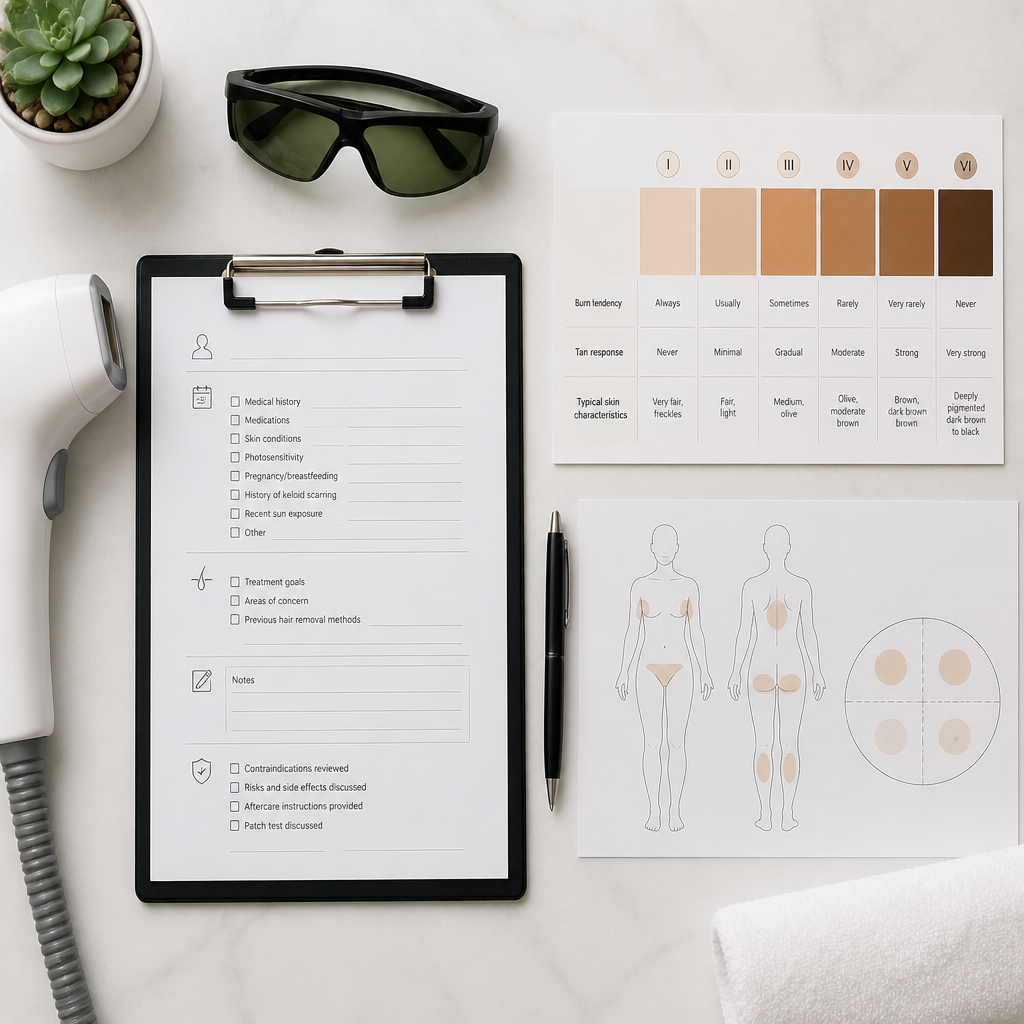
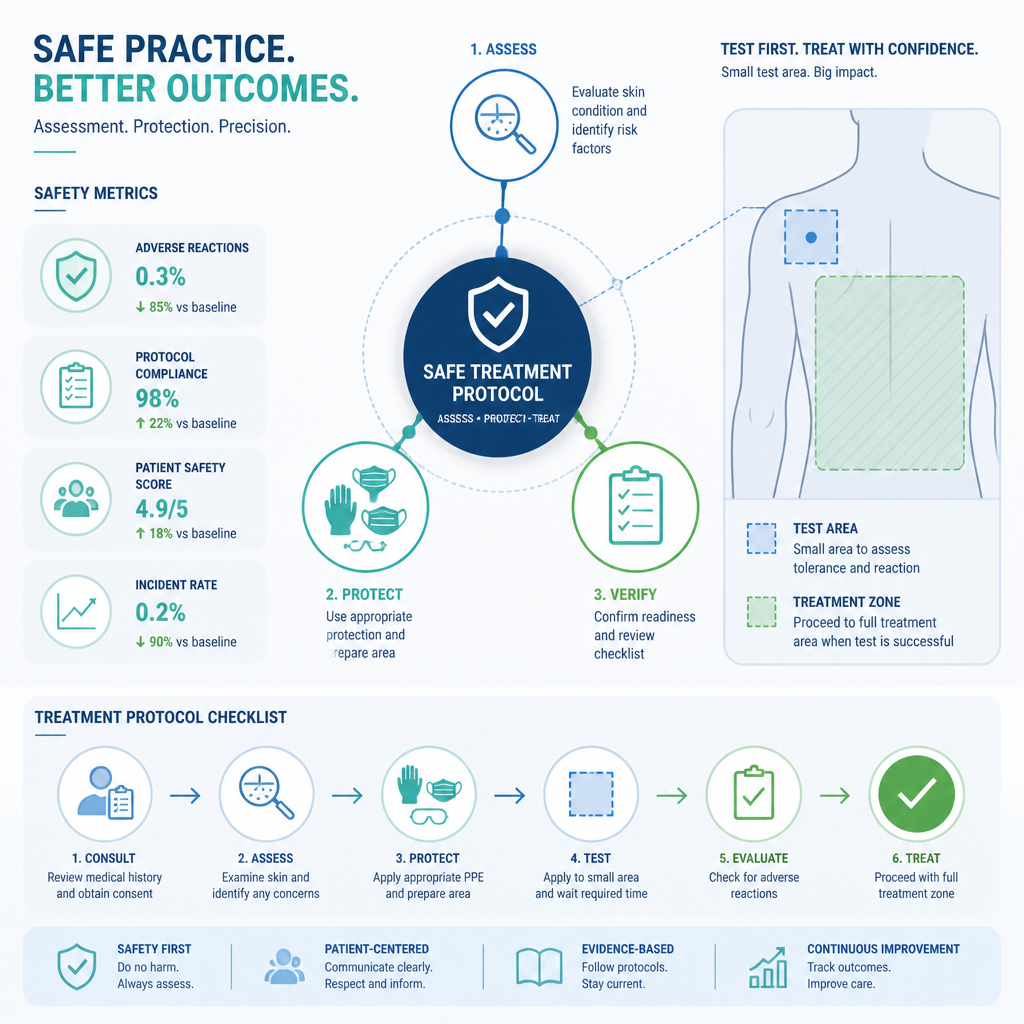
The patch test happens within a broader consultation process. Before the laser is applied anywhere, a qualified practitioner will review your medical history, current medications, skin tone, hair type, and any contraindications that might affect how your skin handles thermal energy. This assessment shapes every decision that follows.
The Step-by-Step Process
The practitioner begins by evaluating your skin type using the Fitzpatrick scale, a classification system that categorises skin by how it responds to UV exposure. This informs which laser wavelength and fluence level is appropriate for you specifically.
A small area is then treated with the laser. During this, the device delivers controlled pulses of light energy to the skin. You will feel a sensation, often described as a quick heat or a snap, but it should be manageable. The practitioner monitors your skin’s immediate physiological response during the test and notes any concerning signs.
You then wait. The 24 to 48-hour period before your follow-up review is where the test proves its value. Skin reactions that are not visible immediately can develop over this window, and it is only after reviewing that response that the practitioner can confirm safe treatment settings for your full session.
Pro tip: Book your patch test at least 48 hours before your first planned full treatment session. Arriving for both on the same day is a clear warning sign that a clinic is not following proper safety protocols.
Why Patch Tests Are Non-Negotiable for Laser Treatment Safety
The laser does not know your history. It does not know that you have sensitive skin, that you are on a photosensitising medication, or that your skin tone sits in a range where certain wavelengths carry higher risk. The patch test is the mechanism that bridges that gap between a standardised machine and an individual human body.
Burns and Hyperpigmentation Are Real Risks Without a Test
Burns, irritation, and pigmentation changes are among the most significant adverse outcomes of laser hair removal done without proper settings verification. These are not hypothetical edge cases. They are documented outcomes when practitioners skip calibration or apply a one-size-fits-all approach.
Hyperpigmentation, where the skin darkens in patches, and hypopigmentation, where it lightens, are both possible when laser energy hits skin that has not been properly assessed. For clients with darker skin tones, this risk is elevated, because melanin in the epidermis absorbs more laser energy and increases the chance of epidermal injury when the wrong settings are used.
“It’s the difference between guessing and knowing, and in a cosmetic treatment built around precision, that distinction has real consequences for safety.”
The Patch Test Confirms Your Settings, Not Just Your Safety
There is a second function of the patch test that clients often overlook. It is not only about confirming that your skin will not react badly. It is also about confirming that the laser settings will actually work effectively for your hair and skin combination.
Thick, coarse hair requires a different laser precision than fine, light hair. A patch test allows the practitioner to evaluate the response to the treatment in a controlled way and adjust the plan before a full session. This means no wasted sessions, no guesswork mid-treatment, and no discovering on the fifth appointment that the settings have been suboptimal from the start.
Pro tip: If a clinic offers a patch test and immediate full treatment in the same appointment, ask them directly why they are not following the standard 24 to 48-hour review window. A professional clinic will have a clear, confident answer. A clinic that cannot answer it is one to walk away from.
Skin Types, Fitzpatrick Scale, and Why the Test Varies
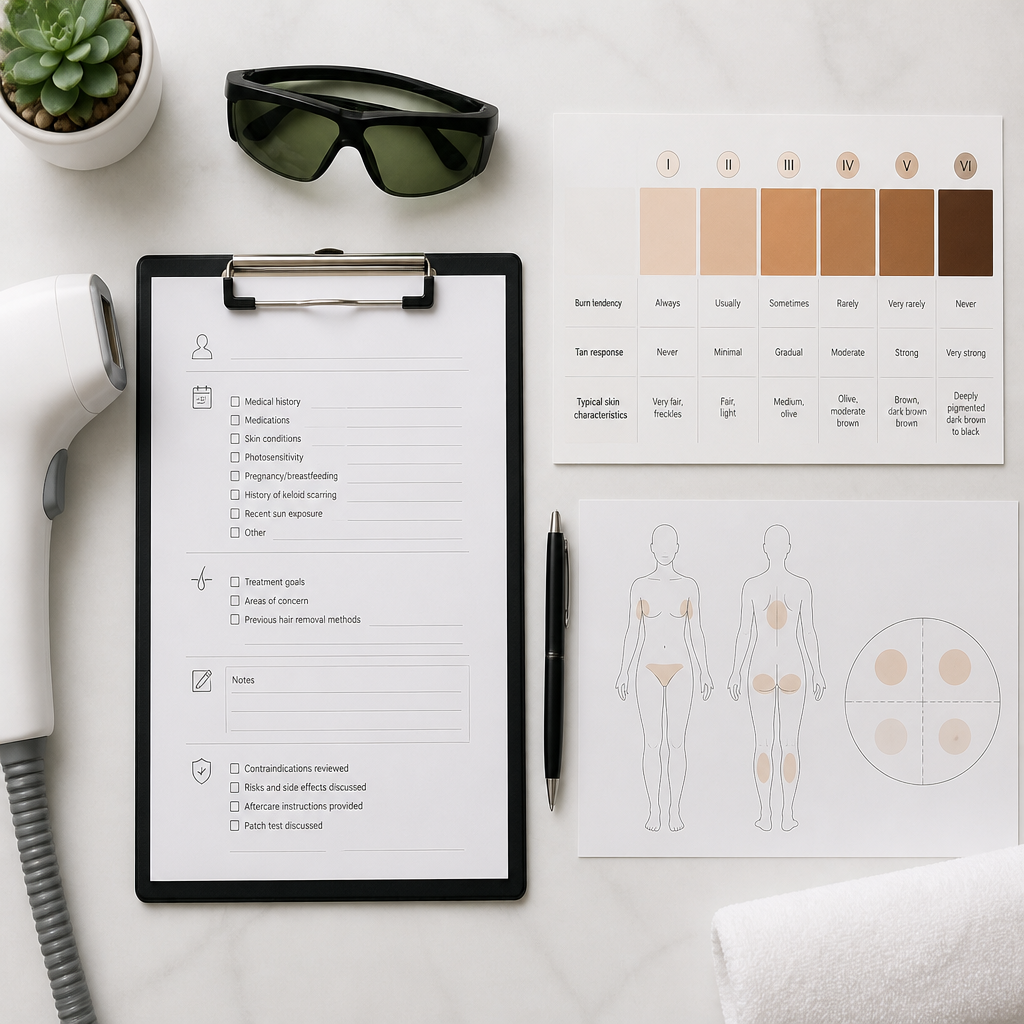
The Fitzpatrick skin phototype scale classifies skin into six types based on how the skin responds to sun exposure, ranging from very fair skin that burns easily, through to deeply pigmented skin that rarely burns. First developed as a clinical tool, it has become the standard framework used in laser treatment to guide wavelength and fluence decisions.
Why does this matter for the patch test? Because the same laser settings that are perfectly safe on Fitzpatrick Type I or II skin can cause real damage on Types IV through VI. UK clinics typically use different laser technologies for different skin types: Alexandrite (755nm) for lighter skin tones, Diode (800-810nm) for mid-range types, and Nd:YAG (1064nm) for darker skin tones, because its longer wavelength bypasses surface melanin more safely.
A patch test applied at the wrong settings for a darker skin type is not just unhelpful. It is actively dangerous. Conversely, settings calibrated too conservatively for lighter skin may produce no meaningful result. The test is the only way to find the right position on that dial for each individual client.
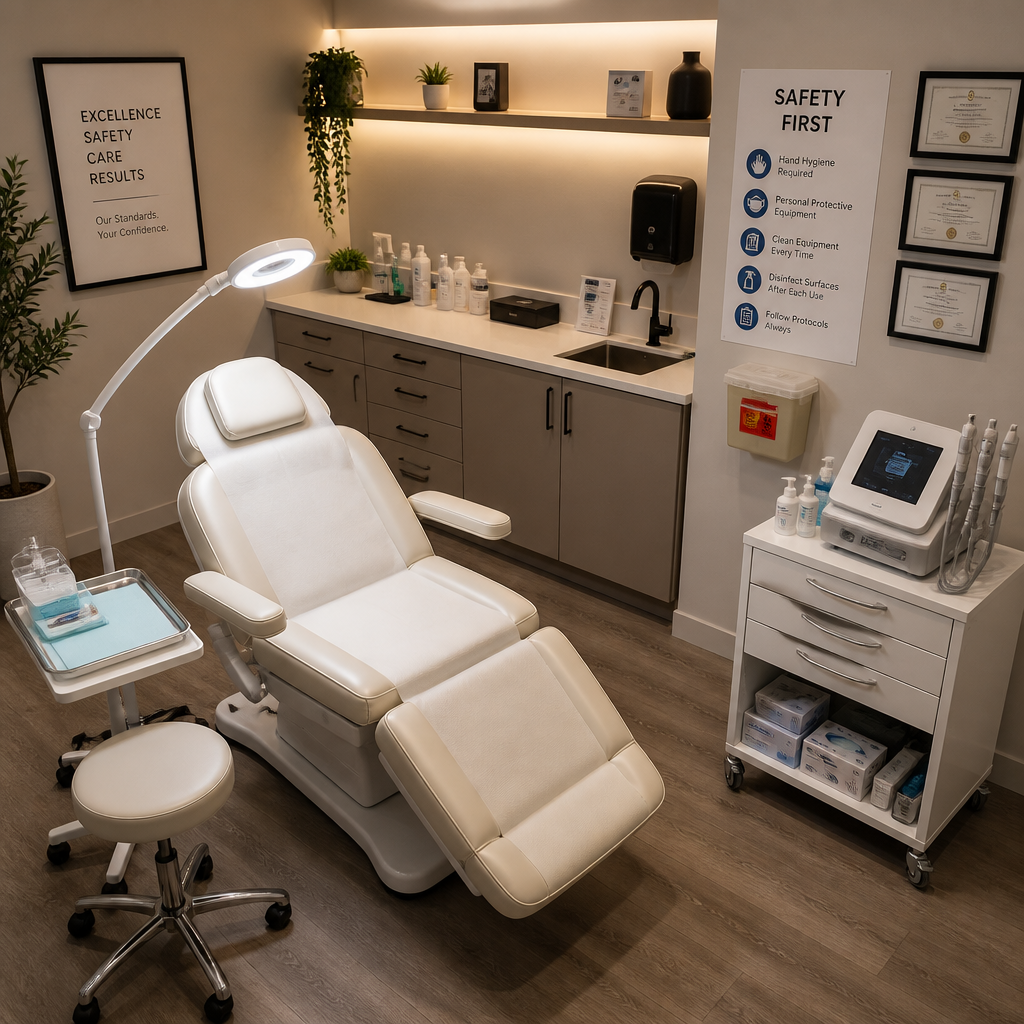
Patch Test Approaches: What Separates a Reputable Clinic from a Risk
Not all clinics approach patch testing with the same rigour. The table below outlines what distinguishes a properly conducted patch test protocol from an inadequate one, and what a red-flag approach looks like in practice.
| Approach | What It Involves | What It Means for You |
|---|---|---|
| Full clinical patch test protocol (e.g. Faith Laser, Liverpool) | Medical consultation, Fitzpatrick skin typing, multi-setting patch on the treatment area, 24-48 hour skin review before full session begins | Safe, calibrated settings confirmed before any full treatment. Optimal results from session one. |
| Basic patch test with limited review | Single-setting patch applied, immediate visual check only, no structured follow-up period | Misses delayed reactions. Settings may not be fully optimised. Some risk remains unaddressed. |
| No patch test or same-day test and treat | Laser applied to full treatment area with no prior skin response data | Violates UK safety standards. Highest risk of burns, pigmentation damage, and scarring. Not acceptable clinical practice. |
The table above makes the choice straightforward. A clinic that skips this step or compresses it into the same appointment as the full session is not following the safety standards expected of professional laser treatment providers in the UK.
What to Do Before Your Patch Test
Preparation for a patch test is not complicated, but it does require following specific instructions to ensure the results are meaningful and the experience is safe.
Shave the Treatment Area
The area being tested should be completely shaved before the appointment, using a razor or depilatory cream only. Do not wax, thread, or use any hair removal method that pulls hair from the root in the weeks before a patch test or treatment session. The laser needs the hair follicle to be intact beneath the skin surface in order to target it effectively. Hair above the surface can absorb laser energy and cause surface burns, which is why shaving is required, not optional.
Avoid Sun Exposure
Tanned or recently sun-exposed skin changes the melanin profile of the surface layer, which directly affects how the laser interacts with your skin. Avoid direct sun on the intended treatment area for at least two weeks before your patch test. Fake tan should also be removed completely, as it artificially darkens the skin and can skew the patch test results.
Disclose All Medications and Skin Conditions
Certain medications, particularly antibiotics, retinoids, and some acne treatments, can make skin significantly more photosensitive. This does not necessarily mean treatment is off the table, but it does mean the practitioner needs to know before the laser goes anywhere near your skin. Disclose everything. A thorough consultation at a clinic like Faith Laser is designed precisely to capture this kind of information and adjust the treatment plan accordingly.
Red Flags: What a Bad Patch Test Experience Looks Like
Knowing what a good patch test looks like is useful. Knowing what a bad one looks like is arguably more important, because there are clinics operating in the UK that cut corners on this step.
The clearest red flag is an offer to do the patch test and the full first session on the same day. This skips the 24 to 48-hour review window entirely. Any reaction that develops after the appointment is discovered with a full treatment area already exposed, not a small test patch. That is a serious clinical shortcut.
Another warning sign is no consultation at all before the laser is applied. A practitioner who does not ask about your medical history, your medications, or your skin type before performing a patch test is not practising safely. The same goes for a clinic that does not classify your Fitzpatrick skin type or does not explain which laser they are using and why it is appropriate for you.
Finally, be wary of any clinic that cannot explain what to do if the patch test produces a reaction. A reputable clinic will tell you in advance that if an adverse reaction occurs during the patch test, the session will be stopped immediately and you will be advised on appropriate next steps, including whether to consult a doctor.
Frequently Asked Questions
Is a patch test required for laser hair removal in the UK?
A patch test is widely considered a mandatory safety step for professional laser hair removal in the UK. Performing a full laser treatment without a prior patch test and review period violates established safety standards. Reputable clinics will always conduct one before proceeding with any full session.
How long does a patch test take?
The patch test itself takes only a few minutes, but it is typically performed as part of a broader consultation that can run between 30 minutes and one hour. The consultation covers your medical history, skin type assessment, and treatment plan discussion. After the patch is applied, you then wait 24 to 48 hours before your skin is reviewed and the full treatment is confirmed.
Will a patch test hurt?
Most people describe the sensation during a laser patch test as a brief heat or a mild snap against the skin. It is generally well tolerated. The sensation depends on the area being tested, the laser settings used, and individual sensitivity. Any significant discomfort during a patch test should be communicated to the practitioner immediately, as it is relevant information for calibrating the full treatment.
Can I have a patch test and first laser session on the same day?
No. A same-day patch test and treatment skips the 24 to 48-hour review window that is essential for identifying delayed skin reactions. Any clinic offering this combination is not following proper safety protocols. Always schedule your patch test as a separate appointment and allow the required waiting period before your first full session.
Do I need a new patch test if I return to laser treatment after a break?
Yes, in most cases. If you have had a significant gap in treatment, have changed medications, experienced notable changes in your skin or health, or are switching to a new clinic or laser technology, a fresh patch test is the responsible step. Skin can change over time, and the settings that were appropriate 12 months ago may not reflect your current skin’s response.
Does Faith Laser in Liverpool offer patch tests before starting treatment?
Yes. At Faith Laser, a patch test is a standard part of the process before any laser hair removal or tattoo removal treatment begins. The clinic follows a full consultation and assessment protocol to ensure the right settings are established for your specific skin type and treatment area, before any full session goes ahead.
If you have had a patch test experience, good or bad, we would love to hear how it shaped your expectations of the treatment that followed. Share your experience in the comments below.
References
- What a laser hair removal patch test involves and why it is done
- UK guide to laser hair removal: skin types, patch tests, and safety standards
- Clinical overview of laser parameters, Fitzpatrick skin types, and epidermal risk from the National Institutes of Health
- What to expect from a laser hair removal consultation and patch test
- Why test patches matter for laser hair removal safety and treatment calibration