Laser Hair Removal for Dark Hair: Faster Results?
If you have dark, coarse hair and you’re researching laser hair removal, here is the short answer: yes, you are in the best possible position to get fast, dramatic results. Laser hair removal dark hair treatment works by targeting melanin, the pigment that gives hair its colour, and dark, coarse hair contains more of it than any other type. That means the laser has a bigger, more absorptive target with every pulse. But “faster” is relative, and there are real variables that determine exactly how many sessions you will need and how complete your results will be. This article breaks all of it down so you can walk into your first consultation at Faith Laser in Liverpool already knowing what to expect.
Table of Contents
- Why Dark and Coarse Hair Responds Best to Laser
- How Many Sessions Does Dark, Coarse Hair Need?
- Which Laser Works Best for Dark, Coarse Hair?
- Laser Technology Comparison for Dark and Coarse Hair
- Skin Tone and the Speed Equation
- What Slows Down Your Results Even with Dark Hair
- Body Area Breakdown: Where Dark Coarse Hair Clears Fastest
- Frequently Asked Questions
- References
Why Dark and Coarse Hair Responds Best to Laser
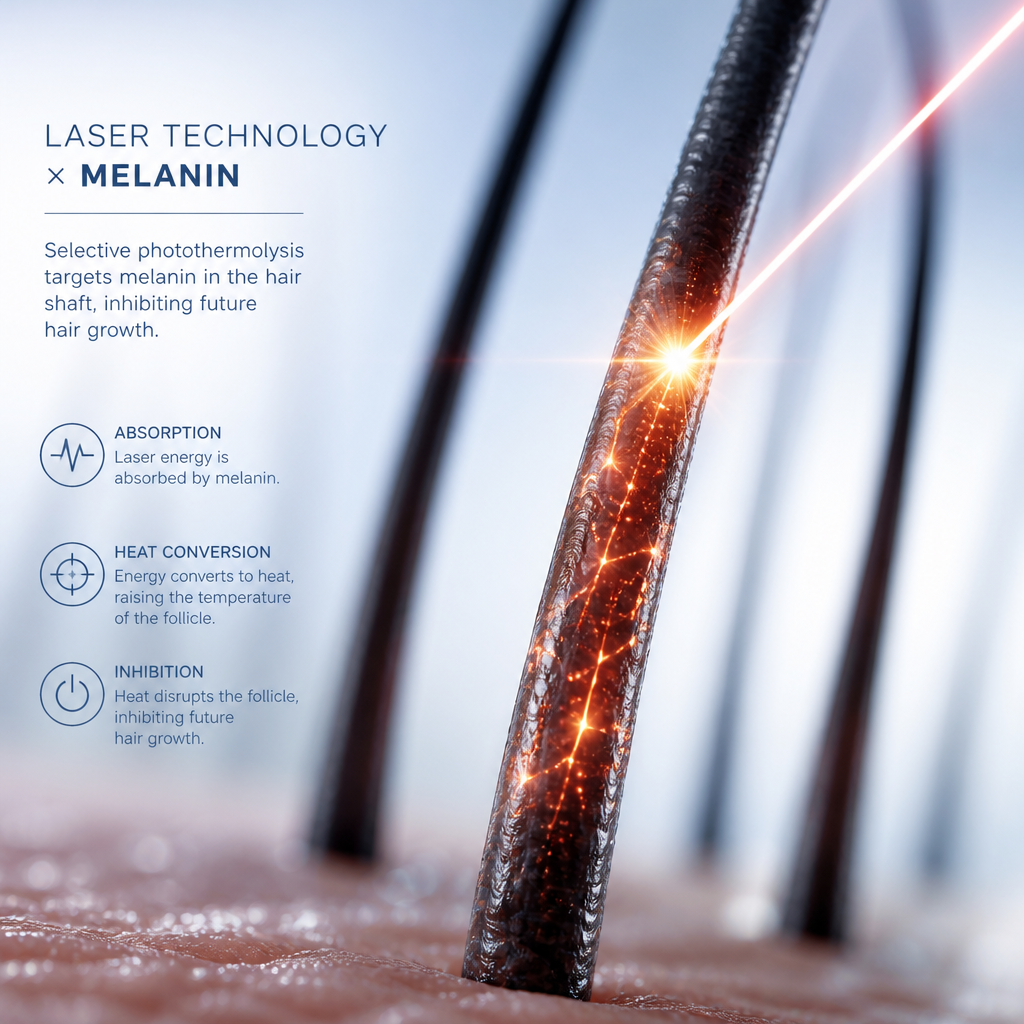
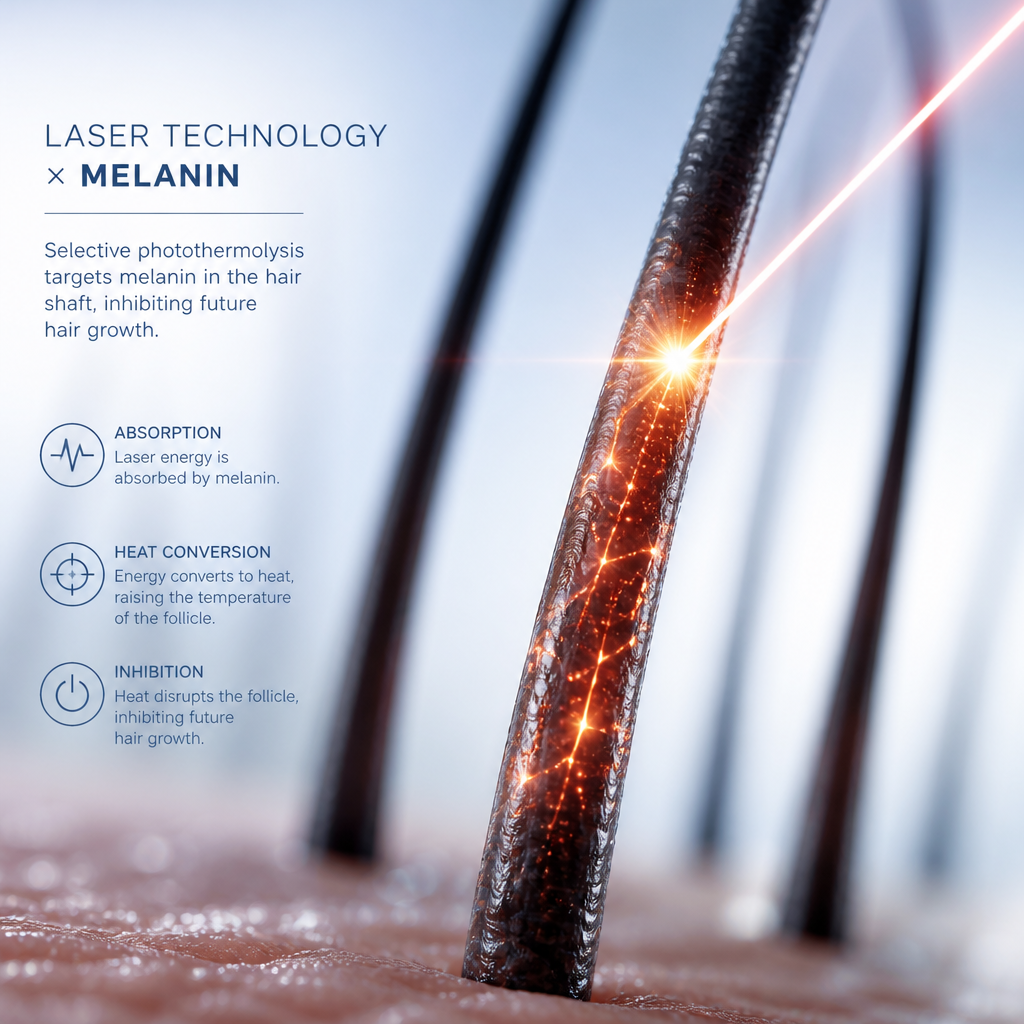
Laser hair removal operates on a principle called selective photothermolysis. The laser emits a specific wavelength of light that melanin in the hair follicle absorbs and converts into heat. That heat damages the follicle enough to stop it producing new hair. Dark, coarse hair contains the highest concentration of melanin, which means it absorbs laser energy most efficiently, generating more heat at the follicle with each pulse.
Fine, light brown, blonde, red, grey, or white hair has far less melanin. The laser has significantly less to target, which is why those hair types require more sessions or specialist wavelengths, and results are never as complete. If you have naturally dark, thick hair, you are genuinely starting from the most advantageous position possible.
Coarseness matters for a separate reason. Thicker hairs have a larger follicle and a deeper, more developed papilla, the part of the root responsible for generating new hair. A well-targeted laser pulse reaches that papilla and causes more decisive damage. Fine hairs, by contrast, have shallow follicles that are harder to destroy permanently.
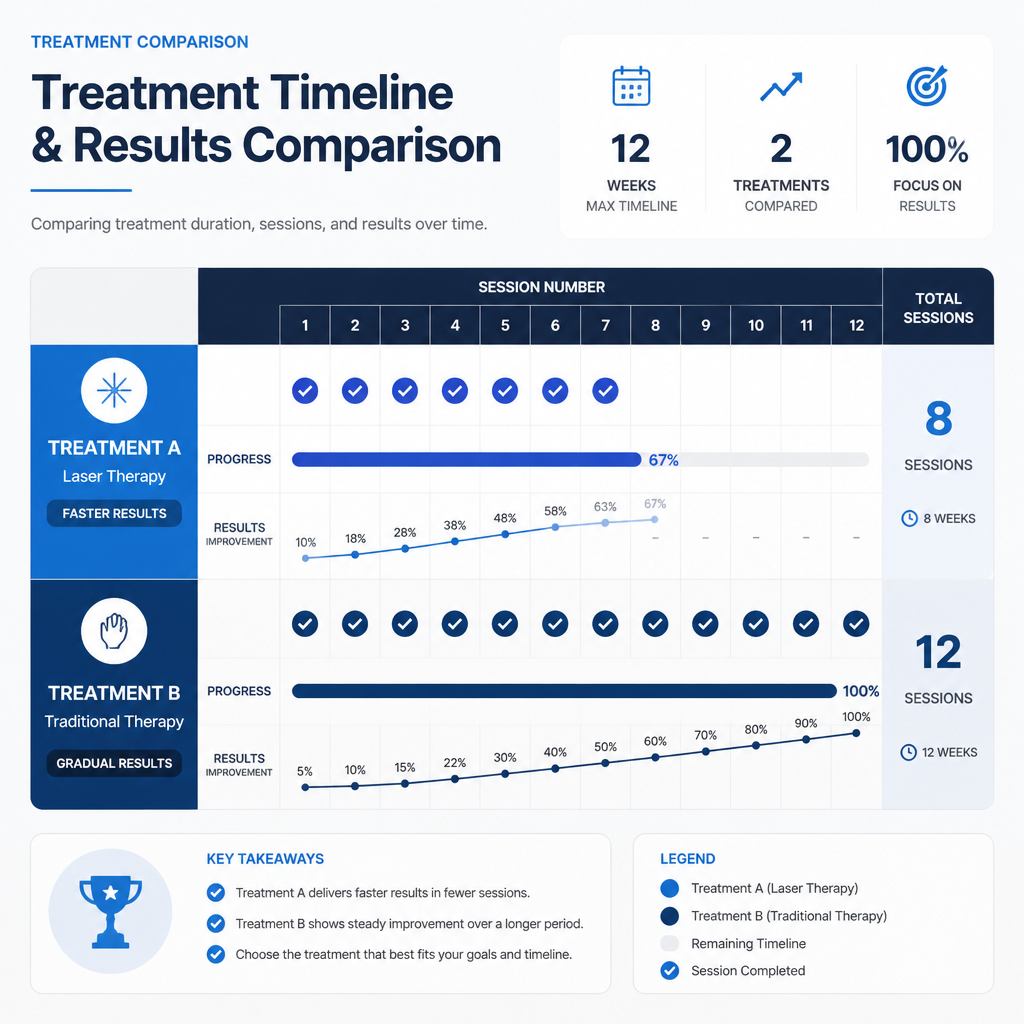
Pro tip: Do not confuse “responds faster” with “needs only one or two sessions.” Even the most ideal candidate with dense, dark hair needs multiple appointments because of how hair growth cycles work. Understanding this upfront prevents disappointment after session one.
How Many Sessions Does Dark, Coarse Hair Need?
The single biggest reason laser hair removal requires multiple sessions has nothing to do with the laser technology or your hair colour. It is biology. The laser can only permanently damage follicles that are in the anagen, or active growth, phase at the time of treatment. At any given moment, only roughly 20 to 30 percent of hairs in a given area are actively growing. The rest are in transitional or resting phases and will not respond to the laser until they cycle back into anagen.
This is why sessions are spaced weeks apart rather than days, and why skipping appointments extends your treatment significantly.
For clients with dark, coarse hair, typical session counts by area look like this:
- Underarms: 6 sessions on average. Hair is typically dark and thick, which responds well.
- Bikini and Brazilian: 6 to 8 sessions. Coarse hair responds quickly, but hormonal sensitivity in this area can extend the timeline.
- Legs: 6 to 10 sessions. Lower legs often clear faster than thighs due to hair density differences.
- Face (upper lip, chin, sideburns): 8 to 12 sessions. Facial hair is heavily influenced by hormones, making it the most stubborn area even when hair is dark and coarse.
- Back and chest: 6 to 10 sessions. Dense terminal hair responds well, but the large surface area means thorough coverage matters.
After the initial course, most clients benefit from one or two maintenance visits per year to address any regrowth from follicles that were in resting phases during the core sessions.
Dark, coarse hair has the most melanin and absorbs laser energy efficiently, so it clears in fewer sessions than fine, light, or grey hair, but consistent spacing between appointments is what actually determines how fast you get there.
Which Laser Works Best for Dark, Coarse Hair?
Not all laser systems perform equally on dark, coarse hair, and the right choice depends on both your hair type and your skin tone. Three main laser wavelengths dominate professional practice: Alexandrite (755 nm), Diode (808 to 810 nm), and Nd:YAG (1064 nm).
Alexandrite (755 nm)
The Alexandrite laser is highly absorbed by melanin, making it precise and effective at targeting follicles where there is strong contrast between dark hair and light skin. It performs well on coarse and medium-thickness dark hair and covers larger treatment areas efficiently. Its limitation is skin tone: it is most appropriate for Fitzpatrick Skin Types I through III. On darker skin, the surface melanin absorbs too much of the laser energy, raising the risk of burns or pigment changes.
Diode (808 to 810 nm)
The diode laser sits in the middle of the spectrum, offering good melanin absorption with slightly more penetration depth than the Alexandrite. It covers a broader range of skin tones than Alexandrite and is a strong option for clients with dark coarse hair across Fitzpatrick Types I through IV. Many modern diode systems use in-motion technology, allowing the handpiece to move continuously across the skin, which speeds up treatment of large areas like legs and backs.
Nd:YAG (1064 nm)
The Nd:YAG laser uses the longest wavelength of the three. Its longer wavelength is less readily absorbed by melanin in the surface layers of skin, allowing it to reach the hair follicle more effectively in clients with higher levels of skin pigmentation. This makes it the clinically appropriate choice for Fitzpatrick Skin Types IV through VI. If you have dark skin and dark coarse hair, the Nd:YAG is the gold standard option, and trying to use an Alexandrite in this situation is not safe.
Pro tip: Ask your clinic which specific laser system they use and confirm it matches your Fitzpatrick skin type before booking. A clinic that uses one fixed wavelength for all clients regardless of skin tone is a clinic worth walking away from.
Laser Technology Comparison for Dark and Coarse Hair
Below is a practical comparison of the three main laser types used for dark and coarse hair removal, covering the key factors that affect your results and safety.
| Laser Type | Best For | Key Limitation |
|---|---|---|
| Alexandrite (755 nm) | Dark, coarse hair on fair to light skin (Fitzpatrick I-III). Fast coverage of large areas. High melanin absorption makes it very effective per pulse. | Not suitable for medium to dark skin tones. Surface melanin absorbs too much energy, risking burns and pigmentation changes. |
| Diode (808-810 nm) | Dark, coarse hair on light to medium skin (Fitzpatrick I-IV). Good penetration depth and versatility across body areas. | Less effective on fine or light-coloured hair. Results on Fitzpatrick V-VI skin types require careful settings and experienced operators. |
| Nd:YAG (1064 nm) | Dark, coarse hair on medium to dark skin (Fitzpatrick IV-VI). Deeper penetration bypasses surface melanin safely. | Slightly less melanin absorption per pulse compared to shorter wavelengths, so may require more passes or sessions on light skin types. |
Skin Tone and the Speed Equation
Here is where many clients get confused: having dark, coarse hair does not automatically mean faster results if the laser being used is not matched to your skin tone. The combination that delivers the fastest results is dark hair on lighter skin (Fitzpatrick Types I to III). The high contrast between follicle melanin and surrounding skin allows the laser to identify and damage the follicle more precisely.
Clients with darker skin tones and dark hair can absolutely achieve excellent, long-lasting results. The treatment requires a laser that targets the follicle deeply without being excessively absorbed by the melanin in the outer skin layers, which means an Nd:YAG or a carefully calibrated diode system. In practice, darker-skinned clients may need slightly more sessions to reach the same endpoint safely, because the laser fluence (energy intensity) needs to be managed more conservatively per session.
At Faith Laser, every client assessment starts with evaluating both hair characteristics and Fitzpatrick skin type. This is the only responsible approach. Anyone who treats you without this assessment is guessing, and guessing with a laser is not something you want.
What Slows Down Your Results Even with Dark Hair
Dark, coarse hair is the most favourable starting point, but several factors can extend your treatment timeline regardless of hair type. Knowing them in advance means you can control the ones within your power.
Hormonal Influence
Hormones are the most common disruptor of laser hair removal results. Conditions such as polycystic ovary syndrome (PCOS) stimulate continued hair growth even in follicles that have been treated. Facial hair in particular is heavily hormone-driven, which is why the face typically requires the most sessions of any body area, even when the hair is dark and coarse. If hormonal hair growth is a factor for you, discuss this during your consultation so your treatment plan accounts for it.
Skipping or Delaying Sessions
Spacing sessions correctly is as important as the sessions themselves. If you delay appointments, follicles that were approaching the anagen phase and ready to be treated will cycle back to rest, and you lose that window. Consistent timing is one of the variables most directly within your control.
Waxing or Plucking Between Sessions
Between sessions, shaving is the only acceptable method of managing regrowth. Waxing, threading, or plucking removes the hair from the follicle itself, eliminating the melanin target the laser needs to work. Even a single waxing appointment between sessions can meaningfully reduce the effectiveness of the following treatment.
Sun Exposure
UV exposure raises the melanin in the surrounding skin, which competes with follicle melanin for laser energy. This increases the risk of skin sensitivity and pigment changes, particularly for clients with medium to darker skin tones. Avoid significant sun exposure for at least two weeks before and after each session, and use sun protection consistently throughout your treatment course.
Body Area Breakdown: Where Dark Coarse Hair Clears Fastest
Not all body areas behave the same way, even when the hair across them is equally dark and coarse. Hair growth cycles vary by location, and this directly affects how quickly you see full results.
The underarms are consistently one of the fastest-responding areas. The hair is usually dense, dark, and coarse, and the growth cycle in this zone is shorter and more predictable. Most clients with dark underarm hair see significant reduction within the first three sessions and reach their treatment goal around session six.
The bikini and Brazilian area responds well for the same reasons but takes a few sessions longer due to hormonal sensitivity. The legs clear progressively, with lower legs typically responding faster than upper legs because of differences in hair density and thickness.
Facial hair is the most variable, not because it is dark or coarse, but because hormonal cycles keep more facial follicles active at once. Upper lip, chin, and sideburn hair on clients with dark hair still responds well to laser, but you should plan for 8 to 12 sessions rather than expecting the same rapid results as underarms.
For clients attending Faith Laser in Liverpool for facial treatments, underarm treatments, intimate area laser hair removal, or full leg courses, the presence of dark, coarse hair is a genuine advantage at every one of these sites. It means the laser is working with your biology rather than against it.
Frequently Asked Questions
Does dark, coarse hair really respond faster than fine or light hair to laser treatment?
Yes, definitively. Laser hair removal works by targeting melanin in the hair follicle, and dark, coarse hair contains significantly more melanin than fine, light, or grey hair. The laser has more to absorb and more follicle mass to damage with each pulse. Clients with dark coarse hair consistently need fewer sessions to achieve the same level of hair reduction compared to those with fine or light-coloured hair.
How many laser hair removal sessions will I need if I have dark, coarse hair?
Most areas with dark, coarse hair reach an excellent result in 6 to 8 sessions. Some areas, particularly the face where hormonal influence is strong, may require 8 to 12 sessions. After the main course, one or two annual maintenance visits help keep results consistent by targeting any follicles that were in resting phases during your initial treatment.
Does my skin tone affect how fast I get results, even if my hair is dark?
Yes. The fastest results come from the combination of dark hair and lighter skin (Fitzpatrick Types I to III) because the contrast allows the laser to target the follicle very precisely. Clients with darker skin tones and dark hair still achieve excellent results but may need a different laser type, typically Nd:YAG, and the treatment is managed at safer energy levels per session. This can add a few sessions to the total count but does not compromise the final outcome.
Can I wax or pluck between laser sessions if I have coarse regrowth that bothers me?
No. Waxing, threading, and plucking remove the hair shaft from inside the follicle, which eliminates the melanin target that the laser needs at your next session. Between appointments, shaving is the only acceptable method. The regrowth may look and feel coarser after shaving than it does after waxing, but shaving does not change the actual hair structure and will not affect your laser results.
Which laser is best for removing dark, coarse hair on darker skin?
The Nd:YAG laser at 1064 nm is the clinically recommended choice for clients with Fitzpatrick Skin Types IV through VI who have dark hair. Its longer wavelength penetrates deeper into the skin without being heavily absorbed by the melanin in the outer skin layers, making it both effective and safe for darker skin tones. A diode laser with carefully calibrated settings is also used for Fitzpatrick Type IV skin. The Alexandrite laser is not the right tool for darker skin tones and should not be used on them.
Will laser hair removal on dark, coarse hair work permanently?
The accurate term is permanent reduction rather than permanent removal. After a complete course of sessions, most clients with dark, coarse hair achieve a substantial, long-lasting reduction in hair density and thickness. Any remaining hairs are typically finer and lighter than before treatment. Hormonal changes, such as pregnancy or a new medical condition, can trigger some regrowth, which is why annual maintenance sessions are recommended rather than treating the initial course as a one-time fix.
Is laser hair removal for dark, coarse hair painful?
Most clients describe the sensation as brief snapping or stinging, similar to the flick of a rubber band. Coarser hair can produce a slightly more intense sensation than fine hair during treatment because the follicle absorbs more energy. Modern laser systems include integrated cooling to manage discomfort. At Faith Laser, the treatment environment is designed to keep you as comfortable as possible throughout every session.
Have you already started laser hair removal for dark or coarse hair? Share your experience in the comments below, or let us know which area you’re treating – we’d love to hear how your journey is going.
References
- Clinical outcomes of combining Nd:YAG, diode, and Alexandrite lasers in a rotational hair removal regimen (PubMed Central)
- How many laser hair removal sessions you need based on hair type and body area
- Farah Dermatology: how session count varies by hair colour, skin tone, and treatment area
- Diode vs Alexandrite vs Nd:YAG laser hair removal: key differences explained
- Laser hair removal sessions guide: skin type, hair characteristics, and area-by-area breakdown