If you have ever shaved your underarms on a Monday and found stubble again by Wednesday, you already know how relentless armpit hair can be. Underarm laser hair removal is one of the most popular treatments at Faith Laser’s Liverpool clinic precisely because the underarm is a compact, high-turnover area where traditional hair removal feels like a never-ending chore. Before you book your first session, though, you deserve a straight answer to the real questions: how many sessions, how much discomfort, what results are realistic, and what separates a clinic worth trusting from one that is just selling you a package. This guide covers all of it.
| Key Insight | Explanation |
|---|---|
| Most people need 8 to 10 sessions | Laser only targets hair in its active growth phase, so multiple appointments spaced 4 to 6 weeks apart are essential to catch successive cycles. |
| Darker hair responds fastest | The laser targets melanin (pigment). Dark, coarse underarm hair absorbs the most energy, meaning you will typically see faster, more dramatic reduction than with fine or light hair. |
| Shave the area 24 hours before, never wax | Shaving preserves the follicle so the laser has something to target. Waxing removes the root entirely, leaving nothing for the laser to work with. |
| Skip deodorant on treatment day | Fragrances and aluminium-based products can cause irritation on freshly treated skin. Arrive clean and product-free. |
| Results typically begin showing after sessions 2 to 3 | Early sessions slow regrowth and reduce density. Significant smoothness becomes noticeable from the middle of your course onward. |
| Consistency beats everything | Skipping appointments or stretching gaps too far allows dormant follicles to activate and sets your progress back. Stick to the schedule. |
| Underarm laser hair removal Liverpool costs vary | Mid-market UK clinics typically charge around £50 to £90 per underarm session. Package pricing usually reduces the per-session cost significantly. |
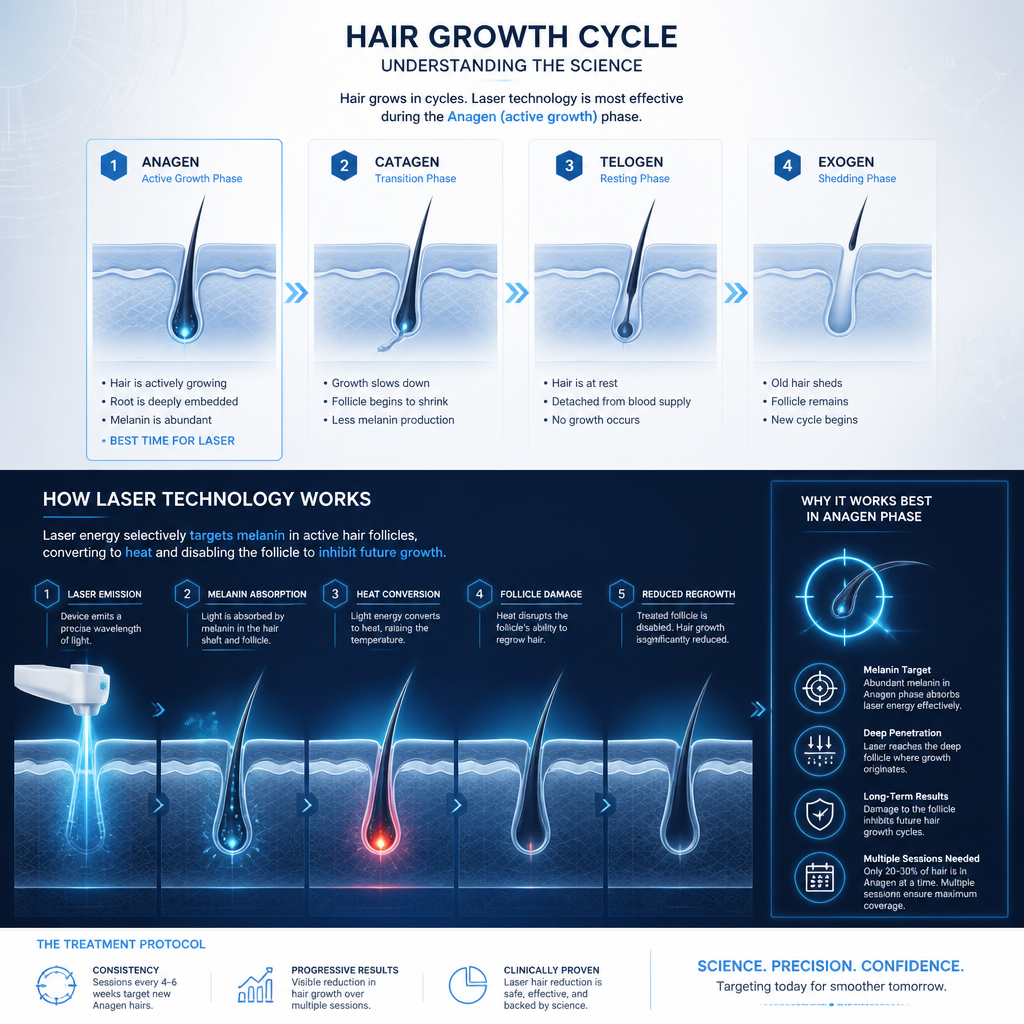
The mechanism is simpler than the marketing makes it sound. A medical-grade laser emits a concentrated pulse of light that is absorbed by the melanin (pigment) inside each hair follicle. That absorbed energy converts to heat, which damages the follicle just enough to disrupt future hair growth, without meaningfully injuring the surrounding skin.
The critical point most clinics gloss over is this: the laser only works on hairs that are in the active growth phase, called the anagen phase. At any given moment, only a proportion of your underarm hairs are in this phase, which is exactly why one session is never enough. Each appointment catches a fresh wave of follicles that were dormant at your last visit.
Laser hair removal works by targeting the melanin in hair follicles, but it only affects hairs in the active growth phase. Not all your hair is in that phase at the same time, which is why a series of treatments is always necessary.
The type of laser used matters. Diode lasers are widely considered effective for a broad range of skin tones and are particularly well-suited to coarser hair like you typically find in the underarm area. Alexandrite lasers work well for lighter skin tones with dark hair, while Nd:YAG lasers are the safer choice for darker skin tones.
Pro tip: Always ask which laser type your clinic uses and why it suits your skin tone and hair colour. A practitioner who cannot answer that question clearly is one you should think twice about trusting with your skin.
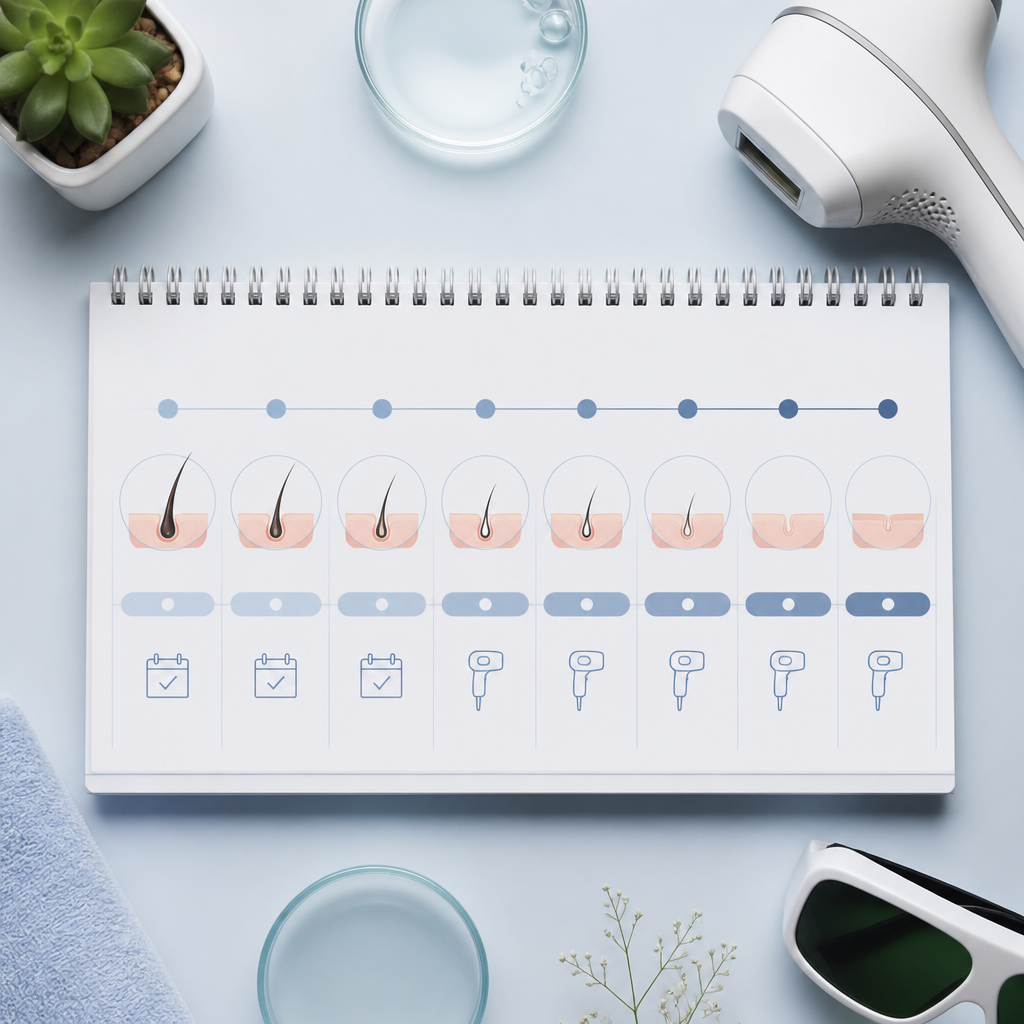
The honest answer is: most people need 8 to 10 sessions for meaningful, lasting underarm hair reduction. Sessions are typically spaced 4 to 6 weeks apart to allow the skin and follicles to respond properly between appointments.
Here is what the progression actually looks like across a standard course:
Some people with hormonal imbalances, polycystic ovary syndrome (PCOS), or naturally fine, light hair may need additional sessions beyond 8. Others with dark, coarse hair and a good skin-to-hair contrast will hit their target result in fewer. The variables are real, but 8 to 10 is a reliable planning number for the majority.
One thing that reliably slows results: inconsistency. Stretching appointments beyond 6 weeks, or skipping sessions entirely, allows dormant follicles to re-enter their growth phase without being treated. You essentially lose ground. Treat the schedule as non-negotiable.
The most effective candidates share a specific profile: dark, coarse underarm hair on lighter skin. The reason is physics. High contrast between hair pigment and skin tone allows the laser to target the follicle precisely without the surrounding skin absorbing significant energy.
This does not mean laser hair removal is unavailable for darker skin tones. It means the laser type and settings must be chosen carefully. Diode and Nd:YAG lasers can treat darker skin safely and effectively when used correctly. If a clinic tells you laser hair removal simply “does not work” on your skin tone without discussing which laser would suit you, that is a red flag worth taking seriously.
Grey, white, blonde, and red hair present a genuine challenge because there is limited melanin for the laser to target. For most of these hair types, laser hair removal produces limited results regardless of the technology used. A good clinician will tell you this plainly at your consultation rather than take your money for sessions that are unlikely to deliver.
Hormonal conditions like PCOS can stimulate ongoing hair growth even after successful treatment, meaning maintenance sessions may be needed periodically. This is not a failure of the treatment. It simply reflects how your body’s hormones interact with follicle activity. Knowing this in advance means you plan better and are not disappointed.
Preparation is where a significant number of people undermine their own results without realising it. The steps are straightforward, but they matter more than most people give them credit for.
Shave the underarm area 24 hours before your appointment. Shaving leaves the follicle intact and in place, giving the laser a target. Waxing, threading, or plucking physically removes the hair root, which means there is nothing for the laser energy to lock onto. Stop all root-removal methods at least four weeks before starting your course and for the duration of treatment.
Tanned skin, whether from the sun or a bottle, reduces the contrast between skin and hair and increases the risk of the laser affecting the skin itself. Stay out of direct sun for at least two weeks before each session and skip the self-tanner entirely during your treatment course.
On treatment day, the underarm area should be clean and free of deodorant, antiperspirant, fragrance, or any topical product. Fragrances and aluminium-based formulas are harsh on freshly treated, sensitive skin and can cause redness or discolouration.
Pro tip: If you have particularly sensitive underarm skin or a history of folliculitis (ingrown hair infections) from shaving, mention this at your consultation. A skilled practitioner at a clinic like Faith Laser will adjust settings accordingly rather than applying a one-size-fits-all approach.
The underarm is one of the most popular areas for laser hair removal partly because the sessions are so short. The treatment area is compact, and a typical underarm appointment takes around 10 to 15 minutes. That includes both sides.
Most people describe the sensation as slight tingling to the skin, sometimes accompanied by a warming feeling. Modern devices incorporate cooling technology to minimise discomfort significantly. The underarm is a sensitive area, but the sessions are brief enough that discomfort is very manageable for the vast majority of clients.
Redness and mild swelling around the treated follicles are normal and typically settle within a few hours. Some people experience a sensation similar to mild sunburn. Applying a cool compress and wearing loose, breathable clothing helps. Avoid heat, including hot showers and saunas, for the rest of the day.
Skip fragranced products, deodorant, and self-tanners for several days post-treatment. The skin is more sensitive than usual and more reactive to ingredients it would normally tolerate well. Wear loose-fitting clothing to avoid friction over the underarm area. Do not wax, tweeze, or pluck any hairs that appear during this period. Shaving between sessions is fine if regrowth bothers you.
People researching underarm hair removal in Liverpool often compare laser treatment against IPL (Intense Pulsed Light) and traditional waxing before committing. Here is a direct, factual breakdown of how these approaches differ in practice.
| Method | Effectiveness | Best For |
|---|---|---|
| Medical-Grade Laser (Diode / Alexandrite) | High. Targets melanin precisely, works on a broad range of skin tones with correct device selection. Most effective long-term solution for dark, coarse underarm hair. | Anyone seeking long-lasting or permanent hair reduction. Best results with dark hair on light to medium skin. With the right laser, also suitable for darker skin tones. |
| IPL (Intense Pulsed Light) | Moderate. Uses a broader light spectrum than laser. Less precise targeting of melanin, generally less effective than medical-grade laser particularly on coarser hair. | Light skin with moderately dark hair. Often found in beauty salons and at-home devices. Results tend to require more sessions and may not be as permanent. |
| Waxing | Temporary only. Removes hair at the root but does not affect the follicle’s ability to grow new hair. Regrowth typically returns within 3 to 6 weeks. | Short-term smoothness. No long-term reduction. Can cause ingrown hairs and repeated skin trauma in the underarm area over time. |
The clearest takeaway from this comparison: waxing and IPL both deliver temporary results with ongoing costs and effort. Medical-grade laser at a reputable clinic is the only method that meaningfully disrupts follicle activity over time. The upfront cost is higher, but the cumulative cost of years of waxing appointments usually exceeds a full laser course.
Liverpool has a growing number of clinics offering laser treatments, which makes choosing the right one more important, not less. Not all clinics use the same standard of equipment, and the difference between a medical-grade laser and a salon-grade IPL device is significant when it comes to laser hair removal results.
Ask what laser technology the clinic uses and whether it is medically certified. Ask whether a consultation is included before any treatment begins. A clinic that books you straight into a session without assessing your skin tone, hair type, and medical history is cutting corners that affect both your safety and your results.
Faith Laser in Liverpool focuses specifically on laser hair removal and tattoo removal, which means the team’s expertise is concentrated rather than spread across dozens of different treatments. Their approach includes tailored packages built around your individual needs, and the clinic is designed to feel relaxed rather than clinical and intimidating. For anyone coming in for underarm laser hair removal for the first time, that atmosphere matters. Being comfortable enough to ask questions and communicate during treatment directly affects how well the session goes.
For anyone comparing Liverpool providers, the relevant questions are: What laser do they use? Who performs the treatment? What aftercare support is available between sessions? Faith Laser’s team is accessible between appointments, which matters when you have a question or concern between sessions and do not want to wait until your next booking to get an answer.
If you are ready to stop managing underarm hair and start eliminating it, Faith Laser’s laser hair removal service is a logical starting point for Liverpool residents who want professional treatment without the impersonal, high-volume clinic experience.
Most clients describe it as slight tingling or warmth to the skin. The underarm is a sensitive area, but sessions are short (usually around 10 to 15 minutes for both underarms), and modern lasers incorporate cooling mechanisms that significantly reduce discomfort. The vast majority of people find it very manageable.
Because the underarm is a relatively small and compact area, each session typically takes between 10 and 20 minutes including preparation. It is one of the quickest areas to treat, which makes it easy to fit into a lunch break or a morning before work.
Yes, shaving between sessions is fine and is actually the only hair removal method you should use during your treatment course. Do not wax, thread, or pluck hairs between appointments. Those methods remove the follicle root, which you need to be present for the laser to do its job effectively at your next session.
Most people notice visible differences in regrowth speed and hair density after their second or third session. Significant smoothness typically becomes apparent from sessions three to four onwards, with the majority of thick, dark hair gone by sessions five to six. Consistency with your appointment schedule is the single biggest factor in how quickly and clearly you see results.
Yes, when the correct laser is used. Diode and Nd:YAG lasers are appropriate choices for darker skin tones and can deliver effective results safely. The key is ensuring the clinic has the right equipment and the practitioner understands how to adjust settings for your specific skin profile. Always confirm this at your consultation before committing to a course of treatment.
Most people achieve long-lasting reduction that does not require regular maintenance. However, hormonal changes, such as those caused by pregnancy, menopause, or conditions like PCOS, can stimulate new hair growth in treated follicles. If this happens, one or two top-up sessions will typically bring you back to smooth results. It is worth discussing your hormonal history at your initial consultation so your practitioner can set realistic expectations.
Mid-market UK clinics typically charge around £50 to £90 per underarm session. Package pricing reduces the per-session cost meaningfully, making a full course more affordable than paying per appointment. Faith Laser offers tailored packages designed to reflect individual needs rather than a fixed price list, so it is worth contacting them directly for a personalised quote rather than trying to compare like-for-like with larger chain clinics.
Have you already had your first underarm laser session, or are you still weighing up whether it is the right choice for you?