Tattoo Regret Liverpool: Why Laser Removal Wins
Tattoo regret in Liverpool is far more common than most people will admit out loud. You made the decision, sat through the needle, and now every morning in the mirror you wish you hadn’t. Whether it is a name that belongs to someone from your past, a design that felt meaningful at eighteen, or a piece that was simply done badly, the feeling is the same: you want it gone. The good news is that modern laser removal has made that possible, and Liverpool now has access to clinical-grade technology that delivers real, lasting results. This is not a fringe treatment any more. It is the most effective and evidence-backed method available.
Table of Contents
- How Common Is Tattoo Regret?
- Quick Takeaways
- Why People in Liverpool Want Tattoos Removed
- How Laser Tattoo Removal Actually Works
- Laser vs Other Removal Methods
- What to Expect From Your Sessions
- Choosing the Right Clinic in Liverpool
- Frequently Asked Questions
- References
How Common Is Tattoo Regret?
The numbers around tattoo regret are consistently higher than the tattooing industry tends to acknowledge. YouGov surveys show that around 26% of people in the UK have tattoos, and around 14% say they have regrets. That figure sounds modest until you apply it to the wider population. Studies show that nearly one in three people with tattoos think about removal.
A 2012 survey from the British Association of Dermatologists found that nearly a third of tattooed people had second thoughts, with men who got inked before the age of 16 being particularly likely to regret it. More recent research reinforces this picture. Of 3,033 participants in a published study, 35.3% reported some level of tattoo regret.
New research analysing search engine data revealed a sharp rise in people wanting to get their tattoos removed, with searches for removal surging significantly in recent years. That shift in behaviour reflects something real: more people are moving past embarrassment and actually taking steps to deal with ink they no longer want.
Quick Takeaways
| Key Insight | Explanation |
|---|---|
| Tattoo regret is widespread in the UK | Research consistently shows roughly one in three tattooed people considers removal at some point, making professional laser treatment a highly relevant service. |
| Laser removal is the gold standard | Modern laser technology targets ink particles precisely, breaking them down without damaging the surrounding skin in the way that older methods do. |
| Multiple sessions are normal and necessary | Ink breaks down gradually as the body clears fragments between sessions. Skipping sessions or rushing the process reduces the final outcome. |
| Colour and age of the tattoo both matter | Older tattoos and dark inks typically respond faster. Bright colours like yellows and light greens require more sessions or specialist wavelengths. |
| Creams and dermabrasion do not work reliably | Over-the-counter removal creams cannot penetrate the dermis where ink sits. Dermabrasion carries a high risk of scarring without comparable results. |
| Clinic choice determines your outcome | Medical-grade equipment, proper consultation, and qualified practitioners make the difference between clean removal and a patchy, incomplete result. |
| Liverpool-based treatment has real advantages | Having a local clinic means consistent sessions, easy follow-up, and no travel disruption between appointments, which directly supports better results. |
Understanding what drives tattoo regret is the first step toward doing something about it. The most important thing to know before you commit to any treatment is how the process works, what it can realistically achieve, and why some methods are worth your money while others are not.
Why People in Liverpool Want Tattoos Removed
The reasons people seek tattoo removal in Liverpool are predictable once you hear them, but they are no less valid for that. A name from a past relationship is the classic case. So is the tribal band from the early 2000s that has stretched, blurred, and aged badly. Poor-quality work from an unlicensed artist is another recurring theme, as is the tattoo that made sense at seventeen but creates problems now in a professional environment.
Career and Professional Life
Visible tattoos continue to affect employment decisions in certain industries. A hand, neck, or forearm tattoo can create barriers in healthcare, law, hospitality, and client-facing roles. For many Liverpool clients, removing a tattoo is not about shame. It is a practical decision about career progression that they did not anticipate when they were younger.
Identity Change Over Time
Millennials lead the way as the most tattooed generation, with 47% having at least one design. That means the generation most likely to have tattooed heavily in their teens and twenties is now firmly in their thirties and forties, and their sense of identity has shifted. What felt like a statement then can feel like a costume now.
Poor Quality Work
A significant proportion of removal clients are not removing meaningful tattoos. They are removing poorly executed ones. Lines that bled, shading that muddied, and colour that faded unevenly within a couple of years. This is particularly common with tattoos done outside of regulated studio environments or during travel. The goal in these cases is often partial fading to allow a proper cover-up rather than complete removal, and laser treatment handles both outcomes well.
Pro tip: If your goal is a cover-up rather than full removal, tell your practitioner before the first session. The treatment approach can be adjusted to target specific areas and fade the tattoo to a point where a skilled artist can work over it effectively, saving you sessions and cost.
How Laser Tattoo Removal Actually Works
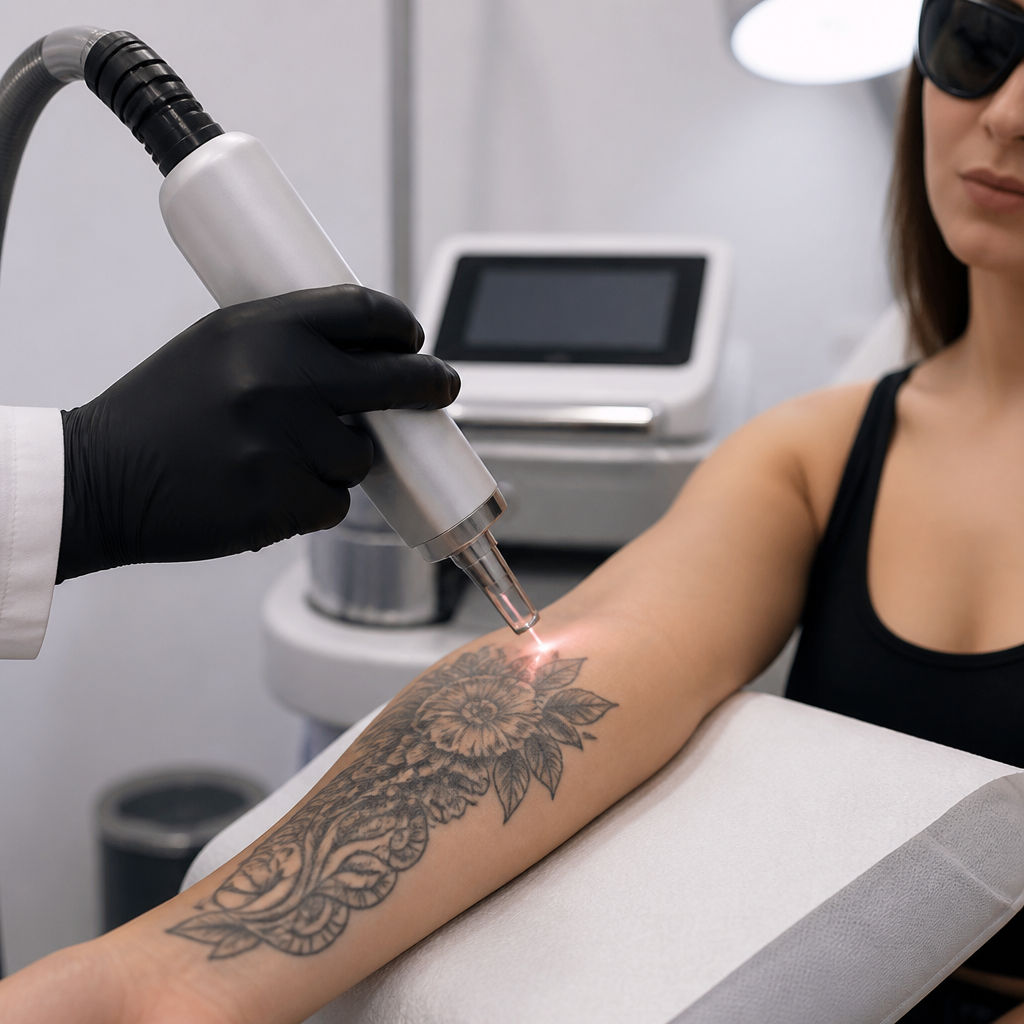
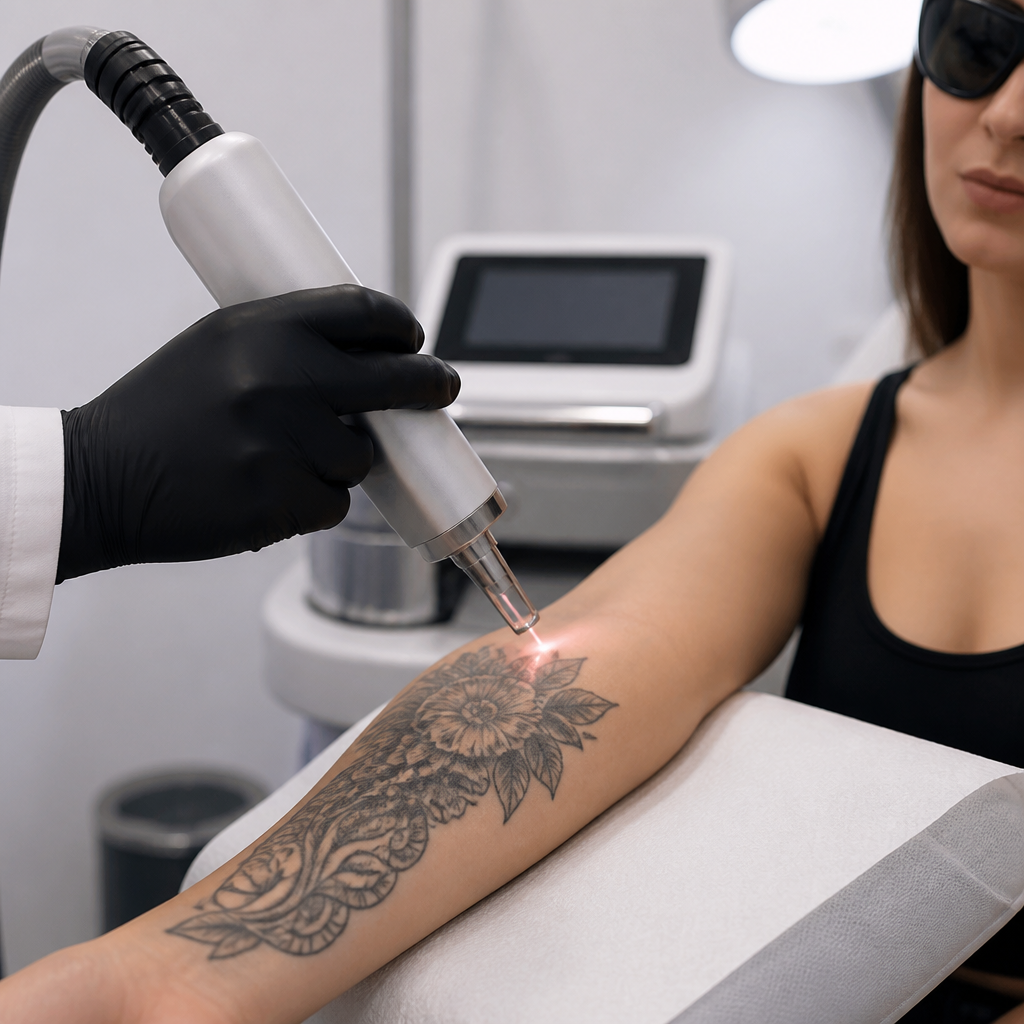
The mechanism behind laser tattoo removal is specific and worth understanding. Tattoo ink sits in the dermis, the deeper layer of skin beneath the epidermis. Your immune system detected the ink as a foreign body when the tattoo was first done and attempted to break it down, which is why tattoos fade gradually over years. Laser treatment accelerates and completes that process in a controlled way.
The Role of Q-Switched and Picosecond Lasers
The use of Q-switched lasers has gained wide acceptance for the removal of tattoos. By restricting pulse duration, ink particles generally reach very high temperatures, resulting in the destruction of the tattoo ink pigment-containing cells with relatively minimal damage to adjacent normal skin. This precision is what separates laser treatment from every other method on the market.
Picosecond laser technology takes this further. Where older Q-switched devices fire pulses measured in nanoseconds, picosecond devices fire in trillionths of a second. The shorter pulses create a photoacoustic effect that shatters ink into smaller fragments, which the lymphatic system then clears more efficiently. The practical result is fewer sessions and better clearance, especially on resistant colours and older skin types.
What Happens Between Sessions
After each session, the broken-down ink fragments are processed and eliminated by your immune system over the following weeks. This is why the gap between sessions matters. Rushing appointments does not speed up the process. It reduces the visible progress between treatments and increases the risk of skin irritation. A standard interval of six to eight weeks between sessions allows the skin to recover and the immune system to clear the previous session’s work before the next round begins.
Innovations in laser technology reduce skin damage, reduce the number of sessions required, shorten recovery time, and improve results, making laser tattoo removal increasingly popular and widely accessible.

Laser vs Other Removal Methods
People searching for ways to remove an unwanted tattoo in Liverpool will find no shortage of alternatives being marketed online. Most of them do not work as advertised. Some of them cause harm. This comparison is based on what the evidence actually shows.
| Method | Effectiveness | Risk Level |
|---|---|---|
| Laser Removal | High. Targets ink at the dermal level and breaks it down for natural elimination. Best available option for full or partial removal. | Low when performed by a qualified practitioner using medical-grade equipment. Minimal damage to surrounding skin. |
| Dermabrasion | Inconsistent. Physically sands the outer skin layer. Cannot reliably reach deep ink deposits. Results vary widely. | High. Dermabrasion relies on aggressive sanding that carries a significant risk of scarring and infection. Unpredictable outcomes. |
| Topical Removal Creams | Negligible. Creams cannot penetrate the epidermis to reach dermal ink. No clinical evidence supports their use for tattoo removal. | Low to moderate. Most creams are ineffective but not dangerous. Some contain harsh chemicals that cause skin reactions without removing ink. |
When comparing methods, laser tattoo removal stands out as the safer, more precise, and highly effective choice for most patients. Laser technology targets only the ink pigment, leaving the surrounding skin intact.
Non-laser tattoo removal methods include surgical excision, dermabrasion, and chemical peels. Surgical excision involves physically cutting out the tattooed skin, which always leaves a scar and is only viable for very small tattoos. It is not a realistic option for anything larger than a few centimetres. Chemical peels work at the surface level and share the same limitation as topical creams: they cannot reach the dermis.
Pro tip: Be cautious of any provider offering removal via saline injection, tattoo removal “pens,” or unregulated chemical treatments. These are not clinically validated and can cause permanent scarring, hyperpigmentation, or infection. If a method is not laser-based, ask for published evidence before proceeding.
The right laser does not burn tattoo ink out of the skin. It shatters it into fragments small enough for the body to do the rest of the work itself. That is the difference between removal and damage.
What to Expect From Your Sessions
Knowing what the process actually feels like matters, because a lot of people delay booking because they are uncertain. Here is a straightforward account of what happens from consultation to completion.
The Initial Consultation
Any reputable clinic will assess your tattoo before treating it. Size, ink density, colour range, age of the tattoo, your skin type, and any previous removal attempts are all relevant. This is not just a formality. The number of sessions, the laser settings, and the expected outcome all depend on these factors. A consultation that takes less than a few minutes and involves no real assessment is a red flag.
Sensation During Treatment
Laser tattoo removal is uncomfortable. The sensation is commonly described as similar to having an elastic band snapped repeatedly against the skin, or contact with a hot splatter. Practitioners apply a topical anaesthetic cream or use cooling devices to manage this. The treatment itself is fast, often only a few minutes for smaller pieces, so the discomfort is brief and manageable for most clients.
Aftercare and Recovery
The treated area will be red and may swell or blister in the days following a session. This is a normal skin response and resolves within a week or two. Keeping the area clean, avoiding sun exposure, and not picking at any blistering are the essentials. Following aftercare instructions properly has a direct effect on how quickly your skin heals and how clearly the ink fades before your next appointment.
Choosing the Right Clinic in Liverpool
Liverpool has a range of options for laser treatment, which means the quality of service and the equipment in use vary considerably. Choosing the right clinic is not a minor detail. It determines your result.
Equipment Standards
Medical-grade lasers are not the same as the devices used in beauty salons. The difference in output, precision, and safety is significant. A clinic serious about tattoo removal will be transparent about the specific technology it uses. Ask what type of laser is used and at what wavelengths. A clinic that cannot or will not answer that question clearly is one to avoid.
Practitioner Qualifications
Laser tattoo removal should be performed, or at minimum supervised, by a qualified practitioner. In the UK, there are no universal mandatory licensing requirements for laser treatments, which means some providers operate with minimal training. Look for clinics that can demonstrate relevant qualifications, insurance, and a clear clinical protocol. A relaxed, professional atmosphere is a sign that the team takes its work seriously rather than rushing clients through appointments.
What Faith Laser Offers
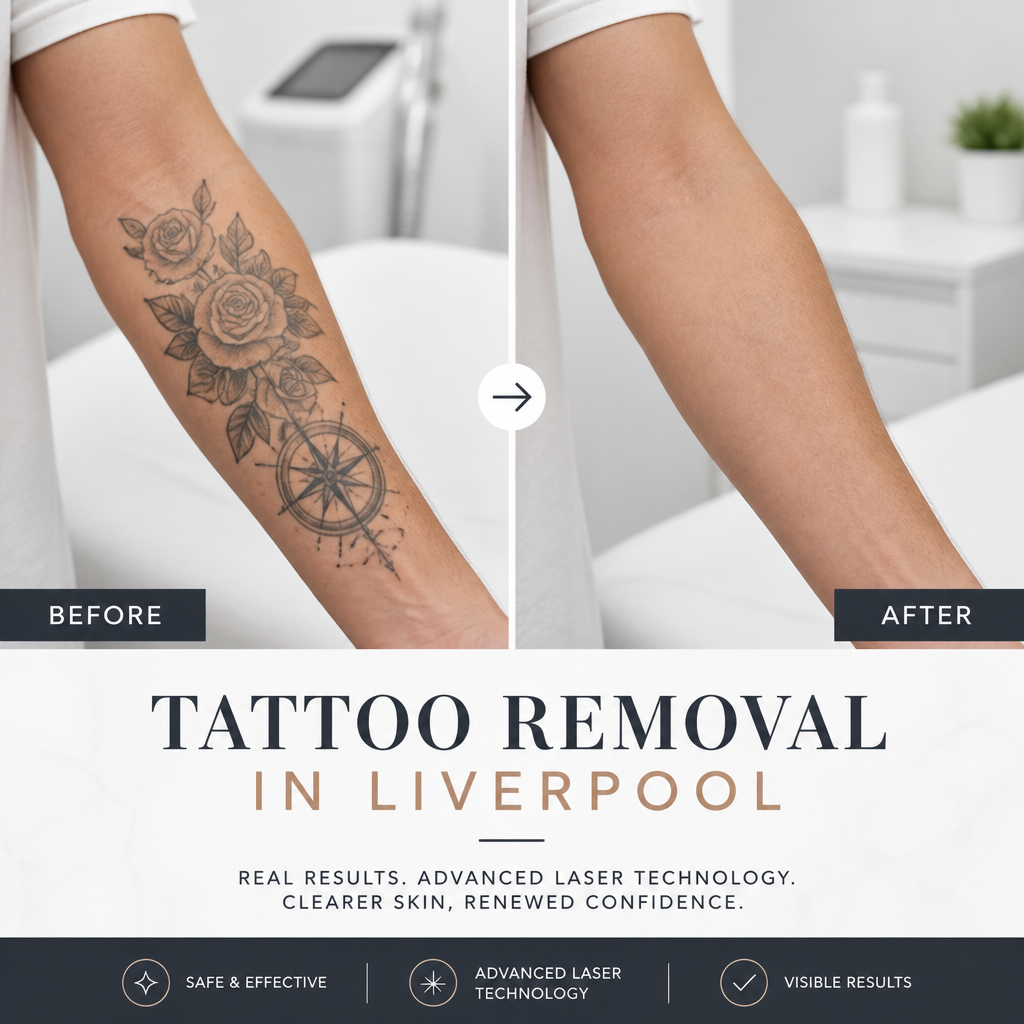
At Faith Laser in Liverpool, tattoo removal is carried out using state-of-the-art laser technology with a 98% effectiveness rate, while keeping skin damage to a minimum. Every client receives a personalised consultation, and treatment packages are tailored to the individual tattoo and skin type rather than applied as a one-size approach. The focus is on complete, clean removal with care taken at every stage, not just the first session. If you are also dealing with pigmentation concerns, pigmentation removal is available alongside tattoo removal for a more comprehensive treatment plan.
For those considering laser hair removal in Liverpool at the same time, combining treatments at a single clinic is far more practical than managing appointments across multiple providers. Faith Laser covers both, using the same standard of equipment and care across all services.
Frequently Asked Questions
How many sessions will I need to remove my tattoo in Liverpool?
The number of sessions depends on several factors: the size and complexity of the tattoo, the colours used, the age of the ink, and your skin type. Most tattoos require between six and twelve sessions for full removal, spaced six to eight weeks apart. Older tattoos and those with dark inks generally clear more quickly. Brightly coloured or professionally applied tattoos with dense ink take longer. A proper consultation at a qualified clinic will give you a realistic estimate for your specific tattoo.
Does laser tattoo removal hurt?
Yes, it is uncomfortable. The sensation is typically described as similar to an elastic band being snapped against the skin, multiplied by the duration of the session. For most clients, the treatment is short enough that it is very manageable. Practitioners routinely apply topical anaesthetic or use cooling technology during the procedure to reduce discomfort significantly.
Will laser removal leave a scar?
When performed correctly with calibrated, medical-grade equipment by a trained practitioner, laser removal should not cause scarring. The laser is designed to target ink particles specifically, leaving the surrounding tissue intact. Scarring risk increases when treatment is rushed, intervals between sessions are too short, or when the practitioner lacks the experience to set the laser correctly for the skin type being treated. This is one of the strongest arguments for choosing a qualified clinical provider over a budget option.
Can all tattoo colours be removed?
Black and dark blue inks are the most responsive to laser treatment and typically clear most completely. Red, orange, and yellow inks require specific laser wavelengths and often take more sessions. Light greens, pale blues, and white ink are the most difficult to remove and may not fully clear regardless of the number of sessions. A reputable clinic will tell you upfront what outcome is realistic for your specific ink colours, rather than overpromising.
Is laser removal safe for all skin types?
Modern laser technology has improved significantly in its ability to treat a range of skin tones. Darker skin types require careful attention to laser settings because there is a higher risk of hypopigmentation, where the treated area becomes lighter than the surrounding skin, if the wrong settings are used. This is not a reason to avoid treatment, but it is a reason to choose a clinic whose practitioners have demonstrable experience treating your skin type and who use equipment with the appropriate wavelength options.
How soon will I see results after my first session?
Most clients see noticeable fading after the first or second session, but this varies. The ink continues to break down and clear for several weeks after each treatment as your immune system processes the fragmented particles. This is why rushing sessions produces diminishing returns. Progress is cumulative, not instant, and the most significant changes often become visible between the third and sixth sessions as the ink density drops substantially.
If you have dealt with tattoo regret in Liverpool and are considering your options, we would like to hear about your experience. Share your questions or thoughts in the comments below.
References
- UK search trend data showing the rise in tattoo removal interest
- Survey data on how common tattoo regret is among UK adults
- Published research on the prevalence of tattoo regret across a large study population
- Clinical comparison of laser tattoo removal versus dermabrasion
- Overview of advances in laser tattoo removal technology and growing demand