Laser Hair Removal vs Shaving: Which Is Worth It?
If you shave every two or three days, you already know the reality: stubble back by the weekend, razor bumps on your bikini line, and another pack of blades on the shopping list. The question of laser hair removal vs shaving is not really about which method works in a single session. It is about which one makes more sense across months and years of your actual life. For people in Liverpool weighing up the upfront cost of laser treatment against the slow, constant drain of razors and shaving products, the numbers tell a more interesting story than most expect.
Table of Contents
- Quick Takeaways
- What Shaving Actually Costs You
- How Laser Hair Removal Works and What to Expect
- The Real Cost of Laser Hair Removal in Liverpool
- Skin Health, Ingrown Hairs, and Irritation
- Who Laser Hair Removal Is Right For
- Side-by-Side Comparison
- Frequently Asked Questions
- References
Quick Takeaways
| Key Insight | Explanation |
|---|---|
| Shaving is not as cheap as it looks | Razors, blades, shaving gel, and post-shave products add up to a meaningful recurring annual cost that compounds over years. |
| Laser delivers up to 90% hair reduction | After a recommended course of 6 to 8 sessions, most clients see dramatic and lasting reduction in hair growth across treated areas. |
| Shaving causes the skin problems laser solves | Razor bumps, ingrown hairs, and irritation are almost entirely eliminated once laser treatment is completed. |
| Faith Laser prices start from £27 per session | Affordable per-session pricing and 6-session packages make laser treatment accessible for Liverpool clients without large upfront commitments. |
| Laser hair removal is worth it for frequent shavers | If you shave more than three times a week, laser treatment typically becomes cost-effective within two to three years compared to continued shaving expenses. |
| You still shave during treatment, but less and less | Shaving between sessions is encouraged, but after each treatment hair grows back finer and slower, meaning you shave far less over the course. |
| Laser suits multiple areas, shaving does not suit all | Laser is effective on underarms, legs, bikini, face, and back. Shaving delicate or facial areas often causes irritation that laser avoids entirely. |
What Shaving Actually Costs You
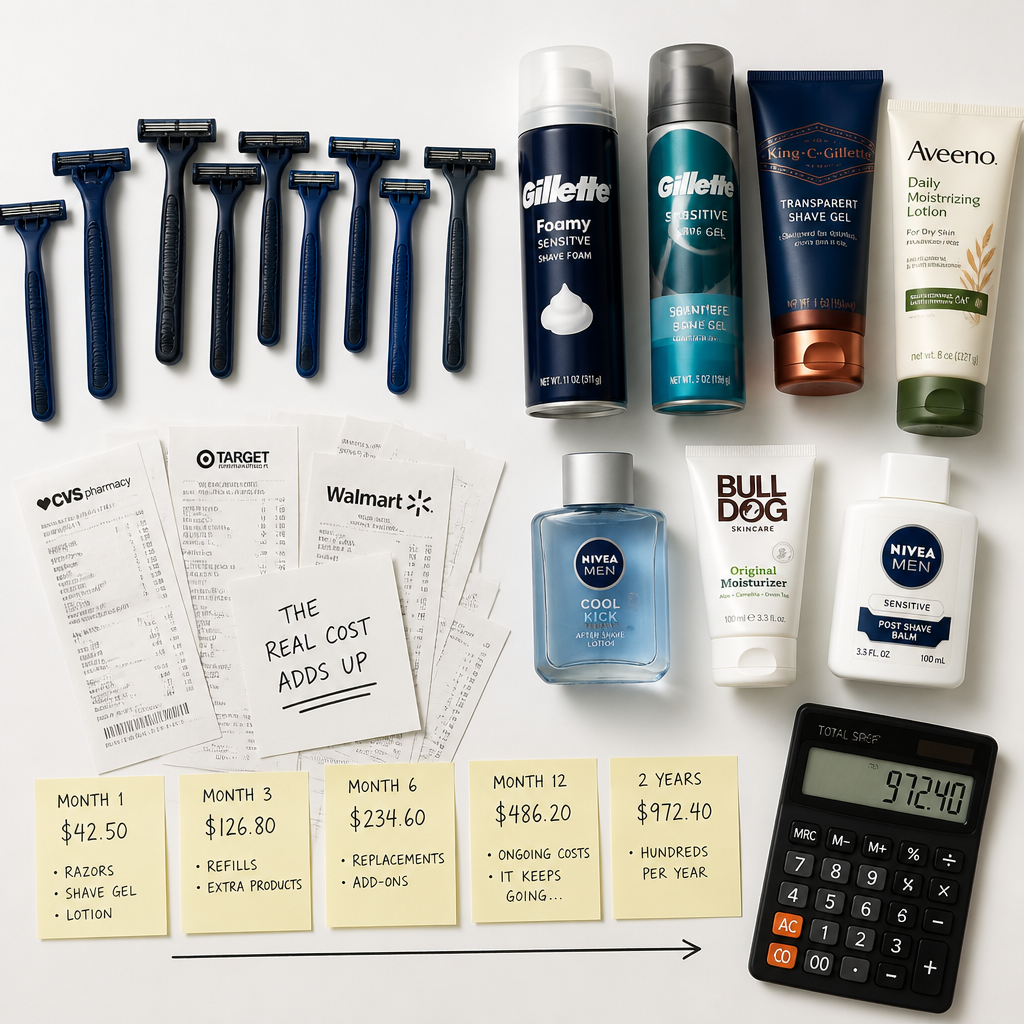
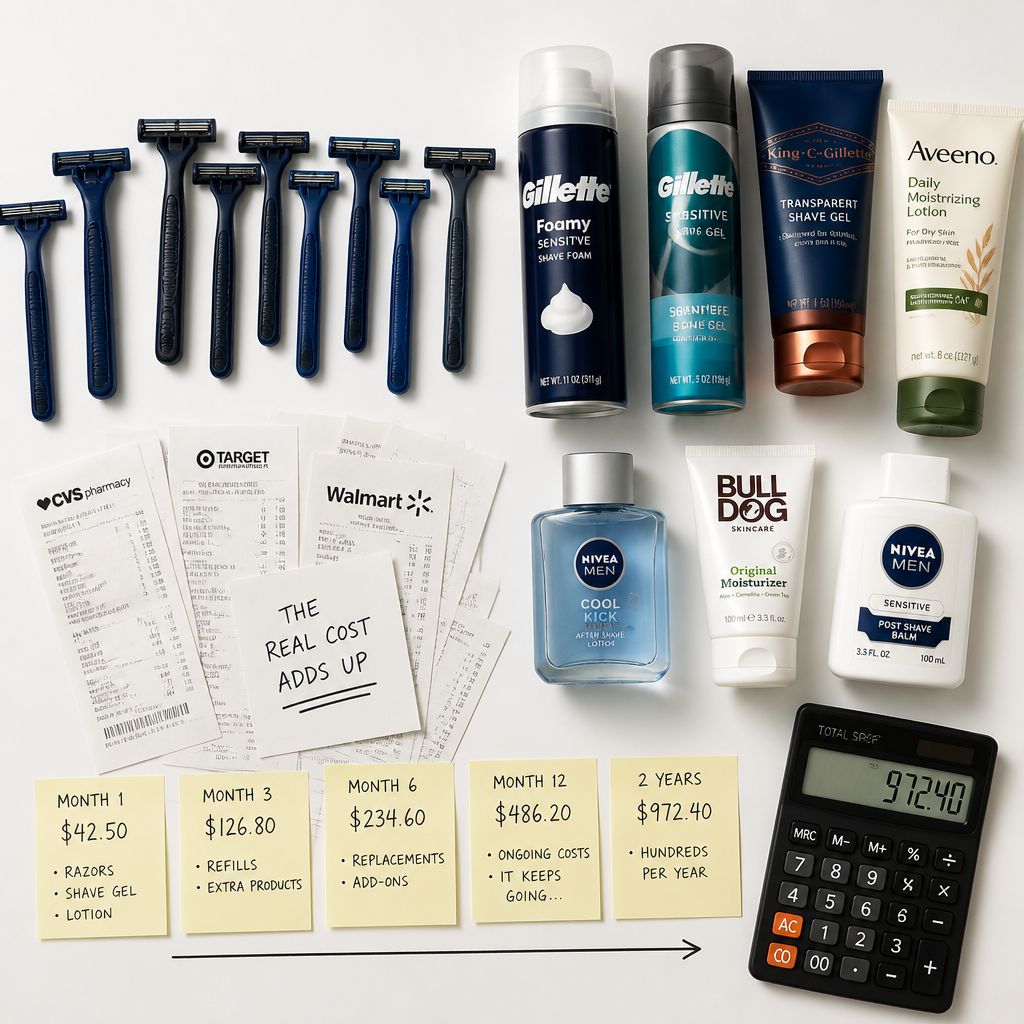
Shaving feels cheap because the individual purchase is small. A pack of razor cartridges, a tube of shaving gel, a moisturiser for after. None of those feel significant at the checkout. The problem is frequency. Most people who shave regularly are restocking several times a year, and that routine does not stop.
When you factor in quality razor blades with replacement cartridges, shaving foam or gel, exfoliating products to prevent ingrown hairs, and post-shave moisturisers or soothing balms, the annual spend is far higher than people typically guess. Research from laser clinics in the US suggests that a lifetime of shaving can cost well over £4,000 across 55 years of regular shaving, even when using affordable products. For people using premium razor brands or shaving daily across multiple body areas, the figure climbs considerably higher.
There is also the time cost. Shaving does not take long in a single session, but across a year of shaving every two or three days, you are spending many hours on an activity that produces results lasting only a day or two. Over a decade, that is a significant block of time spent on a temporary outcome.
Pro tip: Before dismissing laser treatment on cost grounds, add up what you actually spend on razors, blades, shaving gel, and aftercare products in a year. Most people are surprised. Multiply that by ten years and compare it to the cost of a full treatment course.

How Laser Hair Removal Works and What to Expect
Laser hair removal works by targeting the melanin pigment in the hair shaft. The laser emits concentrated light energy that travels down the hair to the follicle, generating heat that damages the follicle and disrupts its ability to produce hair. This process is called photothermolysis. Because it targets the follicle at the root, it produces results that shaving, which only removes hair at the surface, cannot replicate.
Why multiple sessions are necessary
Hair grows in cycles: anagen (active growth), catagen (transition), and telogen (resting). Laser is most effective during the anagen phase, when the follicle is actively producing hair. Because not all follicles are in the same phase at the same time, a single session cannot target every hair. This is why most clients need between 6 and 8 sessions spaced around 4 to 6 weeks apart to achieve the best results.
After a full course, most clients see up to 90% hair reduction in treated areas. Any hair that does return tends to grow back finer and lighter, and considerably more slowly than before. Some hormonal areas may benefit from occasional top-up treatments over time, but the daily or every-other-day razor routine becomes a thing of the past.
What the treatment feels like
Most clients describe the sensation as similar to a rubber band snapping lightly against the skin. It is not painless, but it is manageable, and the discomfort reduces with each session as fewer follicles remain active. The treatment itself is fast: underarms can take under ten minutes. A full leg treatment takes considerably longer but is still a single appointment, not a daily habit.
Pro tip: Shave the area 24 hours before your laser session, not on the day itself. The laser targets the follicle beneath the skin, not the hair above it. Shaving the day before ensures the surface is clear without removing what the laser needs to find its target.
The Real Cost of Laser Hair Removal in Liverpool
One of the most common objections to laser hair removal is the upfront cost. It is a fair point. You are paying for multiple sessions rather than a single purchase. But the comparison only makes sense when you look at what you would otherwise keep spending on shaving across the same period.
At Faith Laser in Liverpool, pricing is transparent and structured for accessibility. Facial areas such as the upper lip, chin, and cheeks start at £27 per session, with a 6-session package available at £135. Full face treatment is £55 per session (£275 for 6 sessions). Body areas are priced comparably, with packages designed to make treatment affordable without requiring a large single payment.
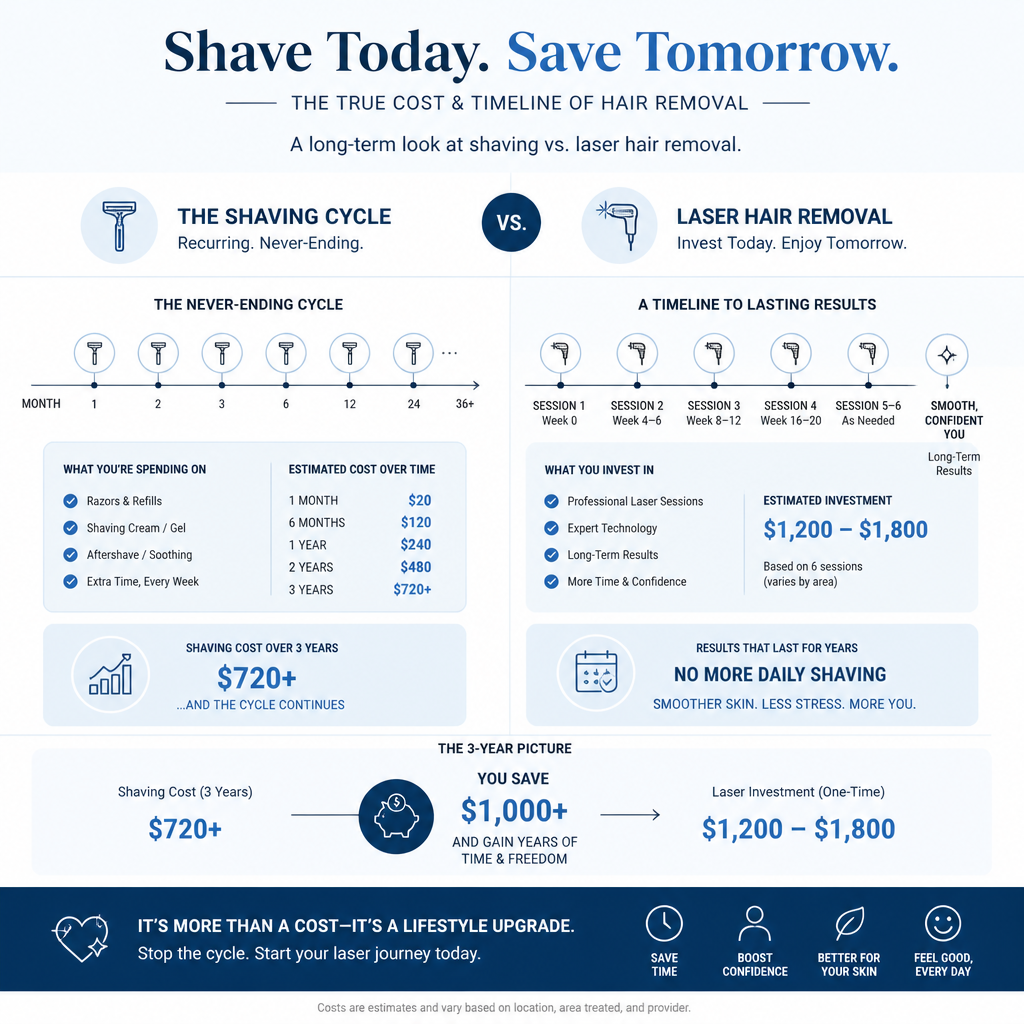
Compare this to what you would spend shaving equivalent areas over the next two to five years. A course of underarm laser treatment at Faith Laser costs a fraction of what most people spend on products over a three-year window, and the results last. That is the point at which is laser hair removal worth it stops being a philosophical question and becomes straightforward arithmetic.
The upfront price is rarely the full picture. When expenses on razors and shaving products are projected across years, the cumulative cost tells a very different story to what most people expect at the checkout.
Faith Laser’s pricing is notably more accessible than some of the larger national chains operating in Liverpool, where courses can run to several hundred pounds per area before any package discounts apply. The clinic’s focus on individual packages and affordable per-session rates means clients are not locked into large commitments before they are confident in the process.
Skin Health, Ingrown Hairs, and Irritation
The cost comparison is important, but for many clients the skin health argument is what actually closes the decision. Shaving does not just remove hair. Done repeatedly, it irritates the skin, disrupts the follicle opening, and creates the conditions for ingrown hairs and razor bumps to form.
Ingrown hairs occur when a shaved hair curls back and grows into the skin rather than outward. They are particularly common in areas with coarser hair, such as the bikini line, underarms, and beard area. Regular shaving of these zones keeps the cycle going: each shave creates fresh opportunity for ingrown hairs to form, and no amount of exfoliating entirely eliminates the risk while you keep shaving.
Laser hair removal breaks that cycle. By progressively reducing the number of active follicles, it removes the source of the problem. Clients who have struggled with chronic ingrown hairs in sensitive areas often find that even after the first two or three sessions, the frequency and severity of ingrown hairs reduces noticeably.
Sensitive and intimate areas
For underarms, the bikini line, and intimate zones, the case for laser over shaving is particularly strong. These are areas where skin is thin and sensitive, where razor irritation and ingrown hairs are most uncomfortable, and where people shave most frequently. Laser treatment in these areas is precise and effective, and the reduction in post-shave irritation is usually one of the first changes clients notice.
Facial areas present a different but equally relevant argument. Shaving the upper lip or chin creates stubble regrowth that is visible and uncomfortable, and waxing these areas repeatedly can sensitise the skin over time. Laser treatment for facial hair produces smoother, longer-lasting results without the cycle of regrowth and irritation.
Who Laser Hair Removal Is Right For
Laser hair removal is not the right answer for every single person, and it is worth being direct about that. The treatment works best on darker hair against lighter skin, because the laser targets melanin contrast. Modern laser technology has improved significantly and can treat a broader range of skin tones and hair types than older systems, but results can vary depending on your individual profile.
In practice, the clients who see the best results and feel most clearly that the investment was worthwhile tend to share a few characteristics. They shave frequently, at least three to four times per week across one or more body areas. They experience regular skin irritation or ingrown hairs from shaving. They are looking for a long-term solution rather than a short-term fix. And they are committed to completing a full course of sessions rather than stopping after one or two.
If you are not a good candidate for laser
Very light or blonde hair contains less melanin and may not respond as well to standard laser treatment. Very dark skin tones require a specific laser wavelength and an experienced practitioner who knows how to calibrate the settings correctly. At Faith Laser, consultations are available to assess your skin and hair type before you commit to a course, which means you get an honest answer about expected results before spending anything.
If you are pregnant, or taking certain photosensitising medications, laser treatment should be paused. These are temporary contraindications rather than permanent ones for most people.
Side-by-Side Comparison
| Factor | Shaving | Laser Hair Removal (Faith Laser, Liverpool) |
|---|---|---|
| Upfront cost | Very low per session (blades, gel) | From £27 per session; 6-session packages available |
| Long-term cost | High, ongoing indefinitely | One-off course cost with minimal maintenance |
| Result duration | 1 to 3 days before visible regrowth | Months to years; up to 90% permanent reduction |
| Time investment | Multiple times per week, every week | 6 to 8 appointments over several months, then done |
| Skin irritation risk | High: razor bumps, ingrown hairs, redness | Low: temporary redness after treatment only |
| Suitable areas | Most areas, but problematic on sensitive zones | All body areas including face, intimate zones, back |
| Hair type suitability | Works on all hair types | Best on dark hair; results vary by skin and hair profile |
Frequently Asked Questions
Is laser hair removal worth it compared to shaving?
For most people who shave regularly, yes. The upfront cost of a laser course is higher, but shaving involves a continuous, indefinite spend on products combined with a recurring time commitment. Once a laser course is complete, results last considerably longer. The break-even point depends on how often you shave and which areas you treat, but frequent shavers typically find laser cost-effective within two to three years.
How much does laser hair removal cost in Liverpool?
At Faith Laser in Liverpool, prices start from £27 per session for small facial areas, with 6-session packages from £135. Larger body areas are priced higher but remain competitive compared to other clinics in the city. Exact pricing depends on the treatment area and the number of sessions needed, which varies by individual hair and skin type.
How many sessions of laser hair removal do I need?
Most clients need between 6 and 8 sessions, spaced approximately 4 to 6 weeks apart, to achieve optimal results. Some areas or hair types may require additional sessions. After the initial course, occasional maintenance treatments may be needed on hormonally active areas, but the frequency is far lower than ongoing shaving.
Can I shave between laser hair removal sessions?
Yes. Shaving is actually encouraged between sessions because it removes hair at the surface without disturbing the follicle, which the laser needs to remain intact to target. Avoid waxing or plucking between sessions, as these methods remove the hair at the root and interfere with the laser’s ability to work effectively.
Does laser hair removal hurt more than shaving?
Laser treatment involves some discomfort, often described as a light snapping or stinging sensation similar to a rubber band against the skin. Shaving itself is painless when done carefully, though the aftermath, which includes razor bumps, irritation, and ingrown hairs, can be significantly more uncomfortable than the brief sensation of a laser session. Discomfort during laser treatment also reduces with each session as fewer active follicles remain.
Will laser hair removal completely stop hair growth forever?
Laser hair removal is described as permanent hair reduction rather than permanent removal. After a full course, most clients experience up to 90% reduction in hair growth. Any hair that does return tends to be finer and lighter. Hormonal changes can trigger some regrowth in certain areas over time, which is why occasional top-up sessions are sometimes recommended, particularly for facial and bikini areas.
Is laser hair removal in Liverpool safe for all skin tones?
Modern laser technology has significantly expanded the range of skin tones that can be safely treated compared to older systems. However, results and safety do depend on using the right laser for your specific skin tone and hair type. At Faith Laser, consultations are carried out before any course begins to assess your suitability and set realistic expectations for your results.
If you have tried laser hair removal or are weighing it up against your current shaving routine, share your experience or questions in the comments. We would like to hear what helped you decide.
References
- Lifetime cost comparison of laser hair removal versus shaving and other methods
- Key benefits of choosing laser hair removal over shaving for long-term skin health
- How laser hair removal treats ingrown hairs and razor bumps effectively
- How many laser hair removal sessions are needed and how long results last
- Laser hair removal vs shaving: a detailed long-term cost breakdown