
Laser Hair Removal Skin Hydration: What Actually Helps
If your skin feels tight, flaky or itchy on the day of your appointment, you have probably noticed that the session feels different. Most people focus on the number of treatments or the settings on the device, and overlook the skin that the energy has to pass through. Skin hydration and laser hair removal are closely linked, though not in the way many clients expect. Moisture will not make a follicle more responsive. It does change how comfortable your skin is during treatment, how it reacts afterwards, and how smoothly your sessions run from one appointment to the next. Here is what we tell clients about dry skin and the moisturiser in your bathroom cabinet.
Table of Contents
- Quick Takeaways
- How Hydration Affects Laser Treatment
- Dry Skin and Sensitivity During Treatment
- Moisturising in the Days Before Your Appointment
- What to Remove Before Your Laser Session
- Aftercare: Moisturising Once the Laser Is Done
- Choosing the Right Product: A Comparison
- Winter Scheduling and Dry Air in Liverpool
- Common Mistakes That Undermine Your Results
- Frequently Asked Questions
- References
Quick Takeaways
| Key Insight | Explanation |
|---|---|
| Hydration does not change follicle response | The laser targets pigment in the hair, so moisture will not make hair removal more effective on its own. |
| Moisturise in the days before | A fragrance-free moisturiser for the two weeks before your session keeps the surface comfortable. |
| Stop product on the morning of treatment | Lotions, oils and self-tanners need to be removed, and clinics will cleanse the area anyway. |
| Dry skin usually feels worse | Tight, flaking skin tends to react more to heat and friction during and after a session. |
| Aftercare is where moisture helps most | Gentle, fragrance-free moisture supports the skin barrier while redness settles. |
| Cracked or sore skin means reschedule | Do not push through a session on broken skin. Let the team assess it first. |
| Winter needs an earlier routine | Cold air and indoor heating dry skin out, so start your routine in early autumn. |
How Hydration Affects Laser Treatment
The first thing to clear up is what the laser is actually targeting. Hair removal systems send light energy into the skin, and the pigment in the hair absorbs it. That heat travels down to the follicle and damages the structure that produces hair, so your moisture level plays no direct part in that process.
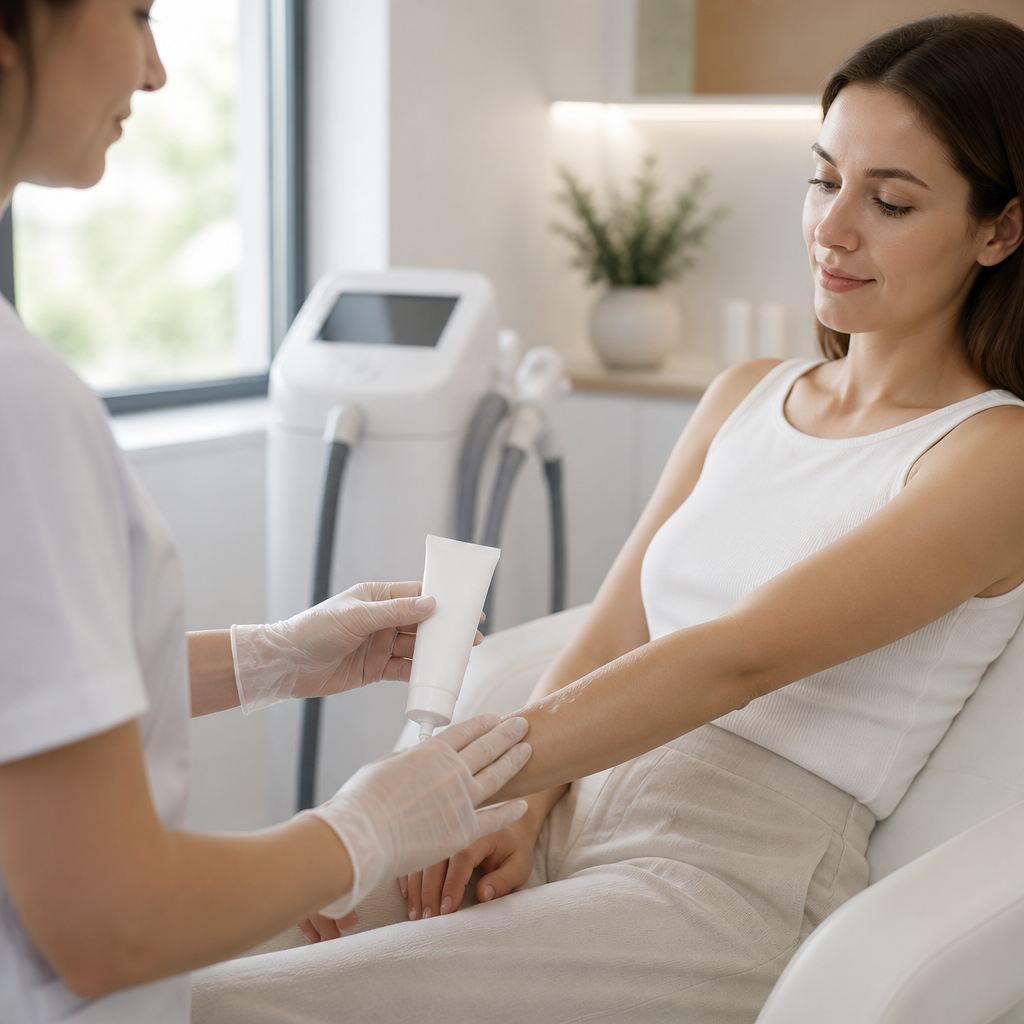
That does not mean hydration is irrelevant. The skin around each follicle takes the heat, carries the sensation, and repairs itself afterwards. When the outer layer is well hydrated, it tends to tolerate the treatment better and settle faster, which is why we treat hydration as a comfort and recovery factor rather than a way to boost results.
What Hydration Changes and What It Does Not
In practice, the difference shows up in three places: how the skin feels during each pulse, how quickly redness fades, and whether tightness or small bumps linger. Hydration does not reduce the number of sessions you need, and it does not change how many hairs respond to the energy. Be sceptical of any product that claims a cream alone will speed up hair loss.
Why the Skin Barrier Matters More Than the Surface
The skin barrier is the outer layer that holds moisture in and keeps irritants out. When it is intact, the skin copes with heat and friction more calmly. When it is depleted, every session can feel a little harsher than the last, and that is the part of hydration that actually affects your experience.
Dry Skin and Sensitivity During Treatment
Dry skin is not a reason to cancel a session, but it does change what you should expect. Clients with dry, flaky or rough skin often report more discomfort during treatment, and the area can look irritated for longer afterwards. A surface that is already compromised tends to react more strongly to heat and friction.
Signs Your Skin Is Too Dry to Treat Comfortably
Look for visible flaking, a tight feeling when you stretch or smile, or itching in the days before your appointment. Those are signs to step up your moisturising routine and mention them at the consultation. Do not push through a session on skin that is cracked, broken or sore, because the team needs to assess it first.
Dry skin is rarely the reason a treatment fails, but it is often the reason a session feels worse than it should.
Why Dry Skin Makes Aftercare Harder
Once the skin is dry, the routine after treatment gets harder to manage. Redness can take longer to settle, and small flares look more noticeable against tight, rough skin. Starting from a well-moisturised baseline means the same aftercare steps work faster and with less fuss.
If you have a sensitive area such as the bikini line or underarms, the effect is more obvious. Friction from clothing and sweat sits on top of dryness, so the skin has two irritants to deal with at once.
Moisturising in the Days Before Your Appointment
The most useful thing you can do for your skin is start early. A fragrance-free moisturiser applied once or twice a day in the two weeks before your session keeps the surface supple, so the treatment area is not fighting dryness on the day. Consistency does more than a heavy product used once.
Choosing a Moisturiser for the Lead-Up Period
Look for a simple, water-based formula with a short ingredient list and no added fragrance. Perfumes and essential oils are a common source of irritation, and irritation is exactly what you want to avoid when the skin is about to receive energy. ‘Unscented’ and ‘fragrance-free’ are not the same thing, so read the label rather than trusting the front of the pack.
How Long Before Treatment Is Long Enough
A physician answering a RealSelf question about moisturising around 14 hours before a session noted that most of the product would be absorbed by then, with any remainder wiped away at the appointment. That is useful reassurance for an evening routine. It is not a reason to apply product on the morning you come in.
Our position is simple: moisturise on the days leading up to your session, and stop on the morning of. That gives the skin the benefit without leaving a film for the team to clean off.
What to Remove Before Your Laser Session
On treatment day, the rule is clean, bare skin. Lotions, oils, self-tanners and leftover deodorant can all sit on the surface and get in the way. Physicians answering RealSelf questions give the same advice: any product, whatever it is, should be removed before treatment.
What the Clinic Will Do on Arrival
Expect the team to cleanse the treatment area before you start. A physician answering a RealSelf question explained that the skin is cleansed at the appointment to remove any lotion left behind. That is a standard step, but it takes time, and cleansing at the chair is not a substitute for arriving with clean skin.
A Simple Morning-Of Routine
Wash the area with a mild, unscented cleanser, skip deodorant on underarm treatments, and avoid any cream or oil on the skin. Wear loose clothing that will not rub the area on the way in. If you have used a self-tanner recently, tell us in advance, because it also needs to come off before treatment.
Pro tip: Keep your moisturising routine going on the days before your session, then stop on the morning itself. A clean, bare surface is easier to treat and lets the team judge the skin’s condition accurately.
Aftercare: Moisturising Once the Laser Is Done
After treatment, the skin is warm, a little sensitive and often pink. This is where a gentle moisturiser earns its place. It supports the skin barrier while redness settles, and it stops the surface feeling tight as it heals.
The First 48 Hours
Once the skin has cooled, apply a fragrance-free moisturiser and reapply through the day if the area feels dry. Use a cool compress wrapped in a soft cloth for heat, rather than ice placed directly on the skin. Hot showers, saunas and heavy workouts can aggravate redness, so keep them to a minimum for a day or two.
When Moisturiser Can Make Things Worse
Thick, heavily scented or very occlusive products applied too soon can trap heat and sweat against the skin. If you notice spreading redness, persistent itching or small bumps that do not settle, stop using the product and contact your practitioner. Do not guess your way through a reaction.
Choosing the Right Product: A Comparison
Not every hydrating product suits the treatment window. Three approaches come up most often with our clients, and each one has a clear use. The table below shows where each fits in your routine.
| Approach | Best Used For | Watch Out For |
|---|---|---|
| Fragrance-free, water-based moisturiser | Daily use in the lead-up to treatment and gentle use afterwards | Some formulas leave a film, so stop using it on the morning of your session |
| Plain aloe vera gel | Cooling warm skin in the first hours after a session | Some brands add fragrance or alcohol, so check the ingredient list |
| Heavy oils and body butters | Very dry areas away from the treatment zone, such as elbows and heels | They leave residue that must be removed, so keep them off the treatment area |
Our default is a fragrance-free, water-based moisturiser for daily use, with aloe for the first hours after a session if the skin feels hot. Heavy oils and butters have a place in the rest of your routine, but they belong away from the area you are having treated.
Reading the Label Properly
Check the ingredient list rather than the marketing claims on the front. Look for short lists, no added fragrance and no essential oils. If a product has a strong smell, it is probably not the right choice for skin that is about to receive energy.
A moisturiser that suits you on a normal day may still be wrong in the week of a session. If your skin reacts to something new, switch back to your usual product and tell your practitioner.
Winter Scheduling and Dry Air in Liverpool
Autumn and winter bring cold air, indoor heating and more time spent in wind. Those conditions dry the skin out quickly, which is why many clients notice their treatment days feel harder as the weather turns. If you are booking sessions through the colder months, start your moisturising routine in early autumn rather than when the first flakes appear.

Planning Your Sessions Around Dry Spells
Spacing matters less than skin condition. If your skin is sore, cracked or unusually reactive, move the session rather than pushing through, and let your practitioner know before you arrive. A short delay is far better than a session that leaves the area irritated for a week.
Keeping Your Routine Steady Through the Season
Consistency beats intensity. A simple routine, applied daily, does more for dry skin than a heavy product used only before appointments. If you want to talk through your timing, you can book a consultation at Faith Laser and we will look at your skin with you.
Pro tip: Note how your skin looks and feels the day before each session. If it is tighter than usual, add an extra evening of moisturiser and mention it when you arrive.
Common Mistakes That Undermine Your Results
Most problems we see with dry skin come from a few predictable habits. Each one seems harmless on its own, but together they make the treatment less comfortable and the aftercare less predictable. Fixing them costs nothing. Here are the three we see most often.
Applying Heavy Products Right Before Treatment
Clients often apply a thick cream on the way to the appointment because the skin feels dry. That layer has to be removed before treatment, and it can delay the start of the session. A light, fragrance-free layer the day before is far more useful.
Stopping Moisturiser Too Early After Treatment
Some people stop all products the moment they leave the clinic. The skin usually still needs gentle moisture for a few days while redness settles, so keep a plain, fragrance-free product on hand until the area feels normal again.
Assuming Hydration Replaces Sun Protection
Hydrated skin is not protected skin. After treatment, the skin can be more sensitive to UV light, so keep the treated area covered or use a suitable sunscreen when you are outdoors. Moisturiser does not do that job, and no amount of hydration will change it.
Frequently Asked Questions
Can I moisturise the night before laser hair removal?
Yes, a fragrance-free moisturiser the evening before is generally fine, and physicians answering RealSelf questions have said that most product is absorbed by the next day. Stop using it on the morning of your appointment, though, so the skin is clean when treatment starts.
Does dry skin make laser hair removal less effective?
Dryness does not change how the laser targets the follicle, so it is not a direct cause of weaker hair reduction. It does make sessions less comfortable and aftercare harder. If the skin is cracked or sore, that is a reason to reschedule rather than treat.
Should I use aloe vera after laser hair removal?
Plain aloe vera gel can be a useful cooling step in the first hours after a session. Check that it is free of added fragrance and alcohol, because either can irritate skin that has just been treated.
Can I use a self-tanner before my treatment?
No. Self-tanners should be removed before treatment, as with any lotion or cream. Tell the team if you have used one recently so they can assess the skin and plan the session properly.
Do medications affect how my skin responds?
Some medications can change how the skin reacts to light. A physician answering a RealSelf question said that antibiotics may increase photosensitivity and suggested waiting one to two weeks after the last dose before starting treatment. Always tell your practitioner about any medication you are taking.
How soon after treatment can I moisturise?
Once the skin has cooled, you can apply a fragrance-free moisturiser. Reapply through the day if the area feels tight, and stop using the product if you notice spreading redness, persistent itching or bumps that do not settle.
What has your experience been with dry skin on treatment day, and which moisturiser has worked best for you?