Best Time for Laser Hair Removal: Why Autumn Wins
Most people start thinking about laser hair removal in May when bare skin is suddenly everywhere and summer feels two weeks away. That instinct is understandable, and it is also backwards. Starting a course of laser sessions in summer is one of the most common mistakes people make, and it costs them both results and comfort. The best time for laser hair removal is autumn, and if you are in Liverpool, October is arguably the perfect month to book your first session at Faith Laser. This article explains exactly why, and what you should do right now to arrive at next summer looking and feeling genuinely different.
Table of Contents
- Quick Takeaways
- Why Timing Matters More Than Most People Think
- The Science Behind Autumn Laser Hair Removal
- Sun Exposure: The Factor That Changes Everything
- How Many Sessions, and Why Autumn Gives You Enough Time
- Season-by-Season Comparison
- What to Do Between Sessions: Autumn and Winter Aftercare
- Laser Hair Removal in Liverpool: What Makes Autumn Work Locally
- Frequently Asked Questions
- References
Quick Takeaways
| Key Insight | Explanation |
|---|---|
| Autumn is the optimal start point | Lower UV intensity and naturally faded summer tans mean your skin is in the right condition for safe, effective treatment. |
| Tanned skin and laser do not mix | Sun exposure increases melanin in the skin, which raises the risk of burns and hyperpigmentation during treatment. |
| Most courses take 6 to 8 sessions | Sessions are spaced 4 to 6 weeks apart, meaning an October start typically wraps up before the following summer. |
| Only the anagen (active growth) phase responds to laser | Because only around 15 to 20% of hair follicles are in the active phase at once, multiple spaced sessions are non-negotiable. |
| Heat and sweat worsen post-treatment sensitivity | Cooler autumn temperatures reduce the risk of irritation and discomfort in the days after each session. |
| Covered skin = easier aftercare compliance | In autumn and winter you are naturally wearing more clothing, which protects treated areas from incidental sun exposure without extra effort. |
| Starting in October means summer-ready skin | A course beginning in October 2026 can be complete by April or May 2027, with smooth results ready for the warm months. |
Why Timing Matters More Than Most People Think
Laser hair removal is not a single appointment. It is a course of treatment, and the season in which you start that course directly affects how safe each session is, how comfortable recovery feels, and how visible your results are. Most people who are disappointed with their results either rushed into treatment in summer with residual tan on their skin, or they ran out of sessions before the warm weather arrived.
Thinking about laser hair removal this autumn in Liverpool is not just good timing in the abstract. It is a practical decision that aligns with how your skin behaves, how your hair grows, and what the conditions outside are actually like between October and March in the north of England.
The difference between starting in October and starting in June is not simply a matter of personal preference. It changes what the laser can safely target, how your skin heals between appointments, and whether you finish your course looking exactly the way you wanted to.

The Science Behind Autumn Laser Hair Removal
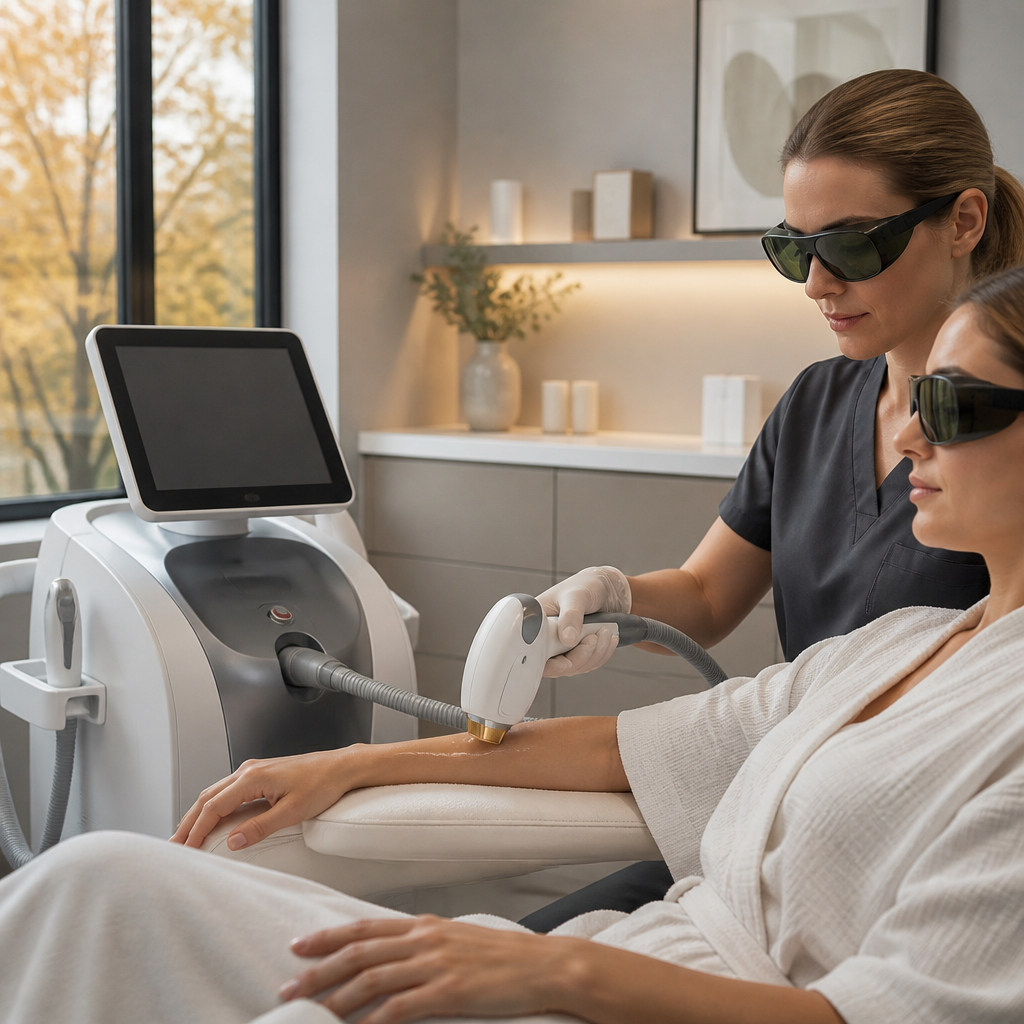
Laser hair removal works by directing concentrated light energy at the melanin (pigment) inside hair follicles. The heat generated by that energy damages the follicle at its root, inhibiting future hair growth. The key word in that sentence is follicle-level melanin. The laser is designed to target dark pigment in the hair, not in the surrounding skin.
The Hair Growth Cycle and Why It Drives the Schedule
Every hair follicle operates independently, cycling through three phases: anagen (active growth), catagen (transition), and telogen (resting and shedding). The laser is only effective during the anagen phase, when the hair shaft is attached to the follicle and carrying enough melanin to absorb the energy. At any given moment, roughly 15 to 20% of your hair is in the anagen phase. That is why a single session, no matter how good the equipment or the technician, cannot eliminate all unwanted hair. You need multiple sessions to catch each follicle in its active phase.
Why Autumn Skin Is Easier to Treat Safely
By October in the UK, summer sun exposure has had several weeks to fade. Your natural skin tone is returning to its baseline. This matters enormously because when the skin itself carries extra melanin from a tan, the laser has more difficulty distinguishing between the pigment it wants to target (in the hair follicle) and the pigment it should leave alone (in the surrounding skin). Autumn skin, having shed most of its summer tan, gives the laser a cleaner contrast to work with, making treatment both safer and more effective.
Pro tip: If you had any significant sun exposure in the weeks leading up to your first appointment, mention it during your consultation. A good clinic will assess your skin tone and adjust settings accordingly, or recommend waiting a further week or two for the tan to fade completely.
Sun Exposure: The Factor That Changes Everything
Sun exposure is the single biggest practical obstacle to laser hair removal. Understanding exactly how it creates problems will help you see why autumn removes that obstacle almost entirely.
Before Treatment: Why a Tan Raises Your Risk
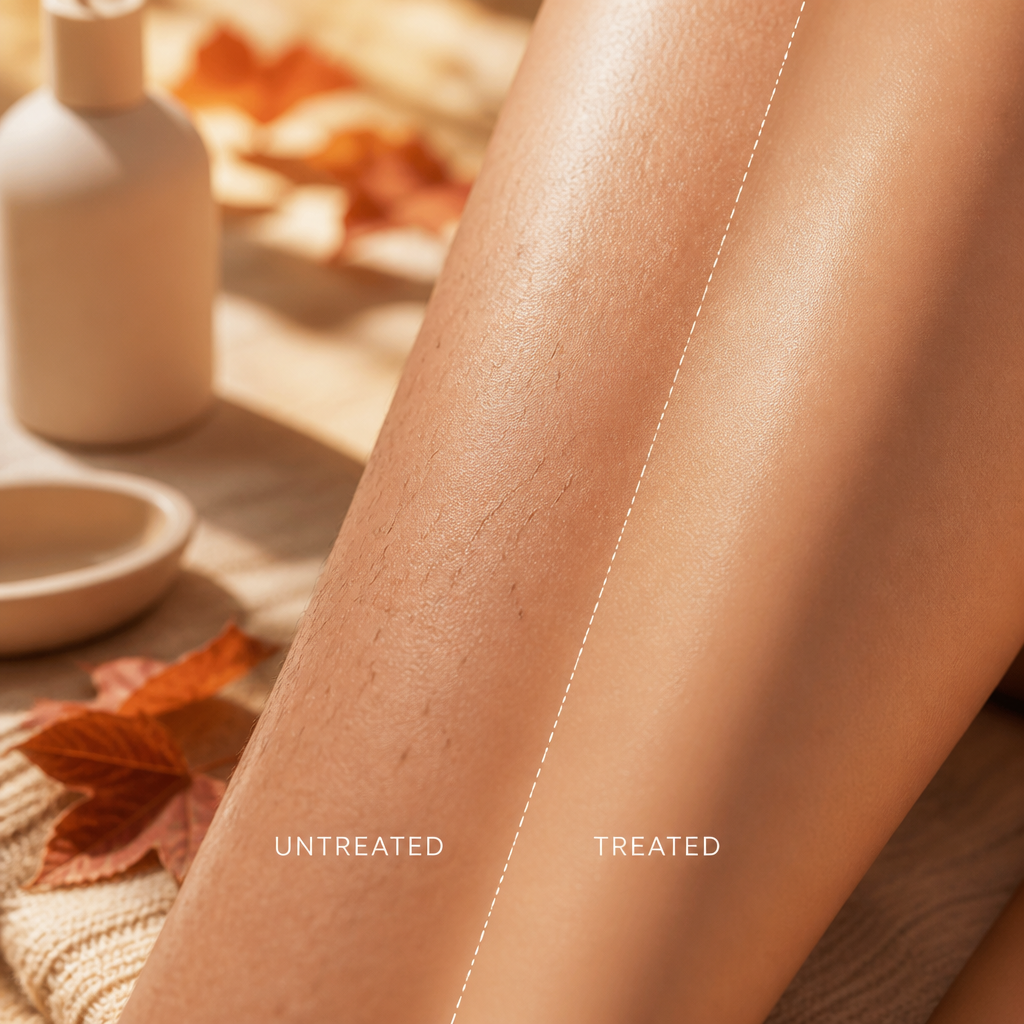
When your skin tans, it produces more melanin as a protective response to UV radiation. This elevated melanin in the skin surface competes with the melanin in the hair follicle for the laser energy. The result is a higher risk of burns, a higher risk of hyperpigmentation (dark patches), and a treatment that is less effective at actually reducing hair. Most clinics recommend waiting at least four to six weeks after significant sun exposure before beginning a session. In practice, if you have had a sunny holiday in September, you are often better off waiting until late October or November before starting.
After Treatment: Why Heat and UV Make Recovery Harder
Post-treatment skin is genuinely sensitive. The follicles have been targeted by concentrated heat energy, and the surrounding skin needs time to settle. During summer months, heat, sweat, and UV exposure all combine to extend that recovery window and increase discomfort. In autumn and winter, cooler temperatures naturally reduce irritation, and the lower UV index makes it much easier to comply with the standard aftercare advice to avoid sun on treated areas. You are also wearing more clothing, which passively protects treated zones without you having to think about it.
The seasonal factor in laser hair removal is often underestimated, even though it can significantly affect the effectiveness of the procedure and the comfort of skin recovery.
Pro tip: Even in autumn and winter, apply a broad-spectrum SPF 30 or higher to any treated facial areas every morning. UV radiation is lower in winter, but it is not zero, and post-treatment skin is more reactive than usual.
How Many Sessions, and Why Autumn Gives You Enough Time
Most people need between six and eight sessions for clear, lasting hair reduction across the body. Larger or hormonally active areas, such as the face, neck, or bikini line, can sometimes need up to ten sessions to reach the same level of reduction. Sessions are typically spaced four to six weeks apart, because that interval allows a new batch of follicles to enter the anagen phase and become treatable.
The Timeline from October to Summer
If you begin your first session in October 2026 and schedule appointments every five weeks, a six-session course finishes around March 2027. An eight-session course finishes around May 2027. Either way, you arrive at the summer months with a completed course and smooth results, rather than still mid-treatment when you want to be enjoying the results. Starting in the spring or summer, by contrast, typically means either rushing sessions too close together (reducing effectiveness), or still having active post-treatment sensitivity when UV exposure is at its highest.
What Happens If You Start Late and Try to Rush
Skipping the recommended gap between sessions does not speed up results. It often reduces them. Each session needs to catch the next wave of follicles in their active phase, and that biological process cannot be accelerated. Starting in autumn gives you the time to do it properly, without the temptation to cut corners as summer approaches.
Season-by-Season Comparison
| Season to Start | Key Advantages | Key Drawbacks |
|---|---|---|
| Autumn (October to November) | Faded tan, low UV, cooler recovery conditions, covered skin for aftercare, finishes before summer | None significant for most people |
| Winter (December to February) | Very low UV, easy aftercare compliance, still finishes in time for late spring or summer | Clinic availability can be busier due to high demand; slightly later summer-ready finish |
| Spring (March to May) | Rising motivation as warm weather approaches | UV levels increasing, tan risk growing, may not finish before summer; more pressure to rush |
| Summer (June to August) | Motivation is high | Active sun exposure, tanned skin risks, heat worsens post-treatment sensitivity, usually not recommended as a starting point |
What to Do Between Sessions: Autumn and Winter Aftercare
Getting the timing right is only half the equation. What you do between sessions determines how quickly your skin recovers and how effective each subsequent appointment is. The good news is that autumn and winter naturally make most of these aftercare steps easier to follow.
Protecting Treated Areas from Sun
For roughly one month after each session, treated skin is more sensitive to UV radiation. In summer this requires significant effort: high-SPF sunscreen applied rigorously, clothing choices, avoiding midday sun. In autumn and winter, you are already covering most of your body, and the UV index is naturally much lower. The compliance burden is minimal.
Avoiding Heat and Sweat
For the first 48 hours after a session, avoid hot baths, saunas, and vigorous exercise that causes heavy sweating. Heat can increase irritation in the treated follicles. Again, this is far easier to manage in cooler months than in the middle of summer when the temptation to be outdoors and active is much greater.
Shaving Between Sessions
Between laser sessions, shaving is fine. Waxing, threading, and plucking are not. These methods remove the hair from the root, which is precisely the part of the follicle the laser needs to target. If you remove the root hair between sessions, the next treatment has nothing to work with in those follicles. Stick to shaving only.
Skincare Products to Avoid
For at least 48 hours after treatment, avoid products containing fragrances, perfumes, or alcohol on the treated areas. These ingredients are harsh on freshly treated skin and can cause redness and irritation. Plain, fragrance-free moisturiser and cool or lukewarm water are your skin’s best friends in the immediate post-treatment window.
Laser Hair Removal in Liverpool: What Makes Autumn Work Locally
Liverpool sits far enough north that summer UV is genuinely intense during peak months, and the autumn transition happens noticeably earlier than in southern England. By October, the city is seeing significantly lower UV levels and cooler daily temperatures. That geography actually works in your favour when it comes to laser hair removal in autumn in Liverpool.
At Faith Laser, the clinic offers a relaxed, professional environment specifically designed to take the anxiety out of the process. Whether you are considering laser hair removal across multiple areas or exploring tattoo removal, booking your consultation in autumn means you are working with the seasonal conditions rather than against them. Affordable packages are tailored to individual needs, and the team is focused on delivering visible, lasting results rather than just filling appointment slots.
The practical logic is straightforward. You live somewhere with real seasons. Autumn reduces your UV exposure naturally. Your summer tan has faded. Your social calendar is less demanding. And by the time Liverpool sees warm weather again, you are already finished.
Frequently Asked Questions
Can I start laser hair removal in winter if I missed the autumn window?
Absolutely. Winter is almost as good a time as autumn to begin your course. UV levels are at their lowest, your skin is naturally at its baseline tone, and cooler temperatures make post-treatment recovery comfortable. Starting in December or January still gives most people enough sessions to finish before the following summer.
How many sessions will I need for laser hair removal in Liverpool?
Most people need between six and eight sessions for lasting reduction on the main treatment areas. Areas with hormonal hair growth, such as the face or bikini line, can sometimes require additional sessions. Your practitioner at Faith Laser will assess your individual hair type, skin tone, and treatment area to give you a realistic picture before you commit.
What happens if I have a residual tan when I start in autumn?
If you have had significant sun exposure in the four to six weeks before your first appointment, it is worth mentioning it at your consultation. A practitioner will check your skin tone and may recommend waiting a little longer for the tan to fade fully. Starting with tanned skin raises the risk of burns and hyperpigmentation, so a short delay is always better than proceeding too soon.
Is laser hair removal on the face treated differently in autumn?
Facial hair removal follows the same seasonal principles, but facial skin is often more reactive and hormonal factors can mean you need more sessions. The advantage of starting facial treatment in autumn is that UV exposure is lower, and you are less likely to be wearing heavy foundation or SPF products that need to be removed before each session. Post-treatment redness also fades faster in cooler weather.
Can I still go on a winter holiday and have laser treatment?
You can, but plan carefully. A sunny winter break, whether in a warm country or on a ski slope (UV is intense at altitude), counts as significant sun exposure. Allow four to six weeks after returning before your next session, and mention the trip to your clinic. Factor this into your overall treatment calendar so one holiday does not derail your entire course.
Does laser hair removal work on all skin tones?
Modern laser technology has advanced significantly and now covers a much wider range of skin tones than earlier equipment. The key variable is the contrast between skin melanin and hair follicle melanin. At Faith Laser, the technology used is selected to work across a broad range of skin types. A consultation will confirm whether and how your skin tone and hair colour respond to the specific equipment being used.
How should I prepare my skin before my first autumn appointment?
Shave the treatment area one to two days before your session, not on the day itself. Avoid sunbeds, self-tanning products, and any heavy exfoliation for at least two weeks beforehand. Arrive with clean skin, free from deodorant, perfume, or moisturiser on the areas being treated. Come in with your natural, product-free skin and let the practitioner do the rest.
If you have started laser hair removal in Liverpool or are weighing up the autumn timing, share your experience or questions below. Your feedback helps others in the same position make a more confident decision.
We would love your feedback and any insights you would share with others. What perspective would you add?
References
- Why autumn and winter are considered the most favourable seasons for starting laser hair removal
- How fall and winter conditions reduce sun-related risks in laser hair removal treatment
- The effects of sun exposure on laser hair removal safety and effectiveness
- How many laser hair removal sessions most people need and why sessions are spaced weeks apart
- Laser hair removal aftercare guidance for protecting skin between sessions