Amateur Tattoo Removal in Liverpool: Why More Sessions Help
Plenty of people searching for amateur tattoo removal in Liverpool carry a piece they never wanted, usually one done at a friend’s flat, at a party, or by someone working with a borrowed machine. When they book their first laser session, many are surprised to hear that the work may need more visits than a professional tattoo of similar size. The laser is rarely the problem. The ink was placed unevenly, too deep, in too many colours, or in a mix that has to be cleared one layer at a time.
Table of Contents
- Quick Takeaways
- Why Amateur Tattoos Need More Sessions
- How Ink Depth and Density Add Sessions
- Colour Mixes That Slow Removal
- Home Tattoo Removal Lasers: What They Can and Cannot Do
- What to Expect Across Sessions in Liverpool
- Comparing Removal Approaches
- Aftercare and Spacing Between Sessions
- Frequently Asked Questions
- References
Quick Takeaways
| Key Insight | Explanation |
|---|---|
| Uneven depth adds passes | Lines pushed too deep and lines that barely reached the dermis respond at different rates, so one treatment rarely clears the whole design. |
| Colour is the biggest variable | The FDA notes that green, red, and yellow are the hardest colours to remove, while dark blue and black are the easiest. |
| Count the colours before you book | Multi-coloured tattoos may need more than one laser type, which changes both the session plan and the total cost of the job. |
| Flesh tones and white ink can turn black | Pigment in these colours can oxidise under laser light, and oxidised pigment can no longer be treated by laser. |
| Home lasers are not a shortcut | The FDA states that lasers cleared for tattoo removal are meant for use by, or under the supervision of, a health care professional. |
| Space sessions by weeks, not days | Multiple treatments with a few weeks between them give the skin time to heal, which protects results and reduces scarring risk. |
Why Amateur Tattoos Need More Sessions
A professional artist works with a consistent machine speed, a steady hand, and a clear sense of how deep each line should sit. An amateur often has none of those things, and the difference shows up months later when the laser starts working. The FDA describes tattoo ink as deposited into the dermis, the second layer of skin, where it stays for life. When that deposit is uneven, the laser has a harder job than it would with a neat, even piece.
In practice, one of the first things we check at consultation is depth variation. Some lines look solid on the surface but have been pushed too deep, while others barely reached the dermis and sit patchy. A laser pass clears ink in the zone it reaches, so one session often lifts the dense areas and leaves the lighter sections looking almost untouched.
Uneven needle depth and patchy lines
Patchy lines are the most common sign of an amateur job. You will see sections that are dark and crisp next to sections that have faded to a grey halo within a year. Each area responds differently, so the treatment plan has to be built around the weakest and strongest parts of the design, not the outline you see in the mirror.
Expect the clinic to spend time mapping these zones before the first session. That mapping is not an upsell. It tells us where the laser needs more than one pass and where a lighter setting protects the skin.
Rushed work and skin trauma
Rushed amateur work tends to damage the skin more than a careful tattoo does. Repeated scraping, bruising, and scabbing from a home setup can leave the surface slightly scarred or uneven. Scar tissue holds ink differently and makes the next session less predictable. This is one reason we do not rush the spacing, even when a client is keen to finish.
How Ink Depth and Density Add Sessions
Density matters as much as depth. Amateur pieces are often packed with ink because the artist wanted solid colour fast, or tried to hide mistakes by going over lines again. A heavily saturated area holds far more pigment than a light one, and every bit of that pigment has to be broken into particles the body can clear.
The FDA explains that laser light shatters tattoo ink into small particles, which the body’s immune system clears over time. That process is steady but not fast. A dense black outline may respond well, while a solid fill across the same area can need several more visits to clear comfortably.
Why dense pigment takes longer to clear
More pigment in one place means more particles to process, and the body can only clear so much at once. Pushing the laser harder to speed things up is a poor trade. Higher energy on overloaded skin raises the risk of blistering, scarring, and infection, which the FDA lists among the risks of tattoo removal.
The sensible approach is to treat in measured steps, give the skin time between visits, and accept that a dense amateur piece may need many more sessions than its outline suggests.
Shading, overworking, and layered ink
Shading built up in layers, with ink going over ink, creates a stack of pigment that varies from top to bottom. The surface may look clearer within a few months while deeper layers still hold colour. This is why an amateur tattoo can seem to fade quickly and then stop responding. The visible part has cleared, but the rest of the stack is still waiting its turn.
The ink you can see is rarely the whole problem. What matters is how much pigment sits underneath, and how evenly it is spread.
Colour Mixes That Slow Removal
Colour is where amateur tattoos most often diverge from expectations. The FDA notes that different ink colours absorb different wavelengths of light, so the laser setting has to match the pigment. Multi-coloured tattoos may need more than one laser to be treated properly, and that alone can change the session plan.
The FDA also ranks colours by difficulty. Green, red, and yellow are the hardest to remove, while dark blue and black are the easiest. Many amateur pieces use bright reds and greens from low-cost pigment sets, which puts them near the top of the difficulty list.
Greens, reds, and yellows
Bright colours from cheap pigment are common in amateur work, and they often need more passes and more sessions than a black outline. Some pigments also fade in ways that look like partial removal, which can give false hope early on. Keep notes on which colours respond first so you can judge progress honestly.
When a piece has several bright colours in close contact, a single wavelength may not clear all of them. In those cases we often split the plan and treat one colour family at a time. That adds sessions, but it avoids wasted visits.
Flesh tones and white ink
Flesh-coloured ink, white ink, and permanent makeup are particularly tricky. The FDA warns that the pigment in these colours can oxidise and turn black when treated by laser, and oxidised pigment can no longer be treated by laser. That is a serious risk for amateur cover-ups or touch-ups that used a flesh or white tone to hide mistakes.
If your tattoo includes these tones, tell the clinic before the first session. A patch that goes dark after treatment can turn a manageable job into a much harder one.
Home Tattoo Removal Lasers: What They Can and Cannot Do
Interest in home tattoo removal laser kits has grown, and the appeal is easy to see: lower upfront cost, no appointment, and privacy. The reality is less appealing. The FDA states that the lasers it has cleared for tattoo removal are used by, or under the supervision of, a health care professional. Safe removal also requires choosing the correct laser type, understanding how tissue reacts, and knowing how to treat the area afterwards.
In practice, people who try a home device usually underestimate the time and consistency required. Output is typically far lower than clinical equipment, so each pass does less. Over many months, the result is often a patchy, partly lightened tattoo with irritated skin, which then needs professional treatment anyway.
Why clinical equipment works differently
Clinical systems let a trained operator select wavelengths for each colour, adjust pulse settings, and watch how the skin responds during treatment. That control matters most with amateur pieces, where colours are mixed and depth varies. A home device usually offers one or two fixed settings and no way to read the tissue response.
Where self-treatment goes wrong
Burns, blistering, and changes in skin colour are the problems that most often turn up when people treat themselves. Scarring is also a real risk, and it can make any later professional treatment less predictable. Infection is another concern, particularly where skin is broken or left unprotected.
Pro tip: Before you buy any device, ask a trained clinician to look at the tattoo and estimate how many sessions a professional approach would need. That one conversation gives you a realistic baseline to compare against any home option.
What to Expect Across Sessions in Liverpool
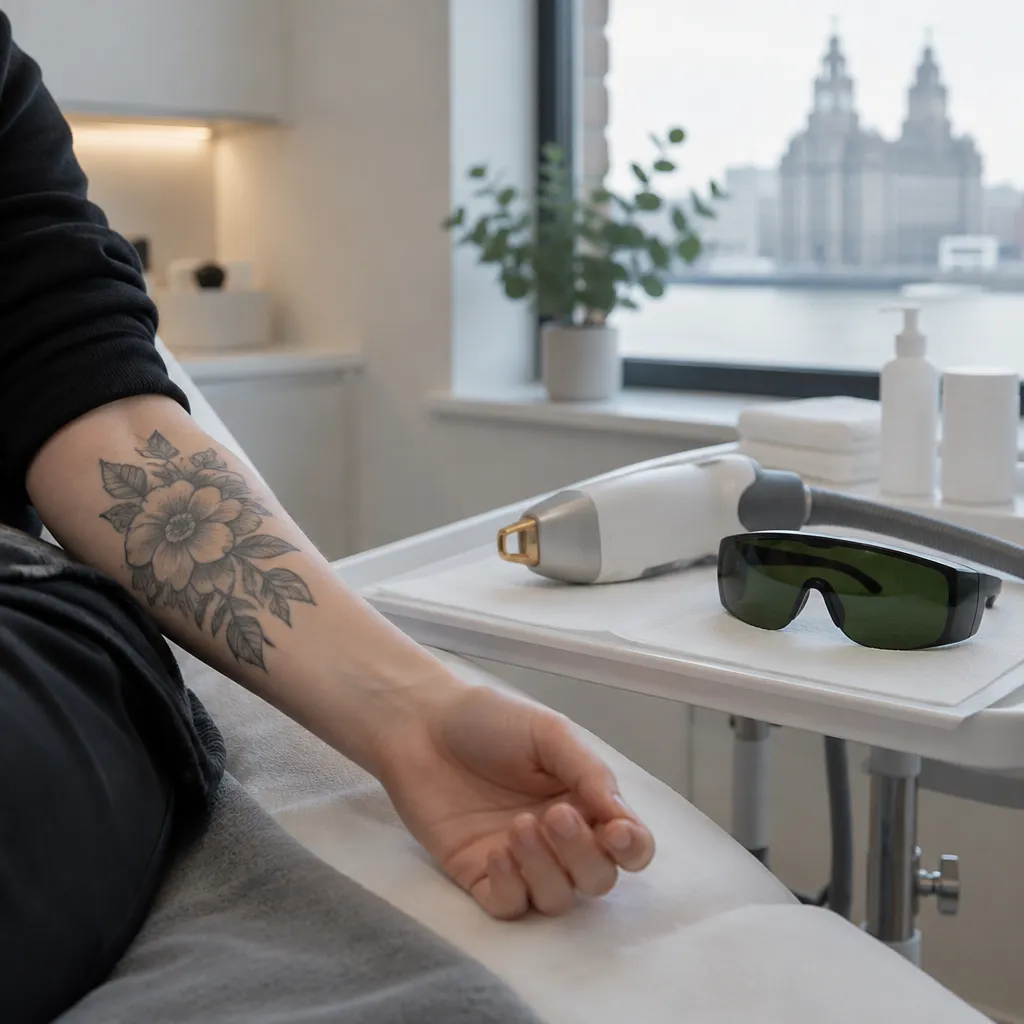
Most people booking tattoo removal sessions in Liverpool are dealing with one of three situations: a tattoo done in a friend’s home, a piece from a holiday or party that went wrong, or a cover-up attempt that left a dark, muddy result. Our service area covers Liverpool and Merseyside, including Crosby, Bootle, Huyton, Kirkby, St Helens, Formby, Ormskirk, and the Wirral. Wherever you live in that area, the first visit should start with an assessment rather than a laser pass.
The FDA recommends talking with a health care professional about the laser procedure, expectations, benefits, and risks before you begin. That conversation is where we set realistic expectations, including how many sessions are likely and what can and cannot be cleared.
The first consultation and test area
A good first visit includes a look at ink colours, depth, density, and skin type. For some clients we also suggest a small test area, so both the clinician and the client can see how the skin reacts before full treatment. It costs a little time and avoids a much bigger problem later.
Typical session rhythm
The FDA notes that laser tattoo removal requires multiple treatments with a few weeks between procedures to let the skin heal. For amateur work, that gap often matters more than people expect. Booking sessions too close together slows healing and can make results look worse, not better.
Expect the number of sessions to be a range rather than a fixed promise. Your clinician can narrow it down as the first few sessions show how your skin and pigment respond.
Comparing Removal Approaches
Three approaches come up most often when people with amateur tattoos ask what to do next. They differ in cost, speed, and how much control you have over the result. The table below sets them out so you can see where each one fits.
| Approach | Typical Session Pattern | Best Suited For |
|---|---|---|
| Clinical laser removal with a trained professional | Multiple sessions a few weeks apart, with settings adjusted for each colour | Mixed colours, dense or deep ink, and anyone who wants a measured, predictable plan |
| Home laser devices | Frequent self-treatment with limited settings and no assessment of tissue response | Very small, single-colour, dark pieces where the owner accepts uneven results and some risk |
| Cover-up tattooing | One or more appointments to redesign the piece with new ink | Clients who want a new image rather than a blank canvas, and whose existing ink can be worked over |
The right choice depends on the ink, not the budget alone. A cheap home device can look attractive, but a few months of patchy progress often costs more in time, comfort, and professional fees than a proper assessment would have.
A cover-up can work well for some designs. Dense or very dark amateur ink, however, often needs partial lightening first, which means some laser work is still part of the plan. Ask for a consultation that looks at both options before you commit to either.
Aftercare and Spacing Between Sessions
Aftercare shapes how many sessions you need, because the skin has to recover before it can be treated again. Returning too soon can leave the area sensitive, inflamed, and more likely to scar. The FDA reminds readers that removal can be painful and carries risks including scarring and infection, which is why follow-up matters.
What to do in the first two weeks
Keep the area clean, cover it if your clinician advises, and avoid picking at scabs or peeling skin. Sun exposure on treated skin can cause pigment changes, so keep the area covered when you are outside. Follow the written advice you are given rather than general tips from the internet.
Signs to report before your next session
Report increasing pain, spreading redness, pus, or a fever. These can point to infection, and they should be checked before any further laser work. Blistering that does not settle, or any change in the skin that worries you, is also a reason to hold off.
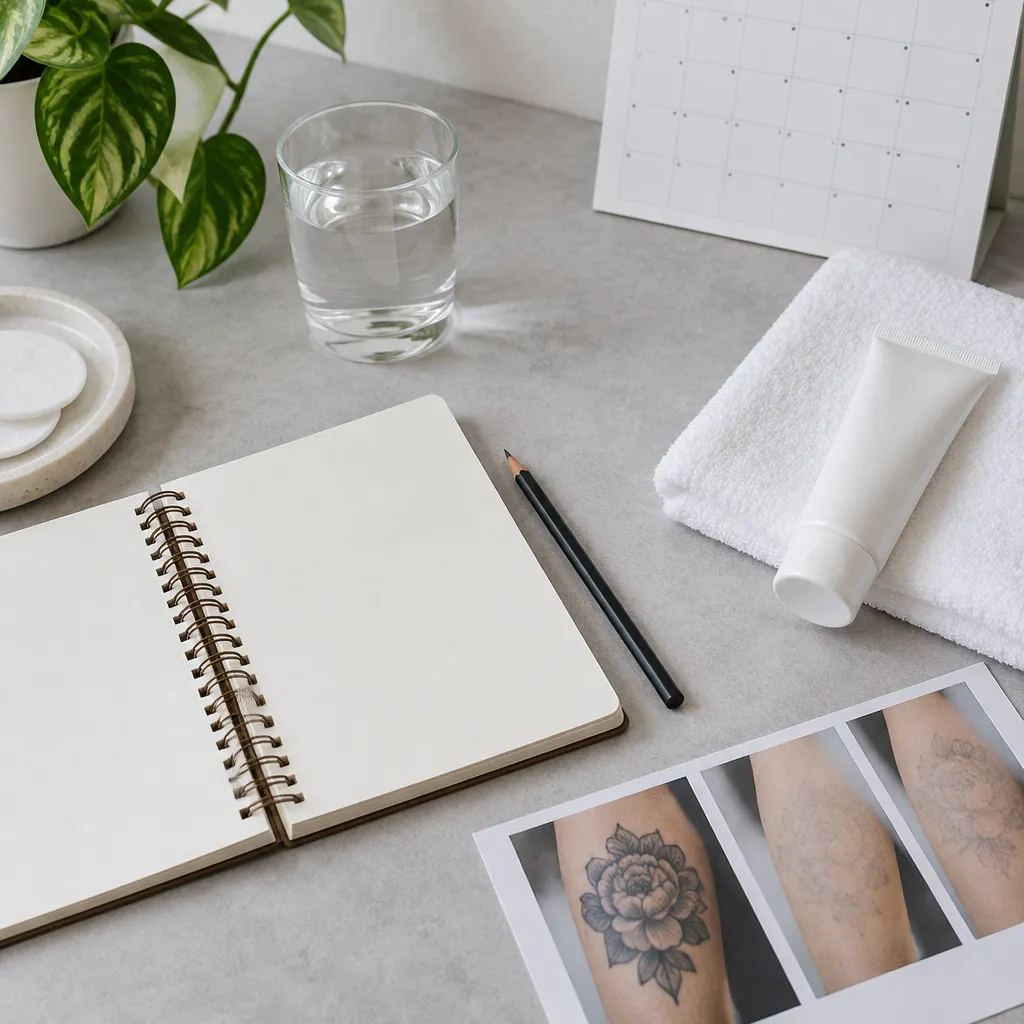
Pro tip: Photograph the tattoo in the same lighting before each session, then compare the pictures side by side. Comparing photos shows real progress far more honestly than memory does, especially when some areas clear faster than others.
Frequently Asked Questions
How many sessions does an amateur tattoo usually need?
There is no fixed number. Colour, ink depth, density, the size of the piece, and your skin all affect the count. Sessions are usually spaced a few weeks apart, so a complex amateur piece often takes many months.
Can I remove an amateur tattoo with a home laser?
Home devices are unlikely to clear a multi-coloured or dense tattoo safely or completely. The FDA states that the lasers it has cleared for tattoo removal are meant for use by, or under the supervision of, a health care professional. A consultation is the safer first step.
Why did part of my tattoo turn grey or black during treatment?
Flesh-coloured and white inks can oxidise when treated by laser, and oxidised pigment can no longer be treated by laser. Tell your clinician about any light or flesh tones before treatment starts so the plan can account for them.
Does tattoo removal hurt?
It can be painful, and the FDA lists possible scarring and infection among the risks. A trained professional can manage discomfort and adjust settings, which is one reason to avoid self-treatment.
Should I cover up an amateur tattoo instead of removing it?
A cover-up can work well for some designs, but dense or very dark amateur ink often needs partial lightening first. Ask for a consultation that looks at both options before you commit to either.
If you have worked through an amateur tattoo removal yourself, or you are deciding on one now, we would welcome your feedback on what helped and what surprised you.
We would love your feedback and any insights you would share with others. What perspective would you add?