

Tattoo Removal Multiple Areas Liverpool: Realistic Plan
If you are looking for tattoo removal in multiple areas in Liverpool, the hard part is not finding a laser. It is building a plan that works for every piece at once. Most people book their first session in one area, see good results, then try to fit the rest into the same few months. That is where timelines collide, budgets stretch and the last tattoo ends up looking like the first one did. This guide explains how we plan multi-area treatment at Faith Laser and where most plans go wrong.
Table of Contents
- Quick Takeaways
- Why Multiple Body Areas Change the Plan
- Mapping Your Tattoos by Body Area
- Spacing Sessions Across Different Zones
- Skin Type, Ink Colour and Sequencing
- Comparing Three Planning Approaches
- Budgeting and Timeline Across Several Areas
- Common Mistakes When Clearing Several Areas
- Frequently Asked Questions
- References
Quick Takeaways
| Key Insight | Explanation |
|---|---|
| Plan each area as its own course | Each body area heals and clears on its own timeline, so book by area rather than by calendar month. |
| Check colour before you sequence | Green, red and yellow are the hardest colours to remove, while dark blue and black are the easiest. Sequence accordingly. |
| Assess white and flesh-tone ink first | These pigments can oxidise and turn black during laser treatment, and oxidised pigment can no longer be treated by laser. |
| Expect session counts to vary by piece | Size, colour, location, age and the amount of ink all change how many sessions a single tattoo needs. |
| Keep a few weeks between sessions | Treatments need a gap so the skin can heal and the body can clear the broken-down ink. Do not compress that gap to save time. |
| Ask for a written estimate per area | A single total hides which piece drives the cost. A breakdown shows where to cut back if your budget changes. |
Why Multiple Body Areas Change the Plan
A single tattoo is a question of sessions. Several tattoos across different body areas turn it into a scheduling problem, a budget problem and a healing problem all at once. The FDA describes laser tattoo removal as a process where the light energy shatters ink into small particles that the body clears over time, so the timeline depends on the body as much as on the machine.

Every body area is its own case. A forearm piece on bony, sun-exposed skin and a dense back piece will not respond on the same schedule. When a client arrives with three or four pieces, we treat each one as a separate course of treatment, then look for the places where the plans can share appointments.
Why one calendar rarely works
Booking every area into the same month sounds efficient, but it often means returning before the last session has settled. Skin that is still reacting to recent treatment is harder to read, and it becomes difficult to tell whether a piece is clearing or whether you are seeing inflammation. A plan built around one calendar tends to push sessions too close together.
What we need before we can plan
Before we give a realistic timeline, we need to know where each tattoo sits, roughly how large it is, what colours it contains and how old it is. UCSF Health lists the age of the tattoo as one of the factors that changes the number of sessions. Ask for the plan in writing at your first consultation, not as a verbal estimate you will have to chase later.
Pro tip: Photograph every tattoo in daylight from the same distance before your first session. Those photos give you a fair baseline, so you can judge progress on each area rather than relying on memory.
Mapping Your Tattoos by Body Area
Start with a simple inventory. List every piece, the body area it sits on, its approximate size, the colours inside it and whether it has been touched up or covered. This takes less time than most people expect, and it removes a lot of confusion when a clinic asks what you want cleared first.
Building a simple tattoo inventory
Include the pieces you want removed and the ones you are happy to keep for now. Many people discover that one large tattoo is really two designs layered on top of each other, which changes the session count. Note any pieces done by different artists, because ink types and densities can vary between studios.
Grouping pieces by body zone and access
Once the list is written, group pieces by body zone. Tattoos on the same arm, back or leg can often be booked in the same visit, which keeps travel and time off work manageable. Pieces on separate zones can run on parallel timelines, but only if the clinic confirms that each area can take treatment at the planned interval.
Location matters as well. UCSF Health notes that where a tattoo sits is one of the factors that affects how many sessions it needs, so a small piece on a difficult area can take longer than you expect. Plan for that rather than assuming every piece will follow the same count.
Pro tip: Ask the clinic to show an estimated session count for each area in your plan. A single total hides which piece is driving the cost, and it makes it far easier to decide what to remove first if your budget changes.
Spacing Sessions Across Different Zones
The FDA states that laser tattoo removal requires multiple treatments with a few weeks in between, so the skin has time to heal. That interval is the biggest constraint in any multi-area plan. You cannot shorten it by booking a second area on the same day as the first and calling it efficient.
Why a few weeks between sessions matters
The body clears shattered ink through the immune system, and that process is slow. If you return too early, you risk treating skin that is still reacting, and that reaction can make the next session less useful. In practice, we would rather see a client attend on schedule than rush a timeline that leaves their skin irritated.
Clearing ink is a slow, repeated process, and a plan that respects the skin’s pace usually finishes with fewer setbacks than one that tries to force it.
Running two areas in the same month
Two areas in the same month is workable if they sit on different body zones and the clinic agrees the spacing. The risk lies in the timing of the starts. If two large pieces begin in the same week, you may end up managing soreness, aftercare and time off on two fronts at once. Stagger the starts so each area has its own clear run.
When appointments are spread across several areas, aftercare becomes a shared routine rather than a per-piece task. Keep one note on your phone with the date of each session, the area treated and anything that looked unusual afterwards. That record helps a clinician decide whether to keep the next session on schedule or hold it back.
Skin Type, Ink Colour and Sequencing
Colour is the variable that most often reorders a plan. The FDA notes that green, red and yellow are the hardest colours to remove, while dark blue and black are the easiest. Multi-coloured pieces may need more than one type of laser, which affects both the length of each visit and the cost.

Colours that clear slowly and need a separate assessment
Flesh-tone, white and permanent makeup pigments need particular care. The FDA says these pigments can oxidise and turn black when treated by laser, and oxidised pigment is no longer treatable by laser. A piece with these colours should be assessed first, before you commit to a sequence that depends on it clearing.
Pro tip: If one piece on your list contains white or flesh-tone ink, ask for that piece to be assessed on its own before you book the rest. Your whole sequence may need to change once you know how it responds.
Skin tone and realistic expectations
Skin tone affects how a clinic chooses its approach and how it judges the response in each area. Clients with darker skin should look for a provider that explains its approach openly, and our guide on tattoo removal on dark skin covers what to expect in more detail. A plan that ignores skin tone tends to produce surprises halfway through.
Sequencing should follow the colour and the skin, not only how visible the piece is. A bright, multi-coloured design on the upper arm may sit at the top of your list for personal reasons, but it may be wiser to tackle it after a simpler black piece has shown how your skin responds. Our complete Liverpool guide to tattoo removal explains in more detail how colour changes the session count.
Comparing Three Planning Approaches
There is no single correct order, but three approaches suit most clients. Each one fits a different kind of person, and each has a predictable downside. The table below compares them so you can see which matches your tattoos, your diary and your budget.
| Approach | Best suited to | Main drawback |
|---|---|---|
| Visibility first | Clients who want to see a visible change quickly for confidence or work reasons | The hardest colours can be left until last, when the plan is most expensive |
| Zone by zone | Clients whose pieces cluster on one or two body areas | The last zone can take months, which requires patience |
| Colour and skin first | Clients with mixed colours, sensitive skin or an unclear ink history | Visible progress is slower at the start, which can be discouraging |
Visibility first
This approach starts with the piece that bothers you most day to day, usually on the face, neck, hands or forearm. It keeps motivation high because you see a change early. The downside is that a visible piece is often a multi-coloured one, so it may need more sessions than you planned for.
Zone by zone
Zone by zone treats one body area fully before moving to the next. It reduces travel and keeps aftercare simple, because you only manage one healing area at a time. The cost is time, because the final zone may not start until the first one has cleared.
Colour and skin first
In our experience, the colour and skin first approach gives the most predictable finish, even though it asks for the most patience. Simple black or dark blue pieces go first, which shows how your skin responds. Any piece with white, flesh-tone or permanent makeup pigment is assessed before the plan depends on it.
Budgeting and Timeline Across Several Areas
Money is where multi-area plans most often stall. Clients compare a single session price and forget that a plan of several pieces multiplies that figure across every area, every session and every missed appointment. A written estimate for each area is the only reliable way to see the true total.
Ask for a total estimate per area
A useful quote lists each area, the expected number of sessions and the cost of each session, all in writing. Session counts vary, so ask what would make a count go up or down. Our Liverpool guide to cost and payment options explains how to compare estimates properly.
Timing visits around clinic hours
Our clinic at 59 Crosby Road N, Waterloo, Liverpool L22 4QD is open on Monday, Wednesday and Thursday from 10am till 2:30pm, on Friday from 10am till 6pm and on Saturday from 9am till 4pm. We are closed on Tuesdays and Sundays. Spread your areas across those windows so that no single week needs more than two visits.
Clients travelling from Crosby, Bootle or Formby often build their plans around the Friday and Saturday hours, which are the longest we offer. Build the timeline around the days you can realistically attend, not the days you wish you could.
Common Mistakes When Clearing Several Areas
Most problems in multi-area plans come from a small number of avoidable errors. The first is treating the plan as a race. The second is assuming that how one area responds tells you how another will respond. Both mistakes are easy to make at the start and expensive to fix later.
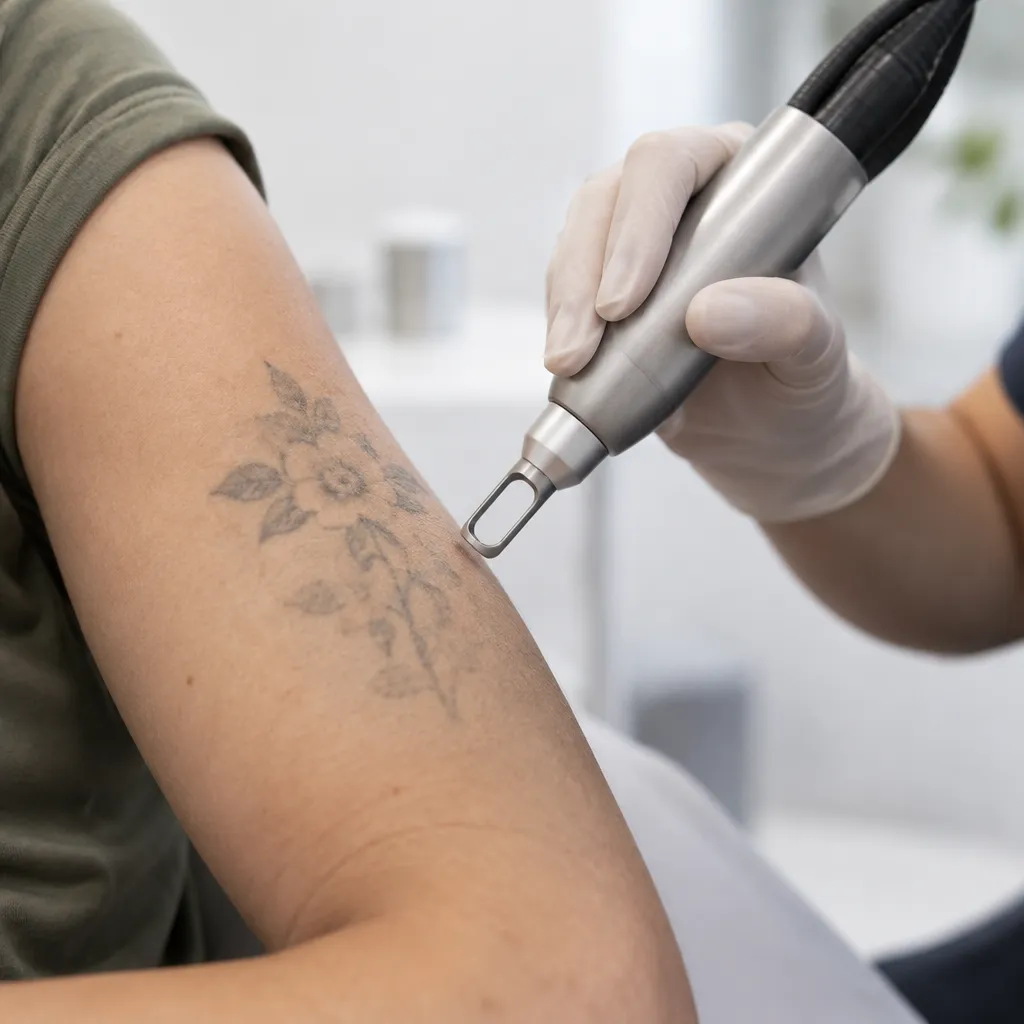
Booking every area at once
Booking every area in one go feels decisive, but it locks you into a schedule before anyone has seen how your skin reacts. If one area becomes irritated, the rest of the calendar either slips or runs on regardless. Book the first two areas, review the results, then confirm the next.
Ignoring aftercare on smaller areas
Small pieces, such as a wrist or ankle design, are easy to dismiss as less important. They still need the same protection from sun and friction after each session, and a neglected small area can set back an otherwise sound plan. Give every area the same aftercare discipline.
Pro tip: Keep a written note of which areas you treated on each date and how they looked in the days afterwards. A clinic can only adjust your plan well if it sees a clear record rather than a summary from memory.
Frequently Asked Questions
Can you remove tattoos on several body areas in one appointment?
Sometimes, but the decision belongs to the clinic, based on the skin and the time since each area was last treated. Treating several areas in one visit can save travel time, but it does not change how long each area needs between sessions.
How long does a multi-area tattoo removal plan take?
There is no single answer. UCSF Health notes that size, colour, location, age and the amount of ink all affect the number of sessions, so the honest answer comes from assessing each area. Ask for an estimate per area and be cautious about a single total with no breakdown.
Which tattoo should I remove first?
For most clients, a small black or dark blue piece in a visible area is a good starting point, because black and dark blue are the easiest colours to clear and the result shows how your skin responds. Leave any piece with white, flesh-tone or permanent makeup pigment until it has been assessed.
Does skin tone change the treatment plan?
Yes, skin tone changes the approach and what the clinic watches for during and after each session. A good provider will explain its method openly before the first session and will adjust the plan if the skin reacts differently than expected.
Can I spread the cost of a multi-area plan over time?
Some clients do, and our Liverpool cost guide explains how payment options work and where they add to the final bill. Before agreeing to any staged payment, check how missed or delayed sessions are handled, because those details can change the total significantly.
Tell us how you chose the first area you cleared, or which part of your plan turned out harder than you expected.