
Starting Tattoo Removal in November: Plan Your Full Course
Most people who book their first tattoo removal session in spring regret the timing by midsummer. Sun, holidays and a course that stretches over more than a year can turn a tidy plan into a stop-start mess. Starting in November gives you a real advantage, but only if you map the full course before the first appointment. This guide explains how to start tattoo removal in November in Liverpool and plan every session from the beginning, so the final treatment does not catch you off guard. In practice, the clients who finish their course are the ones who planned the whole calendar on day one.
Table of Contents
- Quick Takeaways
- Why November Is a Smart Time to Start
- What Your Consultation Should Settle Before Session One
- Mapping Your Session Count and Spacing
- Building Your Calendar Around Sun and Holidays
- Aftercare That Protects Your Schedule
- Budgeting for a Full Course
- Choosing a Scheduling Approach
- Common Planning Mistakes in Winter Starts
- Frequently Asked Questions
- References
Quick Takeaways
| Key Insight | Explanation |
|---|---|
| Plan the course in months, not sessions | Eight sessions at six-week gaps finish around late August 2027. Twelve sessions at eight-week gaps finish around July 2028. |
| Treat summer 2027 as a fixed block | Your middle sessions will fall in the sunniest months, so decide your sun protection and holiday plans before you book session one. |
| Get the session count in writing | Ask your consultant for an estimated number of sessions, the planned spacing and the review date, then keep a copy. |
| Avoid sun for several weeks before session one | Pre-treatment guidance from some clinics recommends a sun-free run-up, which a November start makes easier. |
| Book December and January dates in November | Festive diaries fill quickly, and a session pushed back over Christmas can add weeks to the finish date. |
| Expect larger or more colourful tattoos to need more visits | Scripps notes that larger, newer or more colourful tattoos may require more treatments, so build in a buffer session. |
| Photograph the tattoo at every visit | Fading is gradual, and consistent photos taken in the same light show progress more honestly than memory. |
Why November Is a Smart Time to Start
November is a practical month to begin, and the reasons are about the calendar rather than seasonal sentiment. Your first three or four sessions fall in the darkest months, when most people spend less time in direct sun. That gives your skin a quieter run-in before the course moves into spring.
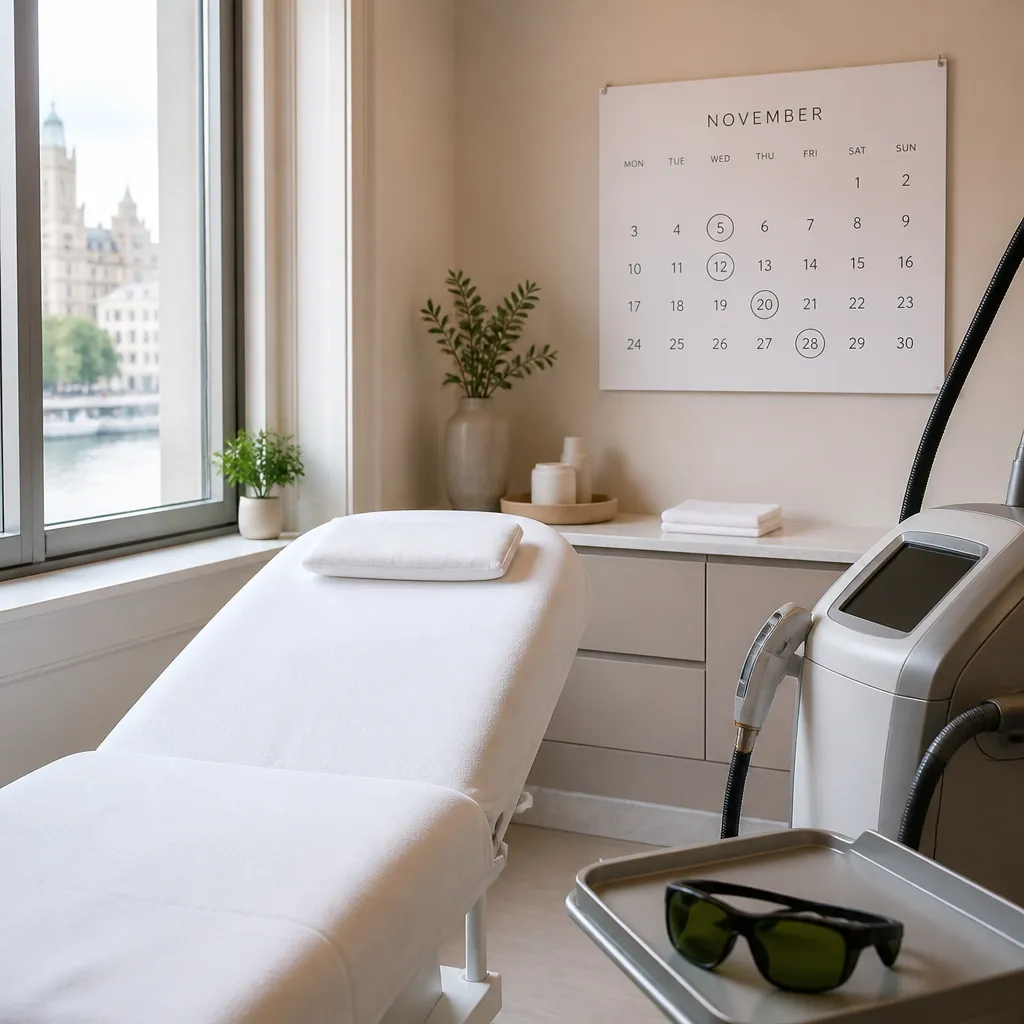
The bigger advantage is the length of the course. Scripps reports that most patients need between 4 and 30 sessions, spaced several weeks apart, which means a full course is measured in seasons rather than weeks. A November start puts the middle of your course in summer 2027, exactly when you need the most control over sun exposure.
The mistake we see most often is starting in March or April because a tattoo is bothering someone right now. The first session feels like progress, the second arrives in May, and by July the course is tangled up with holiday season and no plan. Starting in November forces you to decide the shape of the whole course before the first booking.
Many people ask whether winter is the right time. The honest answer is that the season matters less than whether you can keep the next six to eight months clear for appointments. If you can, November is a strong place to begin.
What Your Consultation Should Settle Before Session One
Your first appointment should be a planning meeting, not just a demonstration of the laser. A good consultation looks at the tattoo’s size, age, location and ink colours, because those factors largely decide how many sessions you will need. Scripps describes this step in the same terms, with a specialist assessing those features before building a treatment plan.
“A thorough consultation will help set realistic expectations and develop the best treatment plan for your skin and tattoo.” E. Victor Ross, MD, Scripps Clinic Carmel Valley
What to ask about colour and age
Some inks respond differently to the laser than others, and your consultant should tell you which colours are likely to need extra passes. Scripps notes that larger, newer or more colourful tattoos may need more treatments. Older tattoos have often already lost some pigment over the years, so they sometimes need fewer visits than a bold, recent piece of similar size.
Get the plan in writing
Ask for three things: the expected number of sessions, the spacing between them, and the point at which the plan will be reviewed. Write those down alongside the date of session one. Most people never do this, and then they cannot tell whether they are behind schedule or on track.
Pro tip: Ask your consultant to note the estimated session count and the planned month for your final session on your booking record. Check that date at every visit and adjust it openly if the tattoo is responding more slowly than expected.
Mapping Your Session Count and Spacing
Spacing is what turns a vague plan into a timeline. Most schedules use gaps of six to eight weeks, because the body needs that window to clear broken-down ink particles between treatments. Shortening the gap to speed things up usually backfires, since the skin is still working through the last session.
The arithmetic of a full course
Count the gaps, not the sessions. An eight-session course has seven gaps. At six weeks apart, that is 42 weeks, so a course starting in November 2026 would finish around late August 2027. A twelve-session course has eleven gaps, and at eight weeks apart that runs to about 88 weeks, or roughly July 2028.
Those two finish dates are almost eleven months apart, which is why the session count matters so much to your personal calendar. Write both dates into your planner before you commit, so you can see what each option asks of your year.
Why the range is so wide
With Scripps reporting between 4 and 30 sessions as typical, you should not commit to a single number until a consultant has looked at your tattoo. Build a plan with a realistic case and a longer case, then book the calendar around the longer one. Treating the best case as the plan is how people end up rushing the gaps.
Keep a simple record with the date of each session, the date of the next one, and any missed appointments. That record tells you when to re-plan, and it stops small delays from quietly becoming a six-month slip.
Building Your Calendar Around Sun and Holidays
Sun is the variable that most often derails a laser course. Pre-treatment guidance from some clinics recommends avoiding sun exposure for several weeks before the first session, and most also ask for protection between sessions. A November start gives you the easiest run-up, but the summer of 2027 is where planning matters most.

Protecting the summer window
Mark June to August 2027 on your calendar now. If a session falls in those months, prepare in advance with a broad-spectrum sunscreen, clothing that covers the treated area, and a hat for long days outside. Avoid booking a session within a few weeks of a sun holiday, because the skin needs time to settle and it is tempting to take the risk.
Christmas and New Year gaps
Winter has its own calendar problems. A session due in the week before Christmas can easily slip, and busy clinics fill up quickly over the festive period. Book your December and January dates while your diary is still open, and treat them as fixed appointments rather than optional extras.
Winter sun holidays are the bigger risk. If you plan a trip in early 2027, book the sessions on either side of it, not in the middle. A gap of a few weeks around the trip is far easier to manage than a session taken too soon after time in strong sun.
Aftercare That Protects Your Schedule
Aftercare is part of planning, not a separate topic. Skin that is irritated, blistered or infected can delay your next session, and every delay pushes your finish date back. The first 48 hours matter most, because the skin is more prone to infection during that time.
The first 48 hours
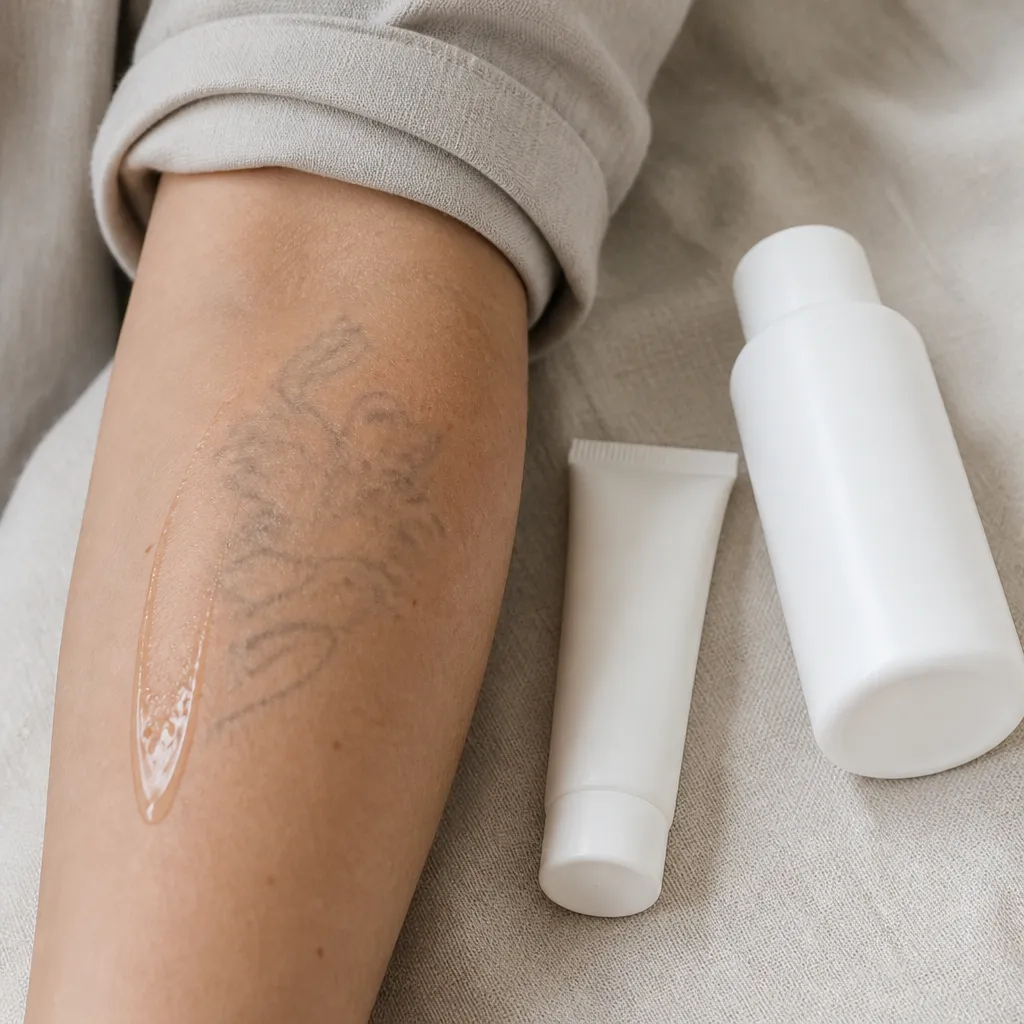
Keep the area clean and dry, follow the aftercare instructions your clinic gives you, and leave any crusting alone. Scripps notes that the skin may look red or slightly swollen after treatment, and that this is usually short-lived. If the redness spreads, the skin feels hot, or you notice discharge, contact your clinic before your next booking.
Hydration, alcohol and the body’s clearance process
The body clears ink particles through its own systems over the weeks between sessions, so your habits in that period matter. Drink water regularly and keep alcohol to a minimum around treatment days. These habits do not replace good spacing, but they support the process you are paying for.
Pro tip: Take a dated photo of the tattoo in the same light at every visit. Fading is slow, and photos stop you from guessing whether a session has made a difference.
Budgeting for a Full Course
Most people budget for session one and nothing else. A full course needs a total figure, a payment schedule and a contingency. Because the consultation sets the number of sessions, ask for a quote covering the whole plan before you commit to any payment.
Paying per session or by package
Per-session payments keep you flexible, but they can make an unfinished course expensive if you stop halfway. Package pricing works well when the session count is clear, though you should check what happens to unused sessions if your schedule changes. Ask whether the package covers the full timeline, not just a shorter window.
Building in a buffer
Plan for at least one extra session above the estimate. A buffer covers a missed appointment, a skin reaction, or a tattoo that clears more slowly than expected. Budgeting for it now means a delay is an inconvenience rather than a reason to quit.
At Faith Laser in Liverpool, packages are tailored to the individual, so ask for the whole course to be laid out before you pay for session one. A clear plan at the start is the easiest way to keep the cost predictable.
Choosing a Scheduling Approach
There is no single correct schedule. Three approaches cover most situations, and each suits a different kind of client. Choose one before session one, then review it at every visit.
| Approach | Best for | Main risk |
|---|---|---|
| Fixed six-week schedule | Clients with a clear finish date and few travel plans | Summer sun or a holiday breaks the rhythm if it is not planned in advance |
| Eight-week spacing with a planned summer gap | Clients with holidays or outdoor work between June and August | A longer finish date, so more of the course overlaps with changes in work or life |
| Flexible review schedule | Clients who are unsure how many sessions they will need | Drift, if nobody sets a review date and the gaps quietly stretch |
For most November starters, the eight-week option with a planned summer gap is the most reliable choice. It accepts a longer finish date in return for a calendar that survives the summer. The fixed six-week option suits people who want to finish sooner and have no summer commitments at all.
Common Planning Mistakes in Winter Starts
Winter starts go wrong in predictable ways. The most common is letting the gaps stretch because the tattoo looks lighter after a few sessions. Lighter does not mean finished, and stopping early often leaves a shadow that needs more work later.
Stopping when the tattoo looks faded
Fading is a midpoint, not the end of the course. Scripps describes tattoos gradually fading over several sessions, and the visible change often lags behind the clearance happening underneath. Keep following the plan, then reassess with your photos and your consultant.
Booking sessions around a single event
Spacing a session to fit around one event, such as a wedding or a summer trip, usually forces a shorter gap than the skin needs. Work backwards from the event rather than forwards from the session. If the event falls in a gap, move the session, not the spacing.
Frequently Asked Questions
How many sessions will I need if I start in November?
Scripps reports that most patients need between 4 and 30 sessions, so the honest answer depends on the tattoo. For a typical full-colour piece, it is sensible to plan around eight to twelve sessions and confirm the figure at your consultation.
Is November really the right time to start tattoo removal in Liverpool?
November is a practical start because your early sessions fall in the darker months, and the course can be planned around summer. The season matters less than whether you can keep the next several months free for appointments.
How long should I wait between sessions?
Most schedules use gaps of six to eight weeks. Follow the interval your clinic sets, because shorter gaps can leave the skin still recovering from the previous treatment.
Can I sunbathe during my course?
It is best to avoid sun exposure between treatments. If you must be outside, cover the treated area and use strong sun protection, and tell your clinic if your skin has been exposed to the sun before a session.
Does every full course cost the same?
No. Size, colour, age and location all affect how many sessions are needed, so the total cost varies from person to person. Ask for a quote covering the whole course after your consultation rather than comparing single-session prices.
Can I start in November if I already have a holiday planned for next summer?
Yes, and it is often the best way to start. Build the plan around the holiday by placing a planned gap before and after it, and confirm the timing with your clinic at the first consultation.
Tell us about your own tattoo removal timeline and which part of the planning surprised you most.
We would love your feedback and any insights you would share with others. What perspective would you add?