Laser Hair Removal for Men in Liverpool: Full Guide
More men in Liverpool are booking laser hair removal than ever before. Industry data from major UK clinic groups points to annual increases well above 30% in male bookings, with men aged 20 to 45 leading the charge. If you have been shaving your back every week, waxing your chest before summer, or dealing with a neck that needs tidying up every few days, you already know the calculation does not add up in favour of razor blades. Laser hair removal for men in Liverpool is no longer a niche treatment. It is a practical decision made by athletes, professionals, and anyone who has had enough of temporary solutions.
Table of Contents
- Quick Takeaways
- Why More Men Are Choosing Laser Hair Removal
- How Laser Hair Removal Works for Men
- Most Popular Treatment Areas for Men
- How Many Sessions Will You Need
- Laser Hair Removal vs Other Hair Removal Methods
- What to Expect Before and After Your Sessions
- Choosing the Right Clinic in Liverpool
- Frequently Asked Questions
- References
Quick Takeaways
| Key Insight | Explanation |
|---|---|
| Male bookings are rising sharply | UK clinics are reporting annual increases exceeding 30% in male laser hair removal bookings, particularly among men in their 20s to mid-40s. |
| Most popular areas for men are back, chest, and face | Full back, shoulders, chest, and beard line (neck and face shaping) are the top treatment zones for male clients across the UK. |
| Sessions are spaced 4 to 8 weeks apart | Hair grows in cycles. Spacing sessions correctly is what makes the treatment effective. Skipping or rushing sessions wastes money. |
| Dense body hair may need more sessions | Areas like the back with thick, coarse hair typically require 8 to 12 sessions. Chest and shoulders usually fall in the 6 to 8 range. |
| Technology matters for darker skin tones | The right laser technology must be matched to your skin tone. A clinic using a single fixed laser for all skin types is a red flag. |
| Shave 24 hours before, never wax | The follicle must be intact below the skin for the laser to work. Waxing or plucking removes the follicle and makes the session ineffective. |
| Faith Laser offers tailored male packages | Faith Laser in Liverpool offers male-specific packages including full back and full torso combinations, priced at competitive rates with multi-session discounts. |
Why More Men Are Choosing Laser Hair Removal
The shift is real and it is not driven by vanity alone. Men who train regularly find body hair traps heat, interferes with sports compression gear, and makes post-workout hygiene more complicated. Cyclists, swimmers, and martial artists have been getting laser treatment for years for functional reasons. The rest of the male population is now catching up.
There is also a straightforward time-cost argument. A man who shaves his back or chest regularly spends a significant number of hours a year on grooming that produces no lasting result. Male laser hair removal in Liverpool removes that cycle entirely over the course of a treatment programme. Once the follicles are treated and the hair is gone, maintenance sessions are minimal or unnecessary.
Social attitudes have also shifted considerably. The stigma that once attached to men seeking cosmetic treatments has largely dissolved, especially in cities like Liverpool where professional grooming culture is strong. Men book consultations the same way they book a barber appointment: matter-of-factly.
How Laser Hair Removal Works for Men
Laser hair removal works by directing concentrated light energy into the hair follicle. The pigment in the hair absorbs that energy, which converts to heat and damages the follicle enough to disrupt future growth. The skin above and around the follicle is largely unaffected, provided the treatment is calibrated correctly for your skin tone.
This is where the Fitzpatrick scale becomes important. Skin tone classification determines which laser wavelength and energy settings are appropriate for you. Clinics using advanced systems can treat a wide range of skin tones safely, but the settings must be matched to the individual. Using the wrong parameters risks burns, hyperpigmentation, or simply ineffective treatment.
Why the AW3 Crystal Freeze System Is Suited to Male Treatment
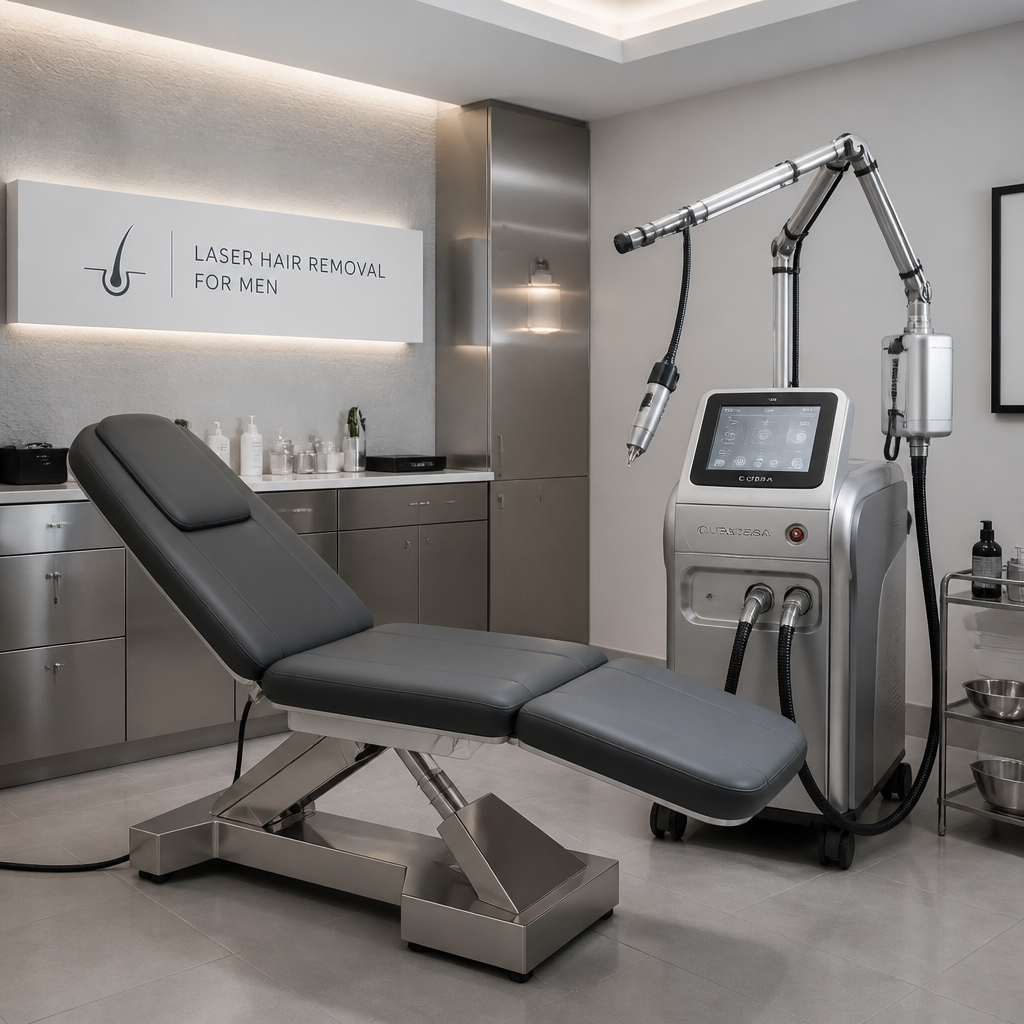
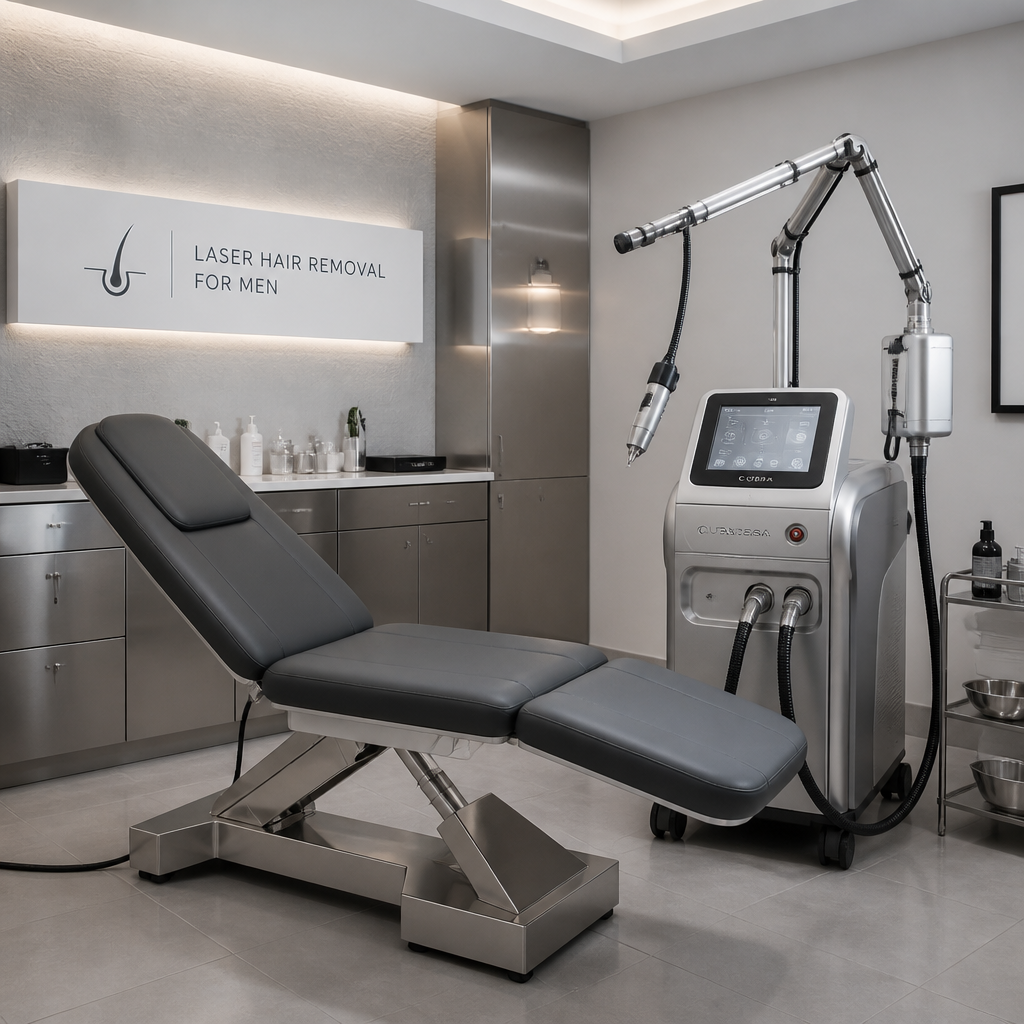
Faith Laser uses the AW3 Crystal Freeze system, which combines Triplicity wavelength technology with an integrated cooling mechanism. For men, this matters because male body hair, particularly on the back and chest, tends to be coarser and denser than female body hair. Coarser hair requires effective energy delivery, while the cooling element protects the skin surface during that delivery. The result is a treatment that can handle the volume of hair typical in male clients without compromising comfort or safety.
Pro tip: If a clinic cannot explain what wavelength their laser uses or how it is calibrated to your skin tone, walk away. That is a basic competency question and every qualified practitioner should be able to answer it clearly.
Most Popular Treatment Areas for Men
Men’s treatment patterns differ meaningfully from women’s. While underarms and legs dominate female bookings, male clients consistently prioritise different zones. Understanding which areas respond well to laser treatment, and which take longer, helps you set realistic expectations from session one.
Back and Shoulders
The full back is the most requested male treatment area. Back hair is typically dark and coarse, which makes it an excellent target for laser energy. However, the density of hair means more sessions are usually required compared to other areas. Most men see significant reduction after six sessions, with a full course running closer to 8 to 12 sessions for complete clearance. Faith Laser offers full back and shoulders packages specifically designed for this.
Chest and Torso
Chest hair responds well to laser treatment and sessions for this area are faster than back treatments. The flat surface and consistent hair density make chest treatments straightforward. Men seeking a clean chest without the daily maintenance of shaving typically see strong results within 6 to 8 sessions. Faith Laser’s male package covers full back and full torso as a combined offering, which is the most cost-efficient way to address both areas simultaneously.
Beard Line, Neck, and Face
Facial laser for men is more nuanced than body treatment. Many men use it not for full beard removal but for beard line shaping, cleaning up the neck, or reducing ingrown hairs caused by frequent shaving. The face has a higher proportion of fine hairs and hormonal influences, which means results can vary and top-up sessions over time are more common in this area. Beard line and neck treatments are among the fastest sessions available, typically taking under 30 minutes.
Underarms and Intimate Areas
These are growing areas of demand among male clients. Underarm laser for men eliminates the daily shave or trim and reduces sweat-related odour by removing the hair that traps moisture. Intimate area treatments follow similar principles to those offered to female clients and are available at Faith Laser as part of their broader treatment menu.

How Many Sessions Will You Need
This is the question every male client asks first. The honest answer is: it depends on the area, your hair colour and texture, and your skin tone. That said, there are reliable general ranges that apply to the vast majority of men.
The reason multiple sessions are non-negotiable is biology, not a sales tactic. Hair grows in cycles: active growth (anagen), transition (catagen), and resting (telogen). The laser only effectively destroys follicles in the active growth phase. At any given time, only a portion of your follicles are in that phase. Spacing sessions 4 to 8 weeks apart catches successive rounds of active follicles. Skipping sessions or stopping early means you treat the same hair cycle twice while missing others entirely.
Completing a full course of treatment is not optional if you want lasting results. Stopping after two or three sessions because the hair looks thinner is one of the most common reasons men do not get the outcome they were expecting.
Pro tip: Book your sessions in advance as a block. When appointments are already in the diary, it is far easier to maintain the correct intervals and complete the full programme without losing momentum between sessions.
Laser Hair Removal vs Other Hair Removal Methods
There is no shortage of hair removal options, but not all of them make sense for men managing large body areas or dense hair growth. Here is a direct comparison across the methods men actually use.
| Method | How It Works | Verdict for Men |
|---|---|---|
| Laser Hair Removal | Targets the follicle with concentrated light, disrupting regrowth at the root. Results are long-term with minimal maintenance after a full course. | Best long-term investment. Handles large areas efficiently. Effective on coarse dark body hair. Requires a full course of sessions. |
| Waxing | Removes hair at the root by applying wax and pulling. Results last 3 to 6 weeks before regrowth. | Painful on large male body areas. Expensive over time when repeated monthly. Ingrown hairs are common, especially on chest and back. |
| Shaving / Trimming | Cuts hair at the skin surface. No effect on the follicle. Regrowth is rapid, typically within 1 to 3 days on the face. | Lowest upfront cost but highest lifetime time cost. Stubble regrowth and razor rash are constant issues. No solution for the back without assistance. |
In practice, men who have used waxing for back or chest hair are typically the most motivated laser clients because they already understand both the discomfort and the temporary nature of alternatives. Laser removes the repetition from the equation.
What to Expect Before and After Your Sessions
Knowing what to do before and after each session directly affects how well the treatment works. This is an area where many men underperform simply because they were not given clear instructions or did not follow them consistently.
Before Your Session
Shave the treatment area approximately 24 hours before your appointment. This is non-negotiable. The laser needs to target the follicle beneath the skin surface, not the hair shaft above it. Surface hair can cause burning without delivering energy to the follicle where it is needed. Do not wax, pluck, or use depilatory creams in the weeks before treatment as these methods remove the follicle and leave nothing for the laser to target.
Avoid sun exposure and tanning for at least 2 to 4 weeks before each session. Tanned or sunburnt skin increases the risk of adverse reactions including burns and post-inflammatory pigmentation. On the day of treatment, arrive with clean, product-free skin. No deodorant, no body lotion, no aftershave on the treatment area.
After Your Session
Mild redness and sensitivity in the treated area is normal and typically resolves within a few hours. Avoid hot showers, saunas, and intense exercise for 24 to 48 hours after treatment. Keep the area out of direct sun and apply a high-SPF sunscreen if exposure is unavoidable. Do not wax or pluck between sessions. Shaving between sessions is fine and does not interfere with the treatment cycle.
Hair shedding in the weeks after a session is a positive sign, not regrowth. Treated hairs are expelled from the follicle as the body clears them. This is expected and normal, not a sign the treatment has failed.
Choosing the Right Clinic in Liverpool
Liverpool has a growing number of clinics offering laser services, which means the quality gap between providers has also grown. Choosing the right clinic for men’s laser hair removal in Liverpool comes down to a few non-negotiable criteria.
First, the practitioners must be qualified. This is a medical-adjacent treatment that uses regulated technology. Ask directly about the qualifications of the person delivering your treatment and whether the clinic holds current certifications. A reputable clinic will answer this without hesitation.
Second, the technology must be appropriate for your skin tone and hair type. A clinic offering a single generic treatment with no assessment of your Fitzpatrick type is cutting corners. Your consultation should include a skin and hair assessment that informs the specific settings used for your treatment.
Third, the pricing structure should be transparent. Clinics that are vague about what is included in a package, or that push upsells during the consultation, are not operating in your interest. Faith Laser publishes its male package pricing clearly: the male package covers full back and full torso, priced at £175 per session or £875 for six sessions. Chest and shoulders separately are available at £70 per session or £350 for six. Full back and shoulders as a combined area is £135 per session or £675 for six sessions.
Faith Laser is based in Liverpool and operates with a clear focus on creating a relaxed, non-clinical atmosphere that many male clients find more comfortable than large chain environments. The Crystal Freeze cooling technology means sessions are manageable even for men who have previously avoided treatment due to concerns about pain.
Pro tip: Always book a consultation before committing to a package. A legitimate clinic will use that consultation to assess your suitability for treatment, explain realistic outcomes for your specific hair and skin type, and answer every question you have. If a clinic skips the assessment and goes straight to selling a package, that is a warning sign.
Frequently Asked Questions
Does laser hair removal hurt more for men than for women?
Pain tolerance is individual, but coarser and denser body hair does absorb more laser energy, which can increase sensation during treatment. The Crystal Freeze cooling system used at Faith Laser significantly reduces discomfort by cooling the skin surface during the pulse. Most male clients describe the sensation as a mild snap or warmth rather than sharp pain, particularly after the first session when hair density begins to reduce.
Can men with darker skin tones get laser hair removal?
Yes, but the technology used must be appropriate for darker skin. The Fitzpatrick scale classifies skin types from I to VI, and different laser wavelengths are suited to different parts of that range. Clinics using advanced multi-wavelength systems can treat darker skin tones safely. Always ensure your clinic assesses your skin type before treatment and can explain which laser settings they will use and why.
How long does a full back laser session take?
A full back session typically takes between 30 and 60 minutes depending on the surface area and hair density. Modern diode laser systems with large spot sizes treat the back significantly faster than older technology. At Faith Laser, the AW3 Schnelle system is designed for fast treatment delivery without compromising effectiveness, which is particularly relevant for larger male body areas.
Will the hair grow back after I complete the full course?
Most men see a permanent reduction in hair density and thickness after a full course of sessions. Some fine hairs may return over time, particularly in hormonally sensitive areas like the face, but any regrowth is typically finer and lighter than the original hair. Occasional maintenance sessions every year or two are sufficient for most clients to maintain their results long term.
Can I shave between laser hair removal sessions?
Yes. Shaving between sessions is completely safe and does not interfere with the treatment. The laser targets the follicle below the skin surface, not the hair shaft, so shaving has no negative effect. Do not wax, thread, or pluck between sessions as these methods remove the follicle and will undermine the laser’s effectiveness at your next appointment.
How soon will I see results from men’s laser hair removal in Liverpool?
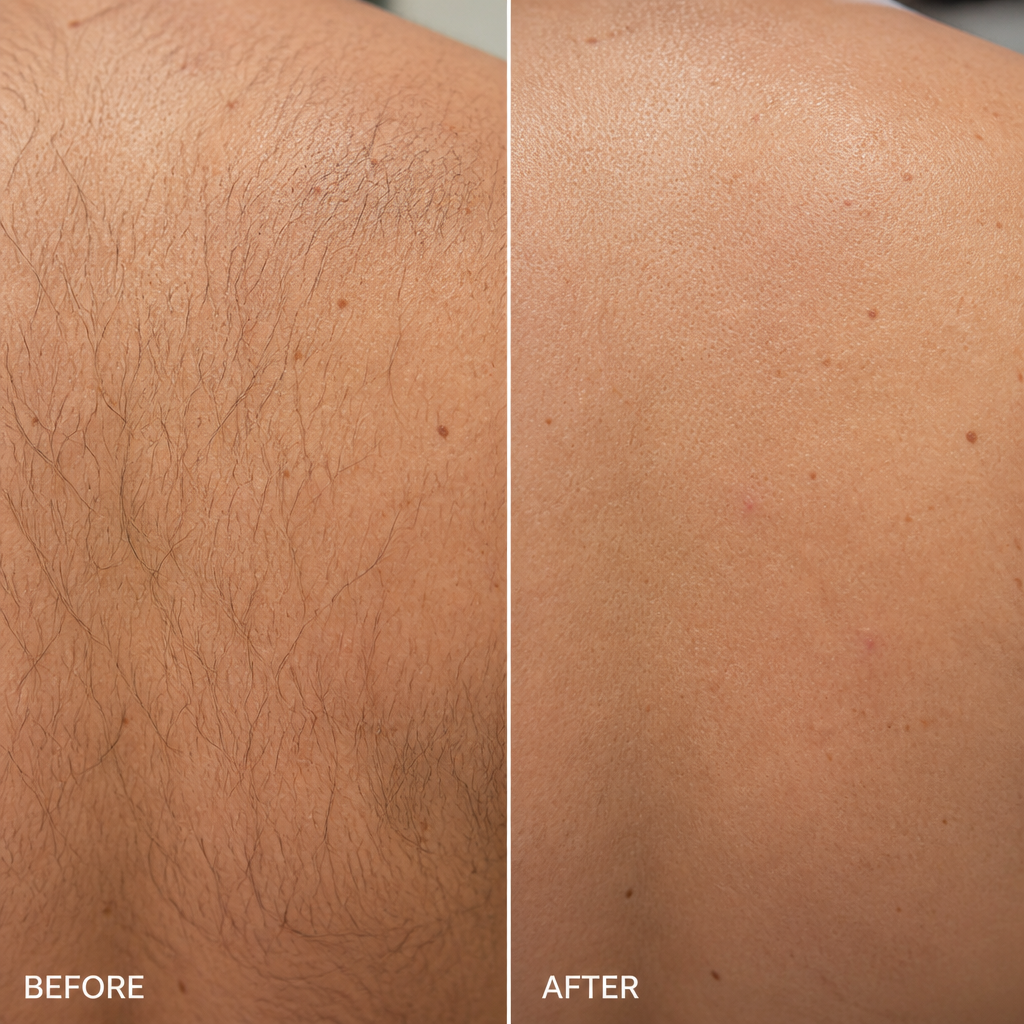
Most men notice a visible reduction in hair density after their second or third session. The treated area will shed hair in the weeks following each appointment, which is a sign the treatment is working. Significant results, typically 60 to 80 percent reduction in hair growth, are usually visible by sessions four to six. Full results are assessed at the end of the complete course.
Is laser hair removal on the beard area safe for men?
Laser treatment on the beard line, neck, and below the cheekbone is safe when performed by a qualified practitioner with the correct equipment. It is commonly used for beard shaping, cleaning the neck, and reducing ingrown hairs caused by regular shaving. Full beard removal requires more sessions than body areas due to the hormonal nature of facial hair and finer hair textures in some zones, so expectations should be set accordingly during consultation.
If you have tried laser hair removal as a man in Liverpool or are considering your first consultation, share your questions or experience in the comments below. Your insight helps other men make a more informed decision.
We would love your feedback and any insights you would share with others. What perspective would you add?
References
- Why men are booking laser hair removal at record rates in the UK, including key statistics on male treatment trends
- Overview of the growing trend of laser hair removal among men and what drives the shift in male grooming habits
- Complete preparation and aftercare guide for laser hair removal, covering what to do before and after each session
- How laser hair removal technology is selected based on skin tone using the Fitzpatrick scale