How Many Sessions Does Tattoo Removal Take?
Most people asking how many sessions tattoo removal takes want a single number. The honest answer is: most tattoos require between 6 and 12 sessions for complete clearance, but that range is shaped by real clinical variables, not a rough guess. If a clinic quotes you a fixed number before assessing your tattoo, treat that as a red flag. At Faith Laser in Liverpool, the conversation starts with your specific tattoo, your skin, and your goal, because those three things are what actually set the timeline.
Table of Contents
- What the Numbers Actually Mean
- The Six Factors That Set Your Session Count
- Ink Colour: The Variable Most People Underestimate
- What Happens Between Sessions
- Technology Matters: Nanosecond vs Picosecond Lasers
- Complete Removal vs Fading for a Cover-Up
- Session Comparison by Tattoo Type
- Frequently Asked Questions
- References
What the Numbers Actually Mean
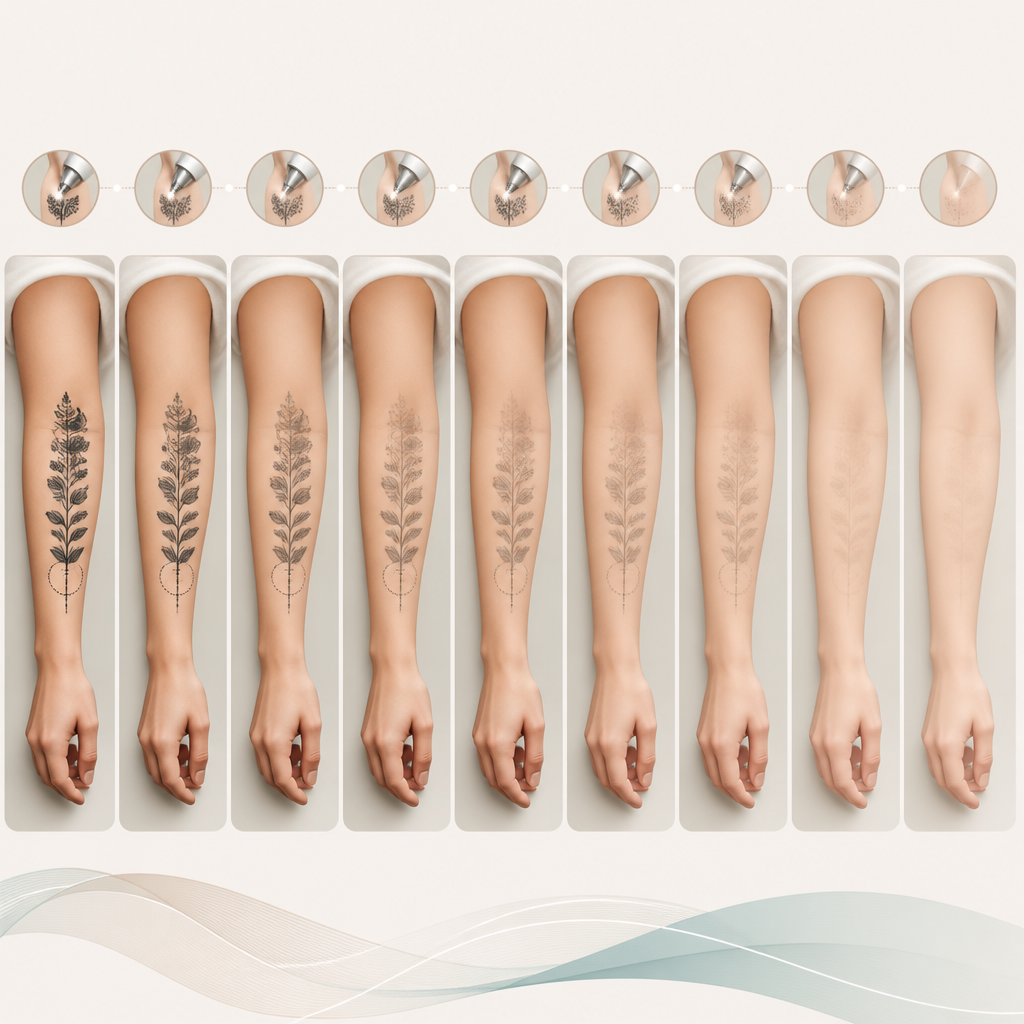
The widely cited range of 6 to 12 sessions is clinically grounded and reflects genuine treatment outcomes across different tattoo types. Sessions are spaced 6 to 8 weeks apart to give the immune system time to flush out the fragmented ink particles between appointments. That spacing is not arbitrary. Compress the gap and you risk treating skin that has not finished healing, which reduces effectiveness and increases the chance of unwanted side effects.
At that 6-to-8-week interval, a 6-session course takes roughly 9 to 12 months of real calendar time. A 12-session course can run to 18 months or longer. Many clients start to see noticeable fading after the third session, though this depends heavily on the factors covered below. Do not judge your progress by session three. The later sessions often deliver the sharpest visible results as residual ink particles are cleared.
| Key Insight | Explanation |
|---|---|
| Typical session range | Most tattoos need 6 to 12 sessions for complete removal, spaced 6 to 8 weeks apart |
| Black ink is easiest | Black and dark grey ink absorbs laser energy across all wavelengths and clears fastest |
| Colours add sessions | Green, blue, and yellow inks require specific wavelengths and typically add sessions to your total count |
| Location on the body matters | Tattoos on the ankles and feet clear more slowly due to poorer circulation compared to chest or upper arm placements |
| Amateur tattoos often clear faster | DIY or amateur tattoos sit shallower in the skin with less uniform ink density, making them easier to break down |
| The Kirby-Desai scale predicts your number | Clinicians use this six-factor scoring tool to estimate your required sessions before treatment begins |
| Aftercare accelerates results | Staying hydrated, protecting treated skin from sun exposure, and avoiding smoking can meaningfully speed up ink clearance |
Understanding that your timeline is individual, not generic, is the most important thing to take from any initial consultation. The numbers above are a starting framework, not a guarantee either way.
The Six Factors That Set Your Session Count
Practitioners use a clinical assessment tool called the Kirby-Desai scale to score six specific variables that, when totalled, give a reliable prediction of the sessions required. This is the tool clinicians actually use, not a simple average based on tattoo size alone. Knowing these six factors helps you walk into a consultation with realistic expectations.
Skin Type
Lighter skin tones require fewer sessions because the laser can target ink pigment with higher energy settings without the risk of affecting the surrounding melanin. Darker skin tones require more conservative laser settings and longer intervals between sessions to minimise the risk of pigmentation changes such as lightening or darkening of the skin. This does not mean tattoo removal is less achievable on darker skin. It means the protocol is adjusted carefully, and the timeline may extend as a result.
Tattoo Location
Areas of the body with stronger circulation, such as the chest and upper back, clear ink more efficiently because the immune system can transport fragmented particles away more effectively. Tattoos on the extremities, particularly the ankles and feet, sit in areas with slower circulation and consistently take longer to clear. This is one of the most commonly overlooked variables when clients estimate their own timelines.
Ink Density and Layering
A tattoo with heavy shading, filled solid areas, or multiple layers of ink, including reworks or cover-ups, presents a significantly higher ink load for the laser to break down. A professional tattoo studio piece with bold, packed colour will almost always sit at the higher end of the session range. Thin linework or a light wash tattoo will often sit much closer to the lower end.
Pro tip: If your tattoo is a cover-up over an older piece, tell your clinician before your assessment. The layered ink load from two tattoos is one of the most common reasons actual session counts exceed initial expectations.
Ink Colour: The Variable Most People Underestimate
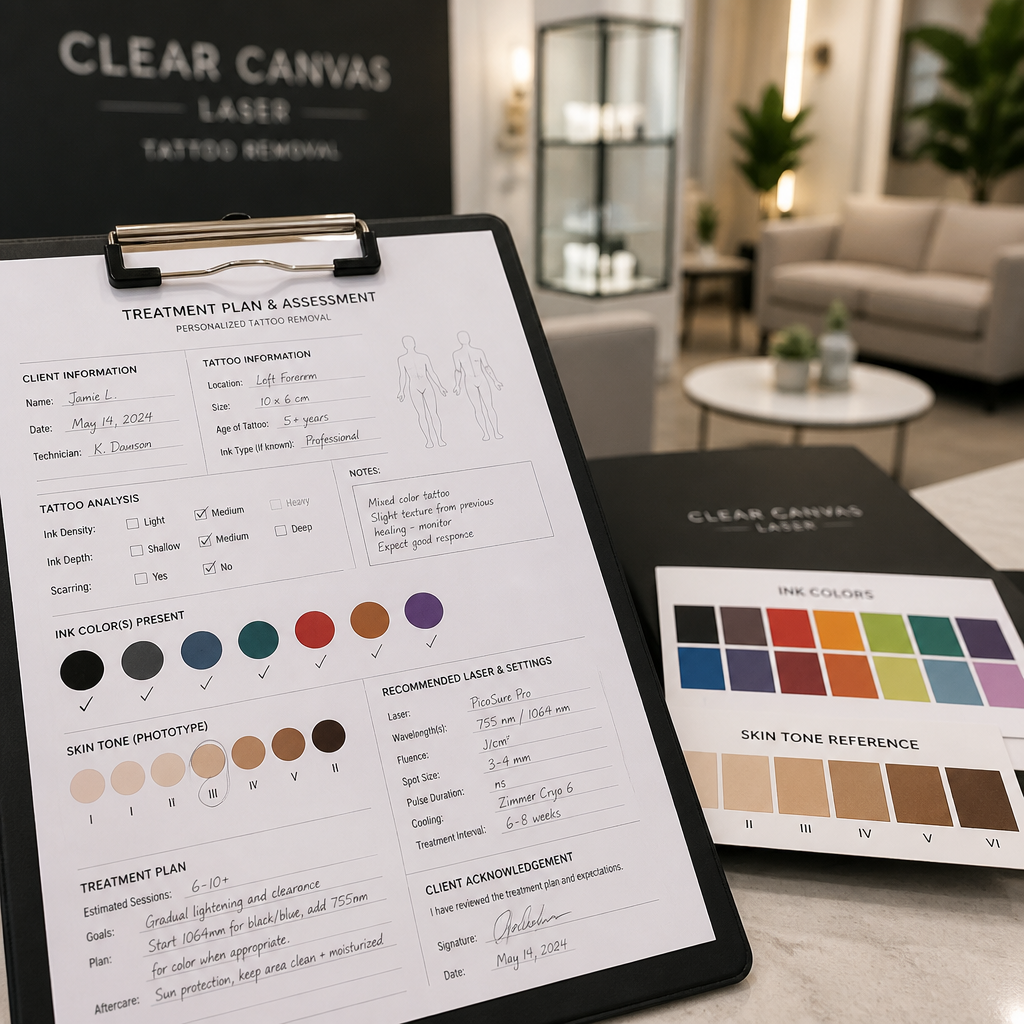
Black ink clears the fastest because it absorbs laser energy across all wavelengths. Dark grey and dark navy inks behave similarly. The challenge increases significantly with coloured inks. Green, blue, and yellow pigments require specific laser wavelengths to target them effectively, and not every laser system carries the right wavelength for every colour. This is why a multicoloured tattoo almost always takes more sessions than a black-only piece of comparable size.
Red and orange inks are generally more responsive than greens or blues, though some red pigments can react unpredictably. White ink, used for highlights, is particularly resistant to laser treatment and may never clear fully. If your tattoo contains light yellow, lime green, or turquoise elements, factor a longer timeline into your planning from the start.
Ink colour is the single variable that can most dramatically shift a session estimate. A client with a small all-black tattoo and a client with a same-sized multicoloured piece can have session counts that differ by 4 to 6 appointments. Starting with an honest colour audit at the consultation stage prevents surprise mid-treatment.
At Faith Laser, the tattoo removal assessment in Liverpool includes a thorough review of ink colours present, so your session estimate reflects what is actually in your skin, not a generic average.
What Happens Between Sessions
Each laser session shatters ink particles into smaller fragments. The body’s immune system, specifically the lymphatic system, then flushes those fragments away naturally over the following weeks. The 6-to-8-week gap between sessions is the window the body needs to complete that clearance before the next round of laser treatment.
In the first week after a session, some redness, swelling, and tenderness at the treated area is completely normal. Scabbing, crusting, or blistering can also occur and should be left alone. Picking or scratching increases the risk of scarring and infection. Most of these initial reactions settle within 10 to 14 days, and the skin continues to heal internally for up to 4 to 6 weeks after each session.
What You Can Do to Speed Up Results
Your immune system does the ink clearance work between sessions, so anything that supports healthy circulation and immune function will positively affect your results. Staying well hydrated, avoiding smoking, protecting the treated area from sun exposure using high-SPF sunscreen, and maintaining a generally healthy lifestyle are all practical steps that have a real impact on how quickly your ink fades between appointments.
Pro tip: Avoid tight clothing over the treated area during the first week post-session. Friction against healing skin can irritate the area and slow the recovery process, which pushes your next available appointment date further out.
Technology Matters: Nanosecond vs Picosecond Lasers
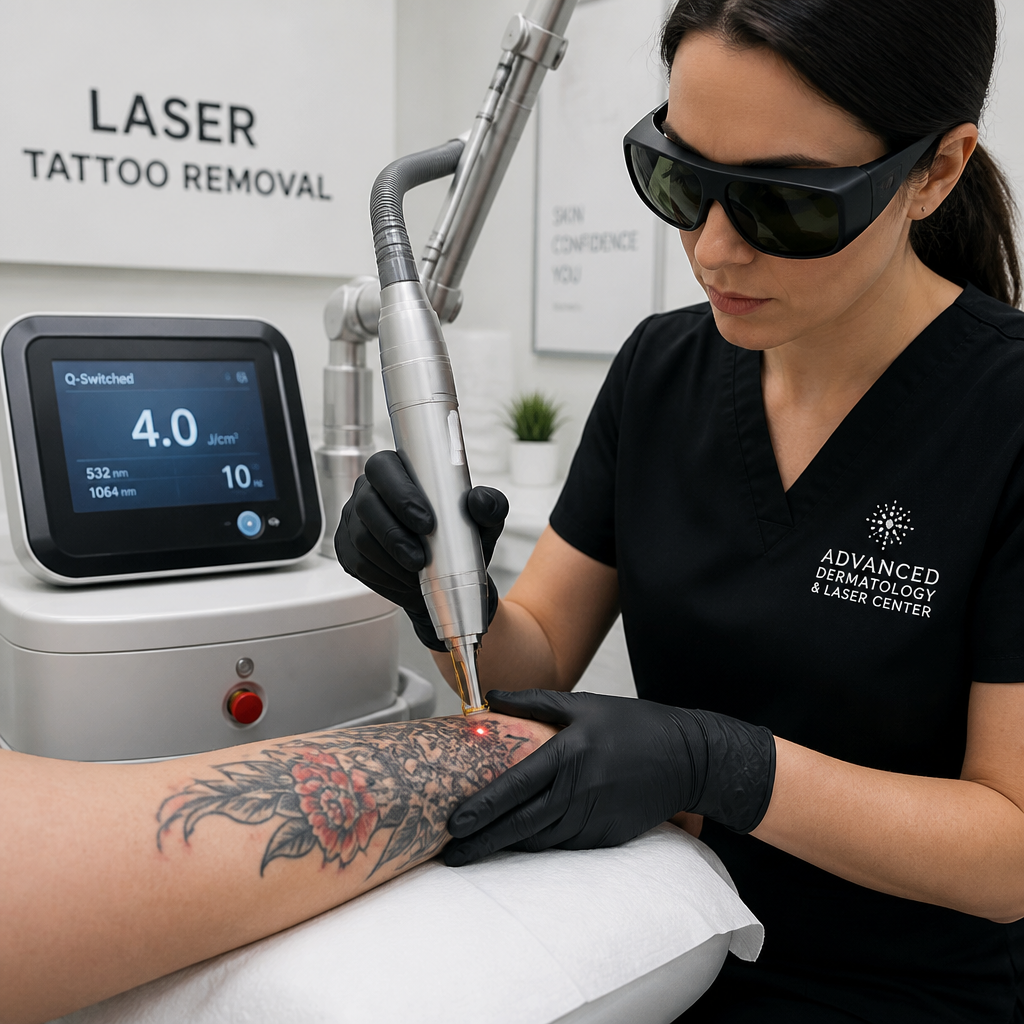
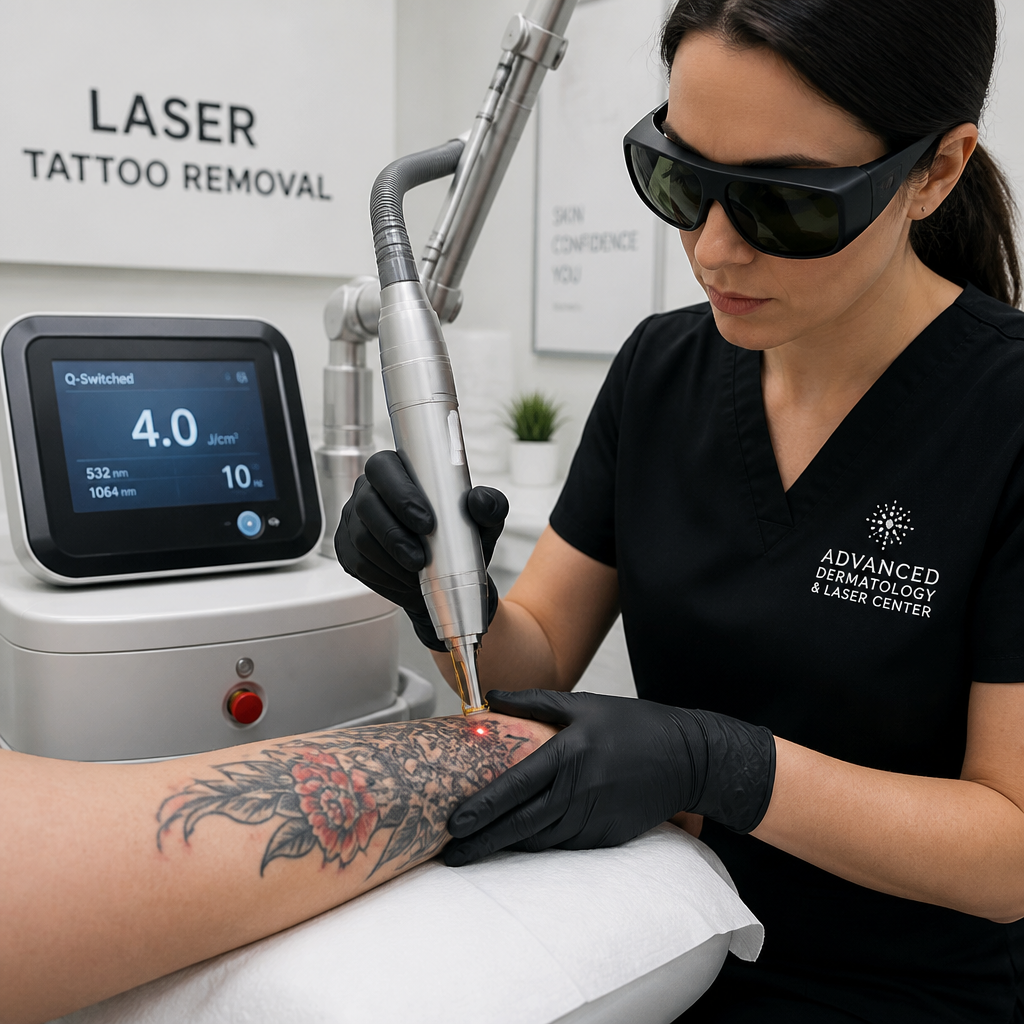
The laser technology used in your treatment genuinely affects both the session count and the experience. The Q-switched nanosecond laser has long been considered the traditional clinical standard for tattoo removal and has a strong track record of effectiveness. Picosecond laser technology delivers energy in shorter pulses, which can shatter ink particles into smaller fragments, potentially allowing the body to clear ink more efficiently.
Clinical research comparing these two approaches is ongoing, and comparative data continue to be published. The core practical point for anyone planning treatment is this: the capability of the specific device, and the skill of the practitioner operating it, matter more than the technology category in isolation. Advanced equipment used without proper training and assessment produces worse results than well-operated proven technology.
Faith Laser uses 3D NanoSure technology, a system designed for precise, efficient ink breakdown with minimal surrounding skin damage. This directly influences why fewer sessions are typically needed compared to older generation equipment, and why the treatment experience is significantly more comfortable. If you want to understand exactly how the technology used at the clinic applies to your specific tattoo, the Liverpool tattoo removal page gives a clear overview, and a consultation will give you session-specific answers.
Complete Removal vs Fading for a Cover-Up
Not every client needs a tattoo gone entirely. If your goal is to fade a tattoo enough to allow a cover-up design to work, the session count can be meaningfully lower than for complete removal. A cover-up artist typically needs the existing tattoo lightened to a point where the new design can sit cleanly on top, which may only require 3 to 5 sessions rather than a full removal course.
If your goal is complete removal with no visible trace, the session count runs to the full range and the final sessions are often the most important. Residual ghost images, faint ink traces that remain after several sessions, usually clear in the later stages of treatment. Stopping treatment early because the tattoo looks mostly gone is a common mistake. Those remaining traces often consolidate and become more obvious once the surrounding skin has fully settled.
Session Comparison by Tattoo Type
The table below reflects realistic session ranges based on the variables discussed. These are not guarantees, and your actual assessment at consultation may differ based on your individual skin and ink profile.
| Tattoo Type | Estimated Sessions (Complete Removal) | Key Factors Affecting Range |
|---|---|---|
| Amateur or DIY black ink | 4 to 6 sessions | Shallow ink depth, uneven density, single colour |
| Professional black and grey | 6 to 9 sessions | Consistent ink depth, variable density in shading areas |
| Professional multicoloured | 8 to 12 sessions | Multiple wavelengths required, colour-specific treatment |
| Cover-up or reworked tattoo | 10 to 12+ sessions | Layered ink load from two or more tattoos stacked |
| Fading only (for new cover-up) | 3 to 5 sessions | Goal is lightening, not full clearance |
These figures assume treatment with modern, capable laser equipment and appropriate spacing between sessions. Treatments spaced too close together, or using underpowered equipment, can distort these ranges significantly upward.
Frequently Asked Questions
Can a tattoo be removed in just 3 sessions?
In most cases, no. Three sessions may produce significant fading, particularly on amateur or lightly inked black tattoos, but complete removal in three sessions is not a realistic expectation for most people. If a provider promises full removal in three sessions without a detailed assessment of your specific tattoo, approach that claim with caution.
Does tattoo removal hurt?
Most clients describe the sensation as similar to a rubber band snapping against the skin repeatedly. Modern laser systems with integrated cooling technology, such as the Crystal Freeze cooling system used at Faith Laser, significantly reduce discomfort during the session. The treated area will be tender and sensitive for several days afterward, but the actual laser treatment itself is brief and well-tolerated by the majority of clients.
How long is each tattoo removal session?
A single session typically takes between 15 and 30 minutes, depending on the size and complexity of the tattoo. Small or simple pieces can be treated in under 10 minutes. A large, detailed piece may take closer to 30 to 45 minutes. The laser treatment itself is fast; most of the session time is spent on preparation and aftercare guidance.
Will my tattoo disappear completely?
For the vast majority of clients, yes. Faith Laser’s approach achieves 98% effectiveness for complete tattoo removal. A small number of very stubborn ink colours, particularly certain yellows and light greens, may leave a faint trace even after a full course of treatment. This is discussed at consultation so expectations are set accurately from the start, not partway through a course.
Can I get tattoo removal sessions closer together to speed things up?
No. Compressing sessions to less than 6 weeks apart is counterproductive. The skin needs adequate time to heal and the immune system needs the full window to clear fragmented ink before the next session. Treating skin that has not fully recovered reduces the effectiveness of each session and increases the risk of side effects including scarring. Patience between sessions directly improves your final result.
Does tattoo placement on my body affect how many sessions I need?
Yes, significantly. Tattoos located on the torso, chest, and upper back tend to clear more quickly because circulation in those areas is stronger. Tattoos on the lower legs, ankles, and feet sit in areas with slower blood flow, which means the immune system takes longer to transport fragmented ink away. A tattoo on your ankle will typically need more sessions than an identical tattoo on your upper arm.
What should I do to get the best results from my sessions?
Stay well hydrated, protect the treated area from direct sun exposure between sessions using a high-SPF sunscreen, avoid smoking (which impairs circulation and immune function), and follow all aftercare instructions provided by your clinician. Do not pick at any scabbing or blistering in the days following treatment. These steps are not optional extras. They have a direct and measurable effect on how quickly your ink clears and how clean your final result looks.
If you have had a tattoo removal session elsewhere that has not delivered the results you expected, or if you are starting from scratch and want an honest, detailed assessment in Liverpool, get in touch with Faith Laser to book a consultation.
Have you already started your tattoo removal journey, or are you still weighing up whether to go ahead? Share your experience or questions in the comments below.
References
- The Kirby-Desai Scale explained: how clinicians score the six factors that determine tattoo removal session count
- Laser tattoo removal timeline: how long it takes to see results across multiple sessions
- Tattoo removal recovery and aftercare: what to expect in the 6 to 8 weeks between sessions
- Clinical comparison of Q-switched nanosecond and picosecond lasers for tattoo removal: efficacy and safety data from 130 patients
- What the Kirby-Desai Scale means for your tattoo removal treatment plan