How Many Sessions Does Laser Hair Removal Take?
Most people searching for how many sessions laser hair removal requires come expecting a single clean number. The honest answer is between 6 and 10 sessions for most body areas, but that range is only useful if you understand why it exists. The number is driven by biology, not by clinics trying to sell you more appointments. Hair grows in cycles, and the laser can only destroy follicles that are actively growing at the time of treatment. That biological reality is what makes a single session pointless and a structured course of treatment genuinely effective. Here is exactly what to expect, area by area, and what will push your number higher or lower.
Table of Contents
- Why Multiple Sessions Are Non-Negotiable
- Quick Takeaways
- Session Counts by Body Area
- Factors That Push Your Session Count Up or Down
- What Results Look Like Session by Session
- Spacing Your Sessions Correctly
- Laser Technology Comparison
- Frequently Asked Questions
- References
Why Multiple Sessions Are Non-Negotiable
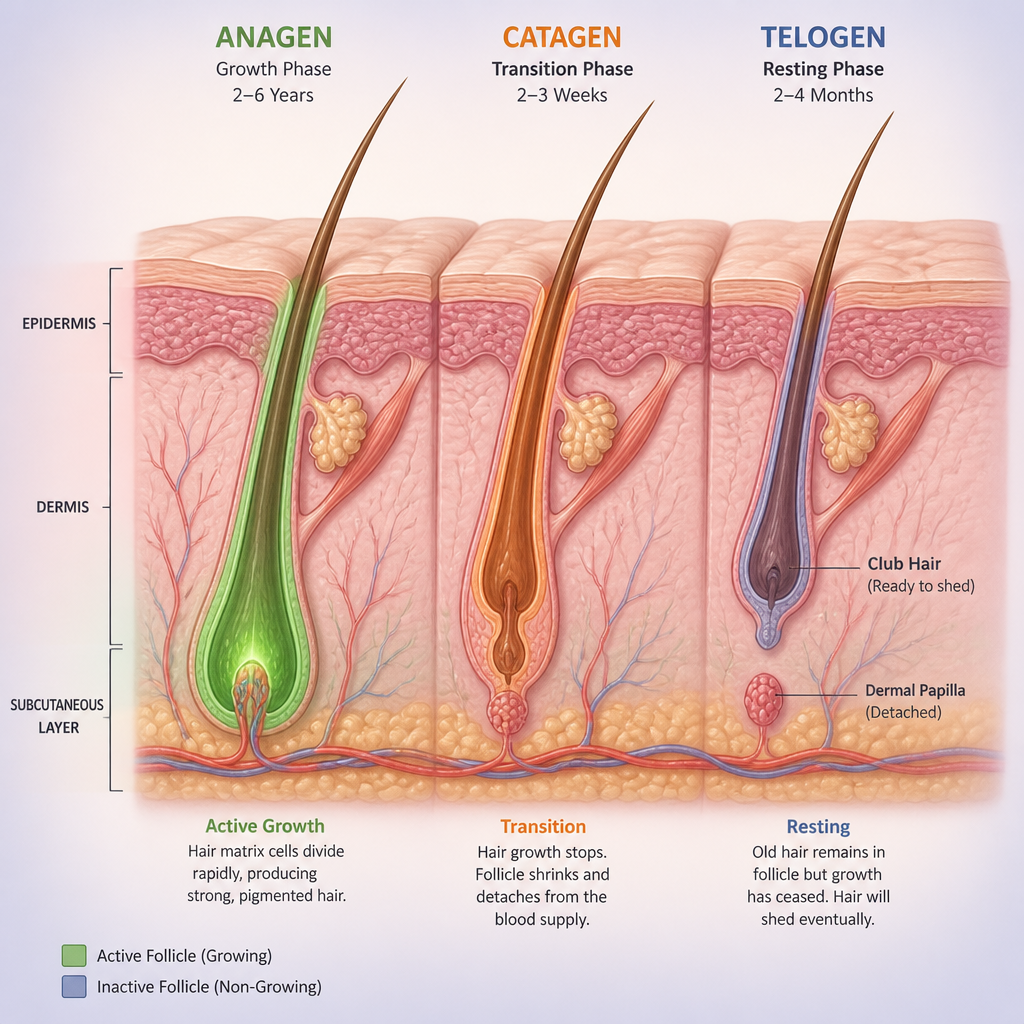
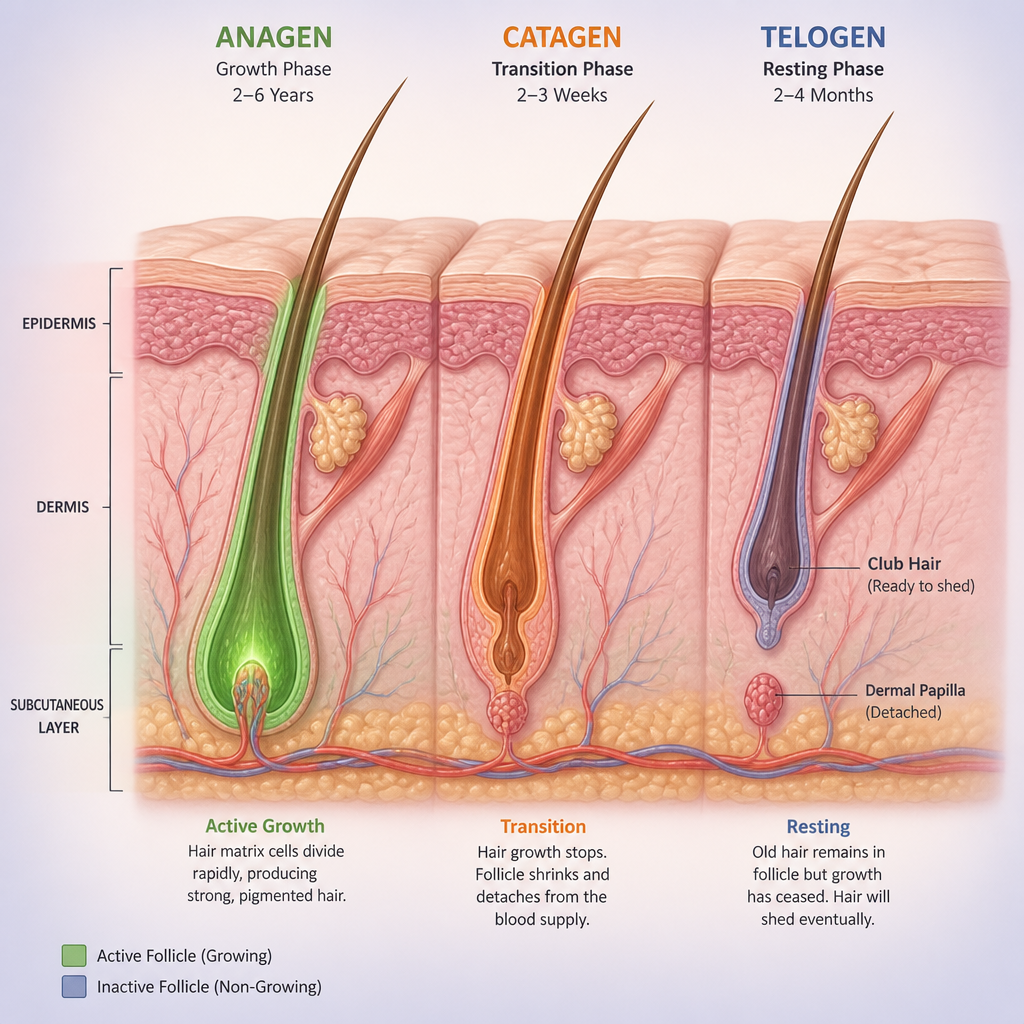
Laser hair removal works by targeting the melanin pigment inside active hair follicles. The laser energy heats the follicle to the point where it can no longer produce hair. The critical word here is “active.” At any given moment, only a portion of your hairs are in the anagen phase, which is the active growth stage where the follicle is fully connected to the hair shaft and vulnerable to laser energy.
The remaining hairs are either in catagen (a brief transitional phase lasting around 2 to 3 weeks where growth stops) or telogen (a resting phase where the follicle is dormant). A laser fired at a telogen hair does very little to that follicle. This is not a flaw in the technology. It is simply how human hair biology works, and no clinic can override it regardless of what equipment they use.
This is why spacing sessions correctly and completing the full recommended course is not optional. Every session catches a new wave of follicles that have entered their active growth phase since your last appointment. Skipping sessions or stopping early does not save money. It wastes the sessions you have already paid for.
The laser can only destroy what it can see. If a follicle is resting, it is invisible to the treatment. The course of sessions exists to catch every follicle in its active phase, not to repeat the same treatment multiple times.
Quick Takeaways
| Key Insight | Explanation |
|---|---|
| Most people need 6 to 10 sessions | This is the standard range for most body areas. Face and hormonal zones can require more. |
| Sessions must be spaced 4 to 8 weeks apart | Spacing matches your natural hair growth cycle. Going sooner does not speed up results. |
| Hair colour and skin tone affect the number | Dark, coarse hair on lighter skin responds fastest. Fine, light, or grey hair requires more sessions and may respond less fully. |
| Hormonal conditions increase session count | PCOS and other hormonal imbalances can trigger new hair growth between cycles, requiring additional treatments. |
| Underarms typically respond quickest | The hair in this area tends to be coarser and the follicle density is manageable. Many clients see strong reduction by session 4 or 5. |
| Legs and back take the most sessions | Large surface area and varied hair density mean you should plan for the upper end of the range, around 8 to 10 sessions. |
| Maintenance sessions are normal after completion | Most clients benefit from one or two top-up sessions per year, particularly in hormonal areas, to manage any regrowth. |
Understanding these basics before your first appointment means you will not be caught off guard or misled by clinics quoting unrealistically low session numbers. At Faith Laser in Liverpool, consultations are structured around your specific hair type, skin tone, and target areas, so your plan reflects your biology rather than a generic estimate pulled from a brochure.
Session Counts by Body Area
Not all body areas are equal when it comes to how many sessions you need. The differences come down to hair density, follicle depth, hair coarseness, and how strongly hormones influence regrowth in that zone. The figures below are realistic ranges based on clinical practice, not best-case marketing promises.
Face (Upper Lip, Chin, Sideburns)
Facial hair removal typically requires 6 to 10 sessions. The face is a hormonally active area, which means new follicles can be stimulated even after treatment, particularly around the chin and jawline. Fine facial hair also responds more slowly than coarse body hair. Expect sessions to be spaced around 4 to 6 weeks apart in this area.
Underarms
Underarms are one of the most responsive areas. Most clients achieve significant reduction in 6 to 8 sessions, with noticeable thinning from session 3 or 4 onward. The hair here tends to be coarser and darker, which makes it an ideal target. Patient satisfaction in this area is consistently high.
Bikini Line and Intimate Zones
The bikini line and Brazilian area generally requires 6 to 8 sessions, though hormonal influences can push that higher. Coarse, dense hair in this zone responds well to the laser, but individual variation is significant. Some clients with hormonal factors will need 10 or more sessions to maintain results.
Legs (Full, Upper, or Lower)
Full leg treatments typically need 8 to 10 sessions to cover the entire surface area effectively. The density and distribution of hair varies across the leg, meaning some patches respond faster than others. Sessions for the legs are longer per appointment but the number of sessions needed is comparable to other areas.
Back and Chest
These areas are common for male clients and also sit in the 8 to 10 session range. Hair on the back in particular can be dense and deep-rooted, and hormonal factors play a significant role in regrowth. Some clients will need maintenance sessions more frequently here than in other areas.
Pro tip: If you are treating multiple areas, book your consultations to prioritise the hormonally active zones first. Getting the chin or bikini line on a consistent schedule matters more than completing a course on the legs, where regrowth hormonal influence is lower.
Factors That Push Your Session Count Up or Down
The session range of 6 to 10 is a starting point, not a fixed prescription. Several factors will push your personal number toward the higher or lower end of that range, and a few can push it beyond it entirely.
Hair Colour and Texture
Laser energy targets melanin, the pigment that gives hair its colour. Dark, coarse hair contains the most melanin and absorbs the laser’s energy most efficiently. This is why people with thick, dark hair on lighter skin typically complete their course at the lower end of the session range. Fine hair, blonde hair, red hair, and grey hair contain less melanin and respond more slowly or incompletely. This does not mean those clients cannot be treated, but they should plan for more sessions and manage expectations around the degree of final reduction.
Skin Tone and Laser Type
Earlier generations of laser technology were optimised for high contrast between dark hair and light skin. Modern clinics using advanced multi-wavelength platforms can treat a much broader range of skin tones safely and effectively. At Faith Laser in Liverpool, the Triplicity wavelength technology is designed to work across different skin types, which matters enormously for getting effective results without skin damage.
Hormonal Influences
Hormones are the single biggest wildcard in laser hair removal. Conditions such as PCOS (polycystic ovary syndrome) can continuously stimulate new follicles, meaning the laser destroys existing ones but new ones keep activating. This does not make laser ineffective. It does mean the total session count is likely to be higher, and annual maintenance sessions become a practical reality rather than a surprise. Discussing your hormonal health with your clinician before treatment starts is not optional. It shapes the entire plan.
Consistency and Timing
Missing appointments, delaying sessions, or waxing between treatments are the most avoidable reasons for needing extra sessions. Waxing and plucking remove the hair shaft from the follicle entirely, which means the laser has nothing to target at your next appointment. Shaving is the only acceptable method of managing hair between sessions because it leaves the follicle intact.
Pro tip: Spacing sessions too close together does not produce faster results. If too few new hairs have entered the anagen phase since your last treatment, you are essentially repeating the same session. Follow the schedule your clinician gives you for each specific area rather than trying to accelerate the process.
What Results Look Like Session by Session
One of the most common frustrations clients have is expecting too much from the first session or being blindsided by how gradual the process is. Here is what actually happens.
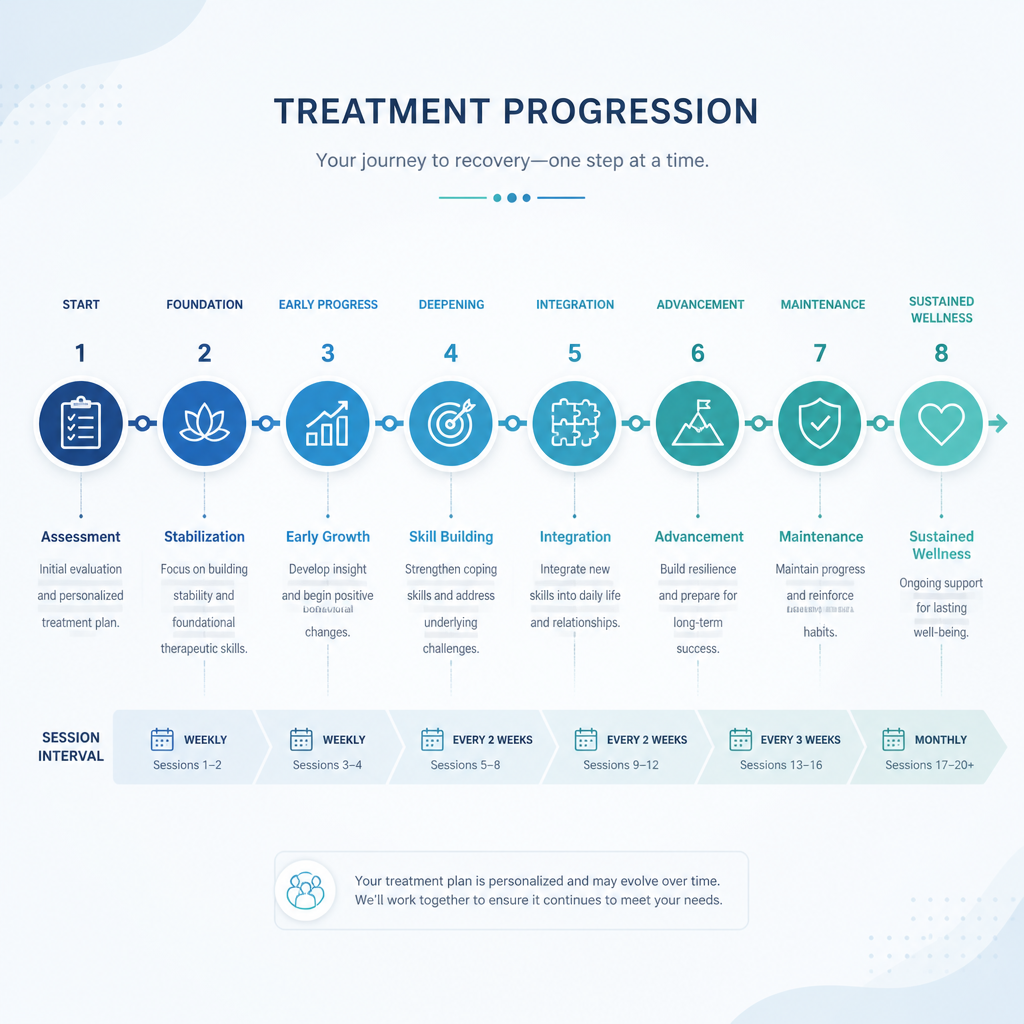
After your first session, treated hairs will begin to shed over the following 1 to 3 weeks. This shedding can look like growth at first, which alarms some clients. It is not regrowth. The follicle has been damaged and is pushing out the dead hair shaft. By session 2 or 3, the reduction in active hair density becomes genuinely visible. Hair that does regrow comes back finer and lighter than before.
By sessions 4 and 5, most clients in responsive areas like underarms and bikini line will notice a substantial difference in density and regrowth speed. In less responsive areas or in clients with fine or hormonal hair, progress may be slower but still measurable. By the end of a full course, the goal is long-term hair reduction rather than a guarantee of permanent zero regrowth in every follicle. The realistic outcome for most clients is a significant, lasting reduction that requires only occasional maintenance.
Spacing Your Sessions Correctly
Session spacing is not an arbitrary administrative decision. It is calibrated to your hair growth cycle in each specific area. Facial hair and underarm hair may be scheduled 4 to 6 weeks apart, while larger body areas like legs and back are often spaced 6 to 8 weeks apart to allow enough follicles to enter the active growth phase between appointments.
A common mistake is applying one fixed interval to every area. This does not work. The growth cycle timing differs by body location, and your clinician should be adjusting your schedule accordingly rather than booking every area at the same interval. If a clinic books every single area on an identical 4-week cycle regardless of the zone being treated, that is worth questioning.
The total time from first session to end of course is typically 9 to 18 months depending on the number of sessions and the spacing used. This is a commitment worth understanding before you start, not a surprise at the halfway point.
Laser Technology Comparison
The type of laser used affects both how many sessions you need and how safely the treatment can be delivered across different skin tones. Not all systems are the same, and the technology behind your treatment matters.
| Laser Type | Best Suited For | Typical Session Count Impact |
|---|---|---|
| Diode Laser (single wavelength) | Lighter skin tones with dark, coarse hair | Effective in the standard 6 to 8 session range for ideal candidates. Less effective for darker skin tones or finer hair. |
| Nd:YAG Laser | Darker skin tones. Penetrates deeper into the follicle. | Safer for melanin-rich skin, may require the upper end of the session range due to lower melanin targeting contrast. |
| Triplicity Multi-Wavelength | Broad range of skin tones and hair types. Combines multiple wavelengths in a single treatment. | Can reduce overall session count by targeting follicles more comprehensively per visit. Used at Faith Laser in Liverpool. |
The technology your clinic uses is one of the most important factors in how many sessions you will need, and whether the treatment can be delivered safely on your specific skin tone. If you are in Liverpool and unsure which technology is right for you, a consultation at Faith Laser will give you a clear, honest answer based on your actual skin and hair profile rather than a one-size-fits-all estimate.
Frequently Asked Questions
Can I get good results in fewer than 6 sessions?
For some clients with ideal conditions, meaning dark coarse hair and lighter skin treated with an appropriate laser, noticeable reduction can occur in 4 to 5 sessions. But “noticeable reduction” is not the same as completing the course. Stopping early leaves active follicles untreated and means the hair that returns will be denser than if you had finished. Six sessions is the realistic minimum for most people, not a selling tactic.
Does laser hair removal work on all skin tones?
Yes, with the right technology. Modern multi-wavelength systems like the Triplicity platform used at Faith Laser in Liverpool are designed to treat a broad range of skin tones safely. Older single-wavelength diode lasers are less effective on darker skin and carry a higher risk of side effects. Always ask what specific laser system a clinic uses before booking, and whether that system has been clinically validated for your skin tone.
Will I need maintenance sessions after finishing my course?
Most clients do. Hair follicles that were in a resting phase throughout your entire course will eventually cycle into active growth. For areas with strong hormonal influence, such as the chin, bikini line, and upper lip, one or two top-up sessions per year is common practice. This does not mean the original course failed. It means the biology of hair growth continues, and occasional maintenance is part of managing that.
Why does facial hair removal take more sessions than underarms?
Facial hair is finer and more influenced by hormonal activity than underarm hair. Fine hair contains less melanin, making it a less efficient target for the laser. Hormonal zones like the chin and upper lip can also generate new follicular activity even after existing follicles have been successfully treated. This is why the face sits at 6 to 10 sessions rather than the 6 to 8 more typical of underarms.
Can I shave between laser hair removal sessions?
Yes, and in most cases you should. Shaving is the only hair removal method that leaves the follicle intact for the laser to target at your next session. Waxing, threading, plucking, and epilating all remove the hair shaft from the follicle, which means there is nothing for the laser to target. You should shave the treatment area 24 to 48 hours before each appointment and avoid these other methods for the duration of your course.
How does laser hair removal in Liverpool compare to DIY at-home devices?
At-home IPL (intense pulsed light) devices use lower energy levels than clinical lasers because they are designed for consumer use without professional supervision. They can produce some reduction for ideal candidates, meaning light skin and very dark hair, but they are slower, less effective, and typically cannot match the results of a professional course. For anyone with hormonal hair growth, darker skin, or fine hair, professional clinic treatment is not comparable. The technology gap is significant, and the session count required with at-home devices is substantially higher.
If you have gone through laser hair removal treatment at Faith Laser or are in the middle of your course, share what your experience has been like so far. Your feedback helps others in Liverpool make informed decisions.
We would love your feedback and any insights you would share with others. What perspective would you add?
References
- How many sessions laser hair removal takes: a clinical overview of session counts, growth cycles, and treatment variables
- What to expect from a full laser hair removal course: sessions, results, and complicating factors
- How hair growth phases (anagen, catagen, telogen) determine why multiple laser sessions are necessary
- Laser hair removal results timeline: what to expect session by session and how spacing affects progress
- Session counts by body area for laser hair removal including face, underarms, bikini, and legs